
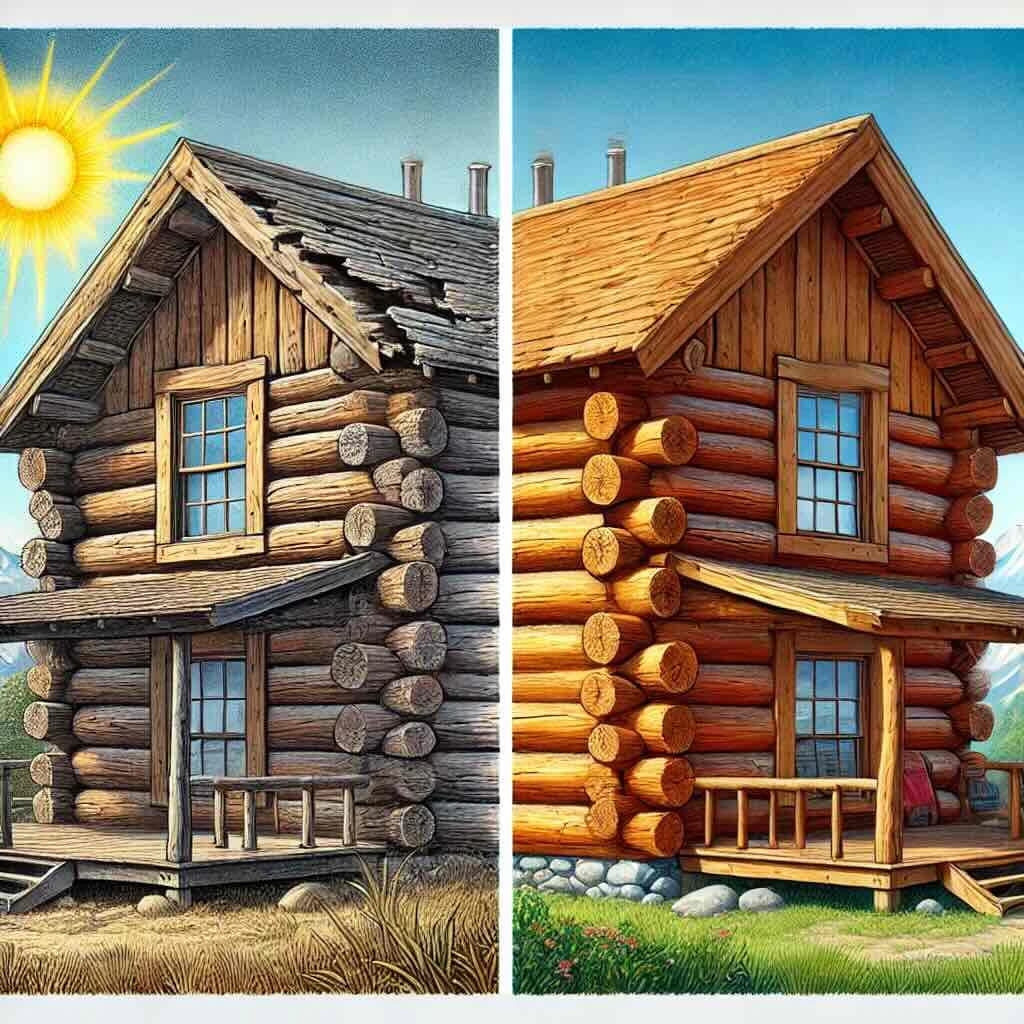
Log Home Inspection in Livermore, Colorado
A real Livermore inspection, anonymized — a handcrafted log home with an active carpenter ant infestation, a finish past its service life, and localized rot, brought back with an integrated six-step restoration.
Log Homes in Livermore & the Laramie Foothills
Livermore sits in the Laramie Foothills north of Fort Collins, in the dry ponderosa-pine country where Larimer County climbs toward the Wyoming line. It is classic handcrafted-log-home territory: big, characterful logs, a lot of open sun, persistent wind, and the low humidity of the Front Range foothills. That same dry, sunny climate that owners love is hard on a finish and, more quietly, inviting to insects.
When a log finish thins and the sapwood softens, carpenter ants and wood-boring beetles move in — and at this elevation a small colony can do real damage before it is obvious from the ground. The Livermore home below brought several of these issues together at once, which is why the recommended fix was not a single coat of stain but a sequenced, multi-step restoration that treated the wood, the pests, and the finish as one system.
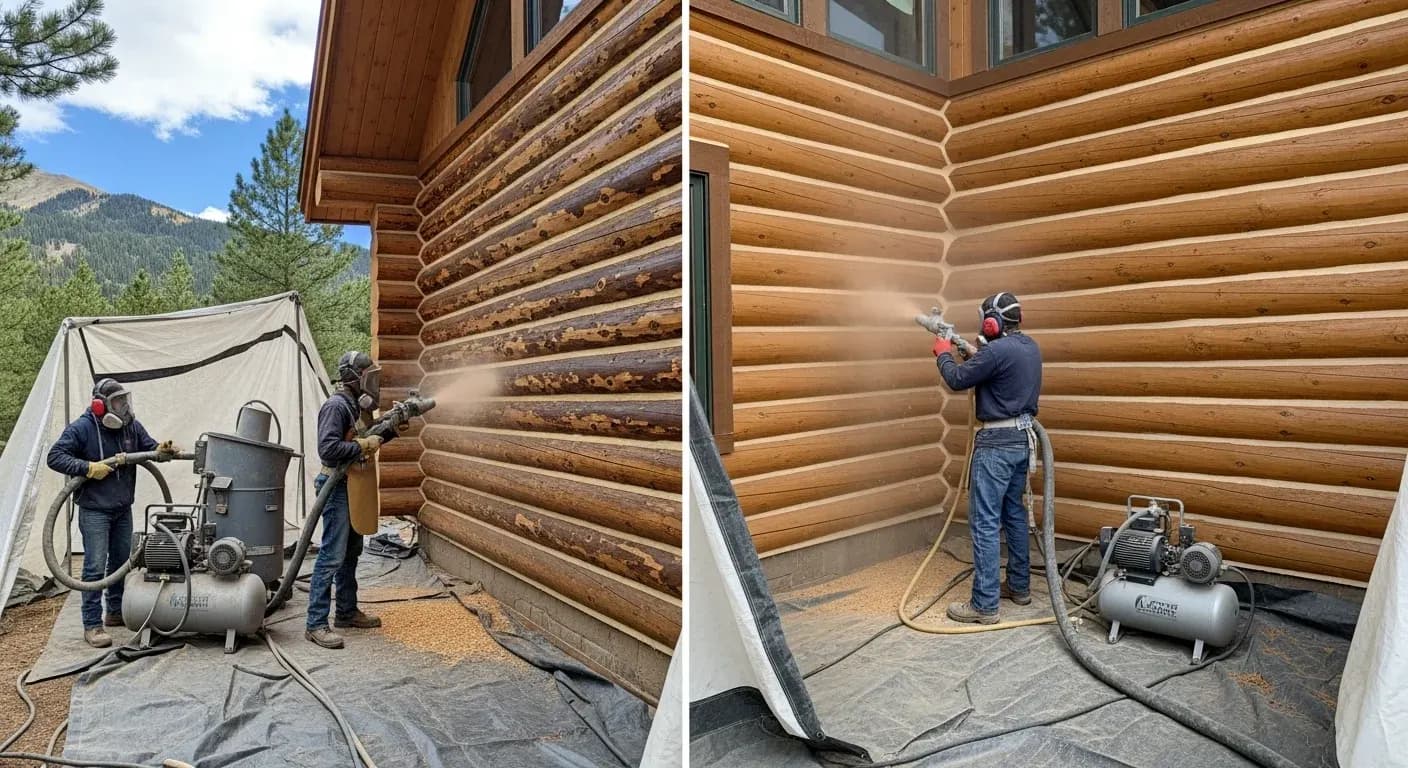
An infested, weathered handcrafted log home
This roughly 3,200-square-foot handcrafted log home showed three problems that fed each other: a finish well past its service life, an active carpenter ant infestation with visible frass and ant trails on the south and west elevations, and localized rot in a structural log on the south wall. Left alone, each one accelerates the others — a failing finish lets in the moisture that softens wood, and softened wood is exactly what carpenter ants and borers exploit.
The recommendation was an integrated six-step restoration: take the logs back to clean wood, treat them with borates to kill and deter insects, rebuild the protective finish in layers, re-chink and seal, and consolidate the rotted structural log. Done in sequence, it stops the infestation, restores the envelope, and resets the home onto a long maintenance cycle.
Findings at a Glance
| Area | Current condition | Recommended action |
|---|---|---|
| Exterior finish | Weather-checked, UV-bleached, past recoat | Media blast and brush back to clean wood |
| South & west elevations | Active carpenter ants — frass & trails | Borate wash + Tim-bor + solid borate rods |
| Chinking | Compressed, cracking, pulling from logs | Remove and re-chink with Permachink |
| Checks & joints | Original sealant split; checks >1/4" open | Energy-seal caulk all open checks |
| South wall structural log | Localized rot, loss of cross-section | Consolidate with borate rods + Abatron |
Documented Conditions
Exterior finish — past service life
The existing finish was weather-checked and UV-bleached and well past the point of a simple recoat. On a handcrafted home with large, irregular logs, a dead finish leaves a lot of exposed surface for moisture to enter. The recommendation was to take the wood back to a clean, sound surface — media blasting followed by an Osborne brush — so the new system bonds and the insect treatment can reach the wood.
Carpenter ants & wood borers — active
There was an active carpenter ant infestation, with frass (sawdust-like debris) and ant trails visible on the south and west elevations — the warm, sunny sides where colonies favor softened sapwood. Carpenter ants do not eat wood, they excavate it, hollowing structural logs over time. The strategy is a two-front borate treatment: an oxalic-acid wash, Tim-bor borate worked into the first finish coat, and solid borate rods set into vulnerable logs for long-term protection against ants and borers.
Chinking — failing
The chinking was compressed, cracking, and pulling away from the log edges, so it was no longer sealing the joints. New Permachink chinking was specified across the exterior once the logs were cleaned and treated, restoring a flexible, watertight seal that moves with the logs through the seasons.
Checks & caulking
Original sealant had split, and numerous log checks wider than a quarter inch were open and collecting water. Energy-seal caulking of those checks closes the pathways that drive water — and the insects that follow it — into the log cores, while still letting the wood expand and contract.
South wall structural log — localized rot
One structural log on the south wall showed localized rot and a loss of cross-section. Where the damage is contained, consolidation is the right repair before full replacement becomes unavoidable: borate rods to kill decay organisms and Abatron Liquid Wood to restore strength to the affected area, monitored on the maintenance schedule going forward.
Example Scope & Investment
The anonymized scope below mirrors the work order for this Livermore project — an integrated six-step program where each step sets up the next.
- 1 · Surface preparationMedia blast all exterior logs, then Osborne-brush to a clean, uniform surfaceIncluded
- 2 · Wash & borate treatmentOxalic-acid wash to brighten and neutralize, then Tim-bor borate to kill and deter carpenter ants and borersIncluded
- 3 · Multi-layer stain systemPermachink Prelude primer, Ultra-2 pigmented coats, and Lifeline Advance clear topcoatIncluded
- 4 · New chinkingRemove failed chinking and re-chink the exterior with PermachinkIncluded
- 5 · Energy-seal caulkingSeal all checks wider than 1/4 inch with energy-seal caulkIncluded
- 6 · Rot consolidationSouth-wall structural log: borate rods plus Abatron Liquid Wood to restore strengthIncluded
These figures come from a real Log Home Finishing inspection in Livermore, shown here as an anonymized example. Every home is different — your inspection includes a written scope and pricing matched to your home’s actual condition.
Products & methods used
Recommended Maintenance Schedule
After a restoration this thorough, the goal is to never let the wood get dry and exposed enough to invite insects back. The schedule below fits Livermore’s dry, sunny exposure.
| Element | Interval | What it involves |
|---|---|---|
| Exterior stain | 6–7 years | Wash and recoat before the finish thins to bare wood |
| Borate-protected logs | Inspect yearly | Watch the south and west elevations for any new frass or ant activity |
| Chinking & checks | Inspect yearly | Re-seal any check or joint that opens before moisture and insects follow it in |
Why a Six-Step Restoration Beats a Single Coat
On a home with active insects and a dead finish, a single coat of stain is worse than doing nothing — it seals moisture and live colonies in behind a fresh film. The reason the work is sequenced into six steps is that each step depends on the one before it: you cannot treat wood you have not cleaned, you cannot finish wood you have not treated, and you cannot seal joints with chinking that has not been removed and re-backed.
Borates are the quiet hero here. Applied to clean wood and built into the first coat — then reinforced with solid rods in vulnerable logs — they kill the carpenter ants and borers already present and keep new ones out for years, working from inside the wood rather than just on its surface. Pairing that with rot consolidation on the south wall stops the structural damage before a log has to be cut out and replaced.
- Staining over active insects and dead finish traps moisture and colonies behind the film.
- Borates treat the wood from within and protect against carpenter ants and borers for years.
- Each step enables the next — clean, treat, finish, chink, seal, then consolidate.
- Consolidating localized rot now avoids a full structural-log replacement later.
What the Work Looks Like
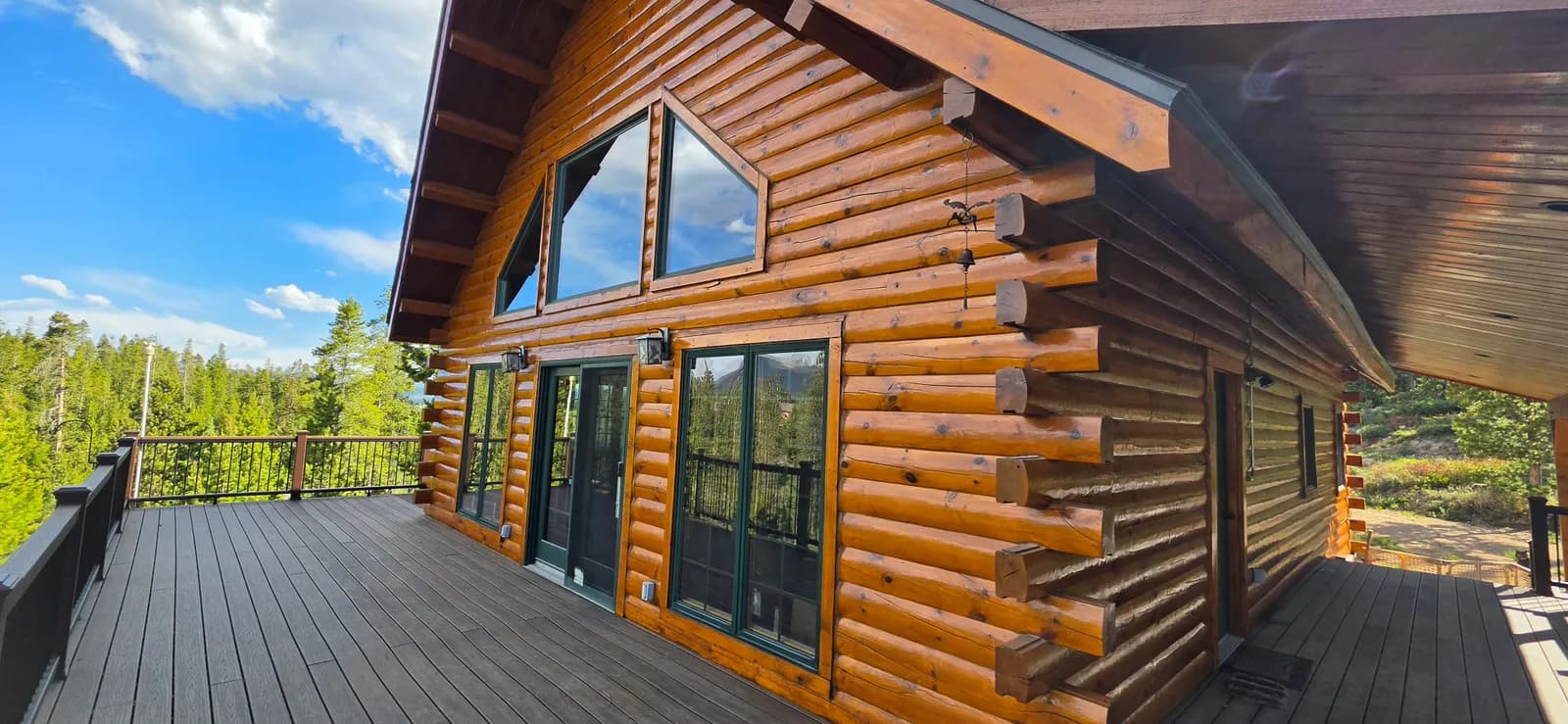
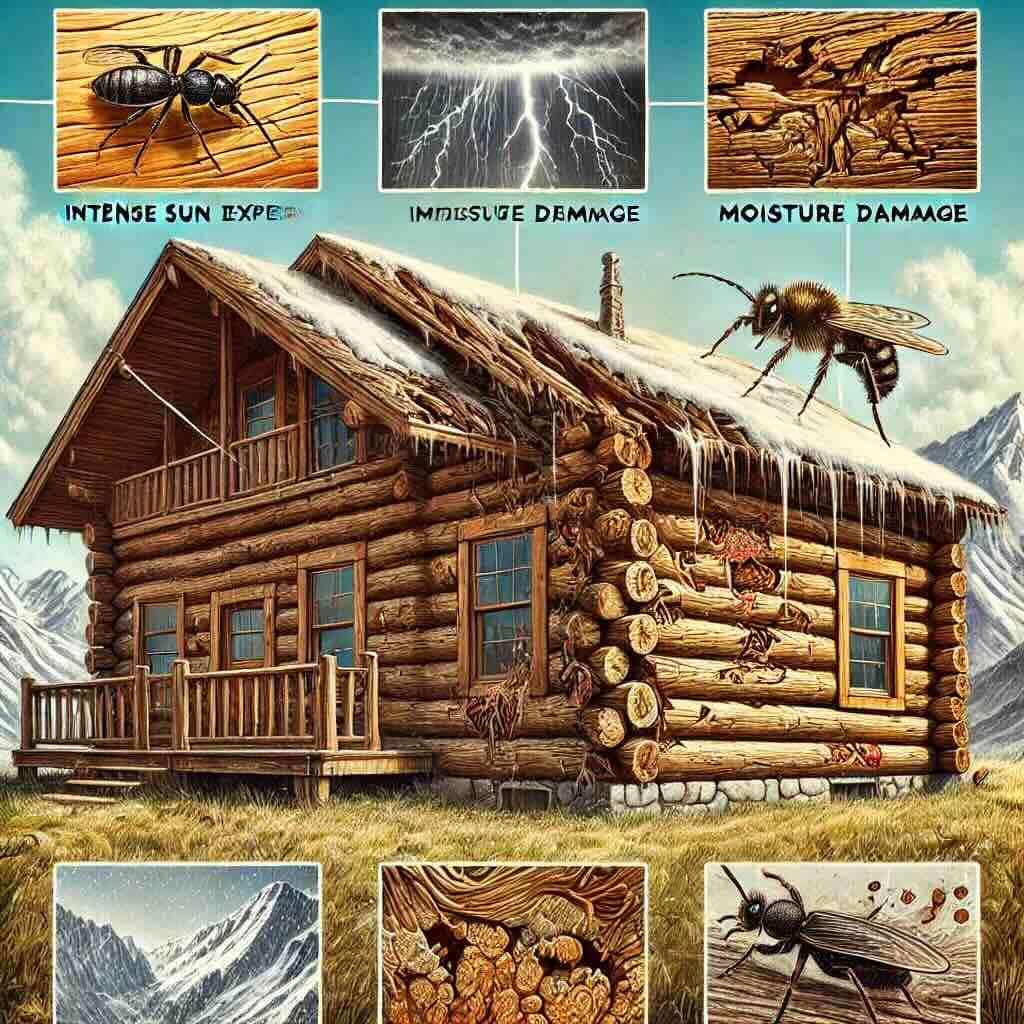
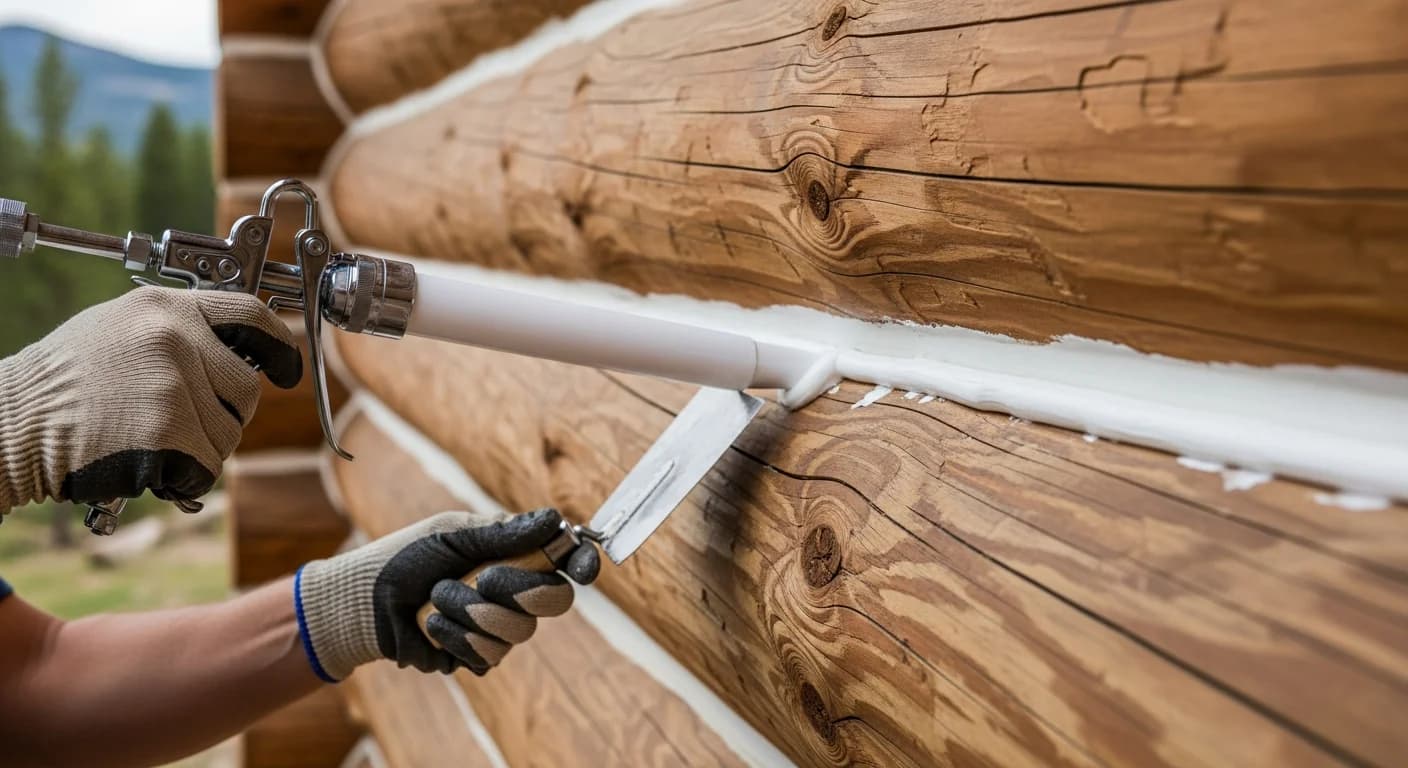
Illustrative photos of Log Home Finishing staining, chinking, and restoration work in Colorado.
Livermore Log Home Inspection — FAQ
How do I know if I have carpenter ants in my Livermore log home?
The clearest signs are frass — a sawdust-like debris pushed out of galleries — and visible ant trails, usually on the warm south and west elevations, which is exactly what this inspection found. Carpenter ants do not eat wood; they excavate it, so by the time you see them the damage is already underway. A log home inspection looks specifically for frass, trails, and the softened, moisture-prone wood that draws them.
What is a borate treatment and why use it?
Borates are mineral salts that are highly effective against wood-destroying insects and decay fungi but low in toxicity to people and pets. On this home they were applied as an oxalic-acid wash and a Tim-bor treatment built into the first finish coat, with solid borate rods set into vulnerable logs. Because borates work from inside the wood, they keep protecting against carpenter ants and borers for years rather than just coating the surface.
Why does the restoration have six separate steps?
Because each step makes the next one possible. You blast the logs clean so treatment and finish can bond; you treat with borates before sealing so you are not trapping live insects behind the finish; you build the stain in layers for UV protection; you re-chink and energy-seal the checks; and you consolidate the rotted structural log. Skipping a step — like staining over untreated, infested wood — defeats the whole program.
Can a rotted structural log be saved without replacing it?
Often, yes, if the rot is localized and caught early. On this Livermore home the south-wall log had lost some cross-section but not the whole member, so the repair was consolidation: borate rods to stop the decay and Abatron Liquid Wood to restore structural strength. That is far less invasive and costly than cutting out and replacing a structural log, which becomes necessary only once rot is widespread.
Example Inspections in Other Colorado Towns
Real, anonymized inspections from log homes across the state.
An incompatible finish peeling off a home and garage
View inspectionHigh-altitude UV, split railings, and open mortar
View inspectionA large-diameter full-scribe cabin in Buena Vista
View inspectionA solid log home with a failed deck system
View inspectionA maintained full-log home in Cimarron
View inspectionA VERY GOOD, well-maintained pre-purchase home
View inspectionFailed interior chinking and an overdue exterior
View inspectionA multi-structure log property in Evergreen
View inspectionA sound home ready for a full clean and finish
View inspectionMissing chinking and open log checks
View inspectionSun-worn siding and decks, caught at maintenance
View inspectionA full-scribe home that was never chinked
View inspectionSound structure, end-of-life finishes inside and out
View inspectionA historic ten-building log ranch
View inspectionA two-story log home in Pine
View inspectionA large D-log home in Steamboat Springs
View inspectionA historic town hall in Tin Cup
View inspectionSeeing Frass or Fading Logs in Livermore?
An inspection finds carpenter ants, borers, and hidden rot before they hollow a structural log — and maps the exact steps to stop them.
Thomas Elliott · Serving log home communities across Colorado
Livermore Area & Related Services
Start with the main log home inspection page to see our full process, or explore log home restoration and maintenance for the work that follows.