
Log Home Inspection in Indian Hills, Colorado
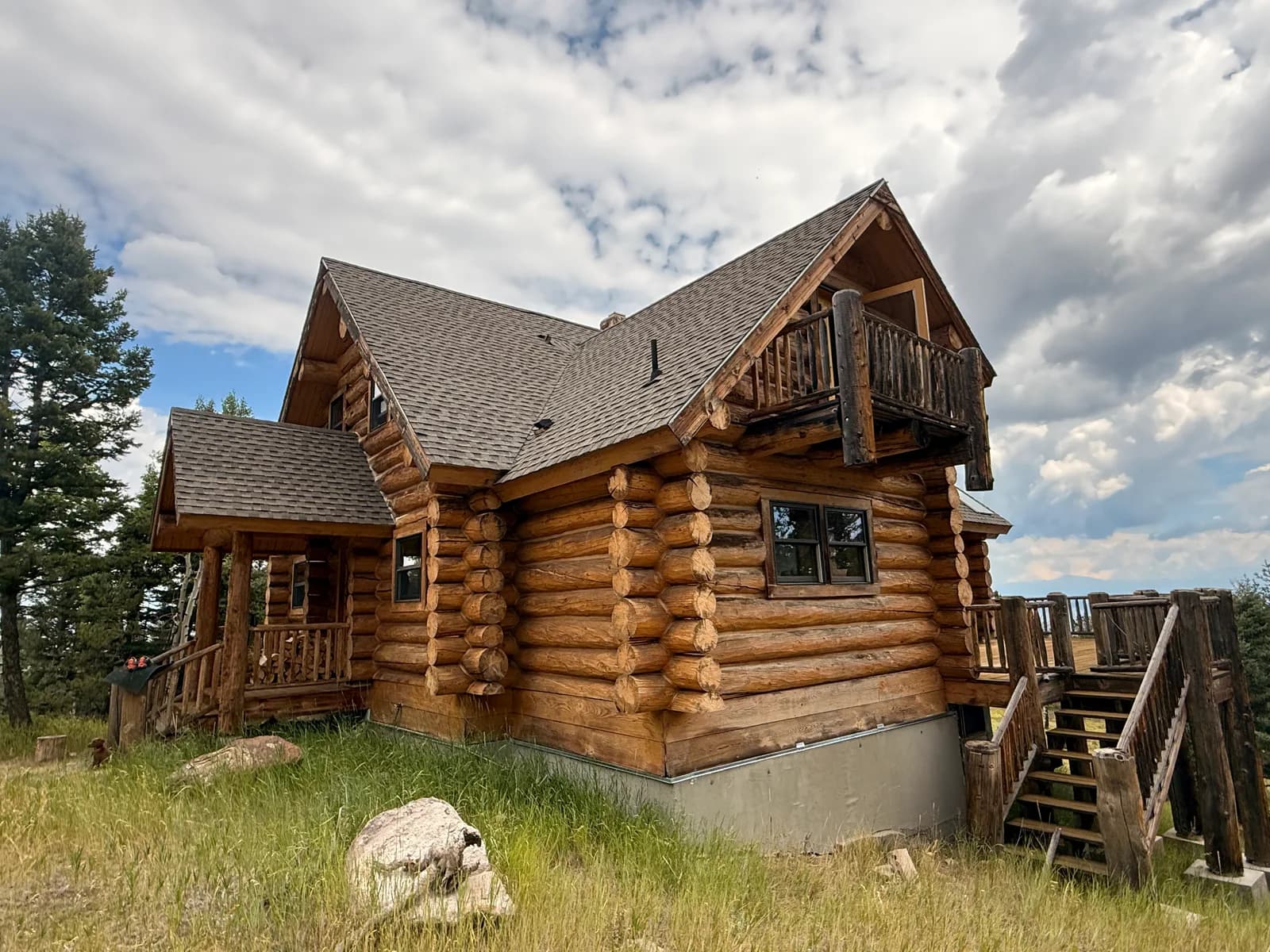
A real Indian Hills pre-purchase inspection, anonymized — a substantial full-scribe log home that had never been chinked, scoped for a complete media-blast, stain, and Perma-Chink restoration inside and out.
Log Homes in Indian Hills & the Jefferson County Foothills
Indian Hills sits in the wooded foothills southwest of Denver, where log homes are tucked into the pines along the ridgelines off Parmalee Gulch. It is a beautiful place to own a log home — and a demanding one. The Front Range foothills combine strong, high-angle UV with big seasonal swings and wind-driven snow that hunts for any unsealed joint. When a home here is bought and sold, a specialized log home inspection is the difference between a confident purchase and an expensive surprise.
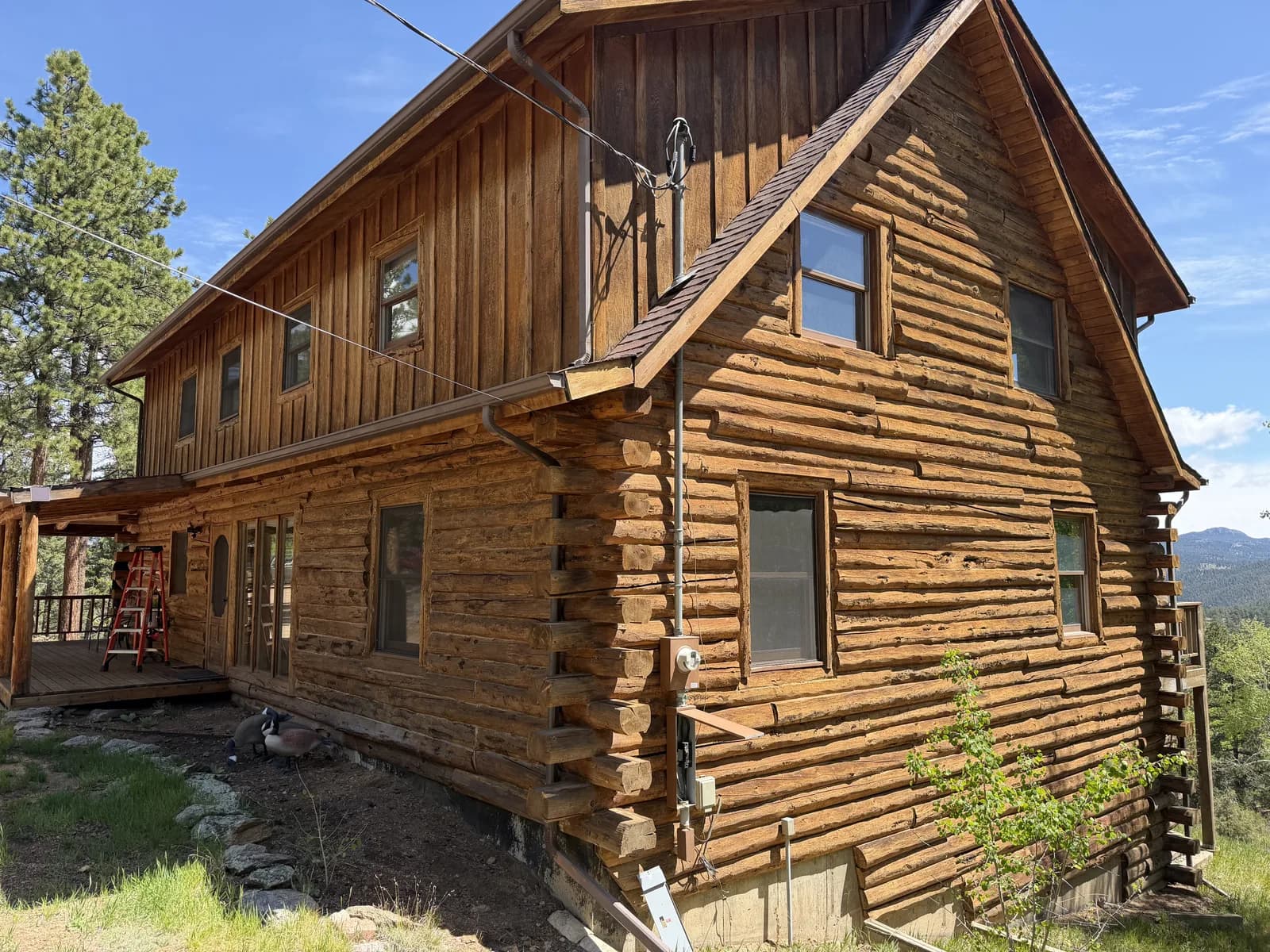
The home below was inspected as a pre-purchase condition assessment for a buyer. It is a substantial full-scribe log structure with good bones, but decades of weathering, layered-up old finish, and one critical original defect had caught up with it. That defect is worth stating plainly because it shaped the entire scope: the home had never been chinked — the log courses met wood-to-wood with no sealant in the joints at all.
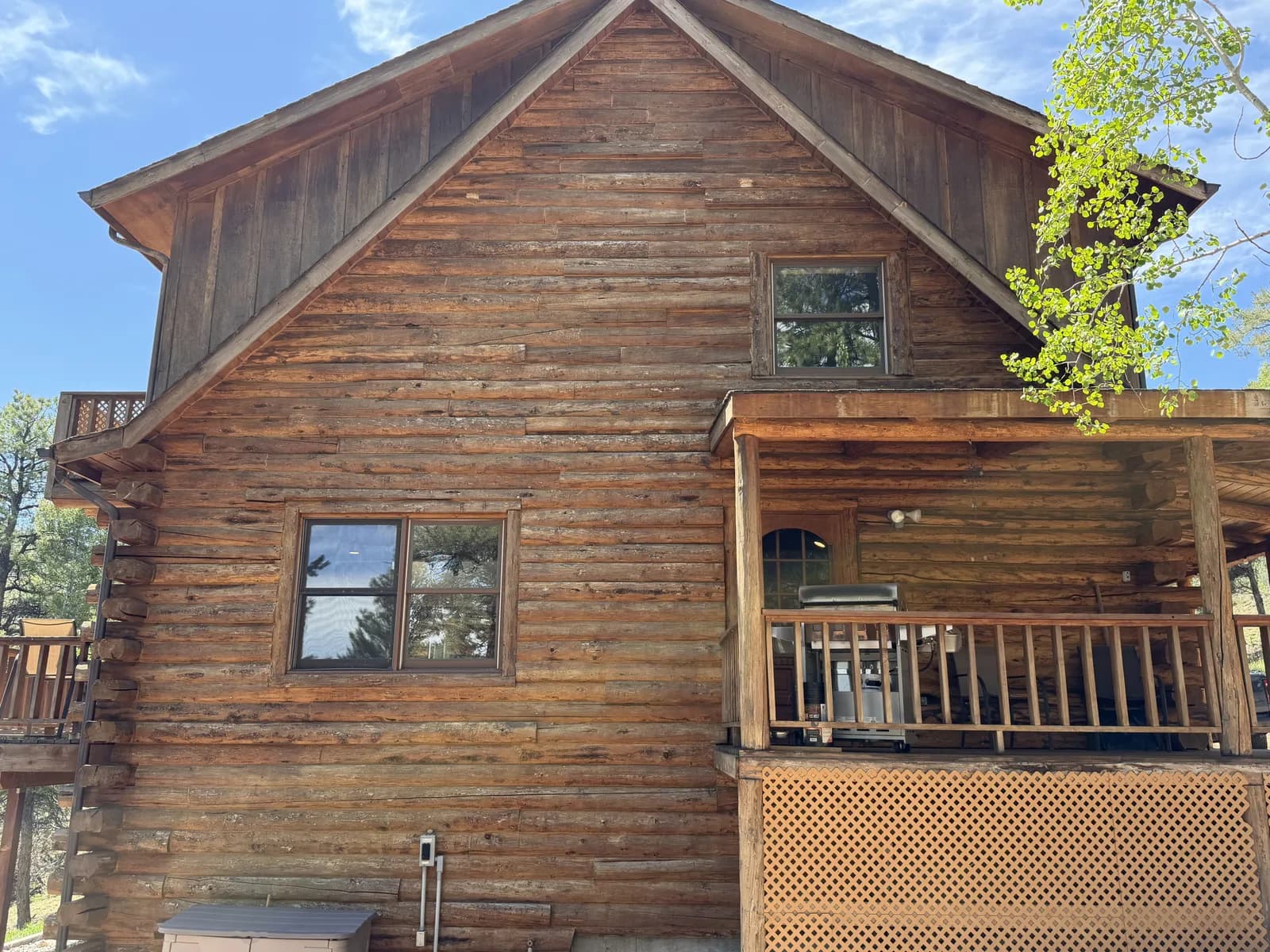
A full-scribe home that was never chinked
This was a pre-purchase assessment: the buyer wanted to know, before closing, exactly what it would take to bring the home back to a sound, protected condition. The structure itself is fundamentally good, but the building envelope needed a complete reset. The interior logs carried an aged, oxidized, mineral-spirit finish that had worn off the high points and pooled in the recesses, so light hit the walls unevenly and no new stain would bond until the old residue was lifted out.
The single biggest issue was the absence of any chinking. With the joints open wood-to-wood, the home had no real defense against air infiltration, moisture, or pests — and a confirmed critter entry point inside proved it. The exterior was worse than the interior: thinned, oxidized, and failed to bare grey wood in places, with structural rot in an east-elevation truss and soffit and in the two lower log courses of the north wall. The scope rebuilt all of it: media blast to bare wood, sand, structural repairs, full Sashco Capture/Cascade stain, and Perma-Chink in every joint.
Findings at a Glance
| Area | Current condition | Recommended action |
|---|---|---|
| Interior log finish | Aged, oxidized, uneven coverage | Media blast to bare wood and sand stain-ready |
| Log joints (interior & exterior) | Never chinked — open wood-to-wood | Install Perma-Chink in every joint over backer rod |
| Exterior logs & stain | Failed to bare grey wood in places | Media blast, sand, and apply Sashco Capture/Cascade |
| East truss & soffit | Checking, splitting, active rot at bearing | Rebuild truss elements and soffit framing |
| North wall lower courses | Rot from snow/grade contact (2 courses) | Cut out and replace with matched-profile logs |
| Critter entry point | Confirmed pest entry, damaged framing | Patch in new log section and rebuild framing |
Documented Conditions
Joints never chinked — the root cause
The log courses met wood-to-wood with no sealant in the joints — the home had never been chinked in its life. This single condition was the root cause of the air loss, the moisture pathways, and the pest entry documented elsewhere. The lasting fix is to install closed-cell backer rod and Perma-Chink in every horizontal joint, inside and out, so the wall finally has a continuous airtight, watertight seal.
Interior finish — oxidized and uneven
The interior logs carried an aged, mineral-spirit-based finish that had darkened and lost its film integrity, worn off the high points and heavy in the recesses. Sanding alone could not lift the bound-in residue, so the surfaces were specified for media blasting followed by a finish sand — the only way to return the wood to a clean, even substrate that a new stain will color uniformly and bond to.
Exterior logs & stain — failed to bare wood
The exterior was in markedly worse shape than the interior, which is expected after decades of foothills UV and freeze-thaw with no maintained finish. The coating had thinned, oxidized, and in several elevations failed completely, leaving raw, grey, UV-degraded wood. Media blasting removes the bound-in oxidation and weathered fiber without the gouging risk of aggressive sanding, after which every log is sanded stain-ready.
East truss & soffit — structural rot
The east-side truss and soffit system showed multiple failure points: open checking, splitting along the log ends, finish failure across the gable, and deterioration at the truss bearing surfaces. Left through another winter these conditions accelerate quickly. The scope rebuilds the affected truss elements and replaces compromised soffit framing before any new finish goes on.
North wall lower logs — rot from snow contact
The bottom two log courses on the north wall had lost structural integrity along the lower face — the classic failure pattern where snow load and grade contact keep logs persistently wet. These courses were specified to be cut out and replaced with matched-profile logs, then sealed and finished to blend with the surrounding wall.
Confirmed critter entry point
A confirmed pest-entry point inside the home had damaged ceiling framing — a direct consequence of the open, unchinked joints. The repair patches in a new log section and rebuilds the damaged framing, and sealing the joints throughout removes the pathway that allowed entry in the first place.
Example Scope & Investment
The anonymized scope below mirrors the work order for this Indian Hills pre-purchase project — a complete interior and exterior restoration built around chinking a home that had never been sealed.
- Refinish interior logsMedia blast all interior log surfaces to bare wood, then sand to a uniform, stain-ready finish (~9,200 sq ft)$73,600
- Stain interior logsApply the Sashco Capture & Cascade interior stain system in the owner’s color choice (~7,800 sq ft)$23,400
- Chink all interior jointsInstall Perma-Chink in every horizontal joint over proper backer rod — home had never been sealed (~12,800 LF)$51,200
- Repair critter entry pointPatch in a new log section and rebuild damaged ceiling framing at the confirmed pest-entry location$750
- Refinish exterior logsMedia blast all exterior log surfaces, then sand to bare, sound wood (~8,400 sq ft)$84,000
- Stain exteriorApply the Sashco Capture & Cascade exterior stain system (~8,500 sq ft)$34,000
- Chink all exterior jointsInstall Perma-Chink in every horizontal exterior joint (~14,000 LF)$56,000
- Repair east truss & soffitRebuild compromised truss elements and soffit framing on the east elevation$6,800
- Replace lower logs — north wallCut out and replace two rotted courses with matched-profile material$6,400
These figures come from a real Log Home Finishing pre-purchase inspection in Indian Hills, shown here as an anonymized example. Every home is different — your inspection includes a written scope and pricing matched to your home’s actual condition, and larger projects can be phased to fit a timeline.
Products & methods used
Recommended Maintenance Schedule
Once a foothills home like this is reset, a steady schedule keeps it out of full restoration ever again.
| Element | Interval | What it involves |
|---|---|---|
| Exterior stain | 3–5 years | Wash and recoat with the Sashco system before the finish reaches bare wood |
| Chinking & joints | Inspect yearly | Spot-repair any joint that loses bond or opens |
| Log ends & checks | Inspect yearly | Re-seal open checks and end grain before they hold water |
Why “Never Chinked” Changes Everything
A log wall is only weatherproof if the joints between the logs are sealed. On this Indian Hills home the joints had never been chinked — meaning that for the home’s entire life, air, moisture, and insects moved freely through every horizontal seam. That is why a confirmed critter entry point was found inside, why the interior lost so much energy, and why moisture had a pathway into the structure. No amount of fresh stain fixes an unsealed wall; the chinking is what makes the envelope work.
It also explains why the scope is a full restoration rather than a recoat. Because the surfaces had to come back to bare wood for both staining and proper backer-rod-and-chinking installation, media blasting was the right tool — it strips decades of oxidized finish and weathered fiber without gouging the logs. With the structural rot in the truss and the north wall addressed at the same time, the home gets a single, sequenced reset that protects it for the next decade. This is exactly the kind of full-envelope work that separates experienced log staining companies from a general painter.
- A log wall is only weatherproof if the joints are sealed — staining alone never fixes an unchinked home.
- Open joints are the direct pathway for air loss, moisture, and the pest entry found inside.
- Bare-wood prep is required for both even staining and proper backer-rod-and-chinking — media blasting does it without gouging.
- Catching structural rot during a pre-purchase inspection lets a buyer budget or negotiate before closing.
What the Work Looks Like
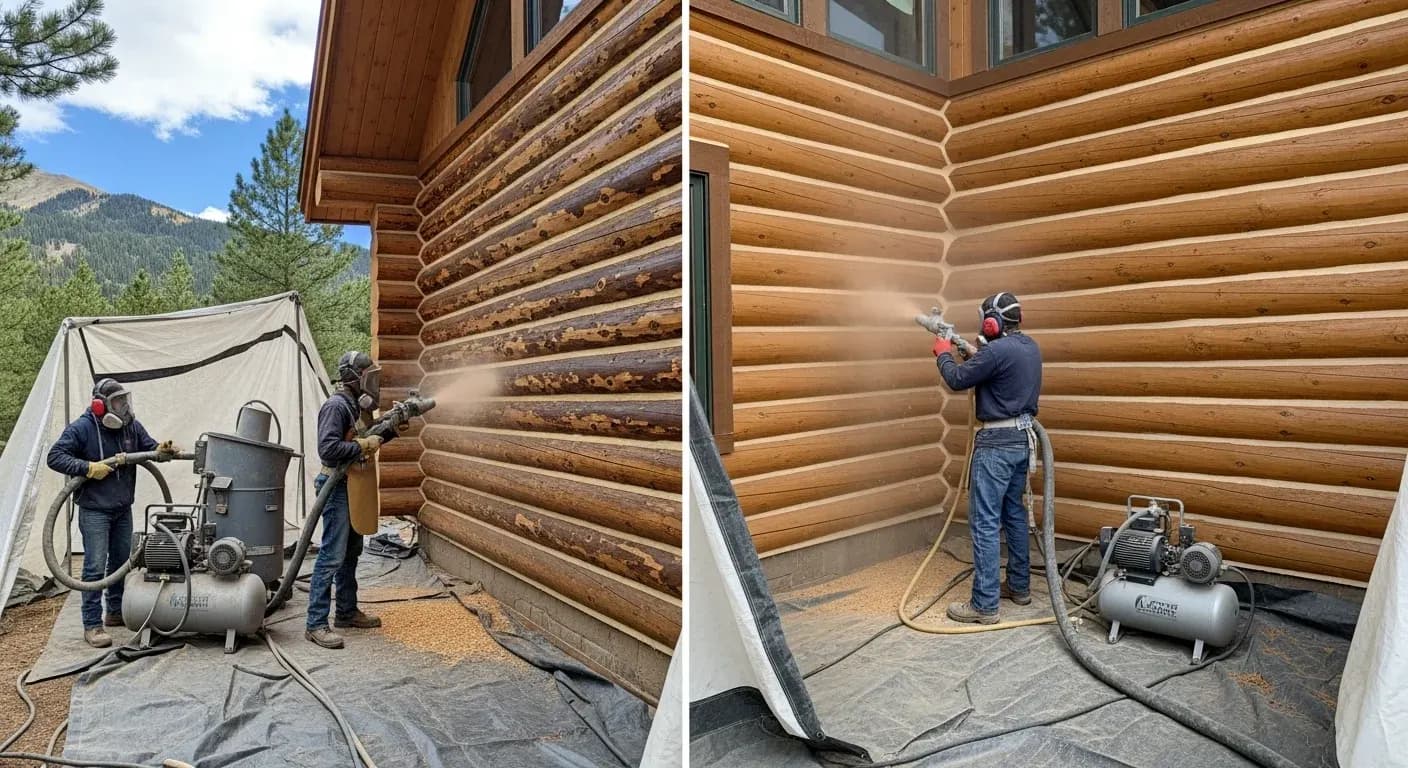
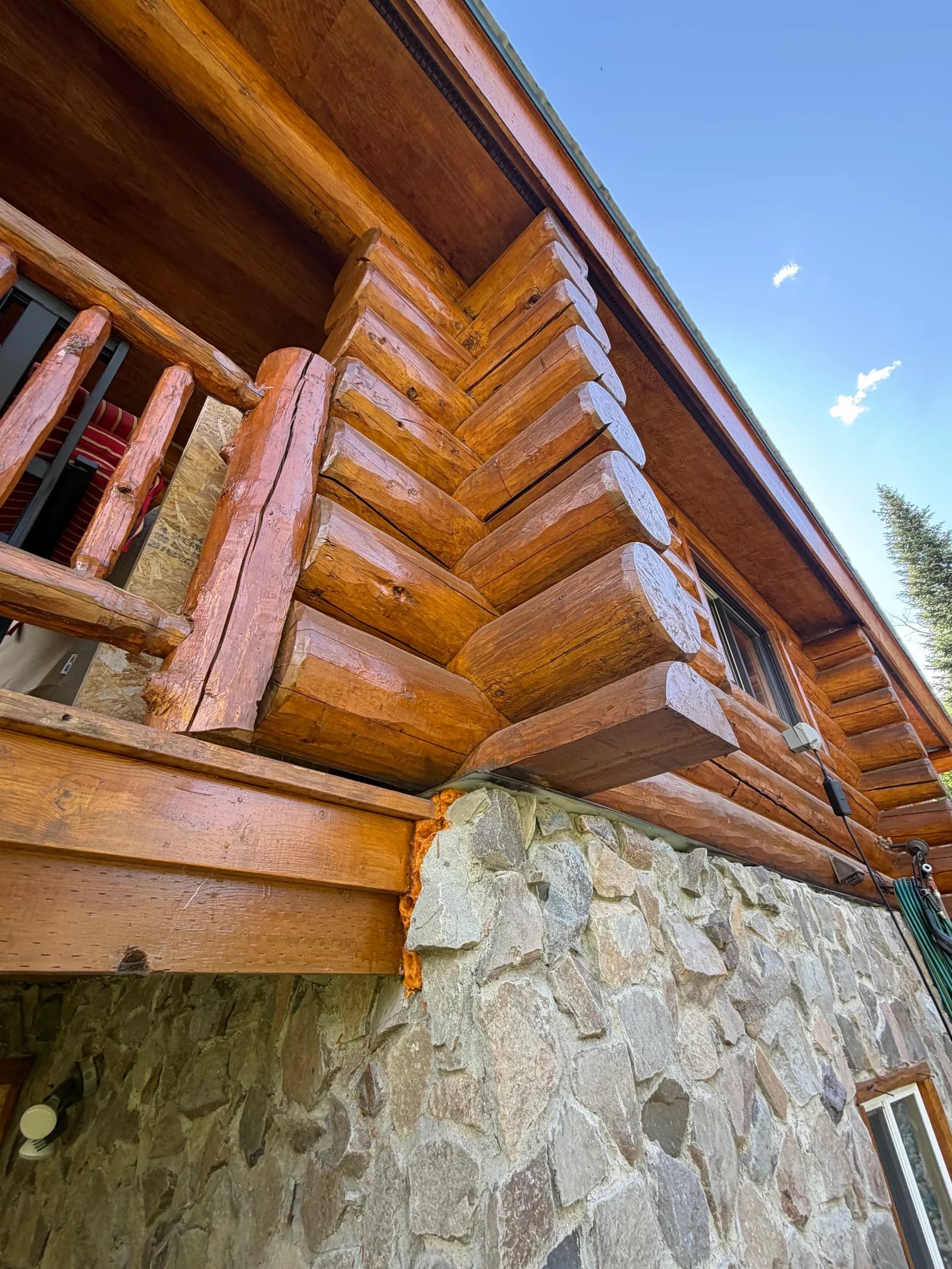
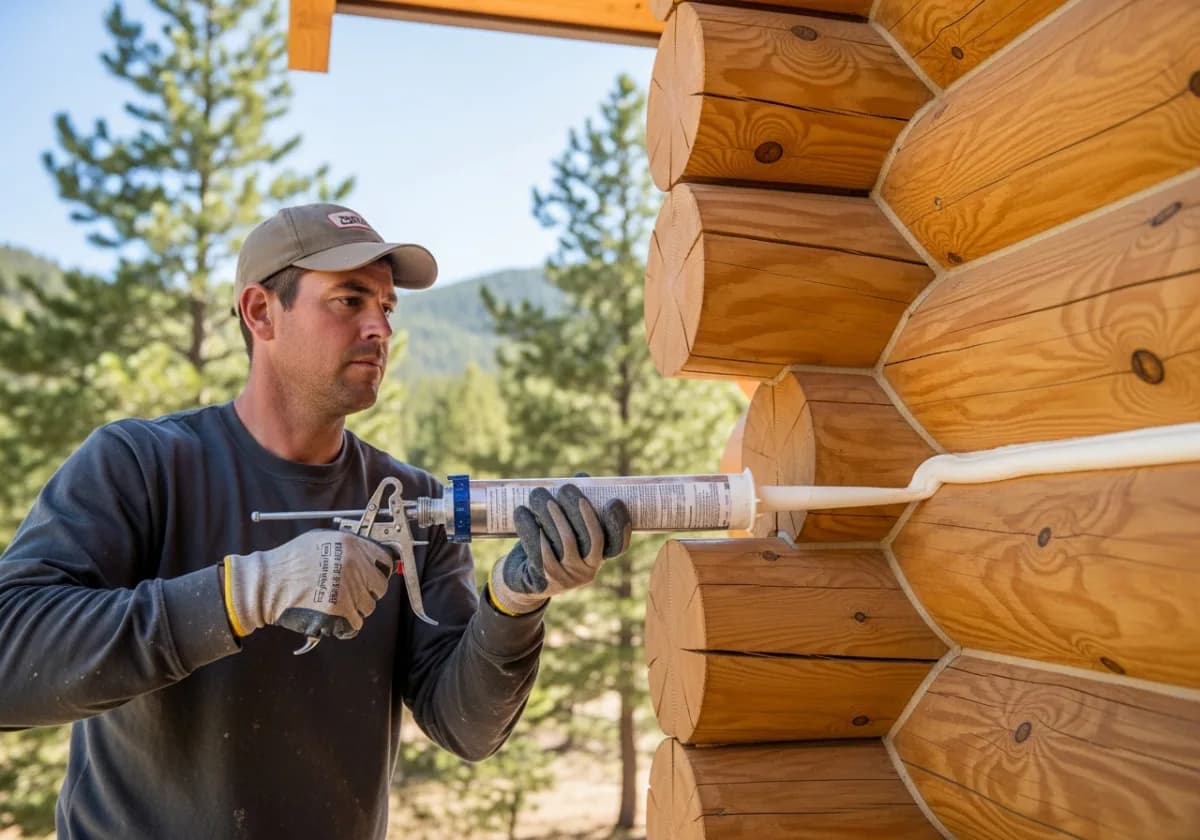
Illustrative photos of Log Home Finishing staining, chinking, and restoration work in Colorado.
Indian Hills Log Home Inspection — FAQ
What does it mean that my Indian Hills log home was “never chinked”?
It means the gaps between the log courses were left open, wood-to-wood, with no sealant ever installed. Chinking is the flexible seal that makes a log wall airtight and watertight; without it, air, moisture, and insects move freely through every joint. On this home that was the root cause of the energy loss and a confirmed pest-entry point. The fix is to install closed-cell backer rod and Perma-Chink in every horizontal joint, inside and out.
Why does the whole home need media blasting instead of just a recoat?
Two reasons came together here. The old interior and exterior finishes were oxidized and uneven, with residue bound into the wood that sanding alone can’t lift, and the joints needed to be opened and prepped to bare wood for proper backer rod and chinking. Media blasting returns every surface to clean, sound, raw wood — the only substrate a premium stain and chinking system will bond to long-term. It does this without the gouging risk of aggressive sanding.
Should I get a log home inspection before buying in Indian Hills?
Absolutely — this very example was a pre-purchase inspection. A specialized log home inspection finds the things a standard inspector misses: unsealed joints, finish failure, log rot in trusses and lower courses, and pest entry. The written scope and cost estimate let you budget accurately or negotiate the price before you close, instead of discovering a six-figure restoration after you own it.
How long will the restoration protect the home?
Done correctly — blast to bare wood, structural repairs, Sashco Capture/Cascade stain, and Perma-Chink in every joint — a full reset like this protects the building envelope for roughly 7–10+ years before the exterior is due for a maintenance recoat. Keeping a simple schedule after that (a wash-and-recoat every 3–5 years and an annual joint check) keeps the home in maintenance range permanently.
Example Inspections in Other Colorado Towns
Real, anonymized inspections from log homes across the state.
An incompatible finish peeling off a home and garage
View inspectionHigh-altitude UV, split railings, and open mortar
View inspectionA large-diameter full-scribe cabin in Buena Vista
View inspectionA solid log home with a failed deck system
View inspectionA maintained full-log home in Cimarron
View inspectionA VERY GOOD, well-maintained pre-purchase home
View inspectionFailed interior chinking and an overdue exterior
View inspectionA multi-structure log property in Evergreen
View inspectionA sound home ready for a full clean and finish
View inspectionMissing chinking and open log checks
View inspectionSun-worn siding and decks, caught at maintenance
View inspectionSound structure, end-of-life finishes inside and out
View inspectionAn infested, weathered handcrafted log home
View inspectionA historic ten-building log ranch
View inspectionA two-story log home in Pine
View inspectionA large D-log home in Steamboat Springs
View inspectionA historic town hall in Tin Cup
View inspectionBuying or Restoring a Log Home in Indian Hills?
A pre-purchase inspection tells you whether the joints are sealed, whether the finish is recoat-ready or gone, and exactly what a full restoration would cost — before you close.
Thomas Elliott · Serving log home communities across Colorado
Indian Hills Area & Related Services
Start with the main log home inspection page to see our full process, or explore log home restoration and maintenance for the work that follows.