
Log Home Inspection in Hartsel, Colorado
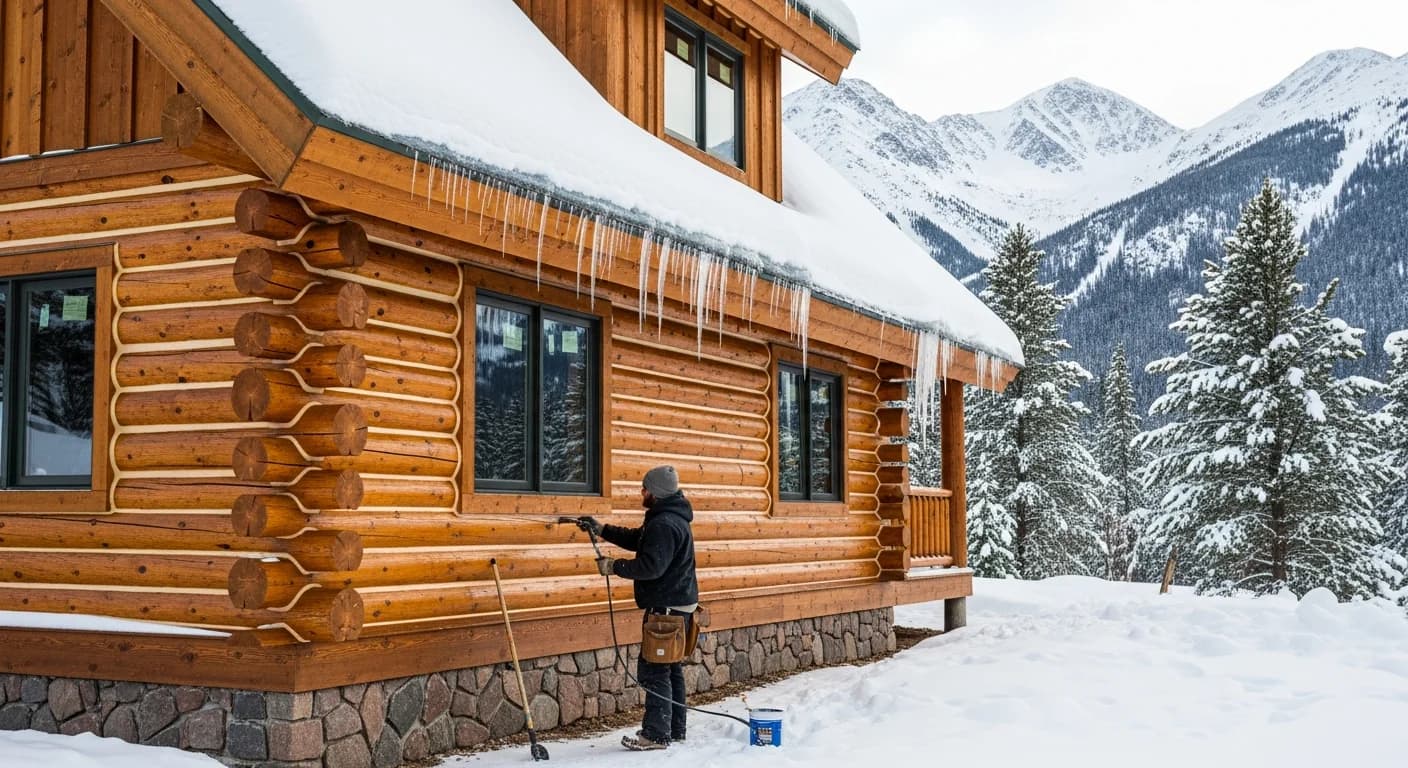
A real Hartsel inspection, anonymized — sun- and weather-worn siding, decks, and railings caught at the maintenance stage, when a wash and re-stain still does the job.
Wood Homes in Hartsel & the Heart of South Park
Hartsel calls itself the “Heart of Colorado,” sitting almost dead center in the wide, treeless expanse of South Park at about 8,900 feet. There is very little to break the elements here: the sun beats down through thin air all day, and the wind crosses the basin almost unimpeded. For a wood-sided home or cabin, that means relentless UV on every elevation and wind-driven moisture that finds any unsealed surface.
The upside is that wood caught in time on the open South Park plains is an easy, affordable fix. The Hartsel home below had real sun and moisture wear on its siding, decks, and railings — but it was still at the maintenance stage, where a proper wash, brighten, and re-stain restores protection long before the wood checks, rots, or needs blasting back to bare.
Sun-worn siding and decks, caught at maintenance
This Hartsel home showed the wear you would expect from minimal maintenance in one of the most exposed spots in Colorado: the wood siding, decking, and railings were in fair-to-poor condition, with UV fading, surface erosion, water staining, and mildew across several elevations. The north entry wall and the deck surfaces were the hardest hit, but none of it had yet progressed to structural damage or bare, checked wood.
Because it was caught at the maintenance stage, the recommendation was a straightforward three-step refresh — pressure wash, brighten, and re-stain with a quality penetrating oil — rather than media blasting and a full restoration. This is the example that shows why timing is everything: the same home, left a few more seasons, becomes a far bigger and more expensive project.
Findings at a Glance
| Area | Current condition | Recommended action |
|---|---|---|
| Wood siding | UV fading, surface erosion, finish breakdown | Wash, brighten, then 2 coats penetrating stain |
| North entry wall | Severe weathering, water stains, mildew | Clean splashback zone; brighten and re-stain |
| Decks | Graying, splintering, dull traffic paths | Wash and re-stain horizontal surfaces |
| Railings | Inconsistent color, some warping | Clean and re-stain to even out color |
| Shaded/moist areas | Mildew and algae forming | Cleaner + oxalic brightener to kill growth |
Documented Conditions
Wood siding — UV fade & weathering
The siding showed uneven weathering and fading, most pronounced near the gables and at the base of the walls where the finish had broken down. On lap siding, the horizontal grooves trap dirt and moisture, which speeds the breakdown. The fix at this stage is a thorough cleaning followed by two coats of a penetrating finish — no stripping required, because the wood underneath is still sound.
North entry wall — splashback & mildew
The north entry wall was the most weathered elevation, with water staining and mildew on the lower portion driven by splashback and a loss of the original sealant. Cleaning the splashback zone, killing the mildew with a brightener, and re-staining restores protection — and keeping that zone sealed is what prevents it from being the first place rot starts.
Decks & railings — graying & warping
The deck boards had grayed and begun to splinter in the high-traffic paths, and the railings showed inconsistent color with some warping. Horizontal deck surfaces always wear faster than walls because they take foot traffic plus standing sun and snow. Washing and re-staining now renews the finish before the boards check and degrade to the point of replacement.
Mildew & algae — shaded areas
Organic growth — mildew and algae — was forming in the shaded, moisture-prone areas. A finish applied over that growth will not bond and will discolor, so the cleaning and oxalic-acid brightening steps are not cosmetic: they remove the growth, neutralize the wood, and open the pores so the new penetrating stain can soak in and protect.
Example Scope & Investment
The anonymized scope below mirrors the recommendation for this Hartsel home — a simple, sequenced refresh that protects the wood before it ever needs restoration.
- 1 · WashSoft/pressure wash all surfaces with a log-safe wood cleaner; dwell, then rinse at moderate pressureIncluded
- 2 · BrightenApply an oxalic-acid brightener to neutralize pH, restore color, kill mildew/algae, and open the wood poresIncluded
- 3 · StainAfter 24–48 hours of drying, apply 2 coats of a penetrating oil stain (Sashco Transformation Log & Timber), back-brushed to work it into the woodIncluded
This anonymized example reflects a real Log Home Finishing assessment in Hartsel; the homeowner received pricing in a written estimate. Every home is different — your inspection includes a written scope and pricing matched to your home’s actual condition.
Products & methods used
Recommended Maintenance Schedule
Hartsel’s full-sun, high-wind exposure is about as harsh as Colorado gets, so a wood home here benefits from a slightly tighter recoat rhythm than a sheltered mountain property.
| Element | Interval | What it involves |
|---|---|---|
| Wood siding | 3–5 years | Wash and recoat with a penetrating stain before the finish erodes to bare wood |
| Decks | 1–2 years | Re-stain horizontal surfaces that take the most sun, snow, and traffic |
| North/splashback zones | Inspect yearly | Keep the most weathered wall clean and sealed to prevent rot |
Why Catching It Early Is the Whole Point
There is a world of difference in cost and effort between a wood home that is fading and one that has weathered to bare, checked wood. This Hartsel home was firmly in the first category: worn and tired, but with sound wood underneath. That is why the recommendation was a wash, brighten, and re-stain — measured in coats, not in blasting, sanding, and board replacement.
The brightening step is the part homeowners often skip, and it matters. A pressure wash alone leaves the wood pores closed and any mildew partly intact; an oxalic-acid brightener neutralizes the surface, removes the organic growth, and reopens the grain so a penetrating oil can actually soak in and bond. Done right at this stage, the finish protects for years — and keeps Hartsel’s relentless sun from ever turning a maintenance job into a restoration.
- Faded-but-sound wood is a wash-and-stain job, not a strip-and-restore one.
- Brightening removes mildew and reopens the pores so the stain can penetrate.
- A penetrating oil soaks into the wood instead of forming a film that peels.
- Decks and splashback zones wear fastest and set the maintenance interval.
What the Work Looks Like
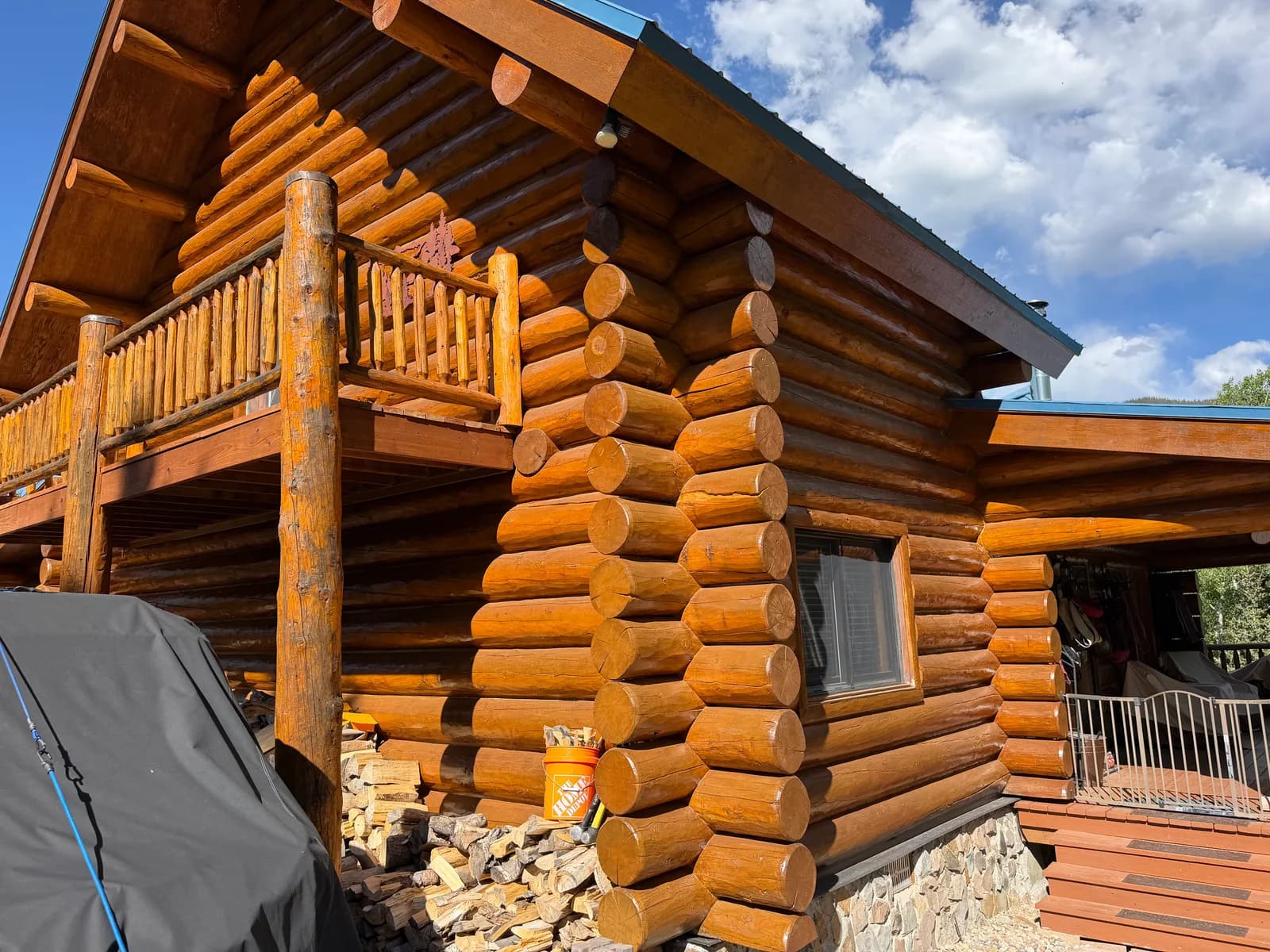
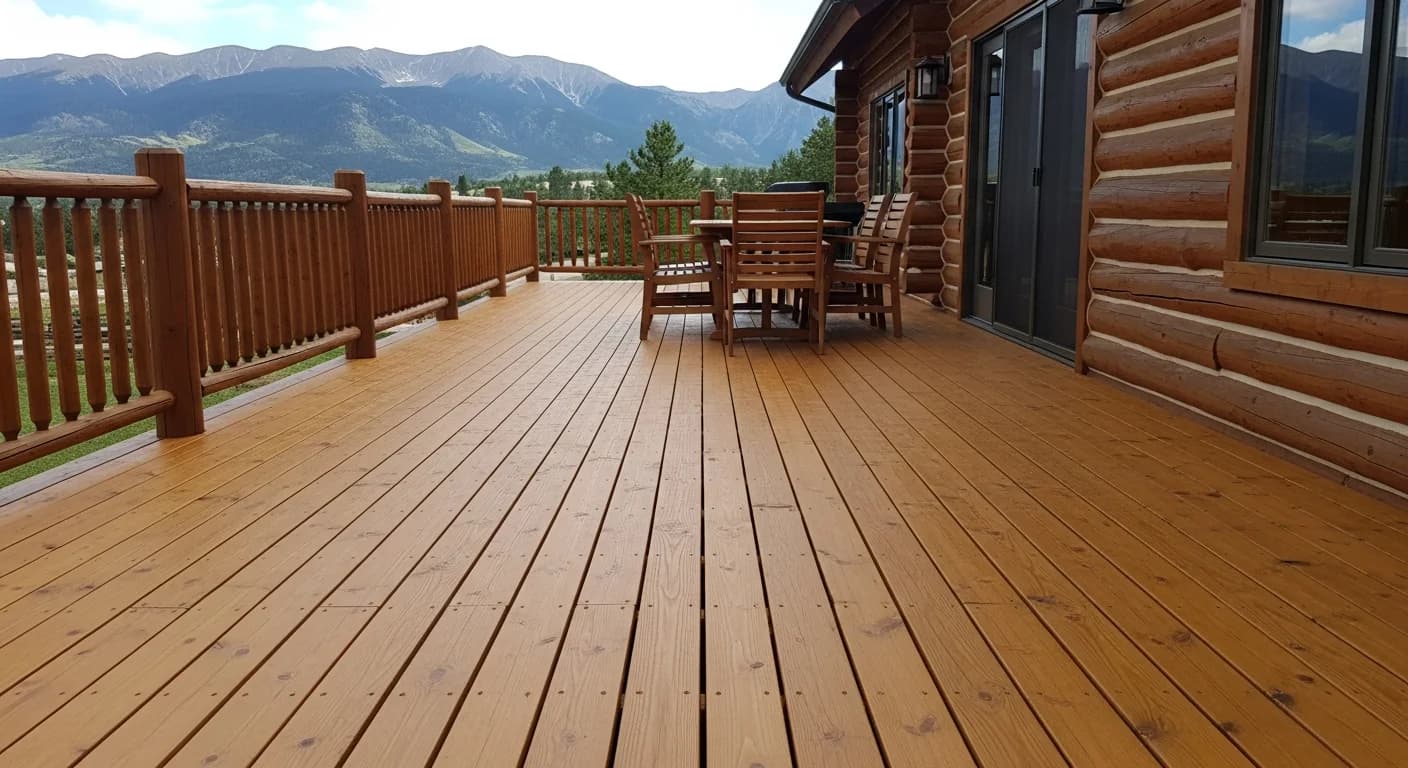
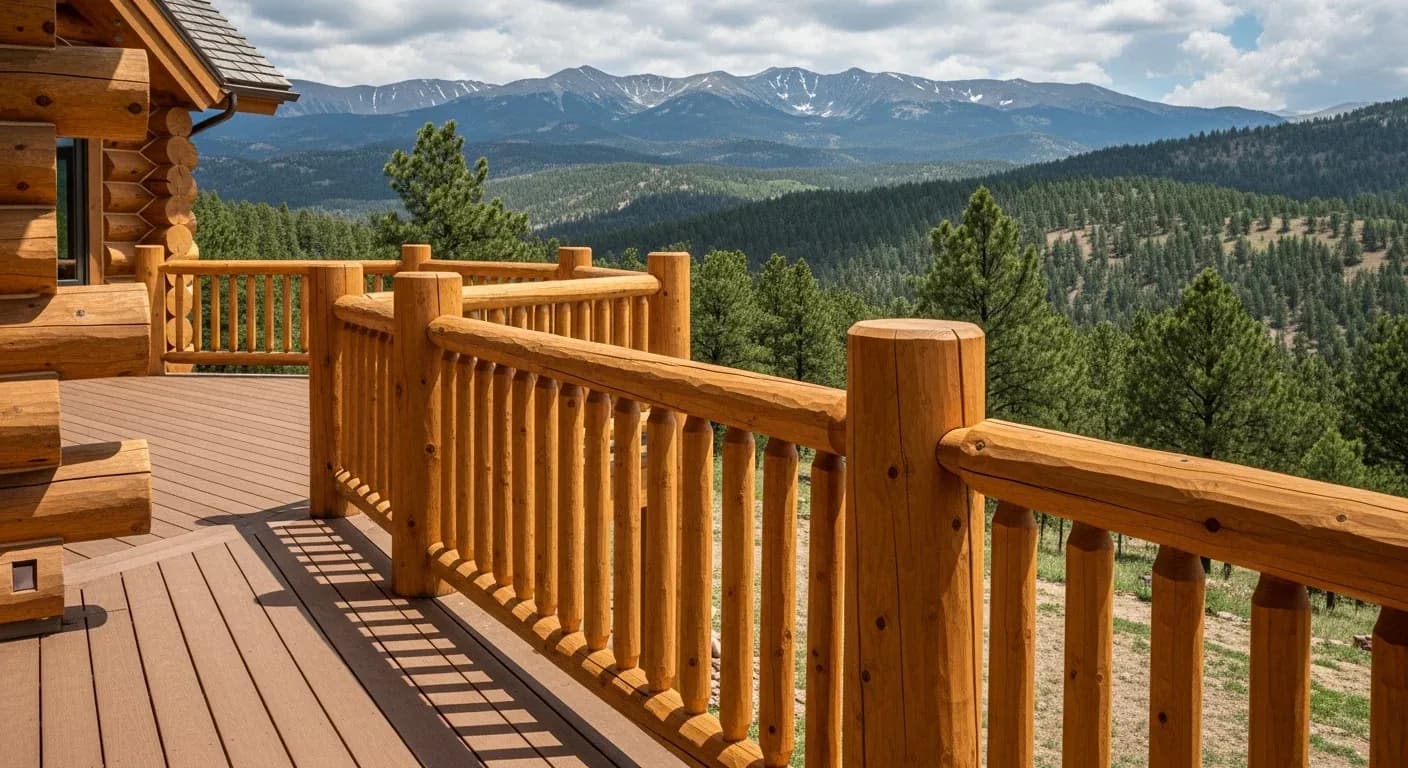
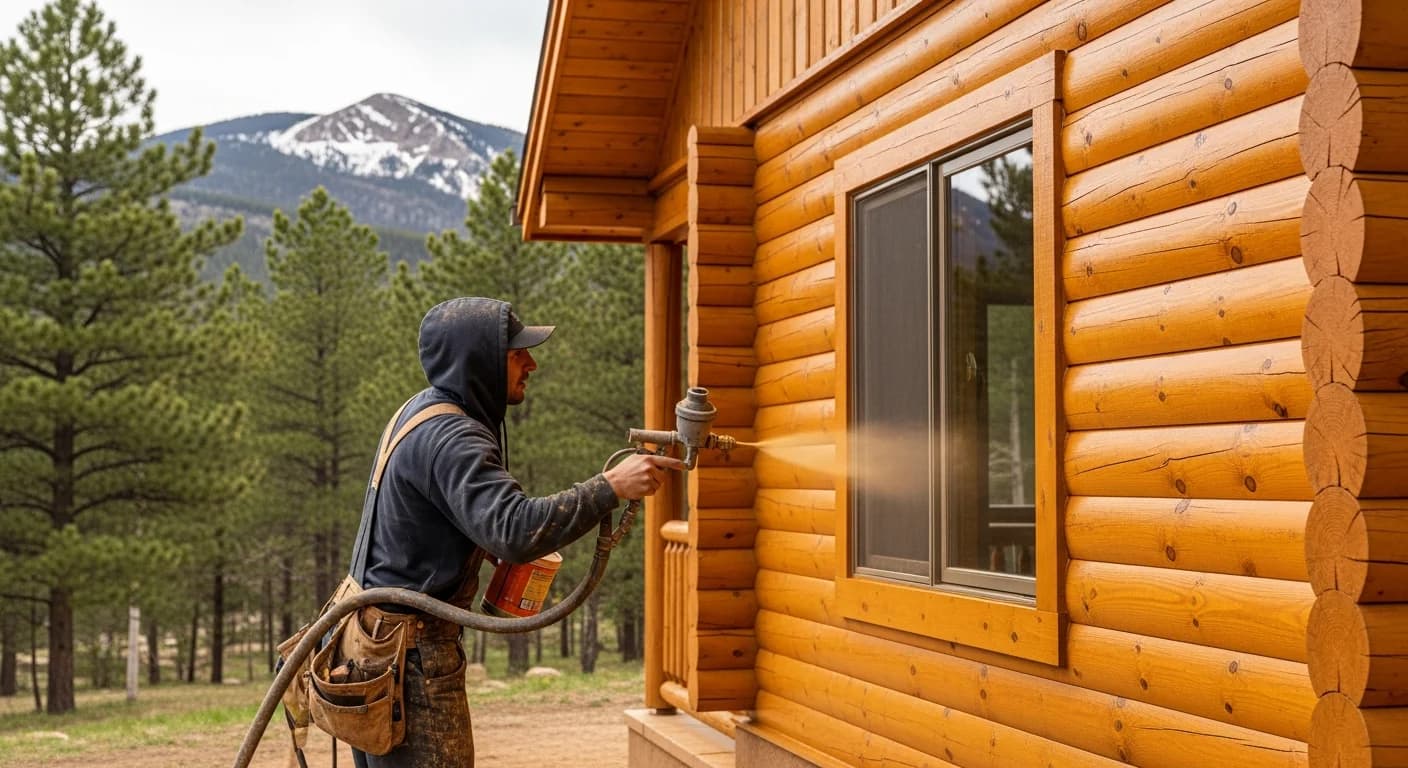
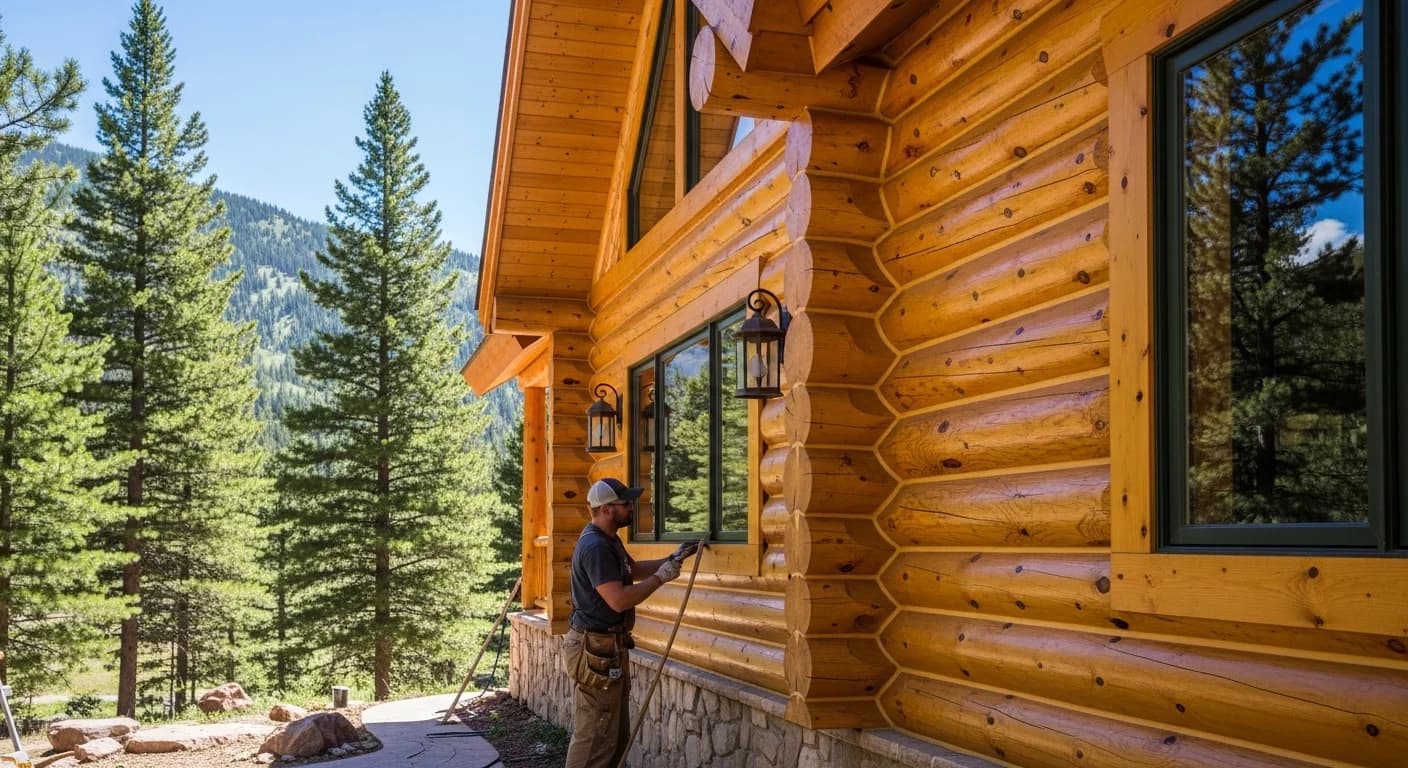
Illustrative photos of Log Home Finishing staining, chinking, and restoration work in Colorado.
Hartsel Log Home Inspection — FAQ
Does my Hartsel home need media blasting, or just a wash and stain?
It depends on how far the wood has weathered. This Hartsel home was faded, mildewed, and tired but still structurally sound, so the right call was a wash, brighten, and re-stain — not blasting. Media blasting is for finishes that have failed all the way to bare, checked wood. Catching the home at the maintenance stage is exactly what keeps it out of that more expensive category.
Why brighten the wood after pressure washing?
A pressure wash removes loose dirt but leaves the wood’s pores closed and any mildew only partly killed. An oxalic-acid brightener neutralizes the surface pH, removes mildew and algae, restores the wood’s natural color, and reopens the grain so a penetrating stain can actually soak in. Skipping it leads to blotchy color and a finish that sits on top and fails early — especially in Hartsel’s harsh exposure.
Why does Hartsel wear out a wood finish so fast?
Hartsel sits in the open center of South Park at about 8,900 feet with almost no tree cover, so homes take full sun all day and constant wind across the basin. That combination of intense high-altitude UV and wind-driven moisture breaks finishes down faster than in sheltered mountain settings. It is why a wood home here benefits from a slightly tighter recoat schedule — every 3 to 5 years on the siding.
What kind of stain do you recommend for South Park exposure?
For an exposed home like this one we recommend a quality penetrating oil stain — on this project, two coats of Sashco Transformation Log & Timber. Penetrating oils soak into the wood and protect from within rather than forming a surface film that can peel and trap moisture. That makes future maintenance a simple clean-and-recoat instead of a strip, which is ideal for the harsh, full-sun conditions in Hartsel.
Example Inspections in Other Colorado Towns
Real, anonymized inspections from log homes across the state.
An incompatible finish peeling off a home and garage
View inspectionHigh-altitude UV, split railings, and open mortar
View inspectionA large-diameter full-scribe cabin in Buena Vista
View inspectionA solid log home with a failed deck system
View inspectionA maintained full-log home in Cimarron
View inspectionA VERY GOOD, well-maintained pre-purchase home
View inspectionFailed interior chinking and an overdue exterior
View inspectionA multi-structure log property in Evergreen
View inspectionA sound home ready for a full clean and finish
View inspectionMissing chinking and open log checks
View inspectionA full-scribe home that was never chinked
View inspectionSound structure, end-of-life finishes inside and out
View inspectionAn infested, weathered handcrafted log home
View inspectionA historic ten-building log ranch
View inspectionA two-story log home in Pine
View inspectionA large D-log home in Steamboat Springs
View inspectionA historic town hall in Tin Cup
View inspectionIs Your Hartsel Home Still at the Easy Stage?
An inspection tells you whether you can still wash and re-stain — or whether the wood has weathered far enough to need more. In Hartsel, timing saves real money.
Thomas Elliott · Serving log home communities across Colorado
Hartsel Area & Related Services
Start with the main log home inspection page to see our full process, or explore log home restoration and maintenance for the work that follows.