
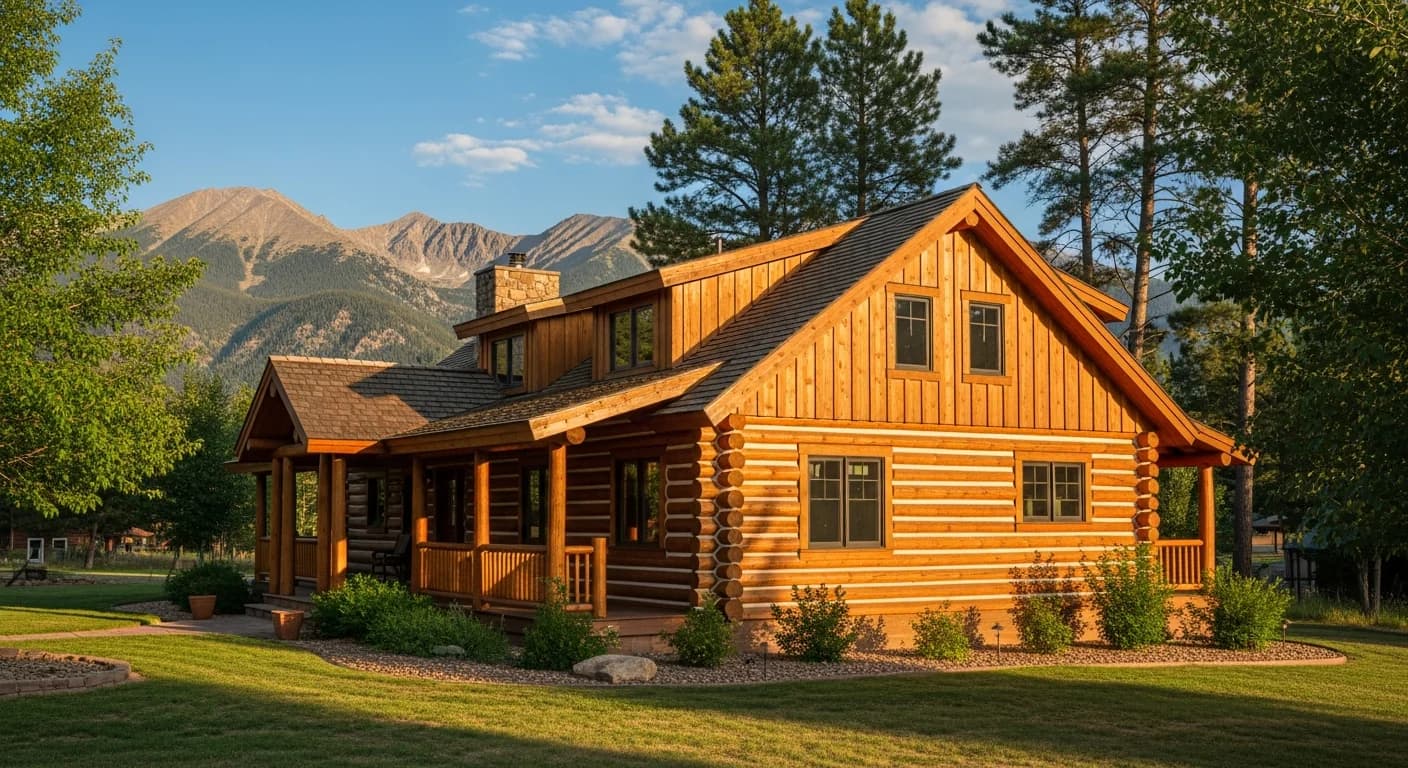
Log Home Inspection in Mosca, Colorado
A real Mosca inspection, anonymized — a historic San Luis Valley guest ranch with ten log structures, restored in a phased plan that put the worst buildings first.
Log Buildings in Mosca & the San Luis Valley
Mosca sits on the floor of the San Luis Valley at about 7,500 feet, in the high desert near the Great Sand Dunes where Alamosa County stretches flat and wide toward the Sangre de Cristo range. The climate here is extreme in a different way than the mountains: it is one of the driest, sunniest, most temperature-swung places in Colorado, with blowing sand, brutal UV, and bone-dry air that checks and bleaches exposed wood relentlessly.
That environment is unforgiving to historic log structures, which often carry decades of patchwork repairs and original mortar-style chinking that has long since stopped flexing. The example below is a historic guest ranch near Mosca with ten log buildings — a large, phased restoration that shows how a multi-structure property is triaged: stabilize and restore the worst buildings first, then work through the rest while preserving the historic character.
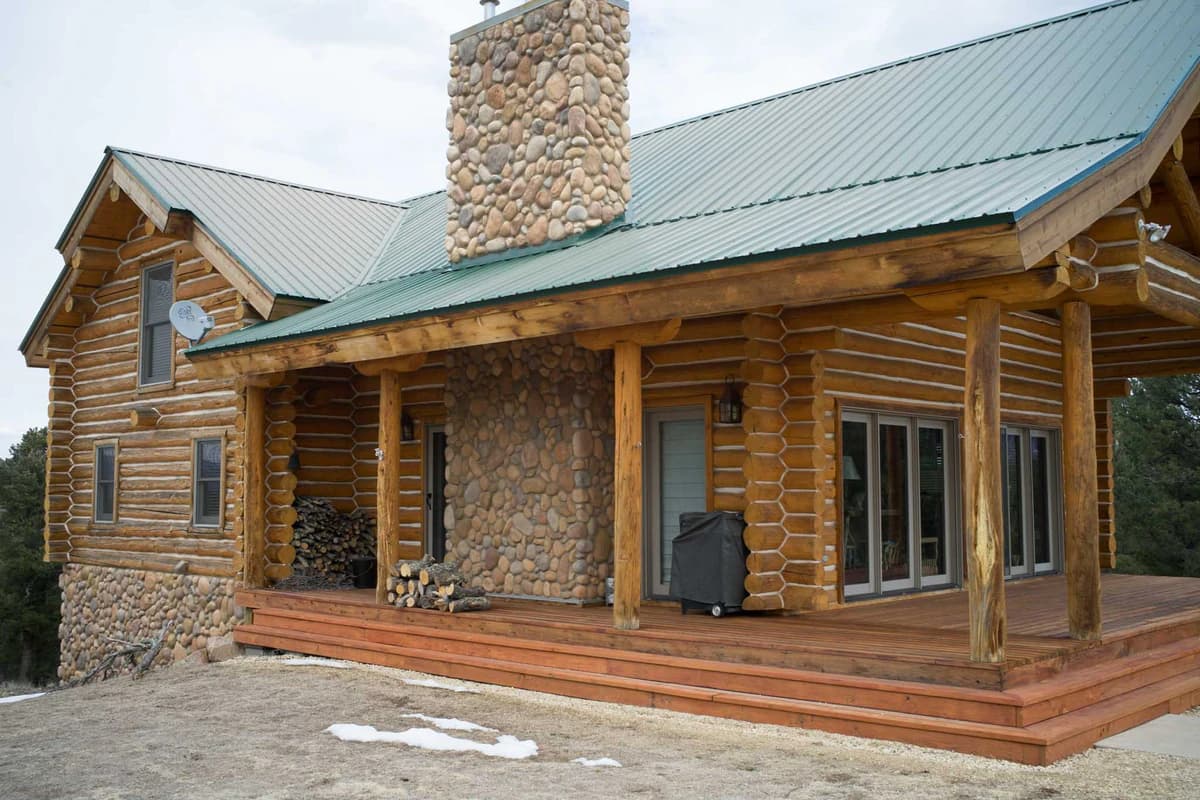
A historic ten-building log ranch
This was a historic working guest ranch near Mosca with ten log structures, ranging from a stagecoach house and a large inn to bunkhouses, an office, an education center, and service buildings. Across the property the original finishes were failing under the San Luis Valley sun, the old mortar-style chinking had lost its flexibility and watertightness, and several buildings carried localized log rot and inconsistent past repairs.
On a property this size the plan is triage, not one big push. The two worst structures — the stagecoach house and the inn — were prioritized, then the remaining buildings sequenced behind them. Throughout, the work was specified to preserve the historic two-tone appearance and structural continuity, replacing the failed mortar chinking with a modern elastomeric chinking that actually moves with the logs.
Findings at a Glance
| Area | Current condition | Recommended action |
|---|---|---|
| Stagecoach house (priority) | Severe UV/hail finish failure | Blast to bare wood; reinforce chinking; keep two-tone |
| The inn (priority) | Extensive finish failure + log rot | Select log repairs/replacement, then refinish & re-chink |
| Mortar chinking (multiple) | No longer flexible or watertight | Remove and replace with elastomeric chinking |
| Lower / foundation logs | Rot in boiler room & guest bunkhouse | Replace rot-damaged logs to stop moisture spread |
| Historic character | Decades of inconsistent patch repairs | Sequence work to preserve the two-tone appearance |
Documented Conditions
Stagecoach house — severe finish failure
The stagecoach house showed severe UV and hail damage, with finishes no longer protecting the wood and well past the point of a recoat. It was prioritized for media blasting back to bare wood and a rebuilt finish, with the chinking reinforced — all specified to maintain the building’s historic two-tone appearance rather than erase it.
The inn — finish failure & log rot
The inn carried extensive surface finish failure together with localized log rot and a history of inconsistent patch repairs. It needed select log repairs and replacements before any refinishing, then a full strip, refinish, and re-chink. As one of the two highest-priority structures, stabilizing it early prevented the rot from spreading through more of the building.
Mortar chinking — failed across buildings
Several structures, including the office and laundry building, still had original mortar-style chinking that had hardened and cracked, losing both flexibility and its watertight seal. Rigid mortar chinking cannot move with logs as they expand and contract, so it inevitably cracks and lets water in. The specification was to remove it and replace it with modern elastomeric chinking that flexes with the wood.
Lower & foundation logs — rot
The boiler room and the guest bunkhouse showed rot in their lower and foundation-level logs, where ground contact and splashback keep wood wet the longest. Those rot-damaged logs were specified for replacement to stop moisture from spreading upward into otherwise sound structure — the kind of repair that is far cheaper than letting decay climb a wall.
Historic character — preserve throughout
Across all ten buildings the work was specified to preserve the historic two-tone appearance and structural continuity of the ranch. On a historic property, restoration is as much about matching color, profile, and detailing as it is about protection — so the sequencing and product choices were made to keep the buildings reading as the historic ensemble they are.
Example Scope & Investment
The anonymized scope below mirrors the work order for this Mosca ranch, organized by building. The two priority structures were tackled first, with the remaining buildings sequenced behind them.
- Stagecoach houseMedia blast to bare wood, rebuild finish, reinforce chinking — preserve two-tone$55,000
- The innSelect log repairs/replacement, full refinish, and re-chink$116,500
- Guest bunkhouseRefinish; replace rot-damaged lower logs; re-chink$70,725
- Education centerBlast, refinish, and re-chink$48,250
- Boiler roomReplace rot-damaged foundation logs; refinish and re-chink$33,000
- Staff bunkhouseBlast, refinish, and re-chink$30,500
- OfficeRefinish; remove mortar chinking and replace with elastomeric$26,750
- Laundry roomRefinish; remove mortar chinking and replace with elastomeric$21,300
- Locker roomBlast, refinish, and re-chink$20,300
These figures come from a real Log Home Finishing inspection of a historic ranch near Mosca, shown here as an anonymized example. Every property is different — your inspection includes a written scope and pricing matched to each structure’s actual condition.
Products & methods used
Why a Multi-Building Property Is Restored in Phases
When a property has ten log structures in varying condition, trying to do everything at once is neither practical nor wise. The right approach is triage: identify the buildings whose finishes and structure are failing fastest — here, the stagecoach house and the inn — and restore those first, before deferred damage like log rot spreads and turns a repair into a replacement. The remaining buildings are then sequenced behind them on a clear priority order.
The chinking decision drives a lot of this work. Original mortar-style chinking is rigid; as logs move with the seasons it cracks and lets water in, which is what feeds the rot found in the lower logs. Replacing it with a modern elastomeric chinking that flexes with the wood — while media blasting failed finishes back to bare wood and preserving the historic two-tone look — is what turns a deteriorating historic ranch back into a protected, maintainable one.
- Triage first: the worst-failing buildings get stabilized and restored before the rest.
- Rigid mortar chinking cracks and leaks — modern elastomeric chinking flexes with the logs.
- Replacing rotted lower logs early stops decay from climbing into sound structure.
- Color, profile, and detailing are matched to preserve the historic two-tone appearance.
What the Work Looks Like
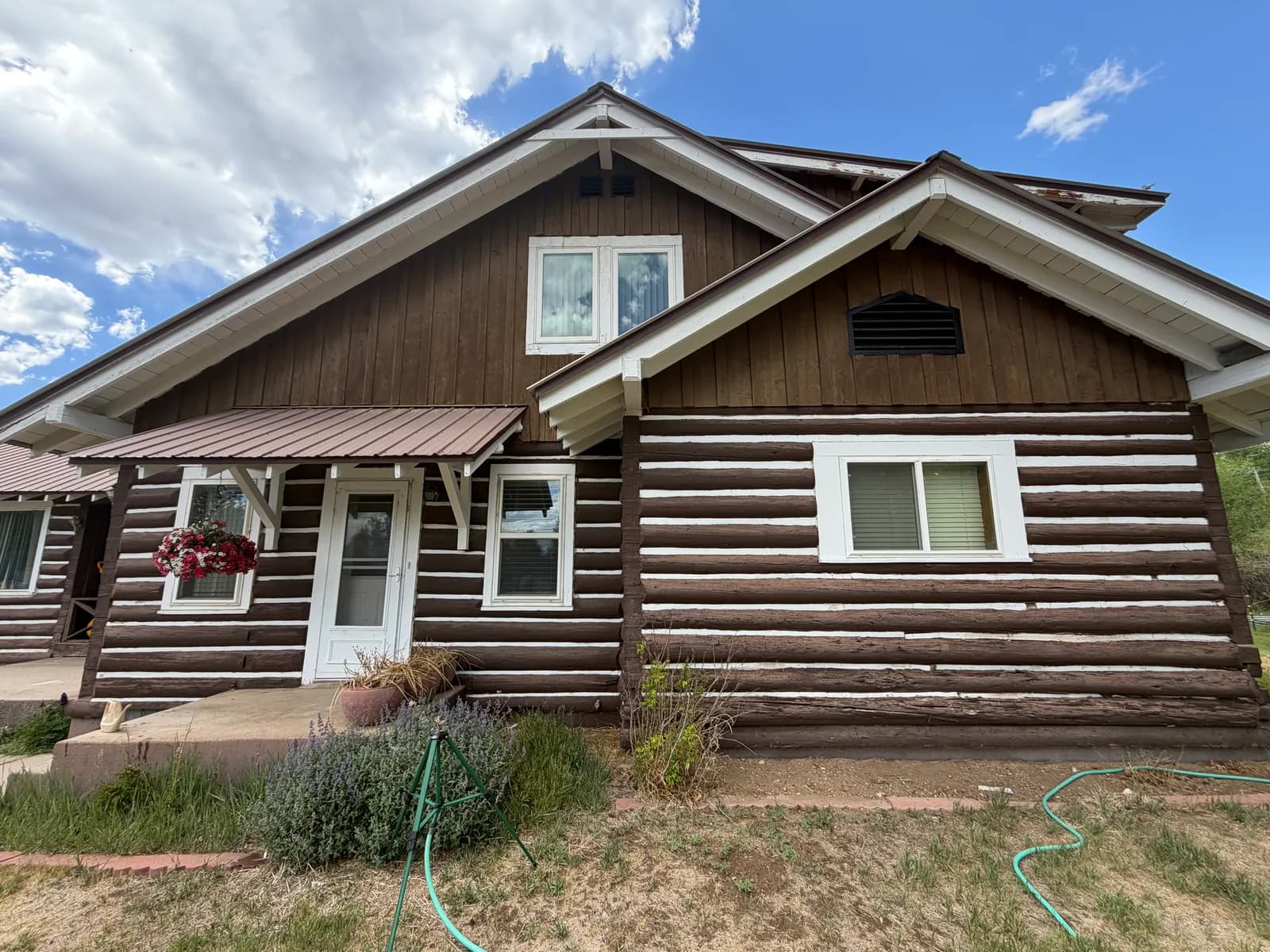
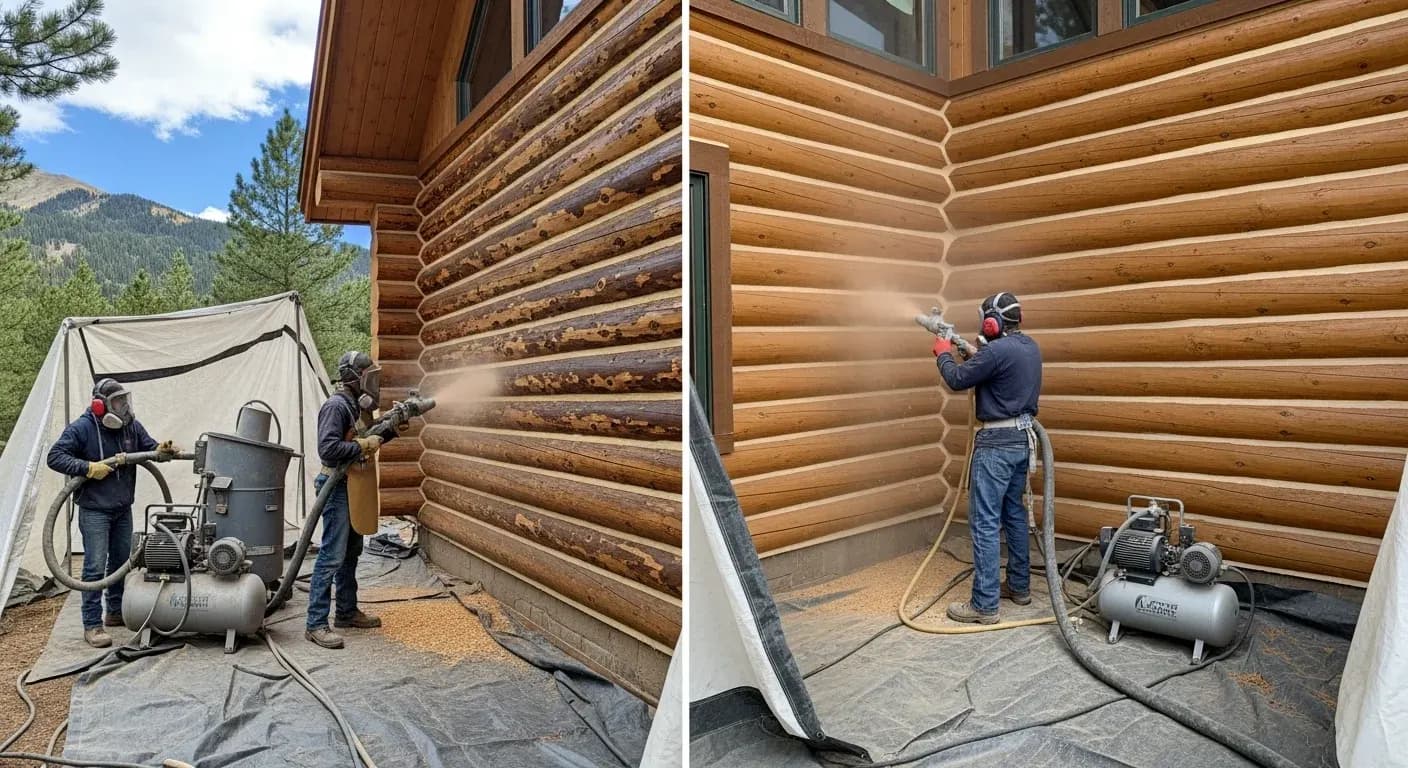
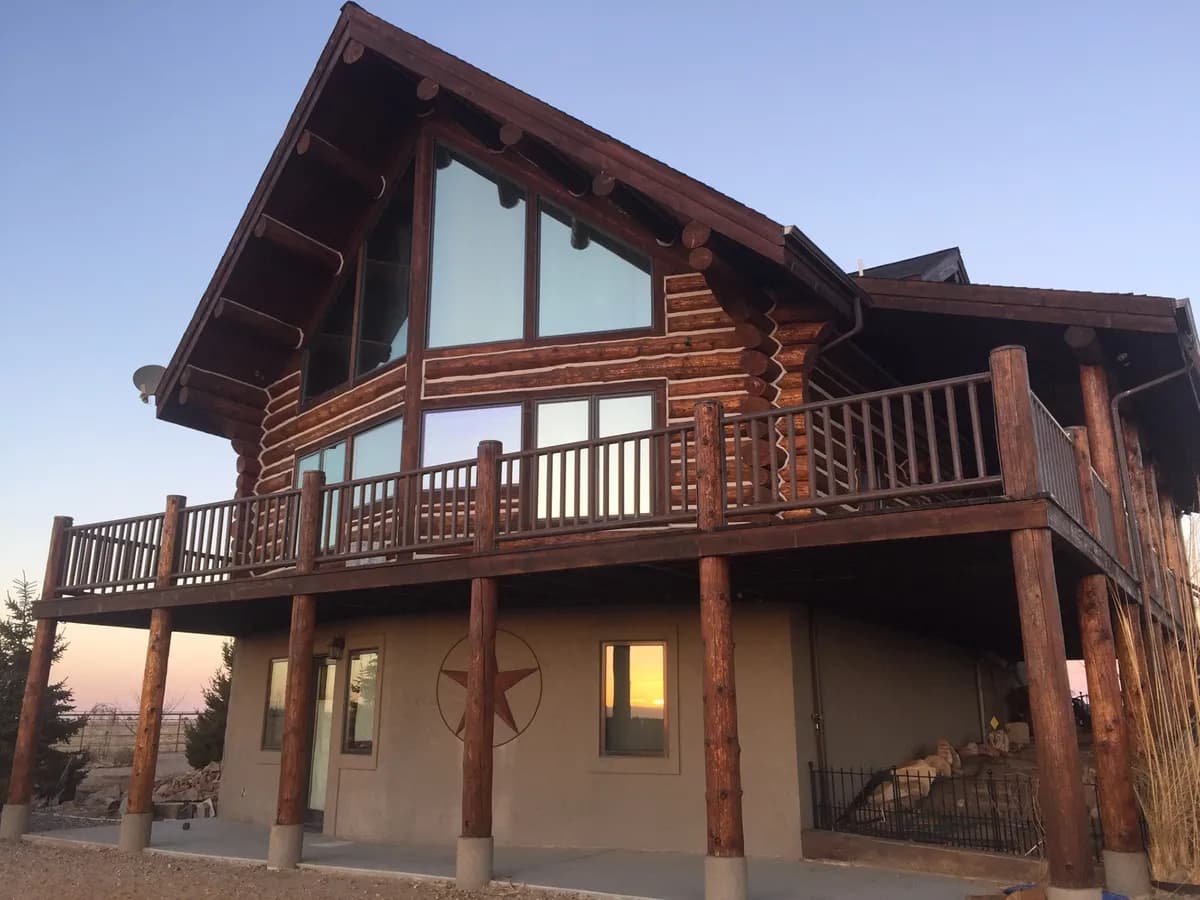

Illustrative photos of Log Home Finishing staining, chinking, and restoration work in Colorado.
Mosca Log Home Inspection — FAQ
Do you restore historic and multi-building log properties?
Yes. This Mosca example was a historic guest ranch with ten log structures — a stagecoach house, an inn, bunkhouses, an office, an education center, and service buildings. With 20+ years of experience and full insurance, we inspect and restore large multi-building properties, sequencing the work by priority so the worst-failing structures are stabilized first while the rest are scheduled behind them.
Why replace mortar chinking with elastomeric chinking?
Original mortar-style chinking is rigid, and logs are not — they expand and contract with temperature and moisture. Over time the rigid mortar cracks and pulls away, letting water into the joints and feeding rot in the logs below. Modern elastomeric chinking flexes with the wood, staying bonded and watertight through the seasons. On historic buildings it can be color-matched so the change protects the structure without altering its appearance.
How do you protect a building’s historic character during restoration?
By treating appearance as part of the specification, not an afterthought. On this ranch the work was specified to preserve the historic two-tone appearance and structural continuity — matching color, log profile, and detailing, and choosing chinking and finishes that read correctly for the period. The goal is a property that is fully protected and maintainable while still looking like the historic ensemble it is.
How is the San Luis Valley climate hard on log buildings?
Mosca sits in high desert at about 7,500 feet — one of the driest, sunniest, most temperature-swung parts of Colorado, with blowing sand on top of it. That combination bleaches and checks exposed wood quickly, dries out rigid chinking until it cracks, and drives moisture into any open joint during storms. Historic structures there need durable, flexible seals and a finish system built to handle relentless UV.
Example Inspections in Other Colorado Towns
Real, anonymized inspections from log homes across the state.
An incompatible finish peeling off a home and garage
View inspectionHigh-altitude UV, split railings, and open mortar
View inspectionA large-diameter full-scribe cabin in Buena Vista
View inspectionA solid log home with a failed deck system
View inspectionA maintained full-log home in Cimarron
View inspectionA VERY GOOD, well-maintained pre-purchase home
View inspectionFailed interior chinking and an overdue exterior
View inspectionA multi-structure log property in Evergreen
View inspectionA sound home ready for a full clean and finish
View inspectionMissing chinking and open log checks
View inspectionSun-worn siding and decks, caught at maintenance
View inspectionA full-scribe home that was never chinked
View inspectionSound structure, end-of-life finishes inside and out
View inspectionAn infested, weathered handcrafted log home
View inspectionA two-story log home in Pine
View inspectionA large D-log home in Steamboat Springs
View inspectionA historic town hall in Tin Cup
View inspectionRestoring a Historic Log Property Near Mosca?
An inspection maps every structure on the property, prioritizes the work, and plans the chinking and log repairs so the restoration protects both the buildings and their historic character.
Thomas Elliott · Serving log home communities across Colorado
Mosca Area & Related Services
Start with the main log home inspection page to see our full process, or explore log home restoration and maintenance for the work that follows.