
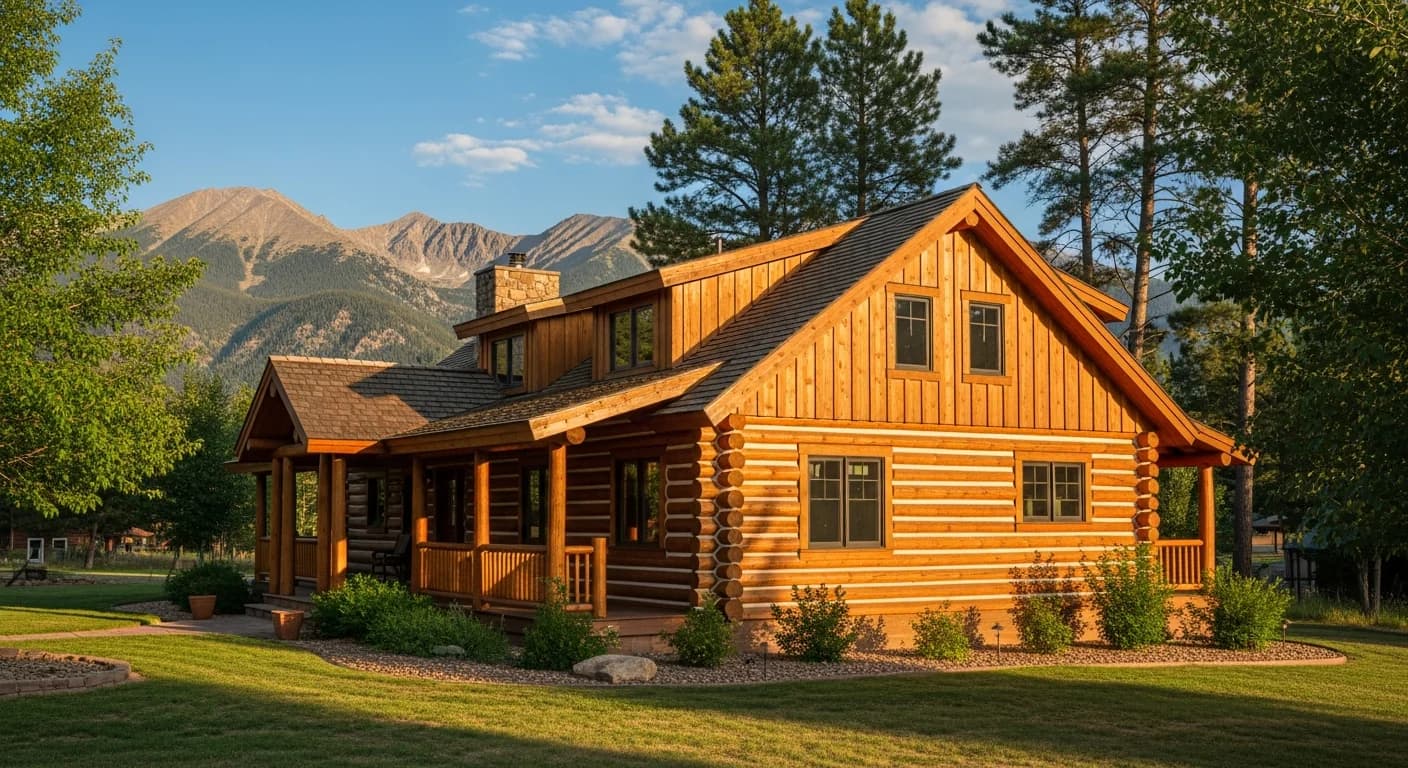
Log Home Inspection in Evergreen, Colorado
A real Evergreen inspection, anonymized — a full mountain property where the finish, the chinking, the stucco, the decks, the railings, and even a bridge all needed attention.
Log Homes in the Evergreen Foothills
Evergreen sits in the Jefferson County foothills around Evergreen Lake and Bear Creek, a landscape of ponderosa pine and large custom log homes. The high-altitude Front Range climate here drives intense UV, freeze-thaw cycling, and severe weather events — including the hail that regularly batters exterior wood and finishes.
On a larger property, a restoration is rarely just the walls. The example below is a full mountain compound: vertical log siding, stucco transitions, multiple decks, log railings throughout, and even a pedestrian bridge over a creek — each with its own finish and, in several cases, structural needs that an ordinary home inspection would miss.
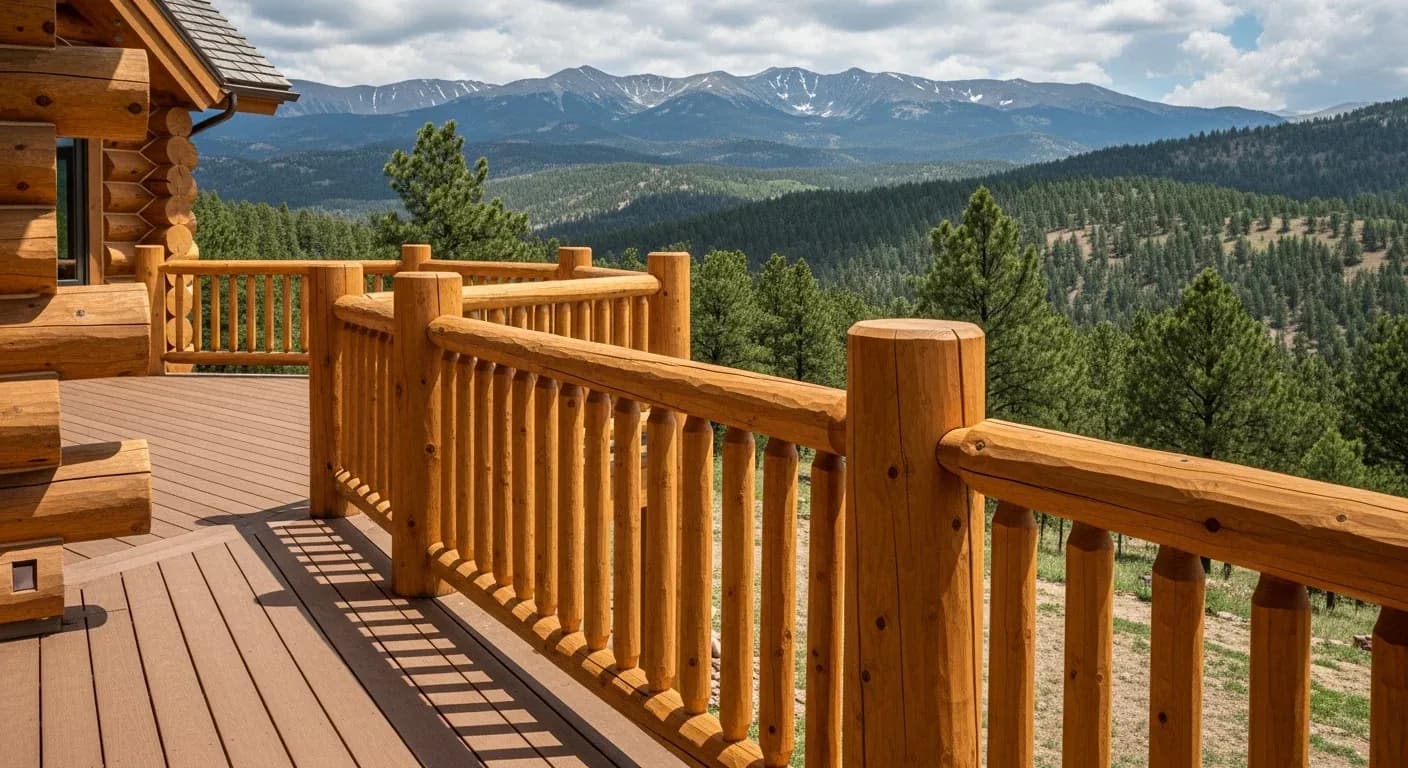
A multi-structure log property in Evergreen
This property features vertical log siding, stucco exterior sections, multiple deck areas, log railings throughout, and a pedestrian bridge. The exterior log surfaces had not been adequately maintained and showed significant deterioration from prolonged UV, water infiltration, and hail damage common to Colorado’s high-altitude climate — extensive greying, finish failure, and open joints between log members.
Beyond the finish, the inspection identified multiple structural concerns: all log railings throughout the property were loose and wobbly, a newer rear deck was missing critical structural hardware, and the bridge railings over a creek bed were unstable. A finish-only refresh would have left real safety issues in place.
Documented Conditions
Exterior log siding — UV, water & hail damage
The vertical log siding had deteriorated significantly from UV, moisture, and hail. The finish had failed in most areas, leaving bare wood with a silver-grey patina, lifted and roughened fibers, and pronounced greying on the south- and west-facing walls. In places, moisture had penetrated deep into the surface, raising the risk of rot if left untreated.
Open, unsealed log joints
Joints between log members throughout the exterior were open and unsealed, with visible gaps letting in daylight, moisture, and air. Open joints compromise the building envelope — heat loss in winter, moisture intrusion year-round, and entry points for insects and pests — and called for full chinking with backer rod in the deeper joints.
Log railings — loose throughout (safety)
A significant safety concern: every exterior log railing — on each deck, staircase, and platform — was loose and wobbly. Posts had loosened at their bases, spindles had separated from the rails, and assemblies lacked the rigidity for safe use. Codes require railings to withstand a 200-pound lateral force at the top rail; these did not appear to meet that standard.
Newer rear deck — structural deficiencies
Although relatively new, the rear deck was missing critical structural components: approved metal joist hangers, a properly installed and flashed ledger board connecting it to the house, and a drip edge at the deck-to-stucco transition. Without these, the deck relies on insufficient nailing and channels water into the framing connection — both code and durability problems.
Stucco transitions & pedestrian bridge
Stucco sections around the chimney and log-to-conventional transitions showed wear and cracking and needed patching and repaint — done last, after the log work, since blasting and staining inevitably contact the stucco. The pedestrian bridge over the creek had severely weathered decking and unstable railings, requiring refinishing plus structural reinforcement.
Example Scope & Investment
The anonymized scope below mirrors the work-order summary for this Evergreen property. Structural repairs come first, then prep, finish, chinking, and finally stucco.
- Refinish log sidingMedia blast / pressure wash all log surfaces to remove damaged fiber and failed finish$24,200
- Stain exterior logs3 coats Sashco Transformation finish for UV and water protection$18,500
- Apply chinkingSashco Log Jam on all log joints, with backer rod in deeper joints, tooled for a clean bond$19,750
- Repair & repaint stuccoPatch damaged stucco, prime, and repaint all stucco — performed as the final step$9,800
- Decks & railingsRefinish and stain decks; shore and strengthen all railings; correct deck structural deficiencies$24,500
- Pedestrian bridgeRefinish decking and railings; reinforce and re-secure railing structure over the creek$9,450
These figures come from a real Log Home Finishing inspection in Evergreen, shown here as an anonymized example. Every property is different — your inspection includes a written scope and pricing matched to your home’s actual condition.
Products & methods used
Why a Whole-Property Approach
On a multi-structure property, the finish is only part of the picture. Loose railings on elevated decks and a bridge over a creek are a genuine fall hazard, and a newer deck missing joist hangers, a ledger connection, and a drip edge will channel water into its own framing. Refinishing around those problems would simply lock real safety and durability issues under a fresh coat.
The correct approach is sequenced: address structural repairs first, then prepare and finish all wood surfaces, apply chinking, and repaint the stucco last so it is left clean and free of blasting debris and overspray. Done together, the property is both protected and safe — and ready for a simple maintenance schedule going forward.
- Structural repairs (railings, deck hardware, bridge) come before any finish work.
- Railings must resist a 200-pound lateral force at the top rail to be safe and code-compliant.
- Stucco is repaired and repainted last, after blasting and staining are complete.
- After restoration, plan annual inspections and touch-up staining of high-exposure areas every 3–5 years.
What the Work Looks Like
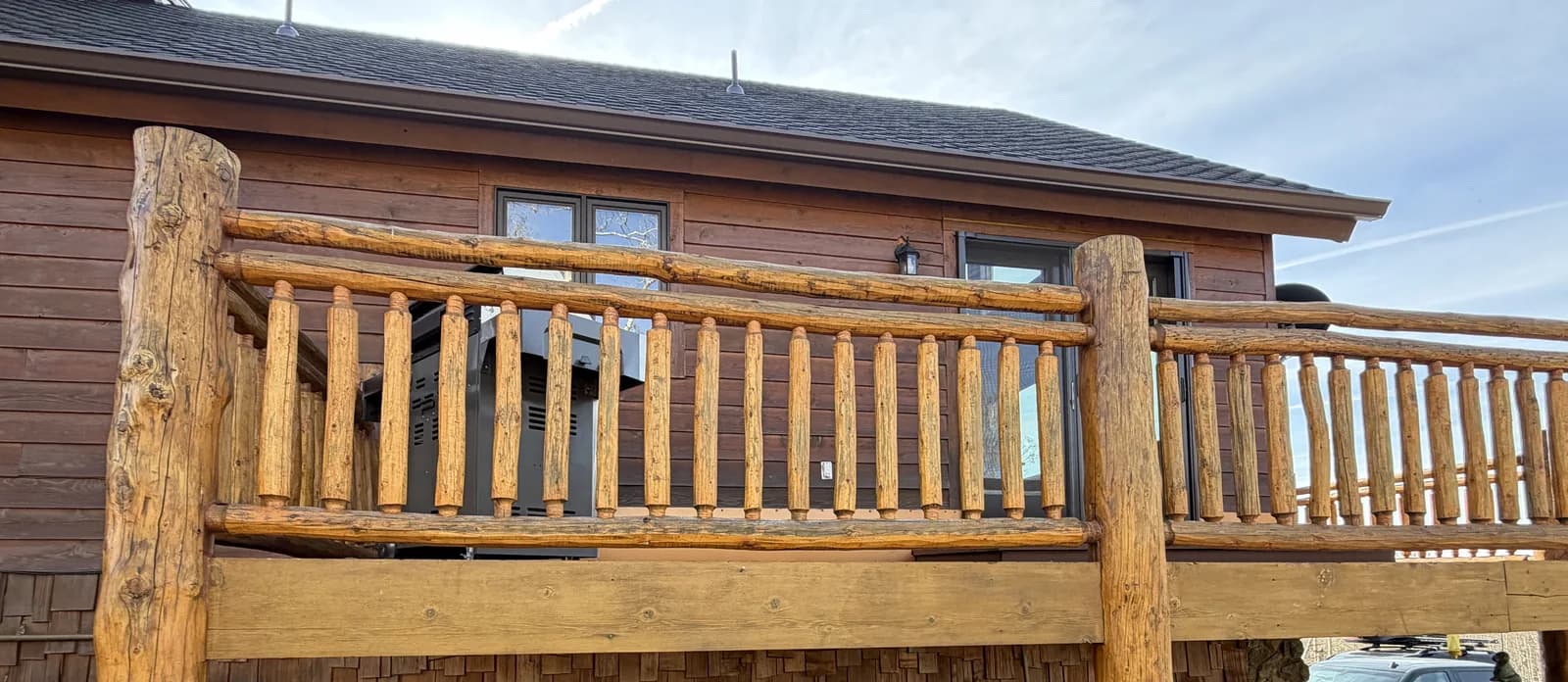
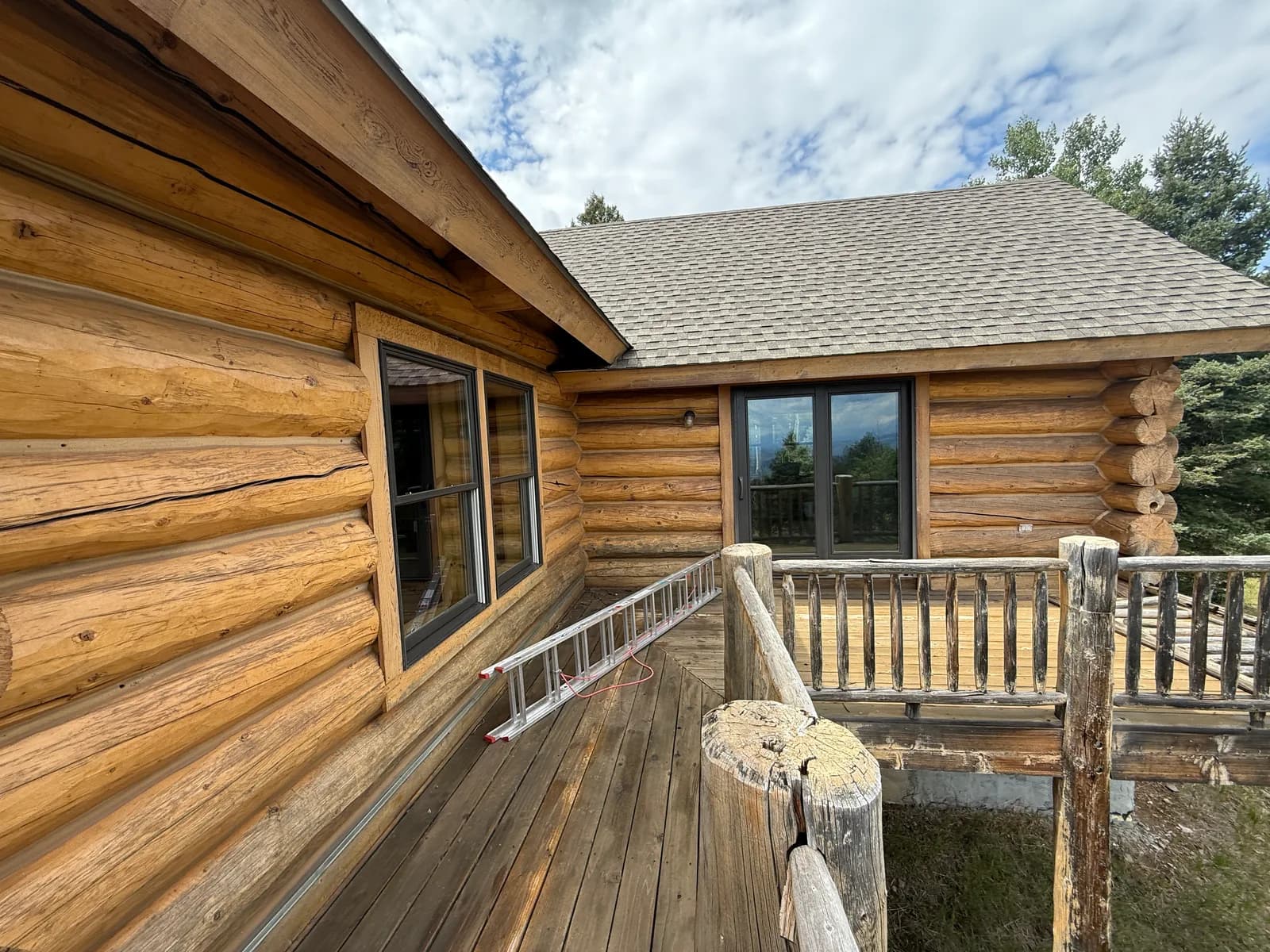
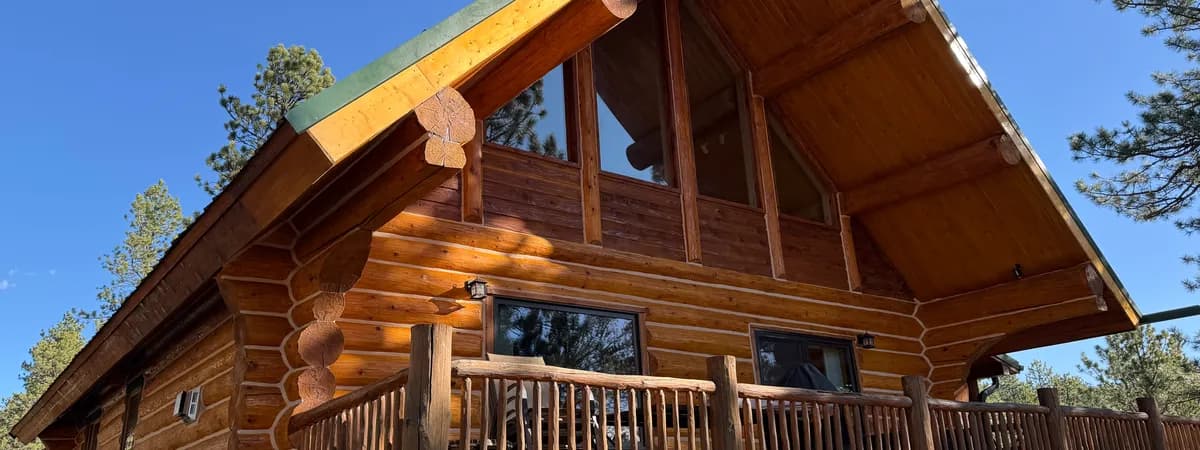
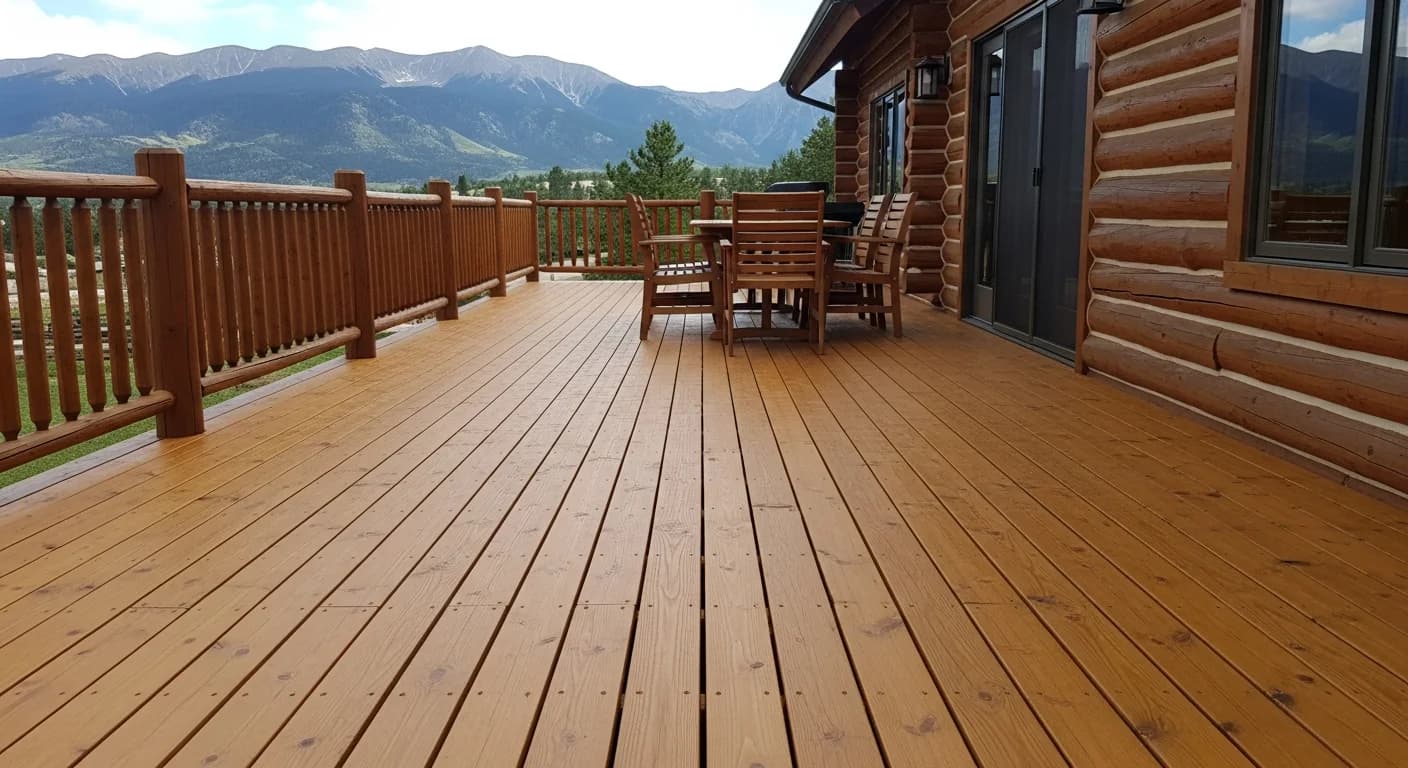
Illustrative photos of Log Home Finishing staining, chinking, and restoration work in Colorado.
Evergreen Log Home Inspection — FAQ
Does a log home inspection cover decks, railings, and other structures?
On a full property it should. This Evergreen inspection covered vertical log siding, stucco transitions, multiple decks, log railings throughout, and a pedestrian bridge — including structural concerns. A specialized log home inspection looks beyond the walls to the finish, the seals, and the safety of every wood structure on the property.
Why were the railings flagged as a safety issue?
Every exterior log railing was loose and wobbly — posts loosened at the base, spindles separated from the rails, assemblies lacking rigidity. Building codes require railings to withstand a 200-pound lateral force at the top rail, and these did not appear to meet that standard. On elevated decks and a bridge over a creek, that is a serious fall hazard that has to be corrected, not stained over.
What was wrong with the newer deck if it looked fine?
It was missing critical structural components hidden from casual view: approved metal joist hangers, a properly installed and flashed ledger board tying it to the house, and a drip edge at the deck-to-stucco transition. Without them the deck relies on insufficient nailing and wicks water into its framing connection — a code and durability problem that an ordinary inspection often misses.
Why is the stucco painted last?
Because the log work comes first and unavoidably affects the stucco. Media blasting produces fine particulate that embeds in stucco texture, and staining logs next to stucco leads to drips and overspray despite masking. Completing all log refinishing, staining, and chinking before repairing and repainting the stucco leaves it fresh, clean, and free of debris at project end.
Example Inspections in Other Colorado Towns
Real, anonymized inspections from log homes across the state.
An incompatible finish peeling off a home and garage
View inspectionHigh-altitude UV, split railings, and open mortar
View inspectionA large-diameter full-scribe cabin in Buena Vista
View inspectionA solid log home with a failed deck system
View inspectionA maintained full-log home in Cimarron
View inspectionA VERY GOOD, well-maintained pre-purchase home
View inspectionFailed interior chinking and an overdue exterior
View inspectionA sound home ready for a full clean and finish
View inspectionMissing chinking and open log checks
View inspectionSun-worn siding and decks, caught at maintenance
View inspectionA full-scribe home that was never chinked
View inspectionSound structure, end-of-life finishes inside and out
View inspectionAn infested, weathered handcrafted log home
View inspectionA historic ten-building log ranch
View inspectionA two-story log home in Pine
View inspectionA large D-log home in Steamboat Springs
View inspectionA historic town hall in Tin Cup
View inspectionRestoring a Full Log Property in Evergreen?
From siding and chinking to decks, railings, and bridges, an inspection maps the whole property — finish and structure — so nothing safety-critical gets missed.
Thomas Elliott · Serving log home communities across Colorado
Evergreen Area & Related Services
Start with the main log home inspection page to see our full process, or explore log home restoration and maintenance for the work that follows.