
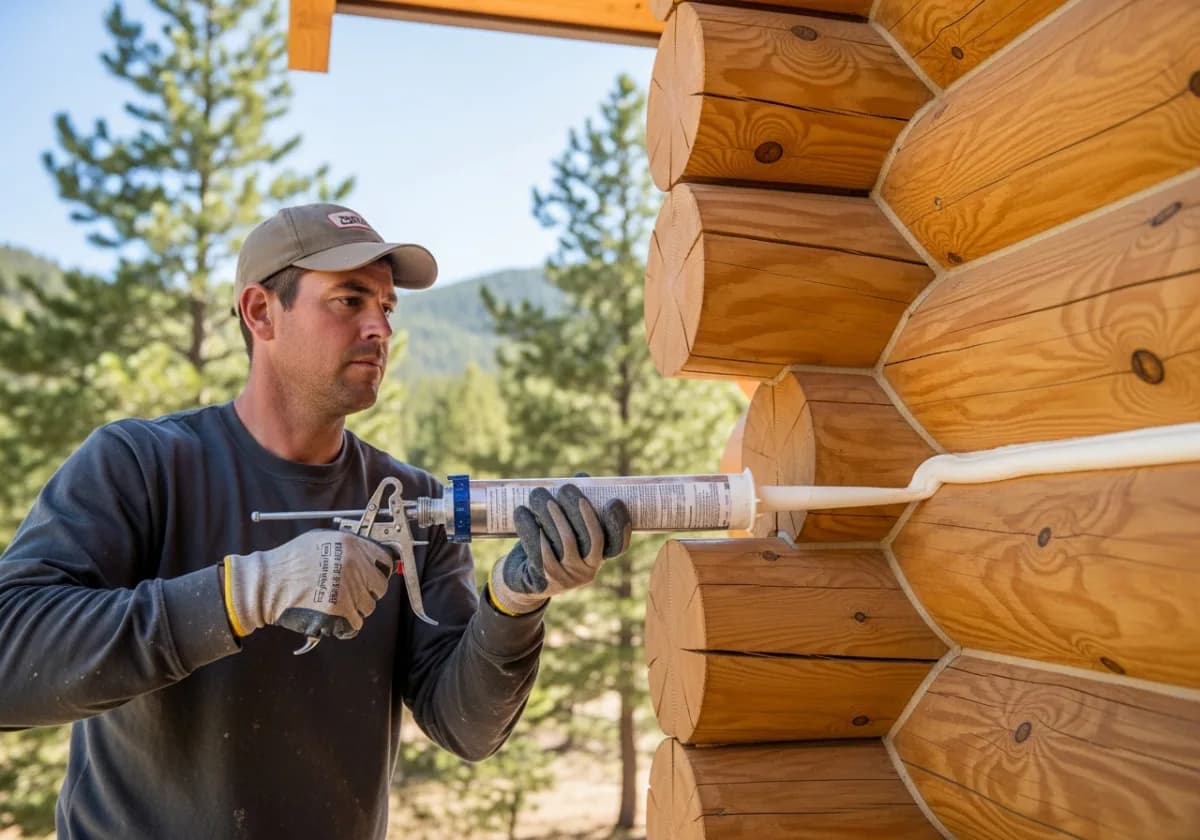
Log Home Inspection in Granby, Colorado
A real Granby inspection, anonymized — a chinking-and-caulking assessment of missing exterior chinking, open log checks, and interior seal failure letting moisture and air through the wall.
Log Homes in Granby & Middle Park
Granby sits in Middle Park, the high mountain basin of Grand County where winters are long and cold and the snow lingers against the lower log courses for months. In that climate the chinking and caulking — the flexible seals in and between the logs — are doing the hardest work on the whole home. They are what keep wind-driven snowmelt out of the joints and conditioned air inside, and when they fail, the damage starts quietly and out of sight.
The inspection below was a focused chinking-and-caulking assessment of a Granby log home, documenting both the exterior and the interior. Unlike a full restoration, this home didn’t need to be stripped and refinished — it needed its seals restored. Missing and failed chinking, open log checks acting as water pathways, and interior joints letting air and moisture migrate were the whole story, and all of it is correctable with proper backer rod and a new elastomeric chinking system.
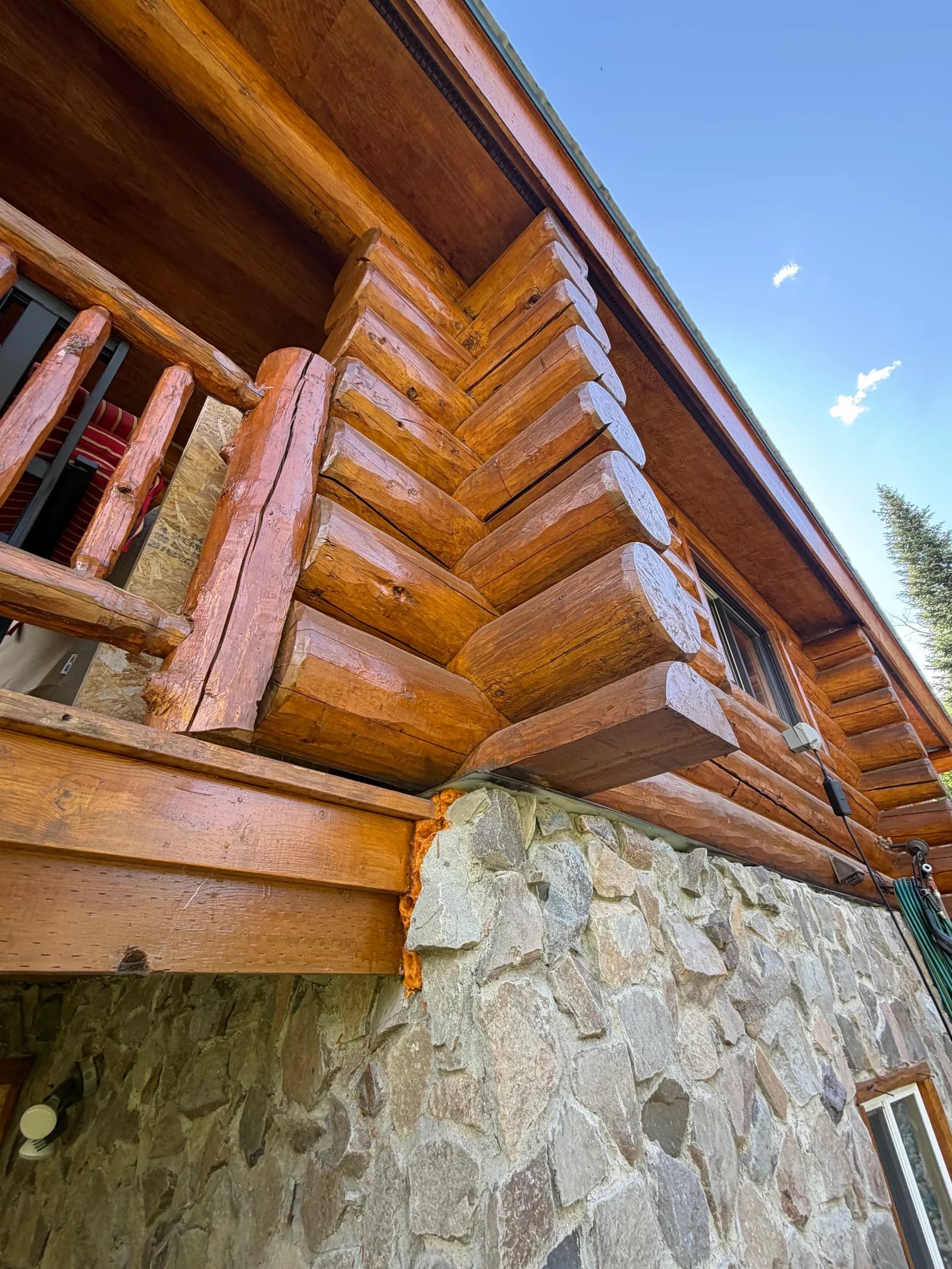
Missing chinking and open log checks
This was a seal-focused inspection, inside and out. On the exterior, sections of chinking between the log courses were missing or failed outright, leaving joints open to direct water intrusion, and the logs showed open checks — the cracks that form as logs season — acting as pathways that funnel water straight into the log profile. Deteriorated sealant at the log intersections and corners rounded out a pattern of a wall that had lost its weather barrier in multiple places.
The interior told the matching story: chinking that had separated from the logs and open interior checks were letting slow moisture migration and air infiltration into the home. None of this required refinishing the wood — it required restoring the seals. The corrective approach is consistent throughout: install properly sized backer rod and a new elastomeric chinking and caulking system in the failed joints and checks, so the wall regains a continuous, flexible barrier that moves with the logs.
Findings at a Glance
| Area | Current condition | Recommended action |
|---|---|---|
| Exterior chinking | Missing and failed between log courses | Install backer rod and new elastomeric chinking |
| Exterior log checks | Open — acting as water pathways | Back and seal with elastomeric caulk |
| Corners & intersections | Deteriorated sealant and gaps | Detail and re-seal the joints |
| Interior chinking | Separated from logs — air & moisture migration | Re-chink over proper backer rod |
| Interior log checks | Open — slow moisture pathways | Back and seal to restore the control layer |
Documented Conditions
Exterior chinking — missing & failed
Sections of exterior chinking between the log courses were missing or had failed, leaving joints open to direct water intrusion. Open joints on a log wall are the single biggest source of both air leakage and moisture entry. The correction is to install properly sized backer rod and a new elastomeric chinking system so each joint regains a continuous, flexible seal that bonds to the logs and flexes with seasonal movement.
Open exterior log checks
The exterior logs showed open checks — the cracks that open as logs season and dry. On upward-facing surfaces these checks catch and channel water directly into the log profile, where it feeds rot from the inside out. Each significant check is backed with closed-cell rod and sealed with elastomeric caulk so it stays closed to water while still allowing the wood to move.
Deteriorated sealant at intersections
At the log intersections and corners, the existing sealant had deteriorated and gaps had opened. Corners are among the most exposed and most movement-prone areas of a log wall, so they’re detailed carefully — cleaned out, backed, and re-sealed — to keep the most vulnerable joints weather-tight.
Interior chinking — separation
Inside the home, chinking had separated from the log surfaces, allowing slow moisture migration and air infiltration through the wall. Interior seal failure is easy to overlook because it doesn’t show on the outside, but it drives energy loss and lets humidity move into the wall cavity. Re-chinking over properly sized backer rod restores the interior air and moisture control layer.
Open interior log checks
Interior log checks consistent with seasonal movement were open and acting as moisture pathways. Backing and sealing these checks completes the interior control layer so the wall manages air and moisture the way a sealed log wall should.
Example Scope & Investment
This was a seal-focused project, not a refinish. The anonymized scope below mirrors the recommended chinking and caulking work, inside and out — chinking projects are quoted by the linear foot after the joints and checks are measured on site.
- Re-chink missing & failed jointsInstall properly sized backer rod and a new elastomeric chinking system in all open and failed exterior jointsIncluded
- Seal open log checksBack and seal open exterior checks with elastomeric caulk to stop water pathways into the log profileIncluded
- Detail corners & intersectionsClean out, back, and re-seal deteriorated sealant at log intersections and cornersIncluded
- Re-chink separated jointsRe-chink interior joints that have separated, over properly sized backer rod, to restore the air and moisture control layerIncluded
- Seal interior log checksBack and seal open interior checks to close air and moisture pathwaysIncluded
This anonymized example comes from a real Log Home Finishing chinking-and-caulking inspection in Granby. Chinking and caulking projects are priced by the linear foot of joints and checks after an on-site measurement, so figures vary by home — your inspection includes a written, itemized scope and price matched to your home.
Products & methods used
Recommended Chinking Maintenance Schedule
In a cold, snowy basin like Middle Park, the seals are the home’s first line of defense — checking them yearly keeps small failures from becoming rot.
| Element | Interval | What it involves |
|---|---|---|
| Exterior chinking & caulk | Inspect yearly | Spot-repair any joint that opens, cracks, or loses bond |
| Log checks (interior & exterior) | Inspect yearly | Back and seal new checks before they channel water |
| Corners & intersections | Inspect yearly | Re-detail the most exposed, movement-prone joints first |
Why Chinking and Checks Matter More Than Looks
On a log home the chinking is not decoration — it is the weather barrier. It seals the gap between every log course so wind-driven snow and rain stay out and conditioned air stays in. When chinking goes missing or fails, the wall loses that barrier exactly where water wants to get in, and the open joints become the leak. Log checks make it worse: as logs season they crack, and an upward-facing check acts like a little gutter, channeling water straight into the heart of the log where rot begins. On this Granby home both problems were present inside and out.
The reason this is correctable without a full restoration is that the wood itself was still sound — the failure was in the seals, not the logs. That is why the fix is targeted: proper backer rod sets the depth and bond shape of the chinking, the elastomeric chinking and caulk flex with the seasonal movement of the logs instead of cracking like rigid mortar, and sealing the checks closes the last of the water pathways. Done now, it’s a chinking project. Left another few winters in Middle Park, those open joints and checks are how a seal problem becomes a log-replacement problem — which is exactly why dedicated log staining companies inspect the chinking every visit.
- Chinking is the weather barrier — missing or failed chinking is an open leak in the wall.
- Upward-facing log checks channel water into the log core, where rot starts; back and seal them.
- Elastomeric chinking flexes with seasonal log movement — rigid mortar cracks and fails.
- Sealing now is a chinking project; ignored, open joints and checks become log replacement.
What the Work Looks Like
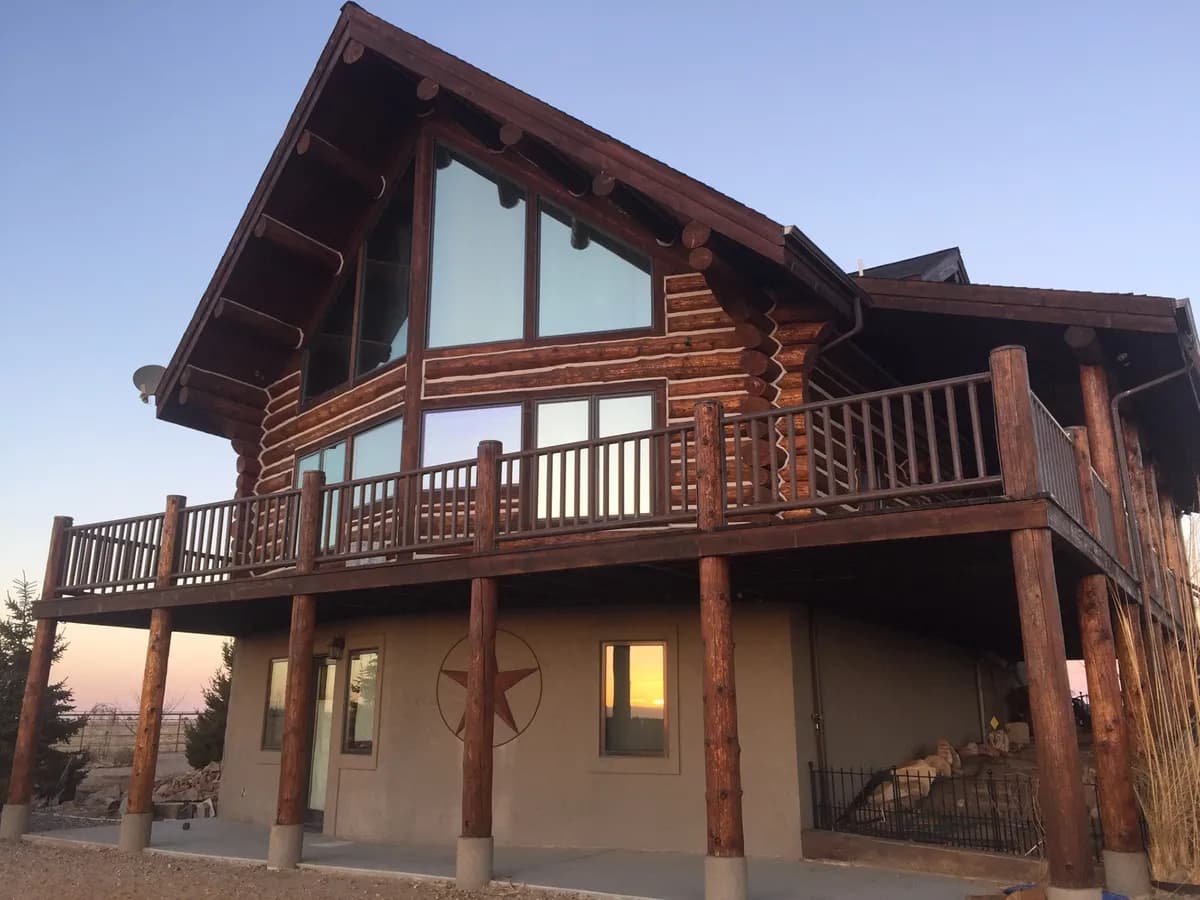
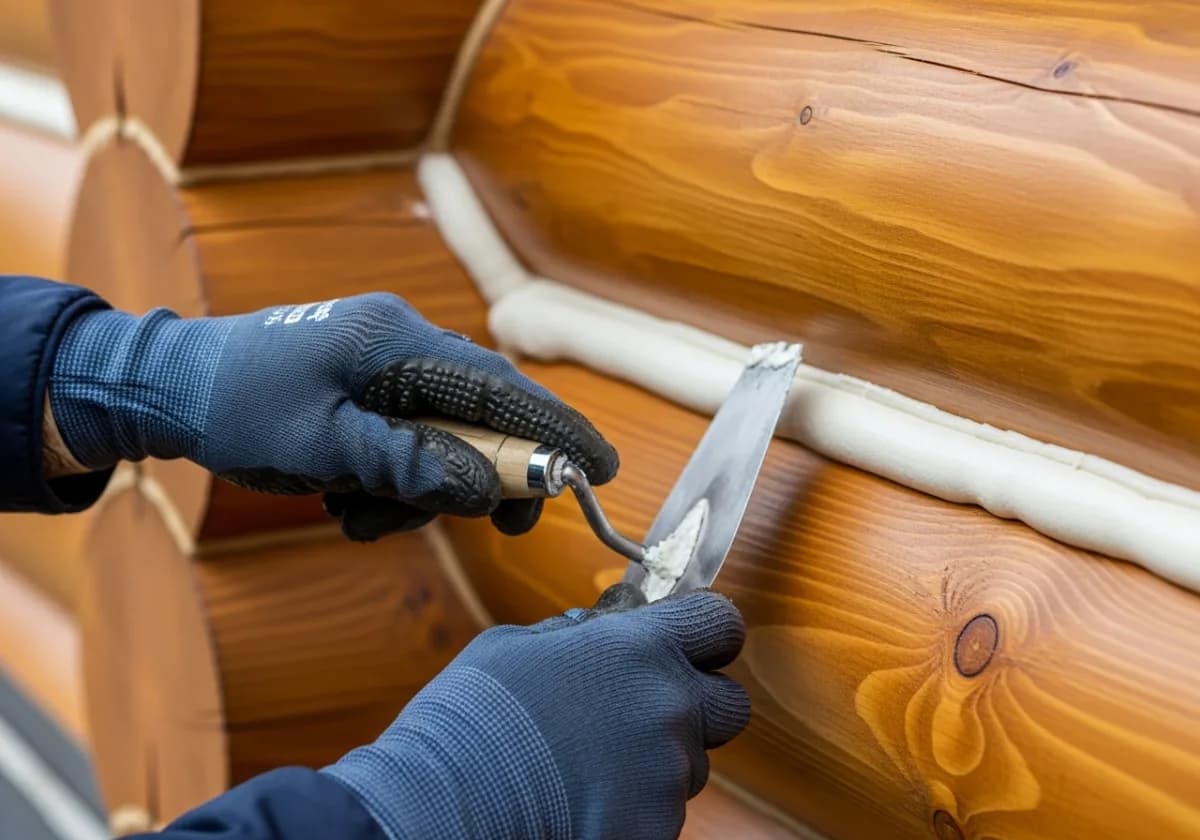
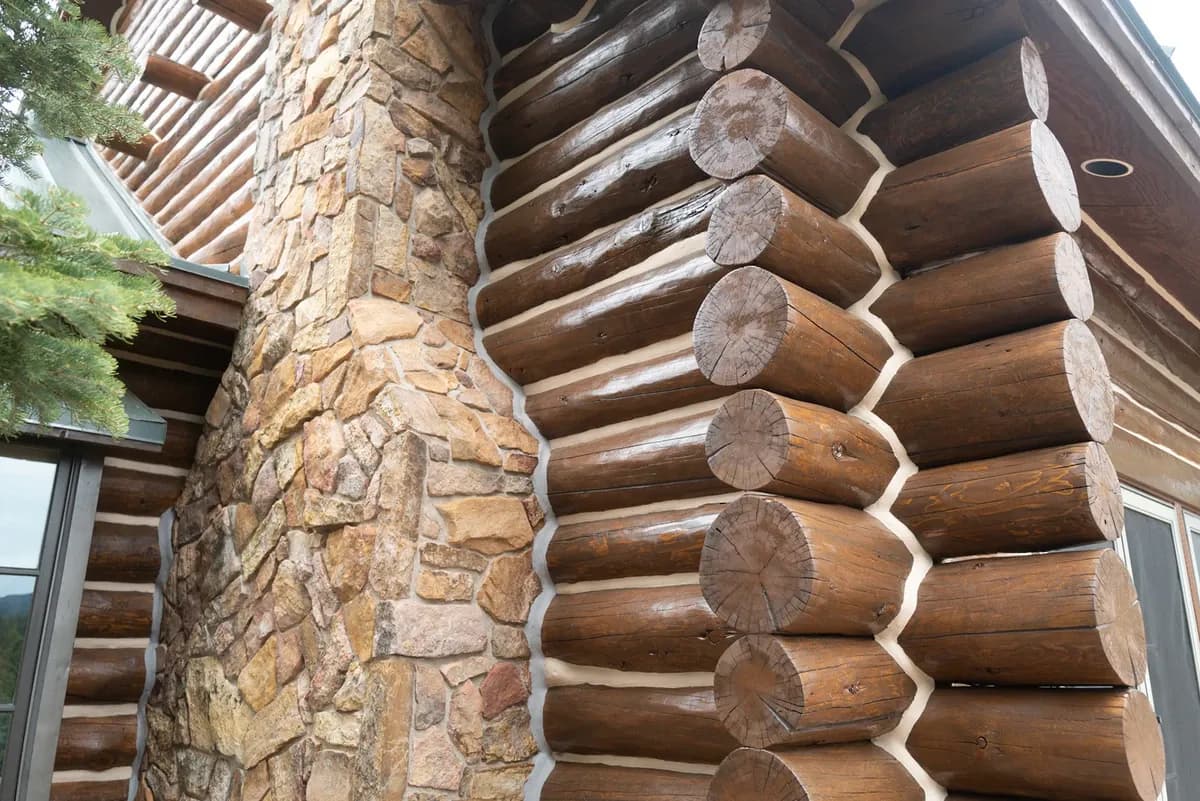
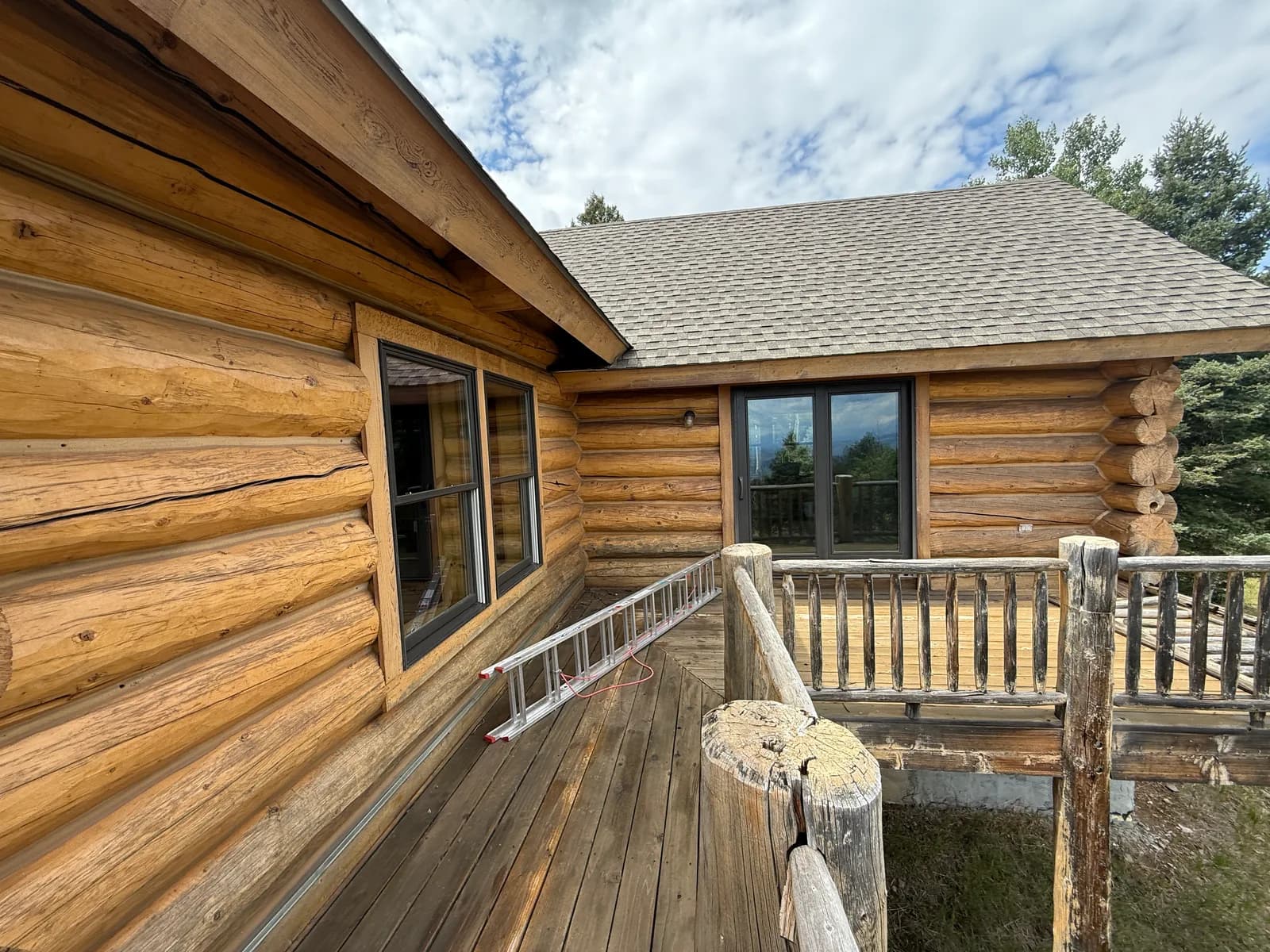
Illustrative photos of Log Home Finishing staining, chinking, and restoration work in Colorado.
Granby Log Home Inspection — FAQ
What’s the difference between chinking, caulking, and a log check?
Chinking is the wide, flexible seal between log courses; caulking is a narrower sealant used on smaller joints and around openings; and a log check is a crack that forms naturally in a log as it seasons and dries. All three matter for keeping water out. On this Granby home, the chinking was missing or failed in places, sealant at the joints had deteriorated, and open checks were channeling water — so the corrective work addressed all of them with backer rod and an elastomeric system.
Do open log checks really need to be sealed?
Yes — especially the ones facing up. A check is a crack along the grain, and an upward-facing check catches and holds water like a small gutter, wicking it into the log core where rot begins. We back significant checks with closed-cell rod and seal them with elastomeric caulk, which keeps water out while still letting the wood expand and contract with the seasons. Sealing checks is one of the highest-value, lowest-cost steps in protecting a log wall.
My home looks fine outside — why does the interior chinking matter?
Because interior seal failure is invisible from the street but still costs you. When interior chinking separates from the logs, air and moisture migrate through the wall — you lose energy efficiency, and humidity can move into the wall cavity. On this home the interior joints needed re-chinking over proper backer rod to restore the air and moisture control layer. A thorough inspection always looks inside and out, not just at the exterior walls.
Does this home need to be stripped and refinished too?
No — and that’s the good news. This was a seal problem, not a finish problem. The logs were sound; what had failed was the chinking, the joint sealant, and the open checks. That means the fix is targeted chinking and caulking rather than a full media-blast restoration. Catching it at this stage is exactly why an inspection pays off: a seal repair now is a fraction of the cost of the log rot that open joints eventually cause.
Example Inspections in Other Colorado Towns
Real, anonymized inspections from log homes across the state.
An incompatible finish peeling off a home and garage
View inspectionHigh-altitude UV, split railings, and open mortar
View inspectionA large-diameter full-scribe cabin in Buena Vista
View inspectionA solid log home with a failed deck system
View inspectionA maintained full-log home in Cimarron
View inspectionA VERY GOOD, well-maintained pre-purchase home
View inspectionFailed interior chinking and an overdue exterior
View inspectionA multi-structure log property in Evergreen
View inspectionA sound home ready for a full clean and finish
View inspectionSun-worn siding and decks, caught at maintenance
View inspectionA full-scribe home that was never chinked
View inspectionSound structure, end-of-life finishes inside and out
View inspectionAn infested, weathered handcrafted log home
View inspectionA historic ten-building log ranch
View inspectionA two-story log home in Pine
View inspectionA large D-log home in Steamboat Springs
View inspectionA historic town hall in Tin Cup
View inspectionFailing Chinking on Your Granby Log Home?
An inspection tells you whether your home needs a targeted chinking repair or something more — and closes the open joints and checks before they turn into log rot.
Thomas Elliott · Serving log home communities across Colorado
Granby Area & Related Services
Start with the main log home inspection page to see our full process, or explore log home restoration and maintenance for the work that follows.