
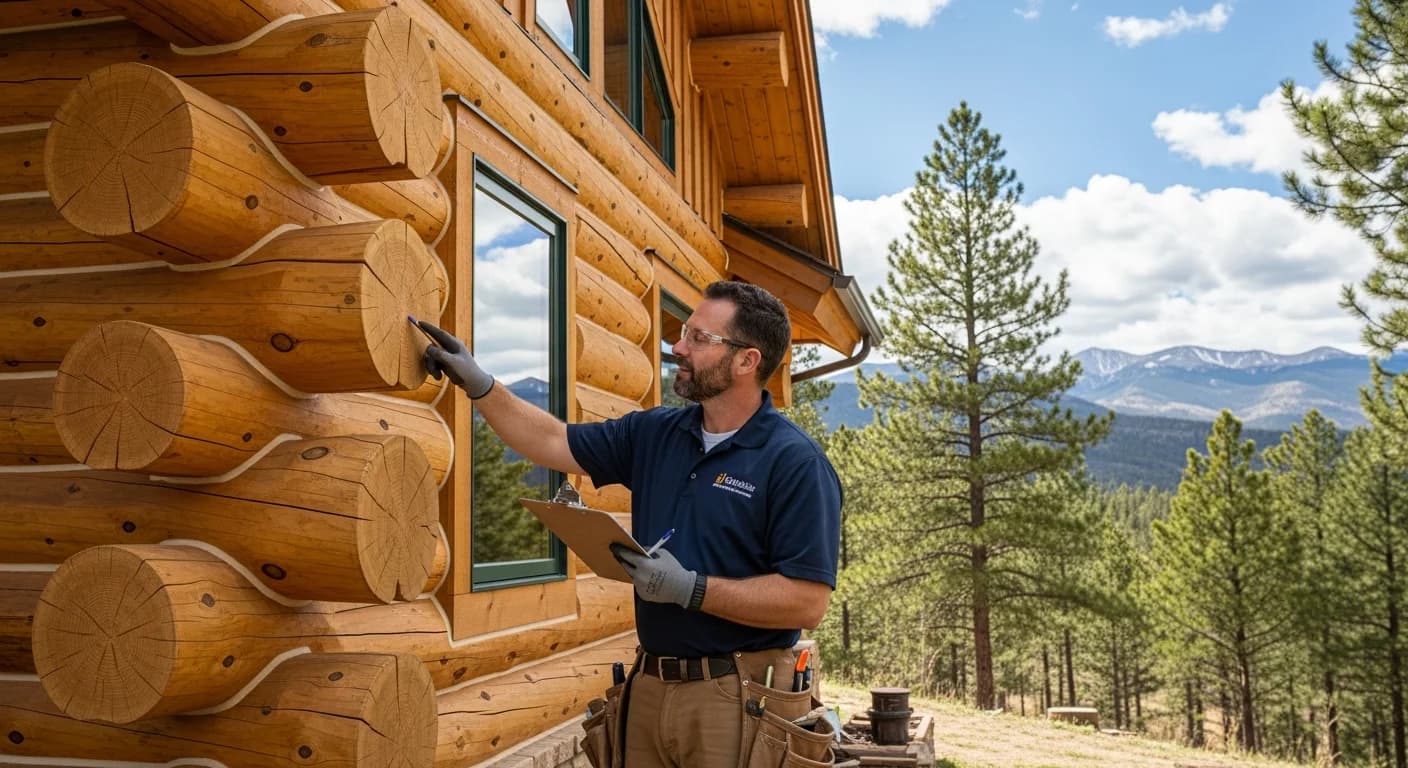
Log Home Inspection in Jefferson, Colorado
A real Jefferson inspection, anonymized — a well-built, structurally sound log home whose interior and exterior finishes and seals had all reached the end of their service life at once.
Log Homes in Jefferson & Northern South Park
Jefferson is a small community in northern Park County, up near Kenosha Pass where US-285 drops into the vast bowl of South Park — and it is worth saying clearly that Jefferson, Colorado is in Park County, not Jefferson County (where towns like Evergreen and Pine sit). At roughly 9,500 feet, with open meadows, big wind, and thin high-altitude air, the finishes and seals on a log home here are pushed hard from every direction.
At this elevation, UV and hail attack the exterior while the freeze-thaw cycle works the caulk and chinking loose, and decades of dry interior air dull and thin the inside finish. The Jefferson home below was a textbook example of a well-built home that had simply reached the end of one full maintenance cycle — sound in structure, but due for a top-to-bottom refresh inside and out.
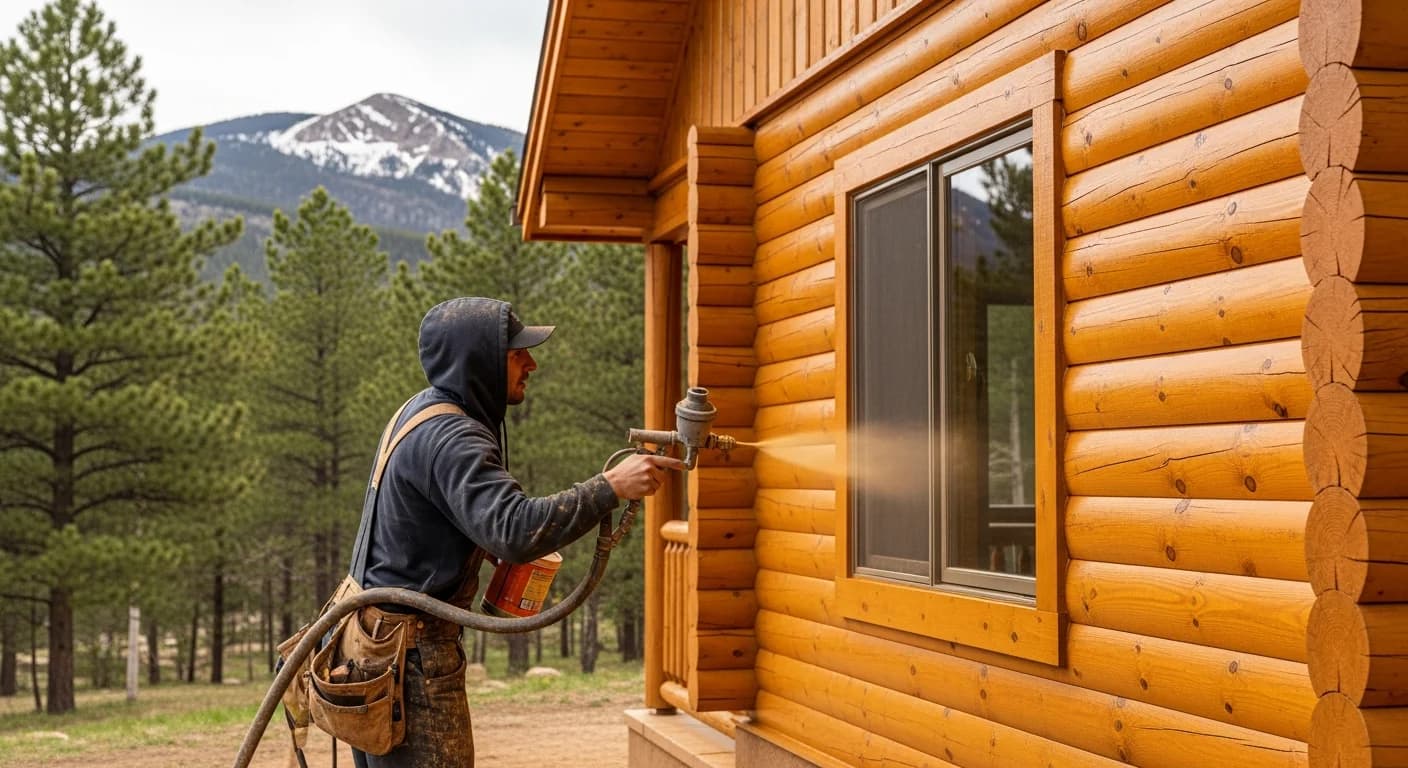
Sound structure, end-of-life finishes inside and out
This was a well-built, structurally sound log home — no rot, no settling problems, nothing wrong with the bones. What had aged out was every protective layer at roughly the same time: the exterior finish was UV- and hail-damaged, the exterior caulking had failed, the interior logs had gone dull and porous, the interior caulking was about twenty years old, and the decks and railings were worn both structurally and cosmetically.
When finishes and seals reach end of life together, the right move is a coordinated full restoration rather than chasing one item at a time. Addressing the interior, exterior, and decks in one sequenced project re-establishes the whole protective envelope and resets the home onto a clean maintenance schedule.
Findings at a Glance
| Area | Current condition | Recommended action |
|---|---|---|
| Structure | Sound and well-built — no rot or settling | No structural repair needed |
| Exterior logs & finish | UV- and hail-damaged finish | Media blast, sand, and rebuild the finish system |
| Exterior caulking | Failed and separating | Remove and replace with backer rod + sealant |
| Interior logs | Dull, porous, dust-laden | Log Wash, then Lifeline Advanced Interior finish |
| Interior caulking | ~20 years old, end of life | Full re-caulk of joints and checks |
| Decks & railings | Structural and finish wear | Replace railings; rebuild main and hot-tub decks |
Documented Conditions
Structure — sound and well-built
The home was structurally sound and clearly well-built, with no rot, settling, or framing concerns found. That sets the tone for the whole project: this is a maintenance-cycle restoration of finishes and seals, not a rescue of a failing structure. The investment goes entirely into protection and appearance, not into repairing the logs themselves.
Exterior logs — UV & hail damage
The exterior finish was deteriorated by years of high-altitude UV and by hail, which pits and breaks a finish film and accelerates its failure. The finish was past recoating, so the recommendation was to media blast and sand the logs back to clean wood, then rebuild the protective system: two coats each of Permachink Prelude primer, Ultra-2 stain, and Lifeline Advance clear topcoat.
Exterior caulking — failed
The exterior caulking had failed and was separating from the logs, leaving the joints and checks open to wind-driven water. All failed caulk was specified for removal and replacement with properly sized backer rod and a high-performance sealant, so the joints flex and stay watertight through the freeze-thaw cycle.
Interior logs — dull & porous
Inside, the logs had gone dull and porous from years of dry mountain air, dust, and ordinary wear, with the original finish thin and tired. The plan was to clean the interior logs with Log Wash and then apply Lifeline Advanced Interior finish, which restores depth and a protective, cleanable surface without changing the character of the wood.
Interior caulking — ~20 years old
The interior caulking was roughly twenty years old and at the end of its service life — hardened and shrinking rather than flexing with the logs. A full re-caulk of the interior joints and checks restores the air seal, which on a high-elevation home like this one matters for both comfort and energy use.
Decks & railings — structural & finish wear
The decks and railings showed both structural and finish wear. The recommendation was to replace the railings and rebuild the main and hot-tub decks to match, rather than refinish components that were near the end of their structural life. Rebuilding now keeps the outdoor spaces safe and brings them onto the same finish and maintenance cycle as the rest of the home.
Example Scope & Investment
The anonymized scope below mirrors the work order for this Jefferson project. Because the home was sound, the work is organized by area — interior, exterior, and decks — rather than around structural repair.
- Media blast & sand logsStrip UV- and hail-damaged finish back to clean, sound woodBy written estimate
- Six-coat Permachink system2 coats each of Prelude primer, Ultra-2 stain, and Lifeline Advance clear topcoatBy written estimate
- Replace exterior caulkingRemove failed caulk; install backer rod and high-performance sealantBy written estimate
- Clean & finish interior logsLog Wash, then Lifeline Advanced Interior finishBy written estimate
- Re-caulk interiorFull re-caulk of ~20-year-old joints and checksBy written estimate
- Rebuild decks & replace railingsRebuild the main and hot-tub decks and replace railings to matchBy written estimate
This anonymized example reflects a real Log Home Finishing inspection in Jefferson; the homeowner received itemized pricing in a written estimate. Every home is different — your inspection includes a written scope and pricing matched to your home’s actual condition.
Products & methods used
Recommended Maintenance Schedule
A coordinated restoration resets every protective layer at once. The schedule below keeps a Jefferson home from sliding back into a full restoration at altitude.
| Element | Interval | What it involves |
|---|---|---|
| Exterior finish | 3–5 years | Wash and recoat high-exposure elevations before UV and hail wear them down |
| Exterior caulking & chinking | Inspect yearly | Spot-repair any joint that opens after freeze-thaw |
| Decks & railings | 1–2 years | Re-stain horizontal surfaces; confirm railings stay solid |
| Interior finish | 7–10 years | Clean and refresh interior logs as the finish dulls |
Why Restore Inside and Out Together
When a home is structurally sound but every finish and seal has aged out at once, fixing one thing at a time is the expensive path — you pay to mobilize again and again, and the items you defer keep failing while you wait. Tackling the interior, exterior, and decks as one coordinated project re-establishes the entire protective envelope in a single pass and puts everything on the same clock going forward.
It also gets the sequence right. Media blasting and exterior staining are messy, structural deck work is disruptive, and interior refinishing needs a clean, settled space — so doing them in the proper order, in one project, protects the finished work and avoids redoing anything. The result is a sound home reset to a fresh, fully protected baseline.
- Sound structure means the budget goes to finishes, seals, and decks — not log repair.
- Finishes and seals that aged out together are cheapest to fix together.
- Hail damage accelerates finish failure, so the exterior needed a strip, not a recoat.
- Twenty-year-old caulk has stopped flexing — re-caulking restores the air and water seal.
What the Work Looks Like
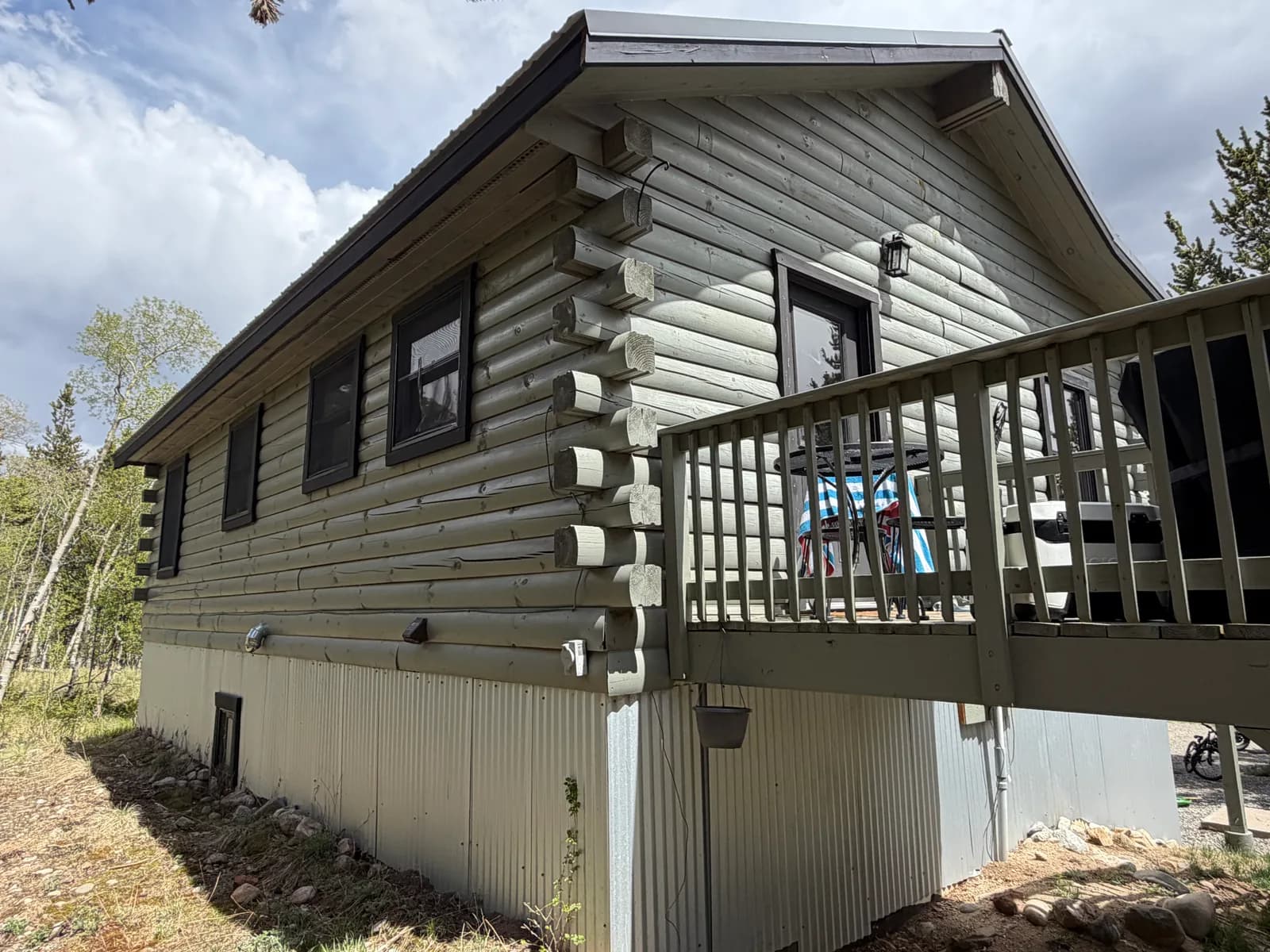
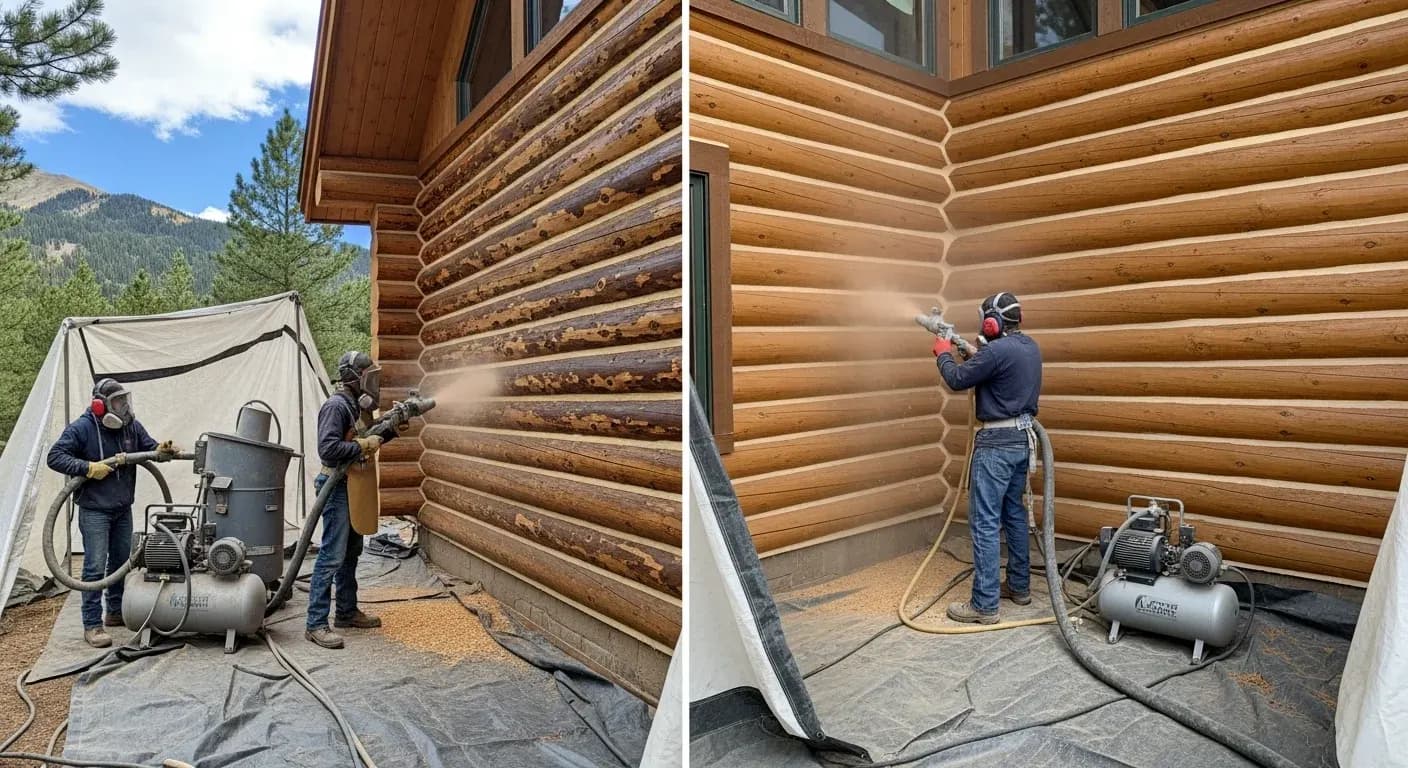
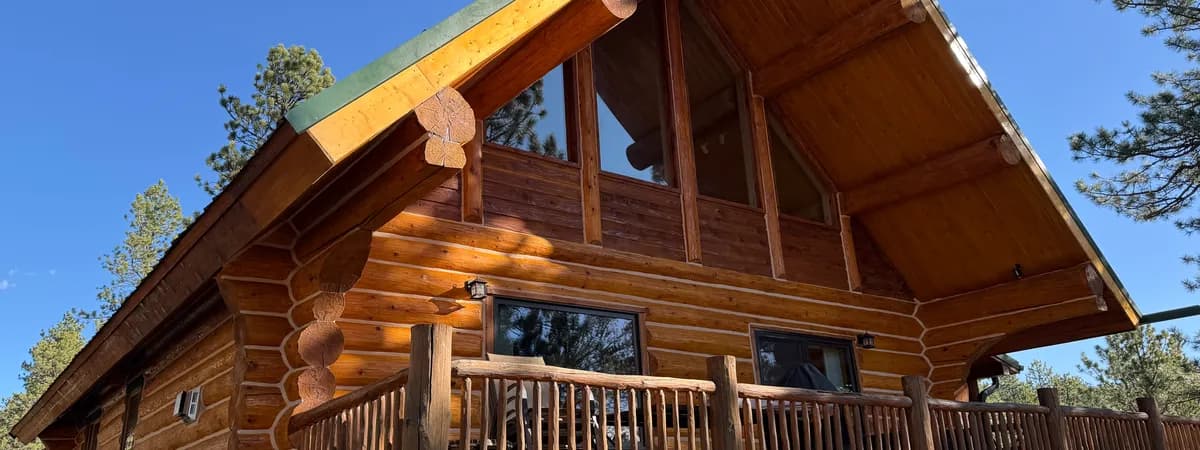
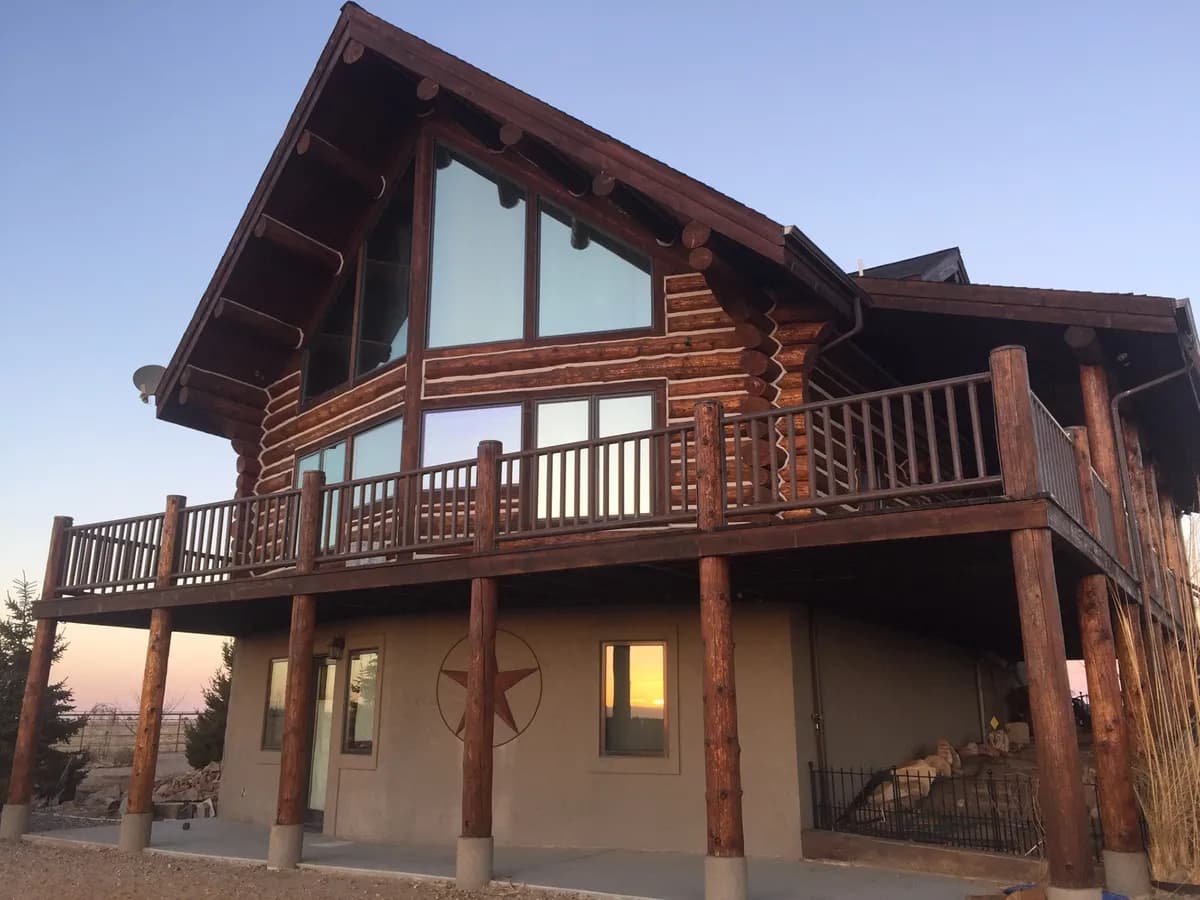
Illustrative photos of Log Home Finishing staining, chinking, and restoration work in Colorado.
Jefferson Log Home Inspection — FAQ
Is Jefferson, Colorado the same as Jefferson County?
No — and it confuses a lot of people. Jefferson is a small community in Park County, up near Kenosha Pass in northern South Park. Jefferson County is a separate, larger county on the Front Range that includes towns like Evergreen and Pine. This example inspection is for a log home in Jefferson, Park County, at about 9,500 feet, where the climate and exposure are very different from the foothills.
How does hail damage a log home finish?
Hail pits and fractures the finish film, breaking the continuous surface that keeps UV and water out. Even when the logs underneath are fine, a hail-damaged finish fails faster than a normally weathered one, and recoating over the broken film does not last. On this Jefferson home the hail and UV damage together put the exterior past recoating, so the logs were media blasted back to clean wood before rebuilding the finish.
Do you refinish the interior logs too?
Yes. Interior logs go dull and porous over time from dry mountain air, dust, and wear, and the original finish thins out. On this home the interior logs were cleaned with Log Wash and refinished with Lifeline Advanced Interior, which restores depth and gives a protective, cleanable surface. We also re-caulked the roughly twenty-year-old interior joints, which had stopped flexing with the logs.
Why rebuild the decks instead of refinishing them?
Because they had structural wear, not just a tired finish. Refinishing only makes sense when the structure underneath is sound; when posts, framing, or railings are near the end of their life, a coat of stain just hides the problem. On this Jefferson home the main and hot-tub decks were rebuilt and the railings replaced, which keeps the outdoor spaces safe and brings them onto the same maintenance cycle as the house.
Example Inspections in Other Colorado Towns
Real, anonymized inspections from log homes across the state.
An incompatible finish peeling off a home and garage
View inspectionHigh-altitude UV, split railings, and open mortar
View inspectionA large-diameter full-scribe cabin in Buena Vista
View inspectionA solid log home with a failed deck system
View inspectionA maintained full-log home in Cimarron
View inspectionA VERY GOOD, well-maintained pre-purchase home
View inspectionFailed interior chinking and an overdue exterior
View inspectionA multi-structure log property in Evergreen
View inspectionA sound home ready for a full clean and finish
View inspectionMissing chinking and open log checks
View inspectionSun-worn siding and decks, caught at maintenance
View inspectionA full-scribe home that was never chinked
View inspectionAn infested, weathered handcrafted log home
View inspectionA historic ten-building log ranch
View inspectionA two-story log home in Pine
View inspectionA large D-log home in Steamboat Springs
View inspectionA historic town hall in Tin Cup
View inspectionIs Your Jefferson Log Home Due for a Full Reset?
An inspection confirms the structure is sound and maps the interior, exterior, and deck work into one coordinated plan — with pricing in a written estimate.
Thomas Elliott · Serving log home communities across Colorado
Jefferson Area & Related Services
Start with the main log home inspection page to see our full process, or explore log home restoration and maintenance for the work that follows.