
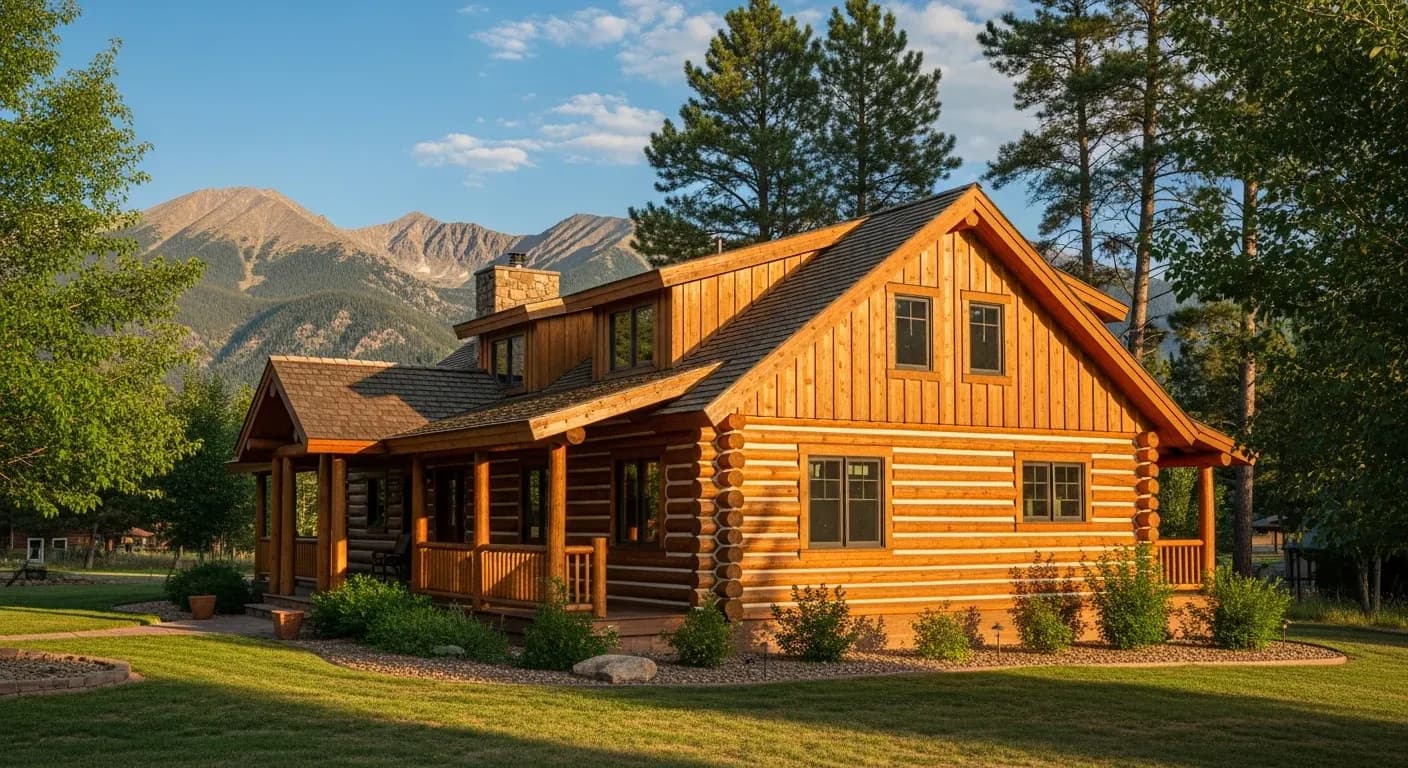
Log Home Inspection in Bailey, Colorado
A real Bailey inspection, anonymized — a home and a detached garage/shop where an incompatible second stain was peeling off in sheets, scoped for a full strip and a two-coat Sashco Transformation restoration.
Log Homes in Bailey & Platte Canyon
Bailey runs along the North Fork of the South Platte in the canyon between Conifer and Fairplay, a Park County community full of log homes set into steep, sunny terrain. At this elevation the UV is intense and the weather swings hard, so the finish on a Bailey log home is its first and most important line of defense. When that finish is applied incorrectly, the home loses that defense fast.
The property below — a primary residence plus a detached garage/shop — is a textbook example of why how a finish is applied matters as much as what is applied. A previous attempt to restore the home was started and never completed, and then a second, incompatible stain was put over the old coating without proper preparation. The result was adhesion failure across both structures, which is exactly the kind of problem a specialized inspection is built to diagnose.

An incompatible finish peeling off a home and garage
This inspection covered two buildings: a primary residence with about 2,950 square feet of exterior log surface and a detached garage/shop with about 1,470 square feet — roughly 4,420 square feet of log in total. The history mattered as much as the current condition. An earlier restoration was begun by pressure washing but never finished, leaving a patchwork of stripped and untouched areas, and then a second stain was applied over the old coating without proper prep.
When two finishes with different resin bases are layered without preparation, they don’t bond — they delaminate. About 40% of the existing finish was in failed condition (peeling, flaking, bubbling), concentrated on roughly 25% of the surface, where bare wood had been weathering. The log ends were darkening from moisture, the home’s caulking was mostly serviceable with about 450 linear feet failed, and the garage had never been chinked at all. The fix is a full strip back to bare wood and a fresh, compatible two-coat Sashco Transformation system on both buildings.
Findings at a Glance
| Area | Current condition | Recommended action |
|---|---|---|
| Previous restoration | Started by pressure washing, never finished | Strip fully and restore in one complete pass |
| Top finish coat | Incompatible over old coating — delaminating | Media blast both structures back to bare wood |
| Failed finish areas | ~40% failed, concentrated on ~25% of surface | Two coats Sashco Transformation, spray & back-brush |
| Log ends (butt ends) | Darkening from moisture absorption | Blast, treat, and seal to halt deterioration |
| Home caulking | ~4,500 LF mostly serviceable; ~450 LF failed | Remove and replace failed caulking |
| Garage/shop joints | Never chinked — open the entire lifespan | Full new chinking/caulking application (~1,880 LF) |
Documented Conditions
Incompatible finish — adhesion failure
A second stain was applied over the original coating without proper preparation. When two products with different resin bases — oil over water, or film-forming over penetrating — are layered without prep, the top coat cannot bond and peels away from the layer beneath rather than sticking to it. That is exactly what was happening across this home, which means the entire finish system has to be removed before a new, compatible finish can go on.
Incomplete previous restoration
Evidence on site showed at least one earlier attempt to restore the exterior by pressure washing that was never completed. Large sections were partially stripped while others were untouched, creating a patchwork across the elevations. Worse, the stripped areas were left exposed to UV and moisture without being re-coated in time, so the wood began weathering before any new finish was applied.
Finish ~40% failed
Roughly 40% of the existing finish was in a failed condition — peeling, flaking, bubbling, and delamination — concentrated on about 25% of the home’s total surface area. On those sections the bare wood had been exposed to the elements for an extended period, leading to graying, surface checking, and the early stages of wood-fiber damage.
Log end (butt end) darkening
Log ends are the most vulnerable part of any log structure — exposed end grain absorbs moisture up to 200 times faster than face grain. Many log ends across the property showed significant darkening, a telltale sign of moisture saturation and the early stages of decay. Left untreated this progresses inward; the repair is careful media blasting, treatment, and sealing to halt it.
Garage/shop — never chinked
The home’s joints carried about 4,500 linear feet of caulking that was mostly serviceable, with about 450 linear feet failed and in need of replacement. The detached garage/shop, however, had never been chinked or caulked — its log joints had been open to wind-driven rain, snow, insects, and air for its entire life. It needs a full chinking/caulking application across all ~1,880 linear feet of joints.
Example Scope & Investment
The anonymized scope below mirrors the work order for this Bailey project — a complete strip-and-restain of both structures, plus chinking the garage that had never been sealed.
- Media blasting & sandingComplete finish removal and surface preparation back to bare wood (2,950 sq ft)$30,680
- Staining — 2 coatsSashco Transformation Log & Timber, applied by spray and back-brush for even penetration$17,700
- Caulking repairRemove and replace failed caulking (~450 LF)$1,800
- Media blasting & sandingComplete finish removal and surface preparation (1,470 sq ft)$15,288
- Staining — 2 coatsSashco Transformation Log & Timber, spray and back-brush$8,820
- Chinking / caulkingFull new application to all log joints — never previously chinked (~1,880 LF)$7,520
These figures come from a real Log Home Finishing inspection in Bailey, shown here as an anonymized example. Every home is different — your inspection includes a written scope and pricing matched to your home’s actual condition.
Products & methods used
Recommended Maintenance Schedule
Once both buildings are stripped and refinished with a single compatible system, a simple schedule keeps the finish bonded and the log ends protected.
| Element | Interval | What it involves |
|---|---|---|
| Exterior stain | 3–5 years | Wash and recoat with Sashco Transformation before the finish reaches bare wood |
| Caulking & chinking | Inspect yearly | Spot-repair any joint that opens or loses bond |
| Log ends | Inspect yearly | Re-seal end grain — it absorbs water far faster than the log face |
Why Layering an Incompatible Stain Always Fails
The most expensive mistake on this Bailey property wasn’t neglect — it was a second stain applied the wrong way. A log home finish only protects the wood if it bonds to the surface beneath it. When a new product with a different resin base is laid over an old coating without proper preparation, the two layers never become one; the top coat peels, flakes, and bubbles off, leaving the wood exposed. That is why a partial fix here was impossible. Once a finish system has delaminated, the only durable answer is to remove all of it and start clean with a single compatible system.
That is also why the inspection matters before the work — and why the choice of contractor matters as much as the choice of product. Diagnosing adhesion failure, identifying which areas have weathered to bare wood, catching the early decay in the log ends, and recognizing that the garage had never been chinked are the kinds of calls experienced log staining companies make every day. The plan strips both buildings to bare wood, treats the vulnerable log ends, restains with a two-coat Sashco Transformation system, and finally seals the garage joints that had been open for the home’s entire life.
- A finish only protects wood if it bonds — an incompatible stain over an old coat just delaminates.
- Once a finish has failed across ~40% of a wall, partial patching can’t restore the system; a full strip is required.
- Log ends absorb water up to 200× faster than the log face, so they need treatment and sealing first.
- A garage or outbuilding that was never chinked is open to weather, pests, and hidden rot — seal it during the same project.
What the Work Looks Like
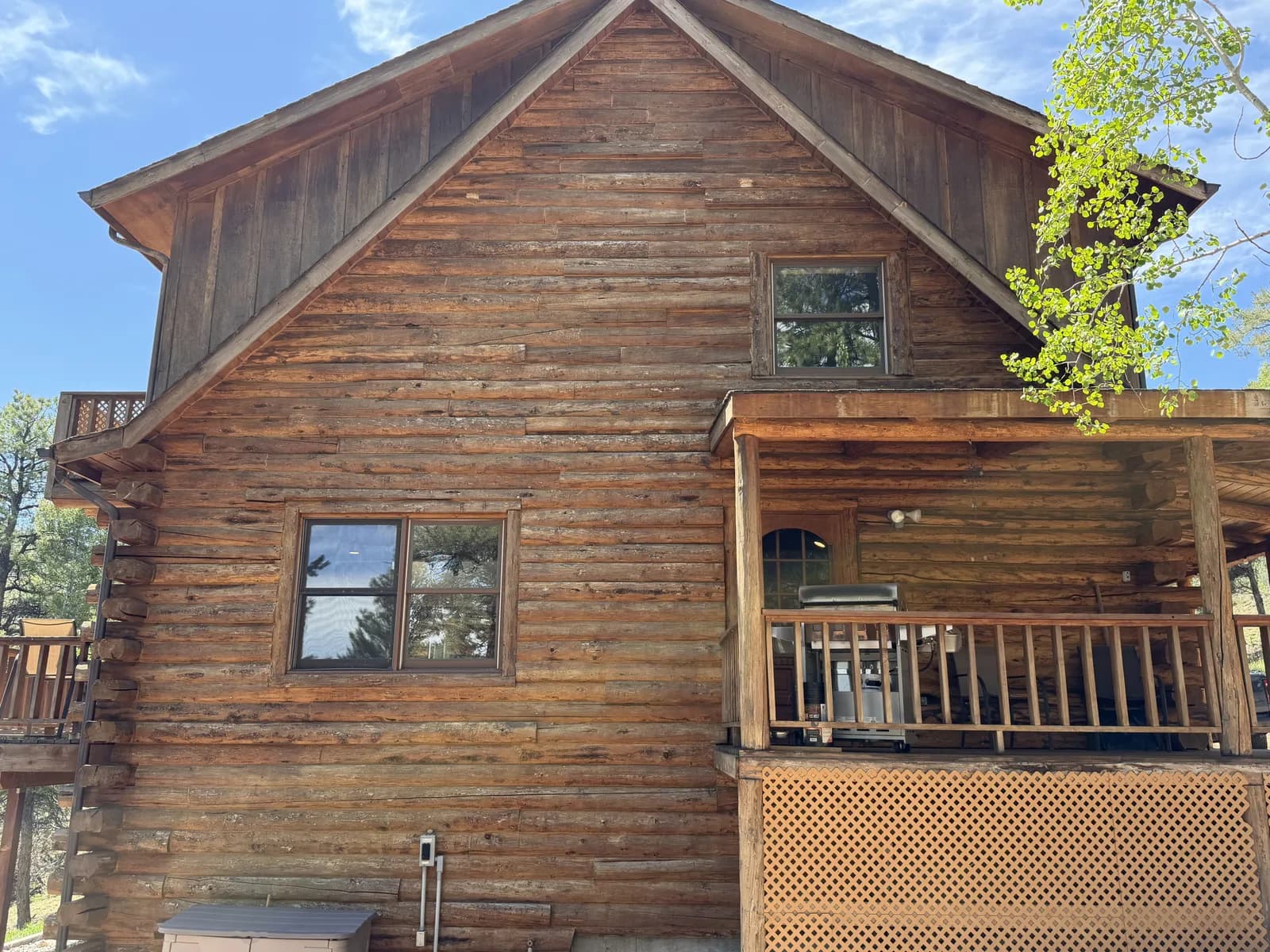
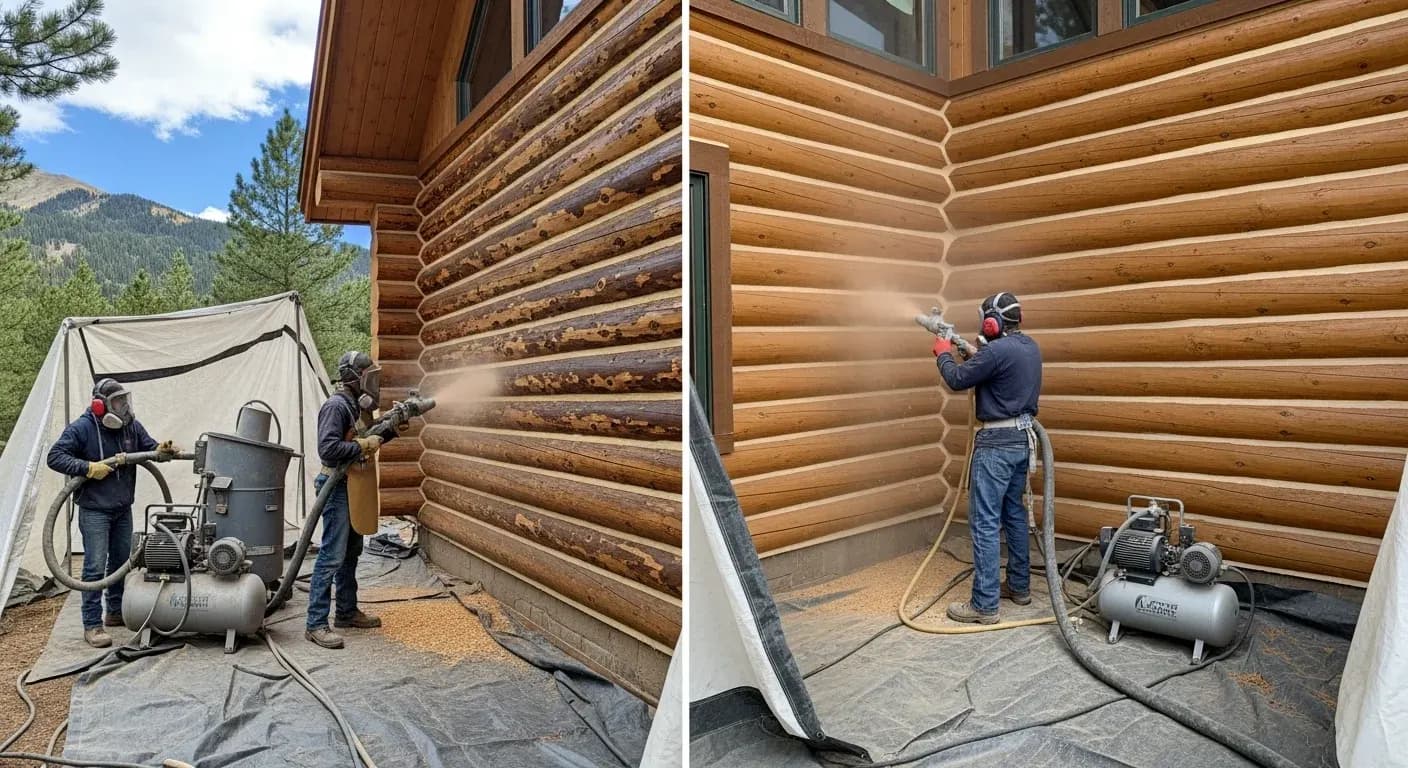
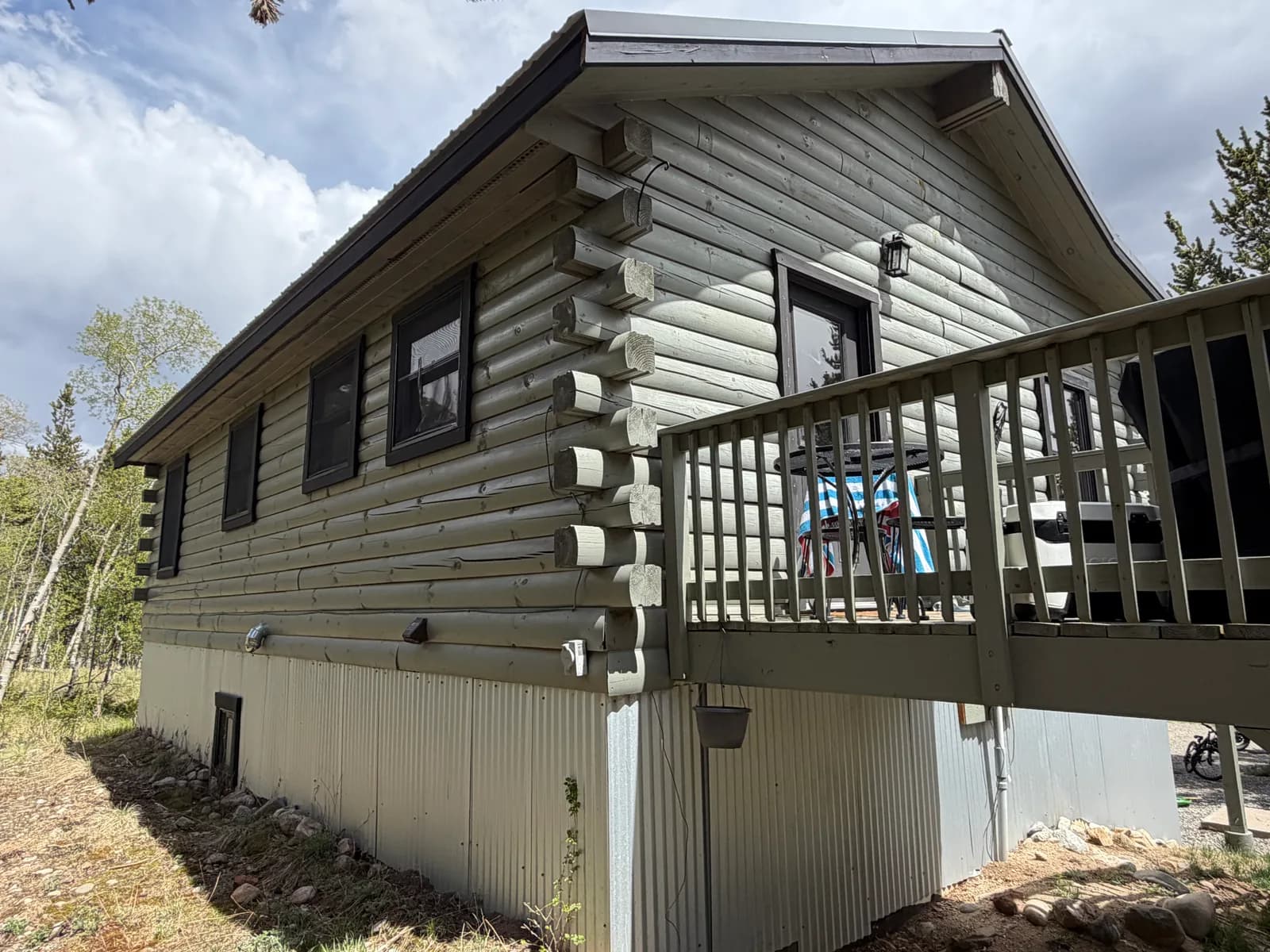
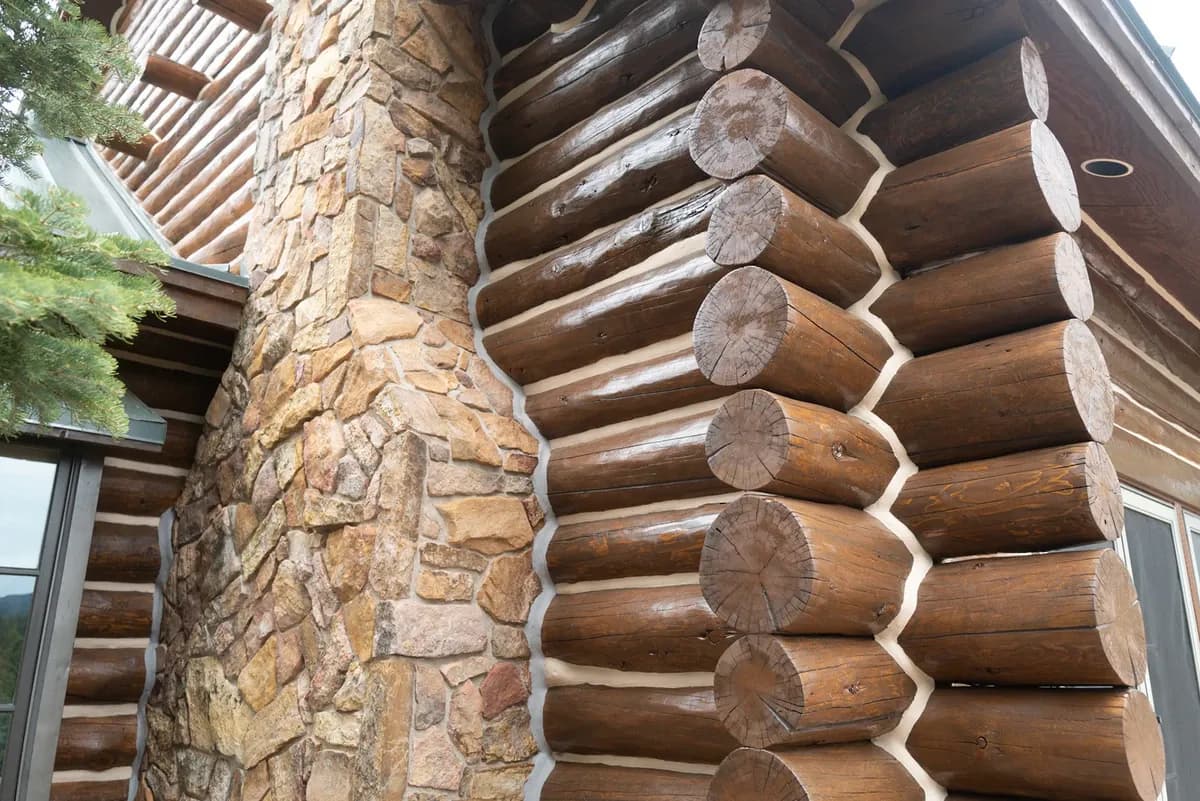
Illustrative photos of Log Home Finishing staining, chinking, and restoration work in Colorado.
Bailey Log Home Inspection — FAQ
Why is my Bailey log home’s stain peeling off in sheets?
Almost always because an incompatible finish was applied over an old coating without proper preparation. If the two products have different resin bases — for example oil-based over water-based, or a film-former over a penetrating stain — the new coat can’t bond and peels away from the layer underneath. That’s what was happening on this home. The only durable fix is to strip all of the old finish back to bare wood and start fresh with a single compatible system.
Can you just touch up the failed areas instead of stripping everything?
Not when the failure is system-wide. On this property about 40% of the finish was failing across roughly a quarter of the surface, and the failed coat wasn’t bonded to the wood. Patching new stain onto a delaminating base just repeats the failure. Media blasting both structures back to bare wood gives every surface the same clean, sound starting point so the new finish bonds uniformly and lasts.
My garage was never chinked — is that a problem?
Yes. Unsealed joints on an outbuilding are open to wind-driven rain, snow, insects, and air for the structure’s entire life, and water that collects between log courses creates hidden rot pockets you can’t see from outside until there’s real damage. On this property the garage needed a full chinking application across about 1,880 linear feet. Sealing it during the same project protects it and keeps the whole property on one maintenance schedule.
How do I choose between log staining companies for a job like this?
Look for a contractor who inspects before they quote and who works with log-specific systems, not general house paint. The failures on this home — adhesion failure from an incompatible stain, early decay in the log ends, and an unchinked garage — are exactly the things an experienced log home specialist catches and prices accurately. The written inspection report should explain each issue, why it happened, and what the corrective scope costs.
Example Inspections in Other Colorado Towns
Real, anonymized inspections from log homes across the state.
High-altitude UV, split railings, and open mortar
View inspectionA large-diameter full-scribe cabin in Buena Vista
View inspectionA solid log home with a failed deck system
View inspectionA maintained full-log home in Cimarron
View inspectionA VERY GOOD, well-maintained pre-purchase home
View inspectionFailed interior chinking and an overdue exterior
View inspectionA multi-structure log property in Evergreen
View inspectionA sound home ready for a full clean and finish
View inspectionMissing chinking and open log checks
View inspectionSun-worn siding and decks, caught at maintenance
View inspectionA full-scribe home that was never chinked
View inspectionSound structure, end-of-life finishes inside and out
View inspectionAn infested, weathered handcrafted log home
View inspectionA historic ten-building log ranch
View inspectionA two-story log home in Pine
View inspectionA large D-log home in Steamboat Springs
View inspectionA historic town hall in Tin Cup
View inspectionIs Your Bailey Log Home’s Finish Peeling?
An inspection tells you whether your finish failed from age or from an incompatible coat layered on top — and exactly what a clean, compatible restoration would cost.
Thomas Elliott · Serving log home communities across Colorado
Bailey Area & Related Services
Start with the main log home inspection page to see our full process, or explore log home restoration and maintenance for the work that follows.