Log Rot Repair in Colorado
Caught early, log rot is a repair. Left alone, it becomes a structural problem. Thomas Elliott and the Log Home Finishing crew stop decay at the source — removing rotten wood, treating with borates, and rebuilding or replacing logs across Colorado's high country.
Why Log Rot Is a Colorado Problem
Wood decay needs one thing to take hold: moisture. Logs that stay above roughly 20% moisture content become a home for the fungi that eat wood from the inside out. Colorado gives that fungus plenty of chances — deep snowpack that banks against the lower courses for months, intense high-altitude UV that cracks and checks the finish, freeze-thaw cycles that work water deeper into the wood, and short summer dry spells that aren't always enough to dry a north-facing wall back out.
The damage almost always starts where water gets a foothold: failed chinking and worn stain, sill logs in contact with snow and splash, deep upward-facing checks, and roof or gutter water that runs down the walls. By the time a homeowner notices a soft spot, the decay has usually been working quietly for a season or two.
That's why we don't just patch the symptom. A proper log home inspection finds every affected log and the moisture source behind it, and our repair corrects both — so the wood we restore actually stays sound.
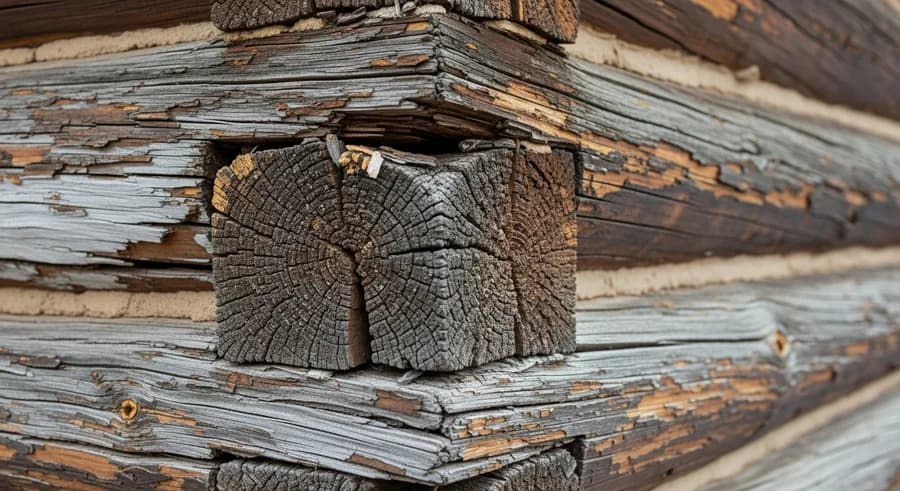
Failed stain & chinking
Once the finish wears through or chinking cracks, water wicks straight into the wood and stays there — the number-one path to decay.
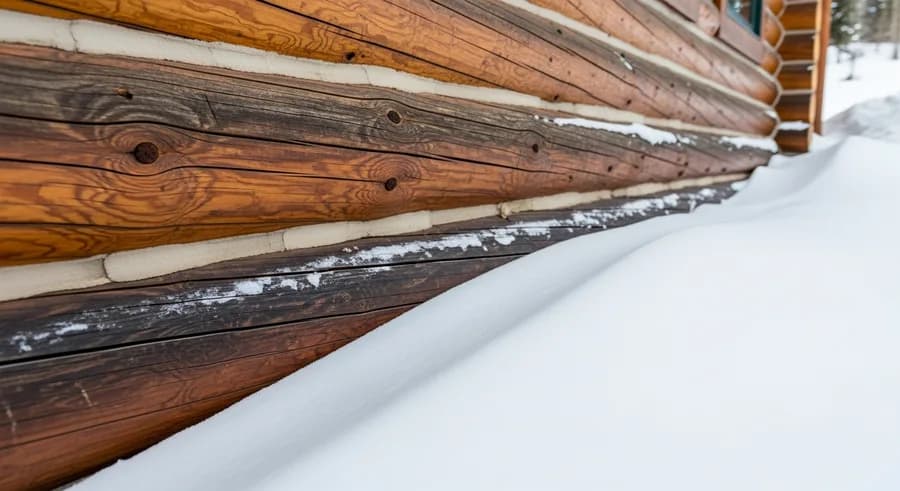
Snow load on lower logs
Drifts that bank against sill logs and bottom courses keep the wood saturated for months at a time through a Colorado winter.
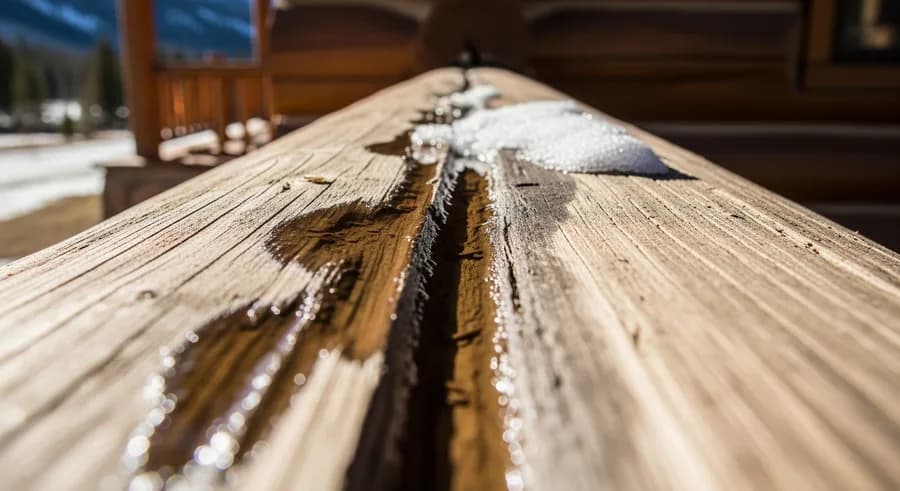
Deep checks holding water
Upward-facing checks on sun-baked log faces collect rain and snowmelt that soaks into the heart of the log.
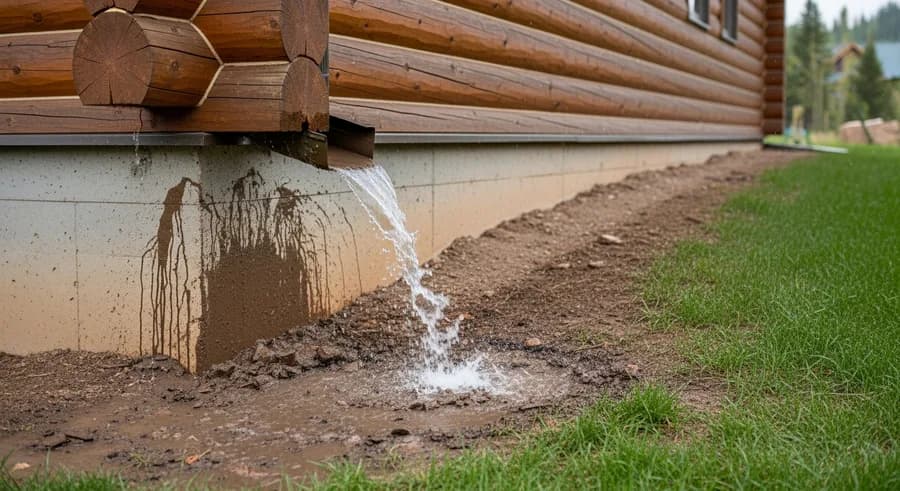
Poor drainage & splash-back
Blocked gutters, short overhangs, sprinkler overspray, and grade that slopes toward the home all drive moisture into the logs.
How to Tell Real Rot From Surface Staining
Dark wood isn't always decay — and decay isn't always obvious. These are the signs that warrant a closer look before small repairs turn into log replacement.
Soft, punky wood
An awl or screwdriver sinks into the log instead of meeting firm resistance.
Discoloration & dark staining
Grey-black or orange-brown blotches, especially low on north and east walls.
Fungal growth or musty smell
Visible fruiting fungus, surface mold, or a damp, earthy odor near the affected logs.
Insect activity
Carpenter ants, frass, or beetle holes — pests follow the moisture into softened wood.
Not sure what you're looking at? A professional log home inspection confirms the extent of decay with probing and moisture readings — and tells you whether log replacement is needed or an epoxy repair will do.
Rot Repair on Real Colorado Log Homes
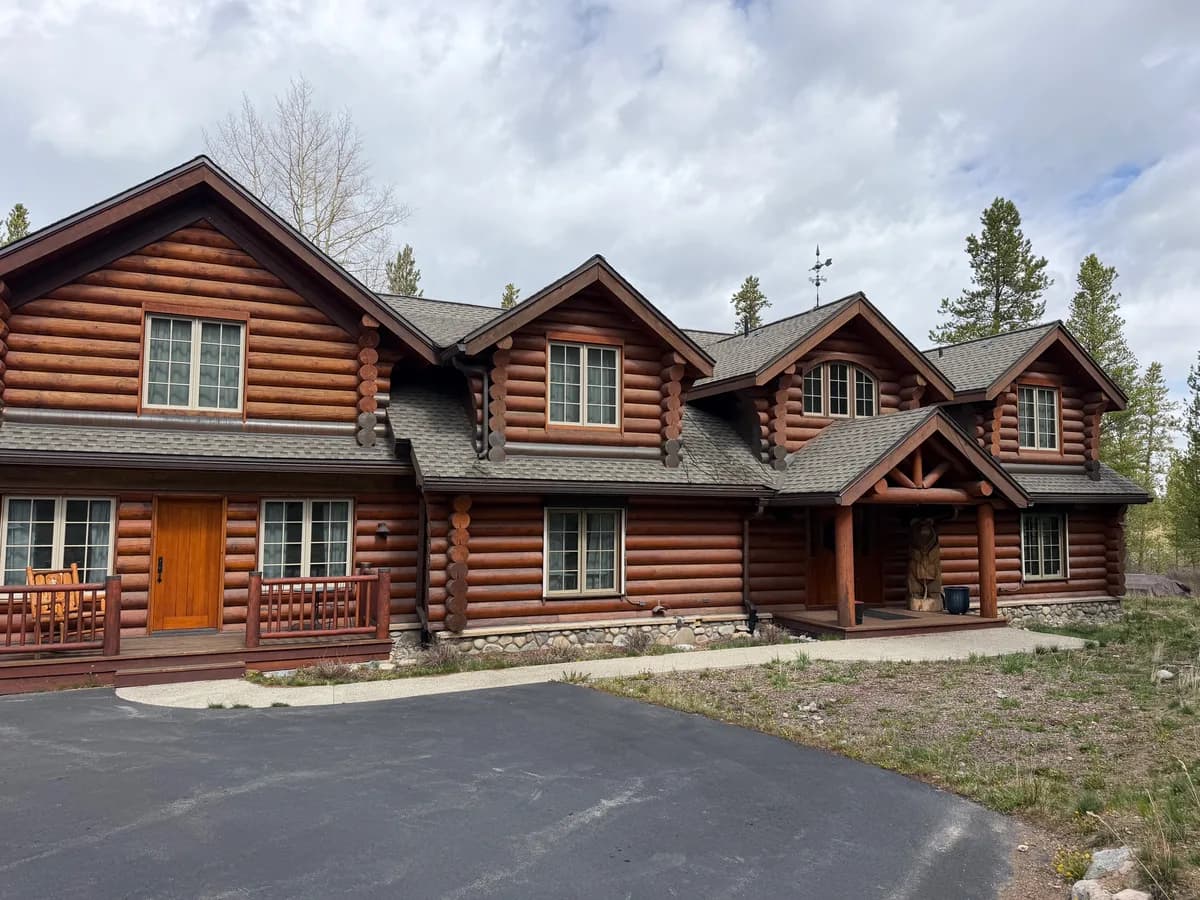
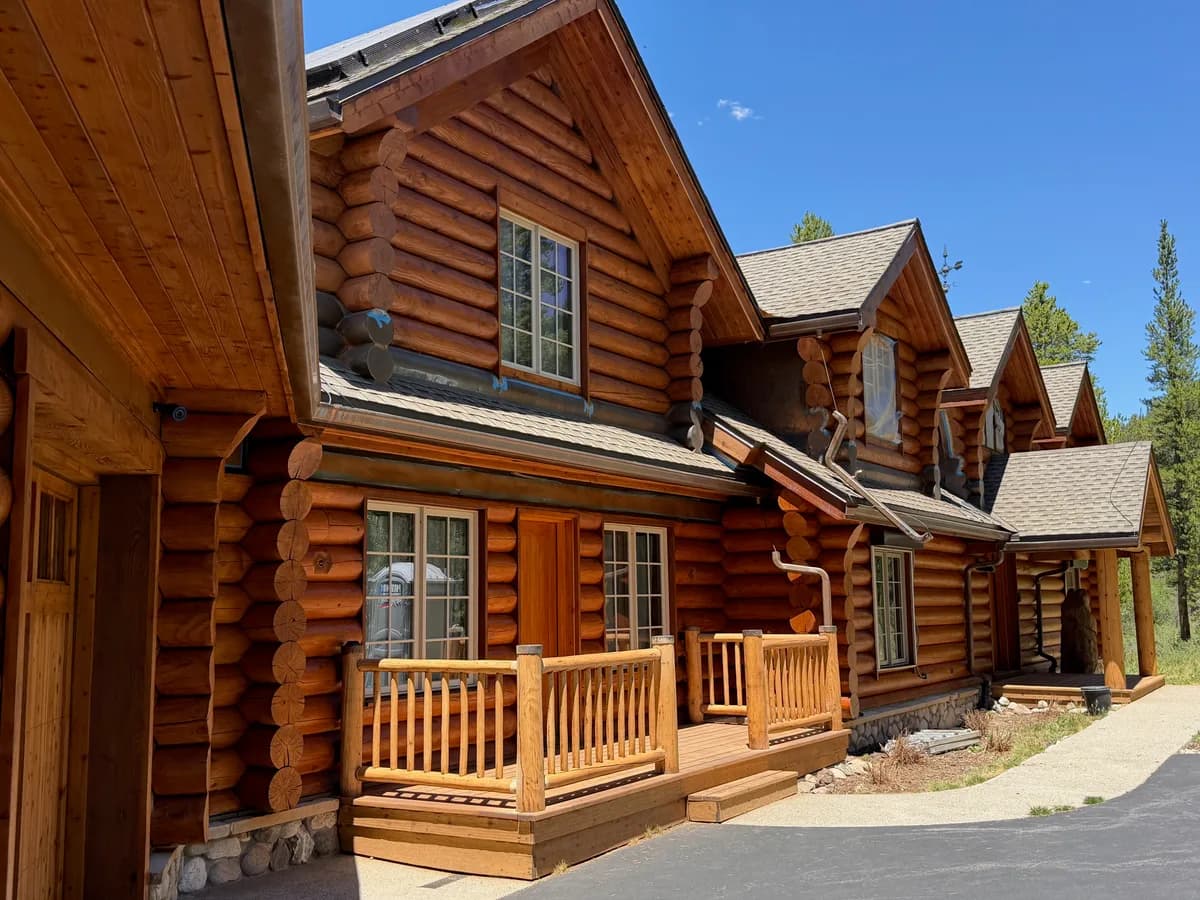
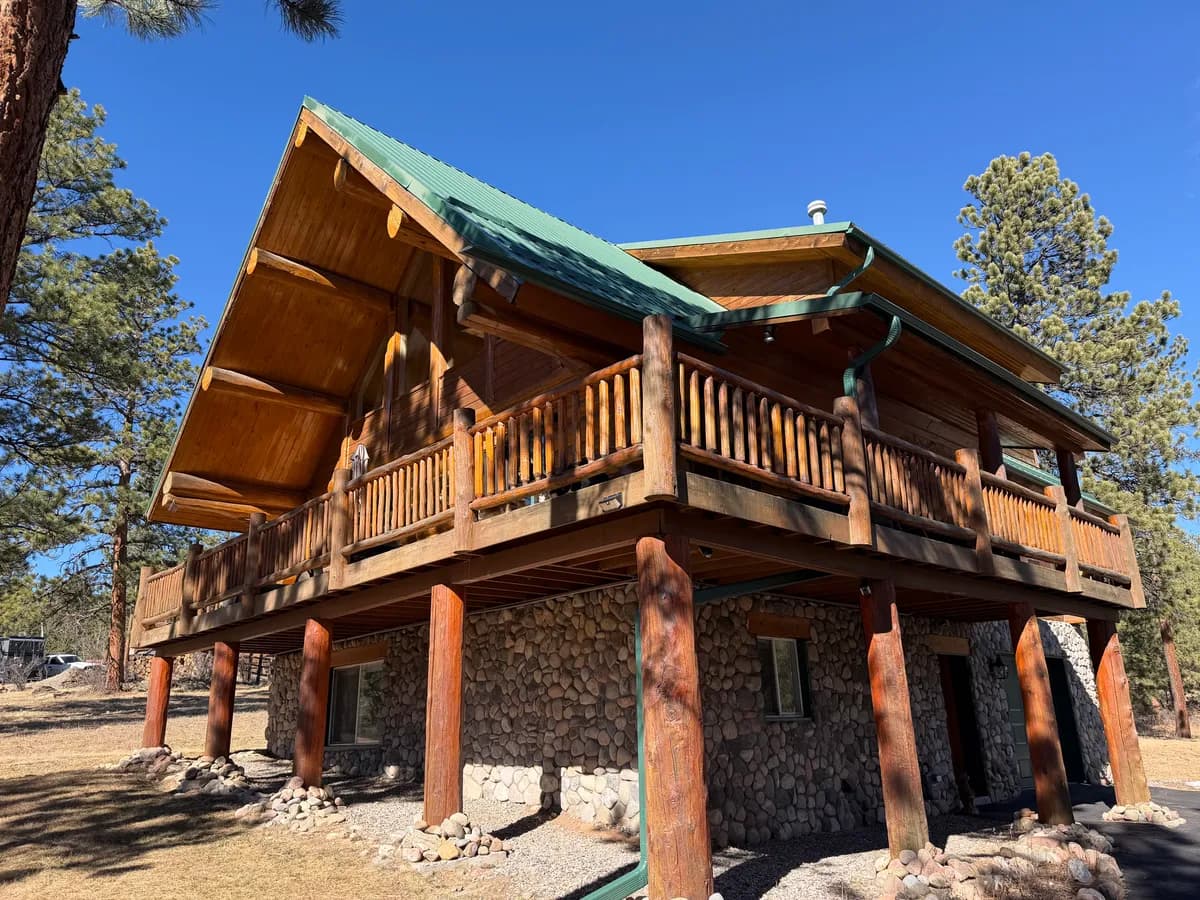
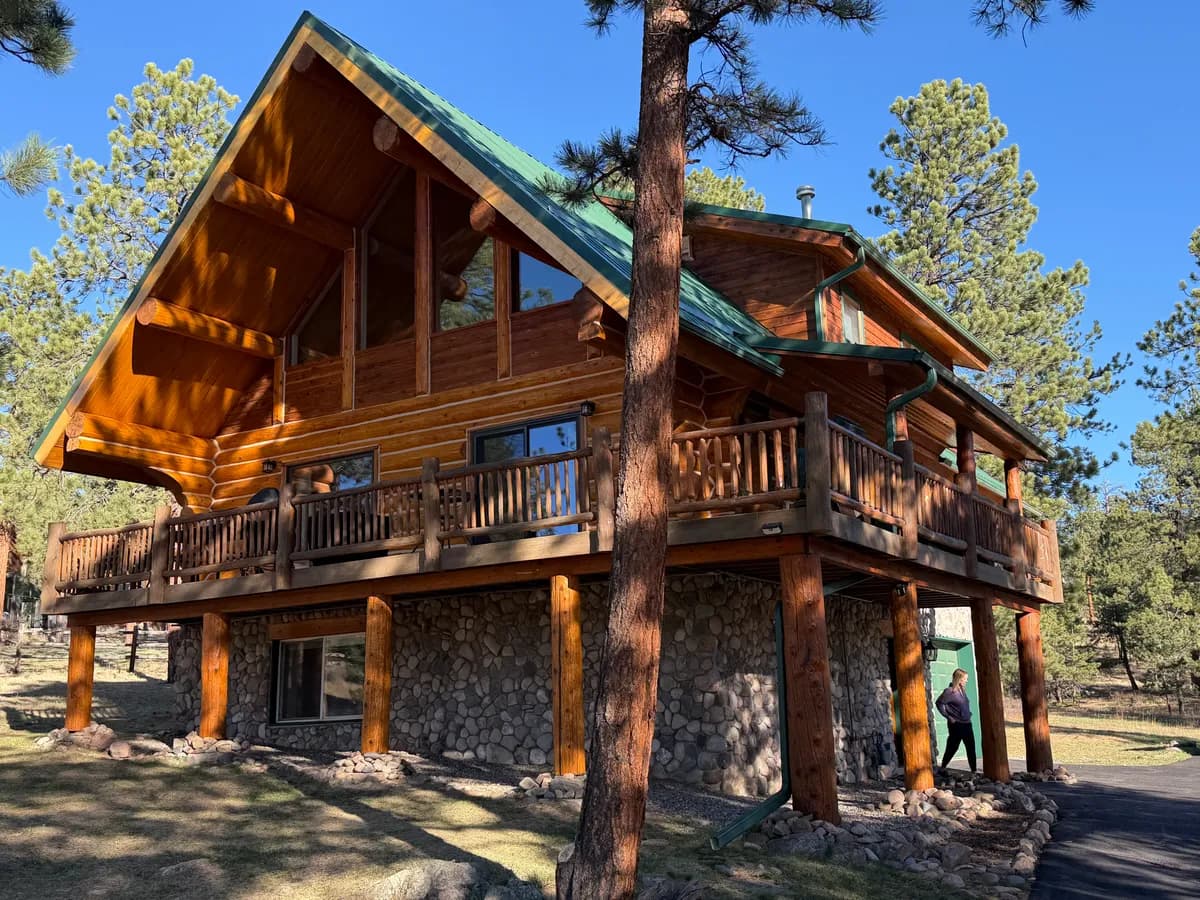
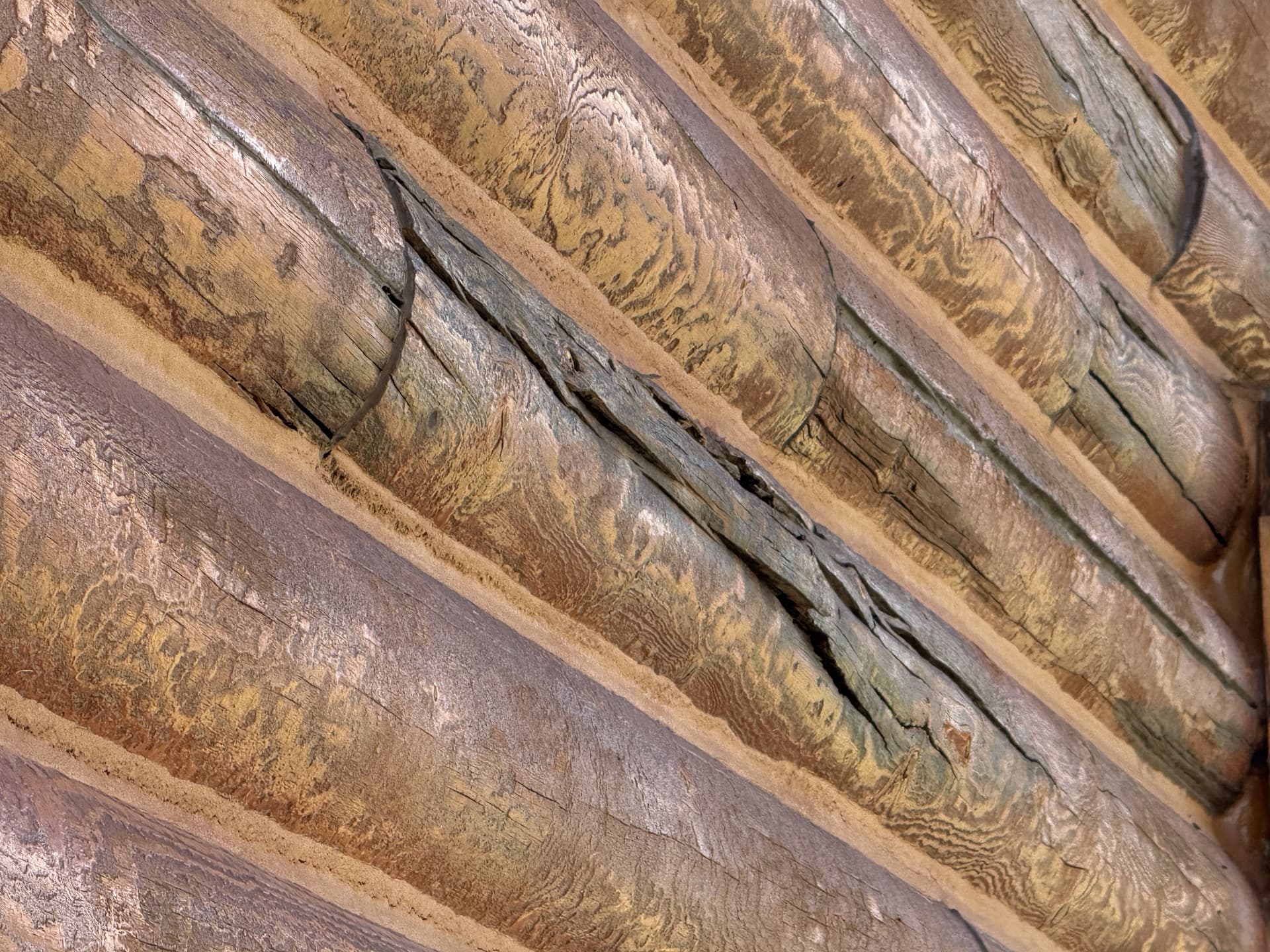
A look at how moisture damage starts and how we cut it back to sound wood. See more in our project portfolio.
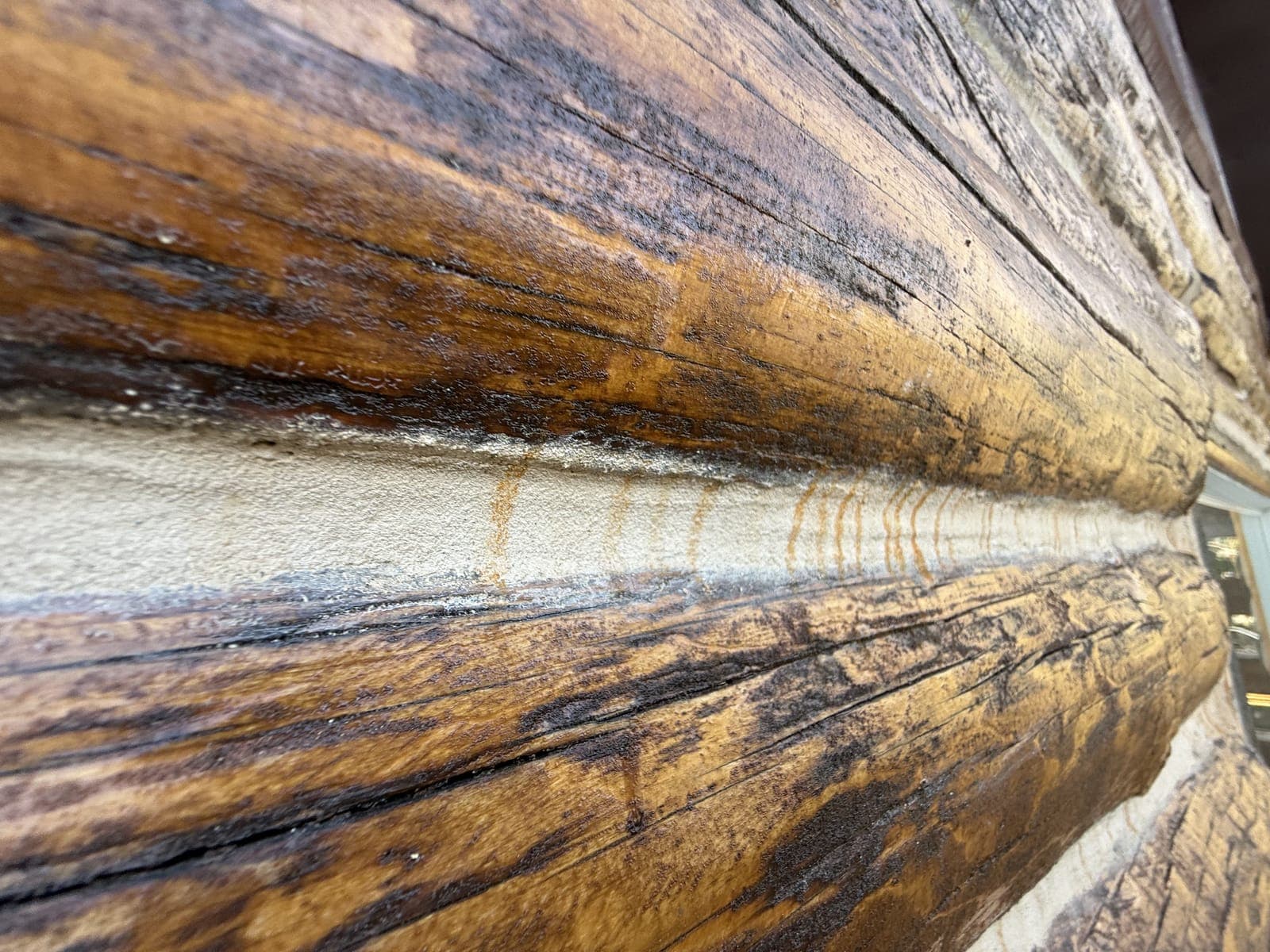
Our Log Rot Repair Process
Five steps that fix the wood and the reason it rotted — the only way a repair holds up in the Colorado climate.
Inspection & moisture mapping
We probe suspect logs and take moisture-meter readings to map exactly how far decay extends — so the repair scope is based on facts, not guesswork.
Remove all decayed wood
Every bit of punky, fungus-colonized wood is cut and cleaned back to sound material. Leaving soft wood behind guarantees the rot returns.
Borate preservation treatment
The surrounding sound wood is treated with borates (Tim-bor / Bora-Care) to kill remaining fungi and insects and protect against re-colonization.
Epoxy rebuild or log replacement
Shallow cavities are consolidated and rebuilt with structural log epoxy; deep or load-bearing decay is solved with half- or full-log replacement.
Re-seal, re-stain & fix the cause
We re-chink, re-stain, and correct the moisture source — drainage, gutters, flashing, and checks — so the wood stays dry and the repair lasts.
Epoxy Repair & Borate Treatment
When decay is shallow and the log is sound at its core, the smartest fix is to remove the punky wood, treat the cavity and surrounding wood with borates, and rebuild the profile with structural log epoxy. Done right, the repair is stronger than the decayed wood it replaced and blends into the wall once re-stained. It's faster and less invasive than replacement — the right call for localized rot caught before it spreads.
- Localized, surface-to-moderate decay
- Log still structurally sound at the core
- Minimal disruption, quicker turnaround
Half-Log & Full Log Replacement
When rot reaches the heart of a log, runs along its length, or the log carries structural load, rebuilding with epoxy isn't enough. We cut out the failed section and splice in matching new material — a half-log facing where the back of the log is sound, or a full replacement where it isn't — then re-seal and re-stain so it disappears into the wall. Learn more about that work on our log replacement page.
- Deep or full-thickness decay
- Load-bearing or sill logs
- Rot that has spread along the log
Rot Repair Is Rarely the Whole Job
Decay almost always travels with worn finishes and failed seals. These services round out a lasting fix:
Serving Colorado's Mountain Communities
From sill logs buried in Summit County snow to weathered walls on the Front Range, we repair log rot across Colorado's mountain communities. See our work in the project portfolio.
- 🎿Breckenridge
- 🎿Vail
- 🏔️Frisco
- 🏔️Silverthorne
- ⛰️Fairplay
- ⛰️Leadville
- 🎿Summit CountyView
- ⛰️Park CountyView
- 🌄Eagle CountyView
- 🏔️Grand CountyView
- 🎿Routt CountyView
- 🦌Larimer CountyView
From the San Juan Mountains to the Front Range — expert log rot repair services at your location.
Popular log home communities we serve
We Serve All of Colorado
Professional log rot repair services available throughout Colorado. Click your county to learn about local conditions and our specialized approach.
Log Rot Repair FAQs
Straight answers about decay, treatment, and what a repair really involves.
What causes log rot on Colorado log homes?
Log rot is wood decay caused by fungi that thrive when wood stays above roughly 20% moisture content. On Colorado log homes the usual culprits are failed stain or chinking that lets water soak in, snow that piles against lower courses and sill logs through a long winter, sprinkler overspray and splash-back from decks and grade, blocked gutters dumping water down the walls, and deep checks (cracks) on upper log faces that collect rain and snowmelt. North- and east-facing walls that dry slowly are usually the first to go.
How do I know if my logs are actually rotten and not just stained?
Surface discoloration alone is not rot. True decay feels soft, spongy, or punky when probed with an awl or screwdriver, and a moisture meter reads high in the affected zone. Other signs include fruiting fungus or mushrooms, a musty smell, paint/stain that flakes with damp wood underneath, and carpenter ants or other insects that are drawn to softened, moist wood. We confirm the extent with probing and moisture readings before quoting any repair.
Can rotten logs be repaired, or do they have to be replaced?
It depends on how deep the decay goes and whether the log is load-bearing. Shallow, localized rot is often repaired by removing the decayed wood, treating the cavity with borates, and rebuilding the profile with structural log epoxy. When decay reaches the core of a log, has spread along its length, or the log carries structural load, full or half-log replacement is the durable fix. We probe and moisture-test every affected log so you only pay to replace what truly needs it — see our dedicated log replacement service for those cases.
What is borate treatment and why does it matter?
Borates (such as disodium octaborate, sold as Tim-bor and Bora-Care) are mineral salts that diffuse into damp wood, killing the fungi that cause rot and the insects that feed on softened wood, while remaining low in toxicity to people and pets. After we remove decayed material we treat the surrounding sound wood with borates so the repair is not re-colonized by fungi. Borates are a standard, long-proven part of professional log preservation.
Will fixing the rot stop it from coming back?
Only if the source of moisture is corrected. Repairing the wood without fixing why it got wet just resets the clock. As part of every rot repair we address the root cause — re-sealing failed chinking and checks, re-staining bare wood, improving drainage, gutters, flashing, and grade, and recommending changes that keep snow and splash off the lower logs. That's the difference between a repair that lasts and one that fails in a few seasons.
How much does log rot repair cost in Colorado?
Every rot repair is priced after inspection because cost depends on how many logs are affected, how deep the decay runs, access, and whether epoxy repair or log replacement is needed. A single localized epoxy repair is modest; widespread decay or structural log replacement is a larger project. We give you an itemized, written estimate after probing and moisture-testing the home — use our online calculator for a ballpark and book an inspection for an exact figure.
Do you treat the insect damage that comes with rot?
Yes. Carpenter ants, beetles, and other wood-destroying insects are attracted to the soft, moist wood that decay creates, and their galleries accelerate the damage. After removing decayed and infested material we treat with borates, which are both fungicidal and insecticidal, then rebuild and seal so the repaired area stays dry and protected.
Log Rot & Restoration Inspections We Performed
Real, anonymized inspections where rot, log replacement, and structural repair drove the recommended scope.
Caught Some Soft Wood? Don't Wait a Season.
Rot only spreads. The sooner we inspect, the more likely it's a repair instead of a replacement. Get an honest, itemized estimate from a specialist who actually does the work.