
Log Home Inspection in Buena Vista, Colorado
A real Buena Vista inspection, anonymized — a hand-scribed cabin built with massive 24–30 inch logs that had never been sealed, and what it takes to restore one.
Log Homes in the Arkansas River Valley
Buena Vista sits in the Arkansas River Valley beneath the Collegiate Peaks, where Chaffee County’s high-desert sun is among the most intense in Colorado. Log homes here range from conventional milled cabins to dramatic hand-scribed full-scribe builds made from very large logs — and the larger the log, the more there is to protect.
A full-scribe cabin that has never been sealed is in a category of its own. Large-diameter logs present far more surface area to the weather, their joints open wider with seasonal movement, and an unprotected shell greys and softens fast at this altitude. The example below shows just how much material and labor a large-log restoration actually requires.
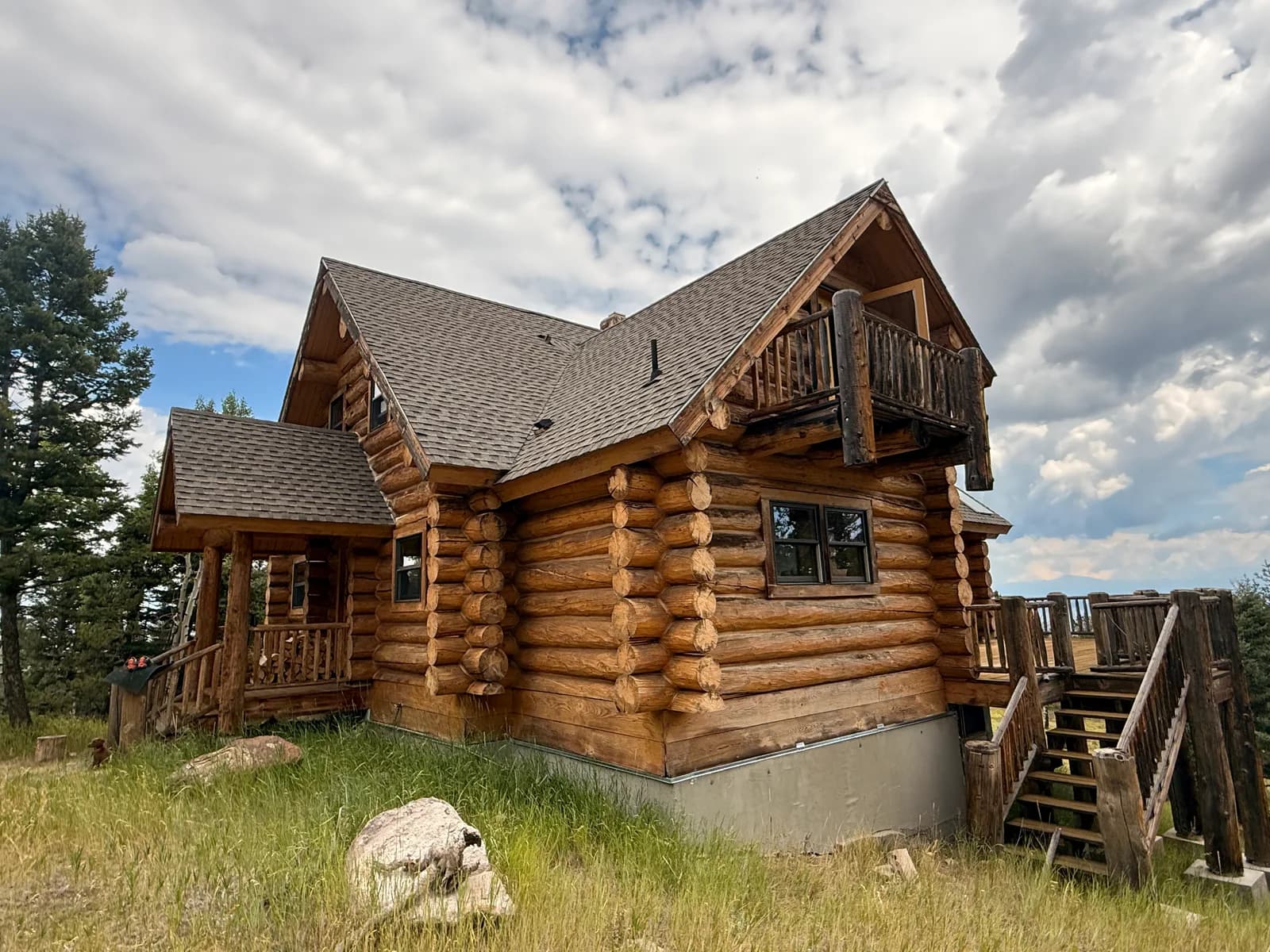
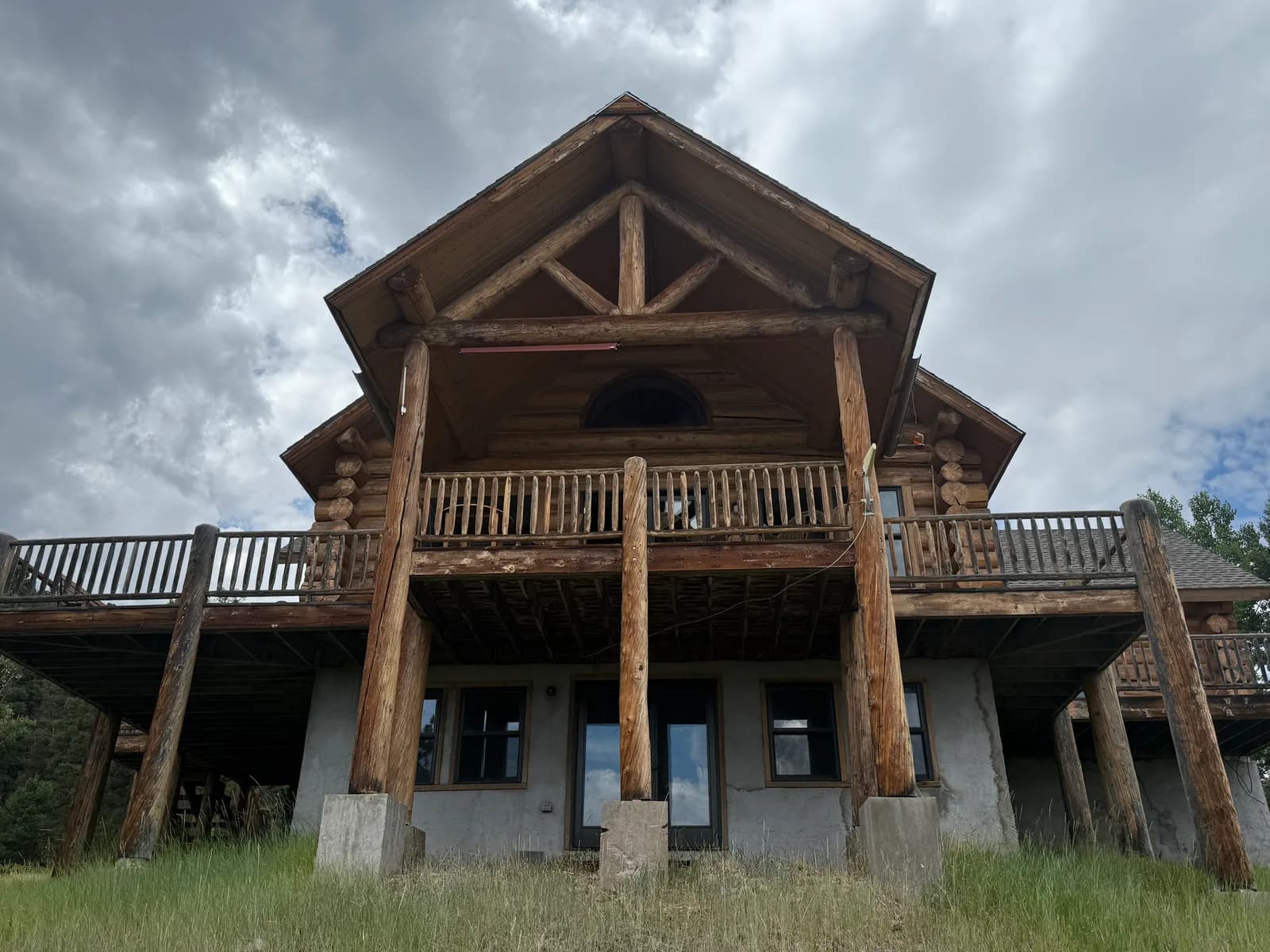
A large-diameter full-scribe cabin in Buena Vista
This cabin was hand-scribed from unusually large logs in the 24-to-30-inch range and had never been properly sealed since construction. Over seven Colorado seasons the exterior shell progressed from uncoated raw timber into moderate-to-severe weathering, and the interior ceilings were beginning to yellow — an early sign that UV and airborne contaminants were reaching surfaces that were never protected.
The existing chinking — a concrete-and-fiberglass system — had failed on every wall, inside and out. The combination of failed seals and very large log diameters places this cabin in a category that requires substantially more material and labor than a conventional log home. Work was recommended to begin immediately to halt further degradation.
Documented Conditions
The large-diameter log challenge
At 24–30 inches in diameter, these logs are far larger than the 10–14 inch stock used in most homes. A round log presents roughly the upper half of its circumference to the weather, so the effective surface to clean, strip, sand, and finish is about three times the nominal wall area — a multiplier that applies to every step: blasting, brushing, primer, stain, and top coat.
Exterior — never sealed, weathered shell
No stain or sealant had ever been applied; the logs stood unprotected for seven Colorado seasons. UV had greyed and softened the south- and west-facing fibers, with water staining and runoff tracking on most walls. The substrate was still structurally sound, but the outer fiber layer had to be removed and the surface rebuilt before any finish would bond.
Chinking — concrete/fiberglass system failed
The existing seal was a concrete-and-fiberglass-insulation system that had failed prematurely on all sides of the cabin. It was no longer a weather barrier and could not be coated over — full removal and disposal was required. On logs this size the replacement joints run wide (commonly 2.5–4 inches), demanding trapezoidal grip-strip backing and far more chinking material per foot.
Interior ceilings — early yellowing
The interior tongue-and-groove ceilings were beginning to yellow — the textbook early warning that UV, cooking moisture, and airborne contaminants are settling into raw wood. Caught now, the yellowing is fully reversible with two coats of clear interior finish. Left untreated, it progresses to amber and then to darker tannin staining that cannot be lifted without abrasive intervention.
Checks (log cracks) — interior & exterior
Roughly 600 linear feet of large checks on the exterior and 500 linear feet on the interior were open paths for water entry. These were scoped to be backed and filled before finishing so they shed water rather than wick it into the log body.
Example Scope & Investment
The anonymized scope below mirrors the field-measured work order for this Buena Vista cabin. The figures reflect the large-diameter multiplier on every line.
- Refinish exteriorMedia blast + Osborne brush to bare, sound wood2,800 sq ft$28,000
- Remove failed chinkingRemove and dispose of the concrete/fiberglass systemAll walls$8,900
- Apply Perma-Chink systemPrelude primer, Ultra-2 finish, Lifeline Advance top coat (2 coats each)Full exterior$18,500
- Apply chinkingTrapezoidal grip-strip and chink all joints~1,950 lf @ $18/ft$35,100
- Backer & fill large checksSeal open exterior checks~600 lf @ $5/ft$3,000
- DeckPressure wash and recoat surface + railingsFull deck$4,500
- Clean interior logsPerma-Chink Log Wash, home + garageFull interior$2,800
- Remove failed chinkingRemove concrete/fiberglass systemHome + garage$12,200
- Apply interior clearLifeline Advance interior clear (2 coats) — logs, timbers, ceilingsFull interior$11,500
- Apply chinkingTrapezoidal grip-strip and chink all joints~1,720 lf @ $18/ft$30,960
- Backer & fill large checksSeal open interior checks~500 lf @ $4/ft$2,000
These figures come from a real Log Home Finishing inspection in Buena Vista, shown here as an anonymized example. Large-diameter and full-scribe cabins vary widely — your inspection includes a written, field-measured scope matched to your home’s actual condition.
Products & methods used
Why Large Logs Change the Whole Project
The defining feature of this property is the size of its logs, and that size changes the sealing problem in three ways: the curved surface area roughly triples relative to a flat wall, the chinking joints run far wider because big logs move more across seasons, and every step from blasting to top coat scales up with the extra surface.
On joints of this width, premium chinking compound alone runs at least $10 per linear foot in material, and even an experienced applicator with a grip-strip and bulk-load gun completes only a few linear feet per hour. That is why a large-log restoration carries a materially higher investment than a conventional cabin of the same footprint — and why acting before the shell decays further is the most cost-effective path.
- Effective surface area on round 24–30 inch logs is roughly triple the nominal flat-wall figure.
- Wide joints need trapezoidal grip-strip backing to maintain a proper two-point bond.
- Interior ceiling yellowing is reversible now with a clear coat — but not once it darkens to tannin staining.
- Each unsealed season compounds the damage and the eventual cost.
What the Work Looks Like
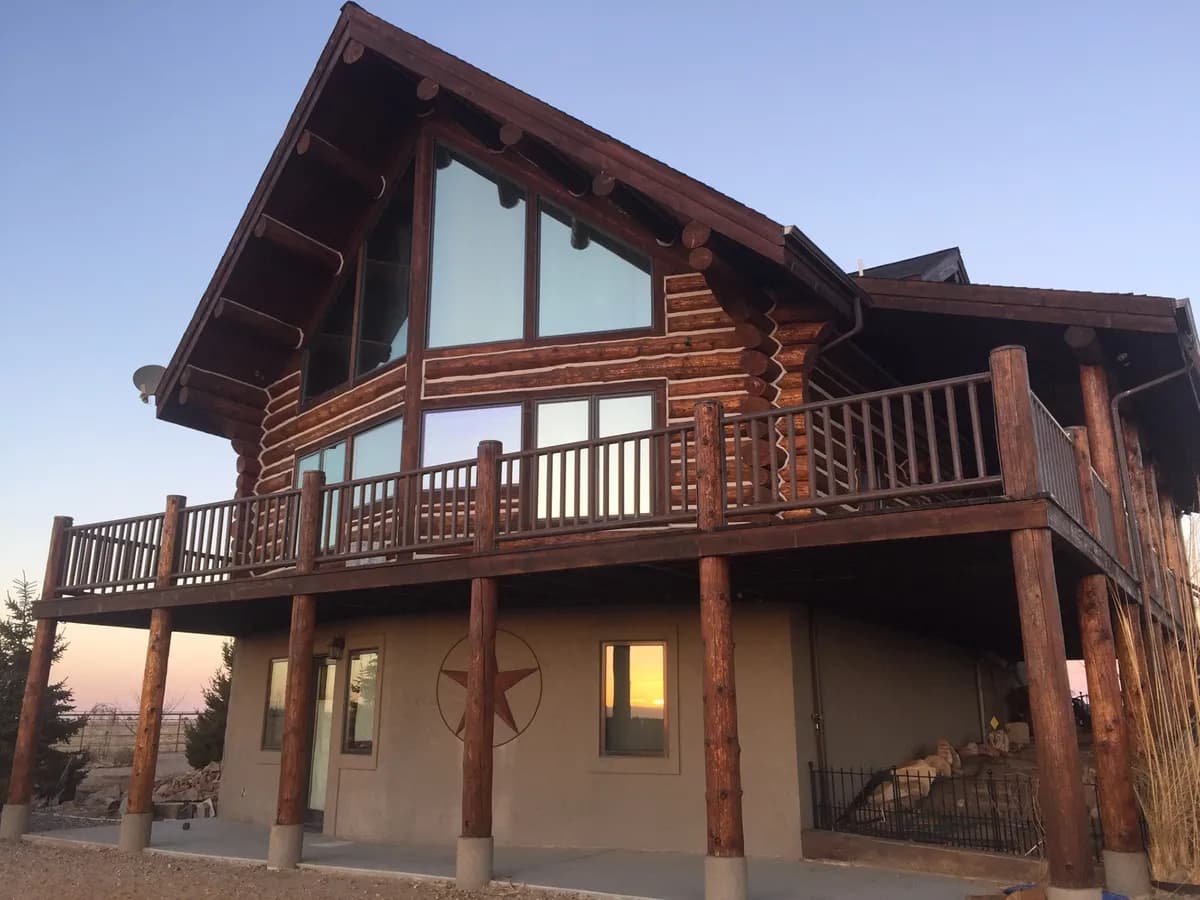
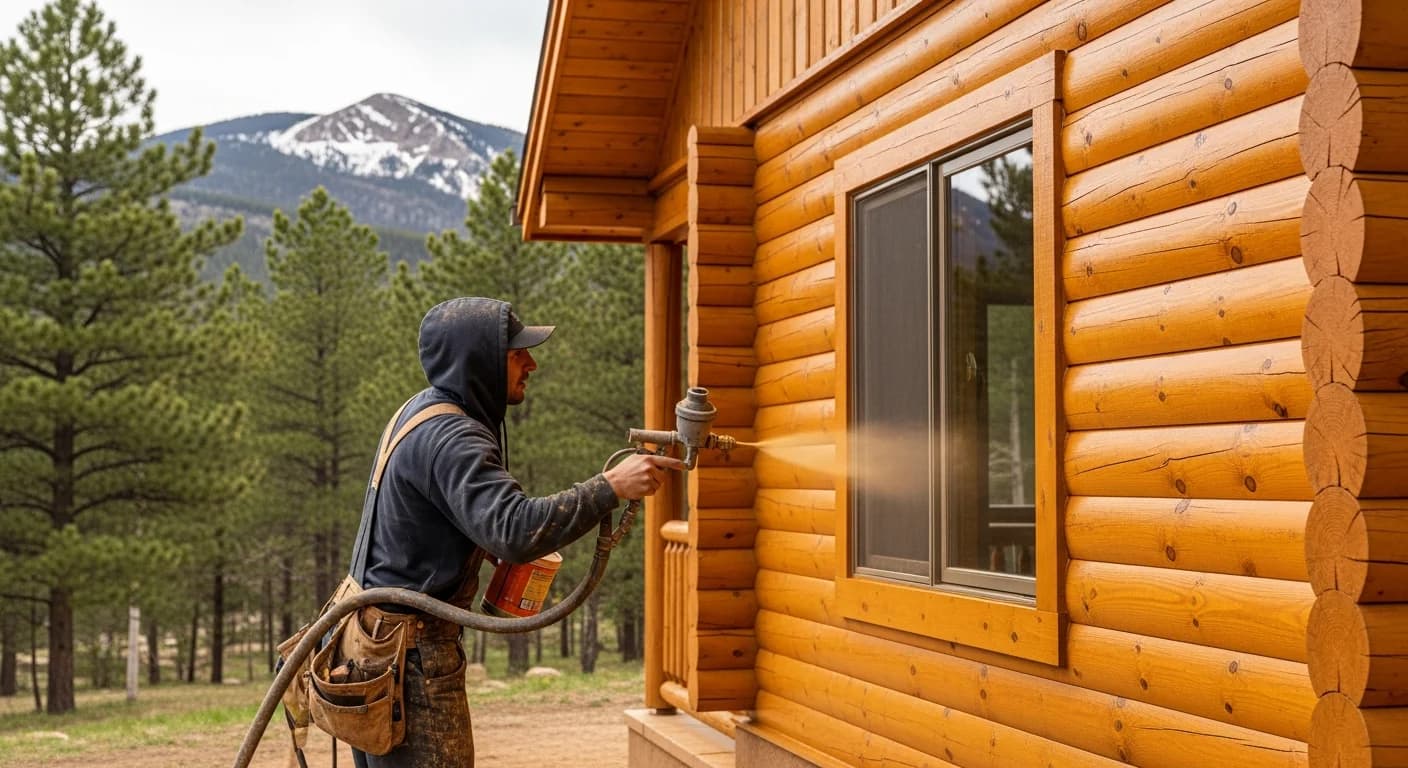
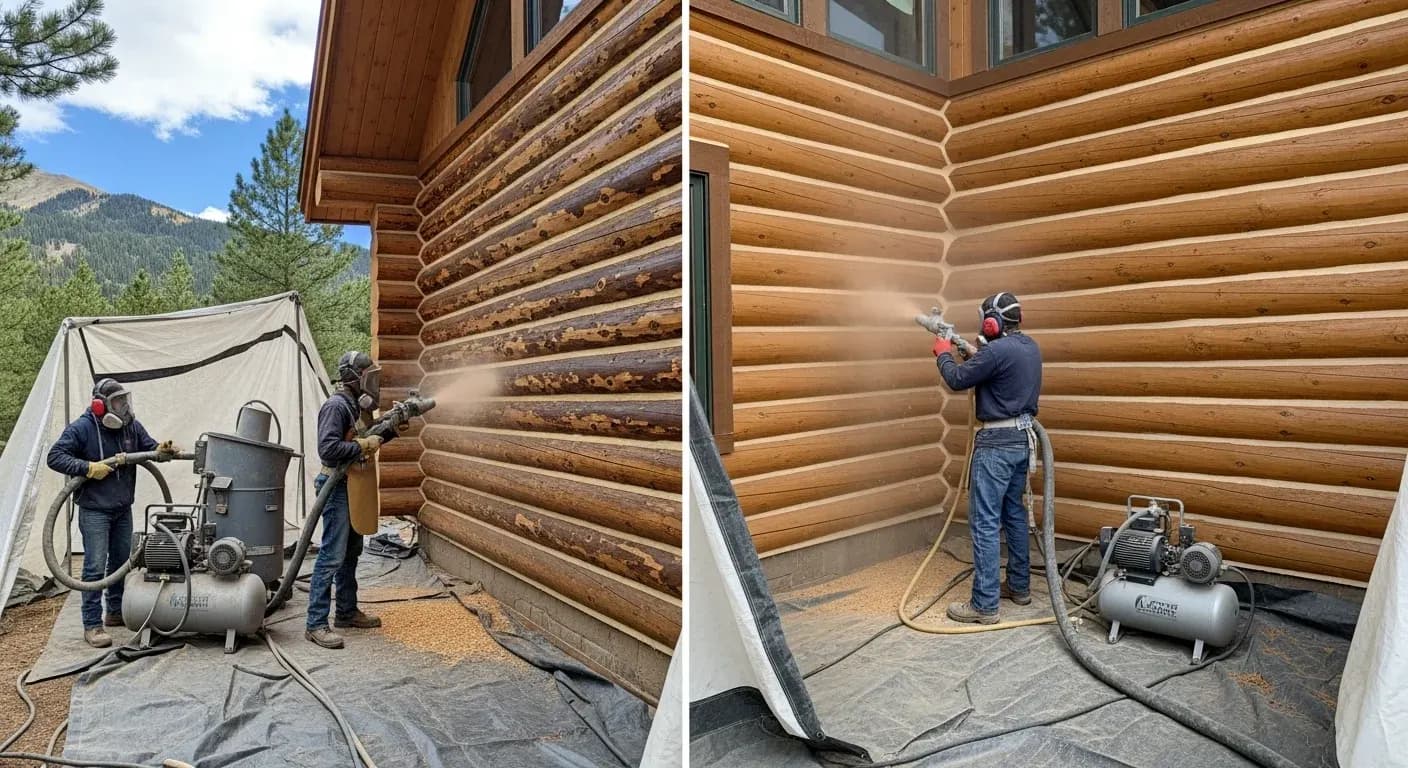
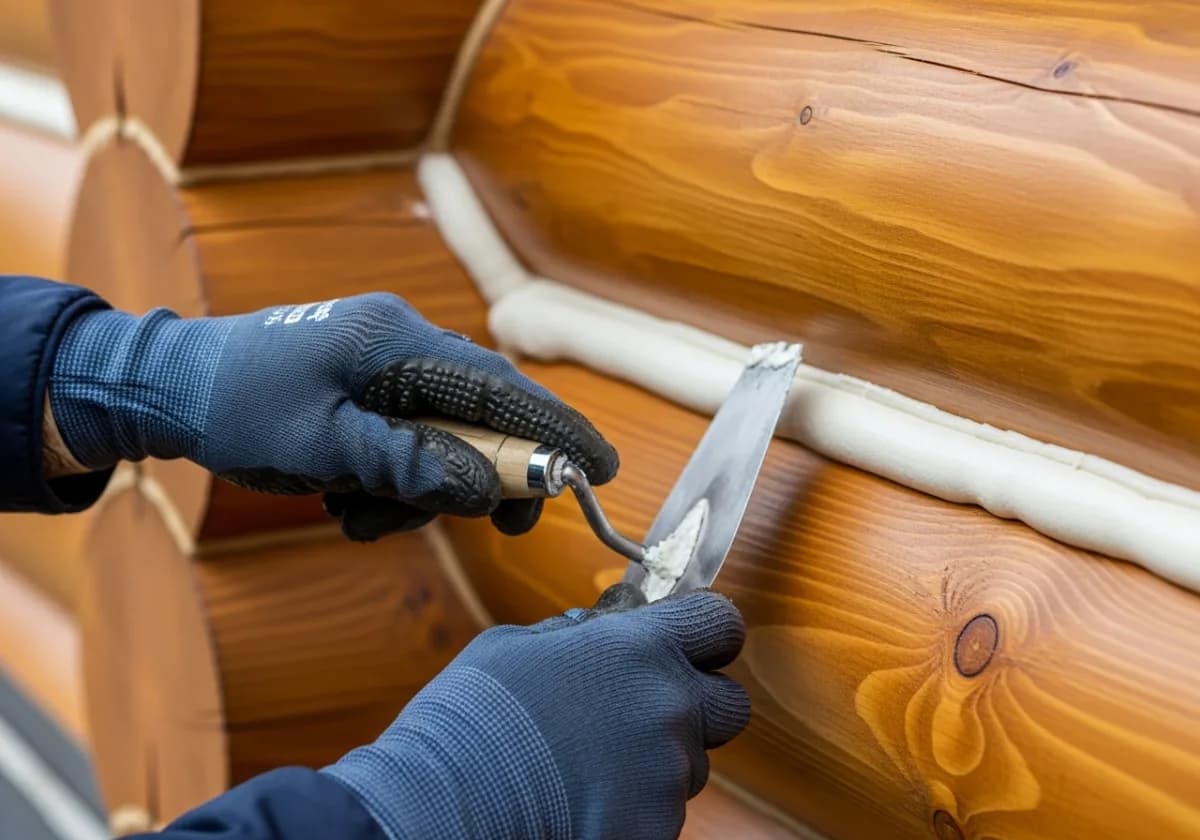
Illustrative photos of Log Home Finishing staining, chinking, and restoration work in Colorado.
Buena Vista Log Home Inspection — FAQ
Why does a large-diameter log cabin cost more to restore?
Because almost everything scales with log size. A round 24–30 inch log presents roughly three times the curved surface of a flat wall of the same footprint, so blasting, sanding, priming, staining, and top-coating all take more material and labor. The joints are also wider, consuming far more chinking per linear foot. The example here totaled $157,460 for exactly these reasons.
What happens if a log home is never sealed?
The unprotected shell greys and softens as UV breaks down the surface lignin, water tracks down the walls, and any open check or joint wicks moisture into the wood. Interior ceilings can begin to yellow. The substrate may still be sound for a while, but the outer fiber must eventually be removed and the surface rebuilt before any finish will bond — which is what this cabin required.
Can yellowed interior ceilings be brought back?
If caught early, yes. Early yellowing on raw interior wood is fully reversible with a thorough cleaning and two coats of a clear interior finish. If it is left untreated, it progresses to amber and then to darker tannin staining that cannot be lifted without abrasive intervention — so the clear coat is best applied before that point.
What is trapezoidal grip-strip chinking?
It is a backing method for wide chinking joints. A trapezoidal grip-strip (and backer) establishes a proper two-point bond so the chinking adheres to both log faces and flexes with seasonal movement without tearing. On large-diameter logs, where joints commonly run 2.5–4 inches, this backing is essential to a durable seal.
Example Inspections in Other Colorado Towns
Real, anonymized inspections from log homes across the state.
An incompatible finish peeling off a home and garage
View inspectionHigh-altitude UV, split railings, and open mortar
View inspectionA solid log home with a failed deck system
View inspectionA maintained full-log home in Cimarron
View inspectionA VERY GOOD, well-maintained pre-purchase home
View inspectionFailed interior chinking and an overdue exterior
View inspectionA multi-structure log property in Evergreen
View inspectionA sound home ready for a full clean and finish
View inspectionMissing chinking and open log checks
View inspectionSun-worn siding and decks, caught at maintenance
View inspectionA full-scribe home that was never chinked
View inspectionSound structure, end-of-life finishes inside and out
View inspectionAn infested, weathered handcrafted log home
View inspectionA historic ten-building log ranch
View inspectionA two-story log home in Pine
View inspectionA large D-log home in Steamboat Springs
View inspectionA historic town hall in Tin Cup
View inspectionHave a Large-Log or Full-Scribe Cabin in Buena Vista?
Big logs need an inspector who understands how surface area, joint width, and altitude change the work. Get a field-measured assessment.
Thomas Elliott · Serving log home communities across Colorado
Buena Vista Area & Related Services
Start with the main log home inspection page to see our full process, or explore log home restoration and maintenance for the work that follows.