
Log Home Inspection in Breckenridge, Colorado
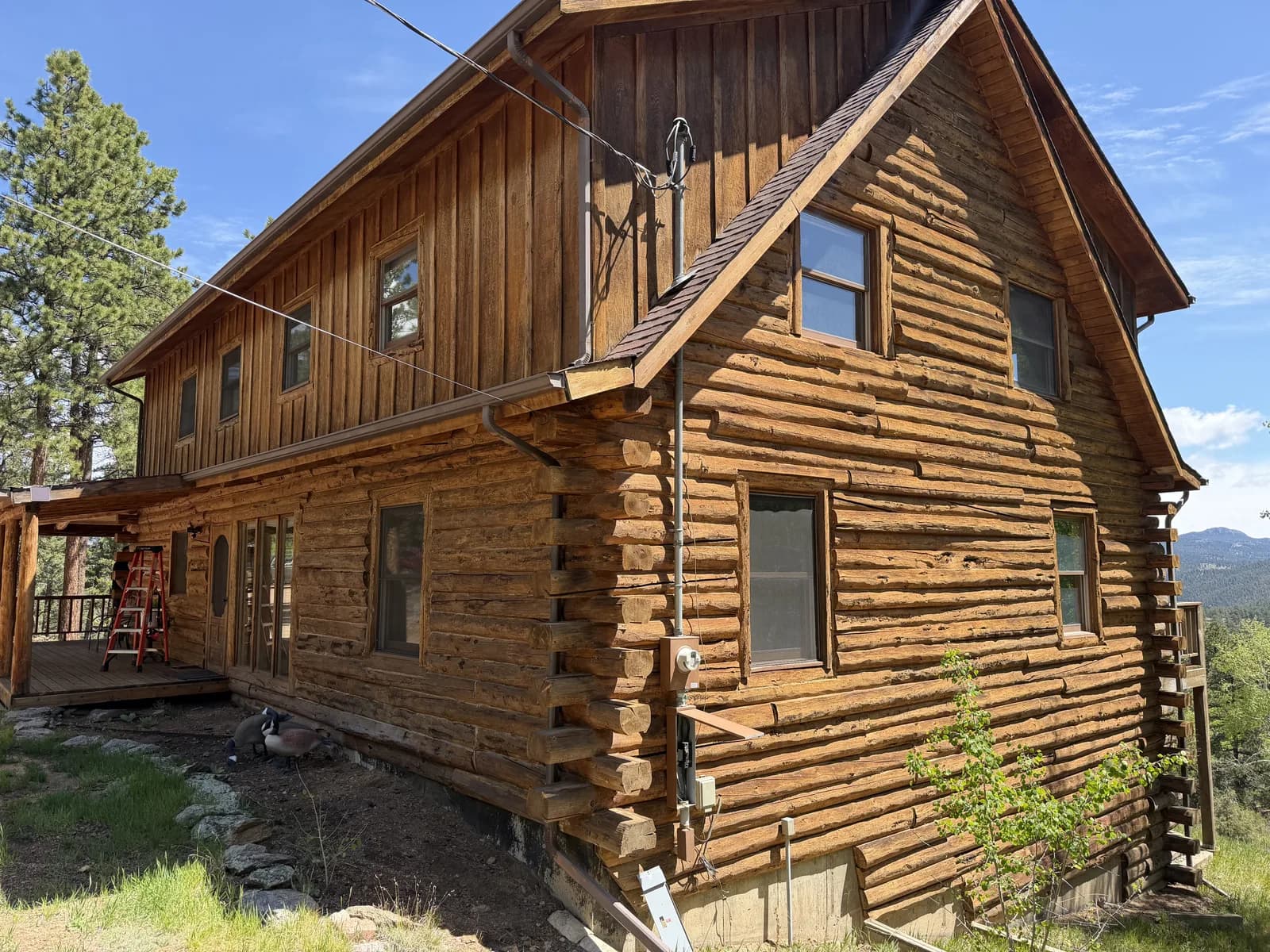
A real Breckenridge inspection, anonymized — a full-log home at nearly 10,000 feet with south- and east-wall UV damage, deck railings split beyond repair, and river rock mortar that needed sealing before another freeze-thaw winter.
Log Homes in Breckenridge & High-Altitude Summit County
Breckenridge log homes sit about as high as log homes get in Colorado — many at or near 10,000 feet in Summit County. At that elevation the air is thin and the UV is brutal, especially on the south- and west-facing walls that take the sun all day. Add deep snow loading, sharp temperature cycling, and the freeze-thaw that works at every mortar joint and railing, and you have one of the most demanding environments a wood finish will ever face.
The home below is a full-log Breckenridge residence inspected for a comprehensive restoration. It shows the classic high-altitude pattern: the protected elevations are holding, but the sun-blasted south and east walls have lost their finish, the exposed deck railings have started to split through, and the river rock foundation and chimney have opened mortar joints that let water in. A single inspection that looks at logs, decks, and masonry together is what keeps a home like this ahead of the altitude.
High-altitude UV, split railings, and open mortar
At nearly 10,000 feet, this full-log home was wearing exactly where the sun hits hardest. The south- and east-facing walls showed the most advanced deterioration — significant checking, graying, and substantial loss of the existing stain — along with the truss details and log ends above the garage entrance. The chinking between logs was largely intact, but the surrounding wood had lost its protective coating, so the scope centered on bringing the finish back before the bare wood started to check deeper.
The decks told the same UV story more dramatically: on the upper deck, the cap rail had split entirely through the wood and the finish had failed completely. Four railing sections and two posts were beyond refinishing and needed full replacement, while the remaining railings were serviceable but due for a strip and recoat. The river rock foundation and chimney had open mortar joints subject to freeze-thaw, and a small interior item — refinishing the fireplace mantle and shelves — rounded out a single, coordinated restoration.
Findings at a Glance
| Area | Current condition | Recommended action |
|---|---|---|
| South & east walls | Advanced UV checking, graying, stain loss (~1,200 sq ft) | Media blast and sand, then re-stain to match |
| Full exterior finish | Uneven coverage across logs, siding, trim, roofline | Full re-stain (~4,000 sq ft) with Sashco Capture/Cascade |
| Upper deck railings | Cap rail split through; complete finish failure | Replace 4 sections and 2 posts; refinish the rest |
| All other railings | Serviceable but finish loss and early weathering | Strip and refinish for uniform protection |
| River rock foundation & chimney | Mortar joint deterioration; freeze-thaw risk | Repair joints; apply Sashco Cascade glaze coat |
| Interior mantle & shelves | Cosmetic mismatch with living room finish | Color-matched paint — straightforward refresh |
Documented Conditions
South & east walls — high-altitude UV damage
The south- and east-facing walls displayed the most advanced deterioration, driven by direct, sustained UV at high altitude. The logs showed significant checking (surface cracking along the grain), graying of the wood, and substantial loss of the existing stain. The truss details and log ends above the garage entrance were similarly affected. Surface prep here is media blasting and sanding (~1,200 sq ft) to remove damaged fiber and old finish so the new stain bonds properly.
Upper deck railings — split beyond repair
The upper deck railings had taken combined UV, snow-load, and temperature-cycling damage. Close inspection of the cap rail revealed deep splitting cracked entirely through the wood, with complete finish failure. Four railing sections and two posts on the upper deck were beyond the point where refinishing alone would be effective and were specified for full replacement, with new railings stained to match before installation.
Remaining railings — serviceable but weathering
The rest of the railings — on both the newer lower deck and the existing upper deck sections — were structurally serviceable but showed clear finish loss and early weathering. All railings were scoped to be stripped and refinished with the Sashco Capture/Cascade system so the entire exterior carries uniform protection and a consistent appearance.
River rock — open mortar joints
The river rock on the foundation perimeter and the chimney showed mortar joint deterioration and general surface weathering. Gaps and cracks in the joints allow moisture intrusion and are subject to freeze-thaw at this elevation. The plan repairs all deteriorated joints to restore integrity, then applies a Sashco Cascade glaze coat across the stone to seal it, prevent further penetration, and restore the appearance.
Interior mantle & shelves — cosmetic
Inside, the fireplace mantle and built-in shelves simply needed refinishing to match the dark brown living room furniture for a cohesive look. This is a straightforward color-matched paint application with no structural concern — included so the whole home is addressed in one visit.
Example Scope & Investment
The anonymized scope below mirrors the work order for this Breckenridge project — a full exterior re-stain with targeted media blasting, deck railing replacement, and river rock sealing.
- Exterior wall refinishing — south & eastMedia blast and sand the south wall, east wall, and truss details above the garage; re-stain to match (~1,200 sq ft)$12,000
- Full exterior re-stainRe-stain all logs, siding, trim, and roofline with Sashco Capture/Cascade in the closest color match (~4,000 sq ft)$16,000
- Railing replacement — upper deckReplace four railing sections and two posts beyond repair; new railings stained to match$8,800
- Railing refinishing — full exteriorStrip and refinish all remaining railings on the lower and upper decks with Sashco Capture/Cascade$14,500
- River rock repair & sealingRepair deteriorated mortar joints; apply a Sashco Cascade glaze coat to all river rock for freeze-thaw protection$5,600
- Interior mantle & shelvesColor-matched paint on the fireplace mantle and shelves for a cohesive interior$1,100
These figures come from a real Log Home Finishing inspection in Breckenridge, shown here as an anonymized example. Every home is different — your inspection includes a written scope and pricing matched to your home’s actual condition and elevation.
Products & methods used
Recommended Maintenance Schedule
At nearly 10,000 feet the south and west exposures degrade fastest, so a tighter schedule on the sun-facing walls keeps the home ahead of the altitude.
| Element | Interval | What it involves |
|---|---|---|
| Exterior stain (sun-facing walls) | 2–4 years | Recoat south/west elevations sooner — they take the hardest UV |
| Exterior stain (shaded walls) | 4–6 years | Wash and recoat before the finish reaches bare wood |
| Deck railings & caps | Inspect yearly | Recoat and reseal caps before splitting cracks through the wood |
| River rock mortar | Inspect every 1–2 years | Re-seal opened joints before freeze-thaw widens them |
Why 10,000 Feet Is So Hard on a Log Home
Every thousand feet of elevation increases UV intensity, and Breckenridge sits near the top of where people build with logs. The finish on a high-altitude home is fighting stronger sun, deeper snow, and more freeze-thaw cycles than the same home would face on the plains — and it loses that fight first on the south- and west-facing walls. On this home those elevations had given up their stain entirely while the shaded sides were still holding, which is the signature pattern of altitude. Catching it at the “checking and graying” stage means a wash, blast, and recoat; waiting until the wood splits deeply turns it into log repair.
Altitude is just as hard on everything attached to the home. The deck cap rails here had split clean through from UV and snow loading, and the river rock mortar had opened enough for water to get in and freeze. That is why a Breckenridge inspection has to look past the log walls — at railings, posts, masonry, and trusses — and why the best log staining companies scope all of it together. Replacing the failed railings, sealing the rock, and re-staining the full exterior in one coordinated pass resets the whole property for the high country.
- UV intensity climbs with elevation — at ~10,000 ft the south and west walls fail years before the shaded sides.
- Catch UV damage at checking-and-graying and it’s a recoat; wait for deep splits and it becomes log repair.
- Deck cap rails take UV and snow load directly and split through — replace them before they fail structurally.
- Open river rock mortar lets water in to freeze and expand; seal it before freeze-thaw widens the joints.
What the Work Looks Like
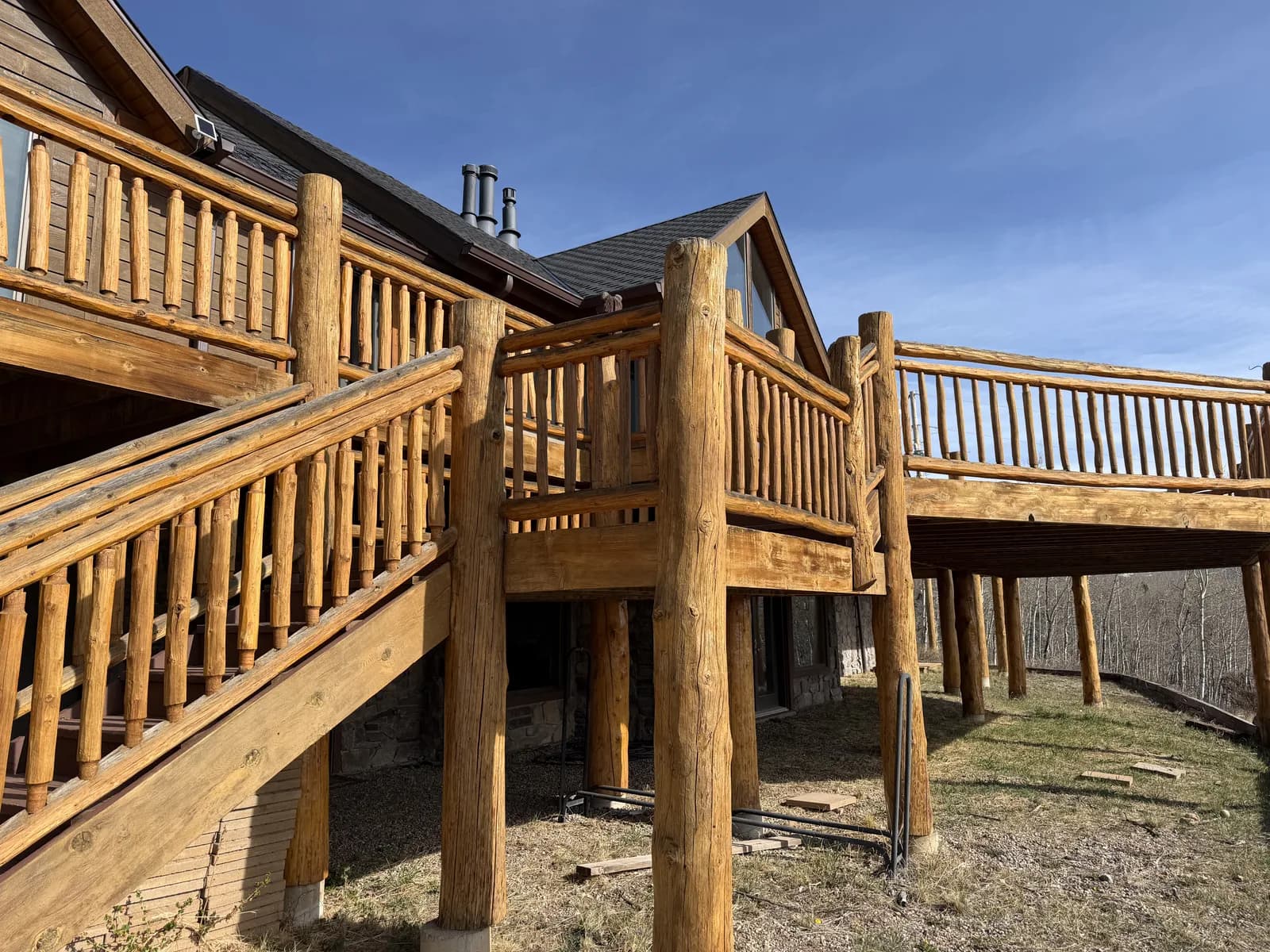
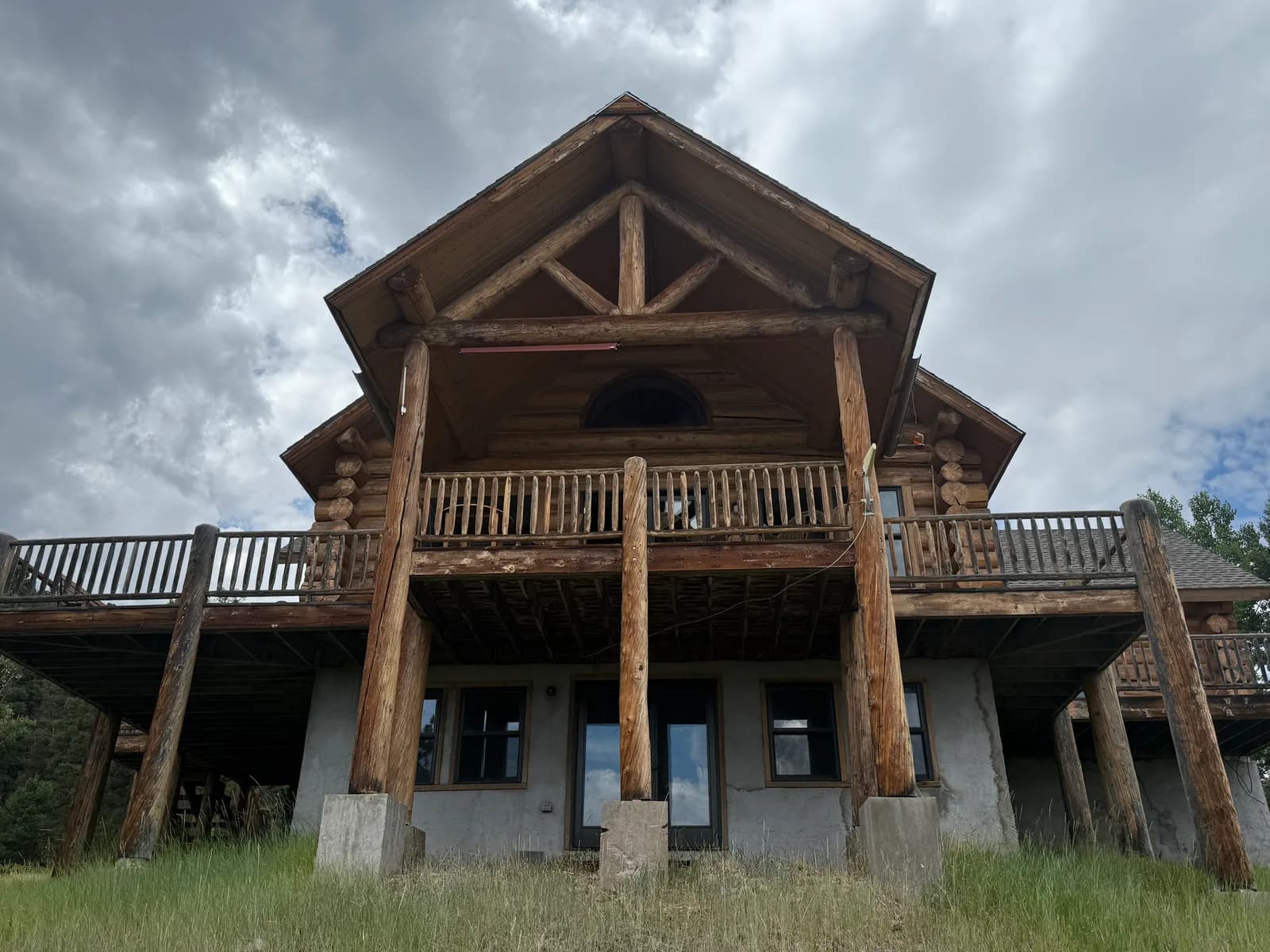
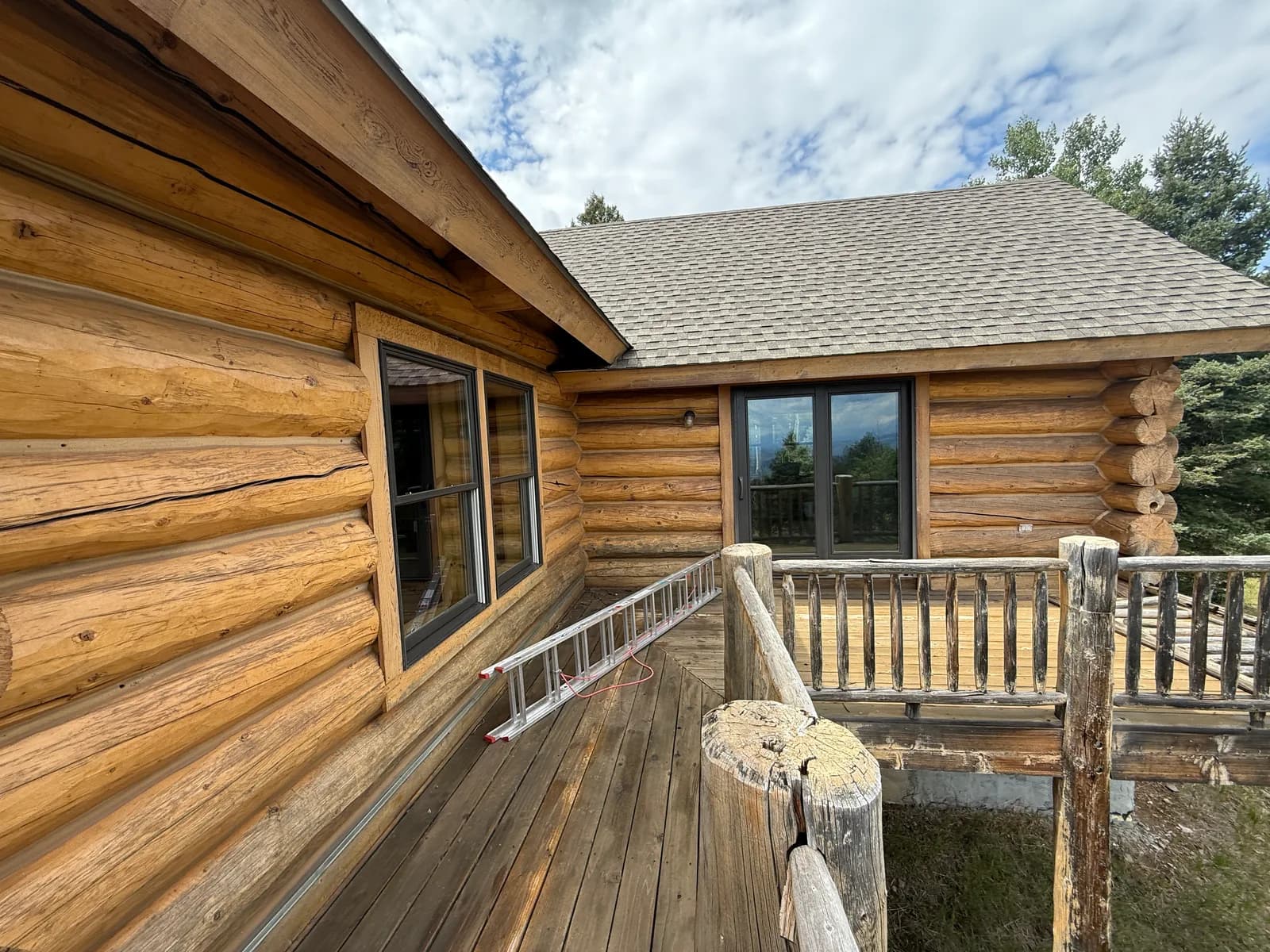
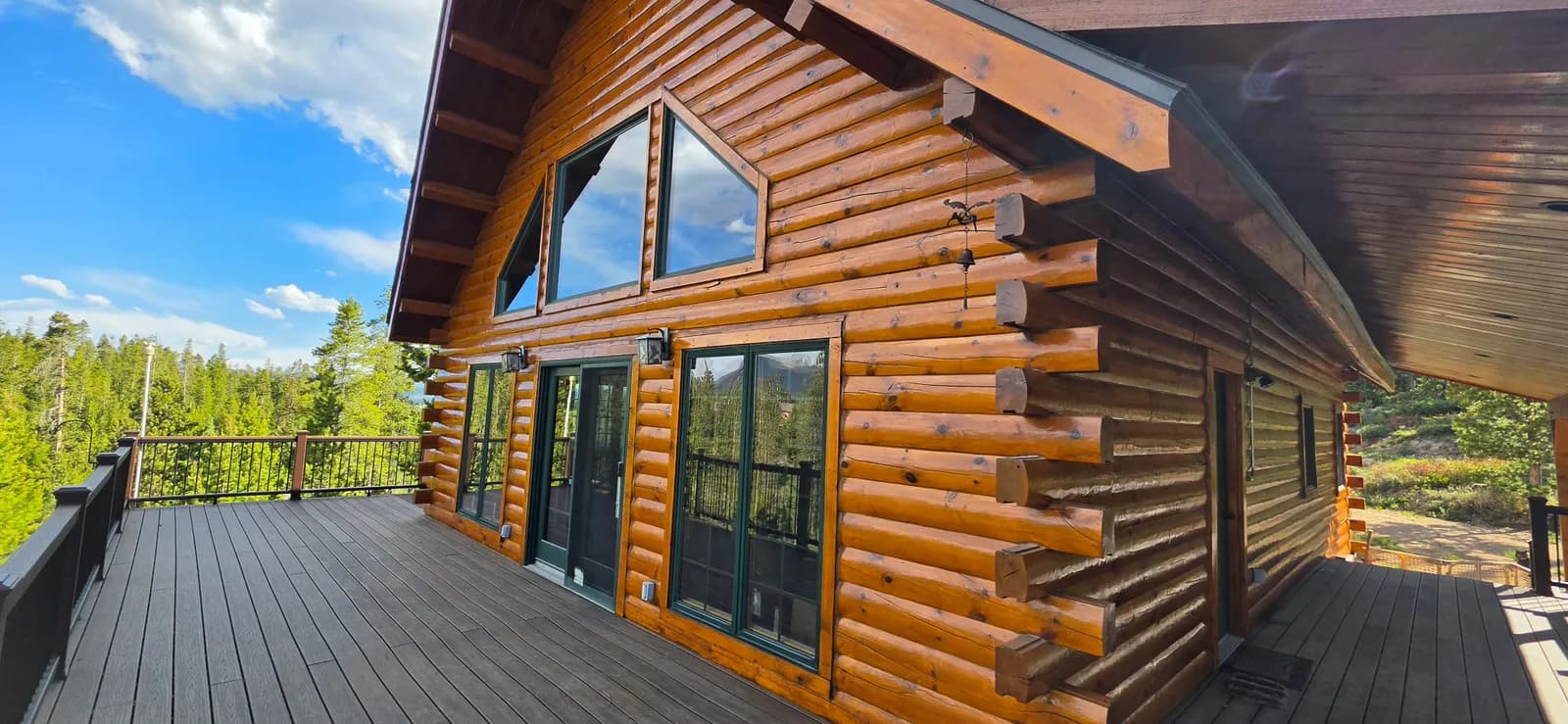
Illustrative photos of Log Home Finishing staining, chinking, and restoration work in Colorado.
Breckenridge Log Home Inspection — FAQ
Why do the south and east walls of my Breckenridge home look so much worse?
Because they take the most sun. At nearly 10,000 feet the UV is intense, and the south- and west-facing elevations absorb it all day while the shaded sides are protected. On this home the sun-facing walls had lost their stain entirely — checking, graying, bare wood — while the rest was still holding. That uneven wear is the classic high-altitude pattern, and it’s why we often blast and recoat the sun-facing walls more aggressively, then re-stain the whole exterior so it matches.
Can my deck railings be refinished, or do they need replacing?
It depends on how far the damage has gone. On this home most railings were serviceable and just needed stripping and refinishing, but the upper-deck cap rail had split entirely through the wood and the finish had failed completely — four sections and two posts were beyond refinishing and had to be replaced. New railings are stained to match before installation. An inspection is how you tell which railings can be saved and which are structurally done.
Why does the river rock need sealing too?
River rock foundations and chimneys rely on their mortar joints to keep water out. At this elevation freeze-thaw works those joints open, and once water gets in it freezes, expands, and widens the gaps every winter. On this home the joints were repaired and then sealed with a Sashco Cascade glaze coat, which protects the stone and mortar, stops further moisture penetration, and restores the appearance of a distinctive architectural feature.
How often should a high-altitude log home be re-stained?
More often than a lower-elevation home — and not evenly on all sides. At Breckenridge elevations the south- and west-facing walls often need attention every 2–4 years, while shaded elevations can go 4–6 years. The key is to recoat before the finish reaches bare wood. An annual look at the sun-facing walls, the deck caps, and the masonry joints keeps a high-country home in maintenance instead of restoration.
Example Inspections in Other Colorado Towns
Real, anonymized inspections from log homes across the state.
An incompatible finish peeling off a home and garage
View inspectionA large-diameter full-scribe cabin in Buena Vista
View inspectionA solid log home with a failed deck system
View inspectionA maintained full-log home in Cimarron
View inspectionA VERY GOOD, well-maintained pre-purchase home
View inspectionFailed interior chinking and an overdue exterior
View inspectionA multi-structure log property in Evergreen
View inspectionA sound home ready for a full clean and finish
View inspectionMissing chinking and open log checks
View inspectionSun-worn siding and decks, caught at maintenance
View inspectionA full-scribe home that was never chinked
View inspectionSound structure, end-of-life finishes inside and out
View inspectionAn infested, weathered handcrafted log home
View inspectionA historic ten-building log ranch
View inspectionA two-story log home in Pine
View inspectionA large D-log home in Steamboat Springs
View inspectionA historic town hall in Tin Cup
View inspectionProtecting a Breckenridge Log Home at Altitude?
An inspection tells you which walls need blasting versus a simple recoat, which railings are beyond saving, and what it takes to keep your high-country home ahead of the UV.
Thomas Elliott · Serving log home communities across Colorado
Breckenridge Area & Related Services
Start with the main log home inspection page to see our full process, or explore log home restoration and maintenance for the work that follows.