
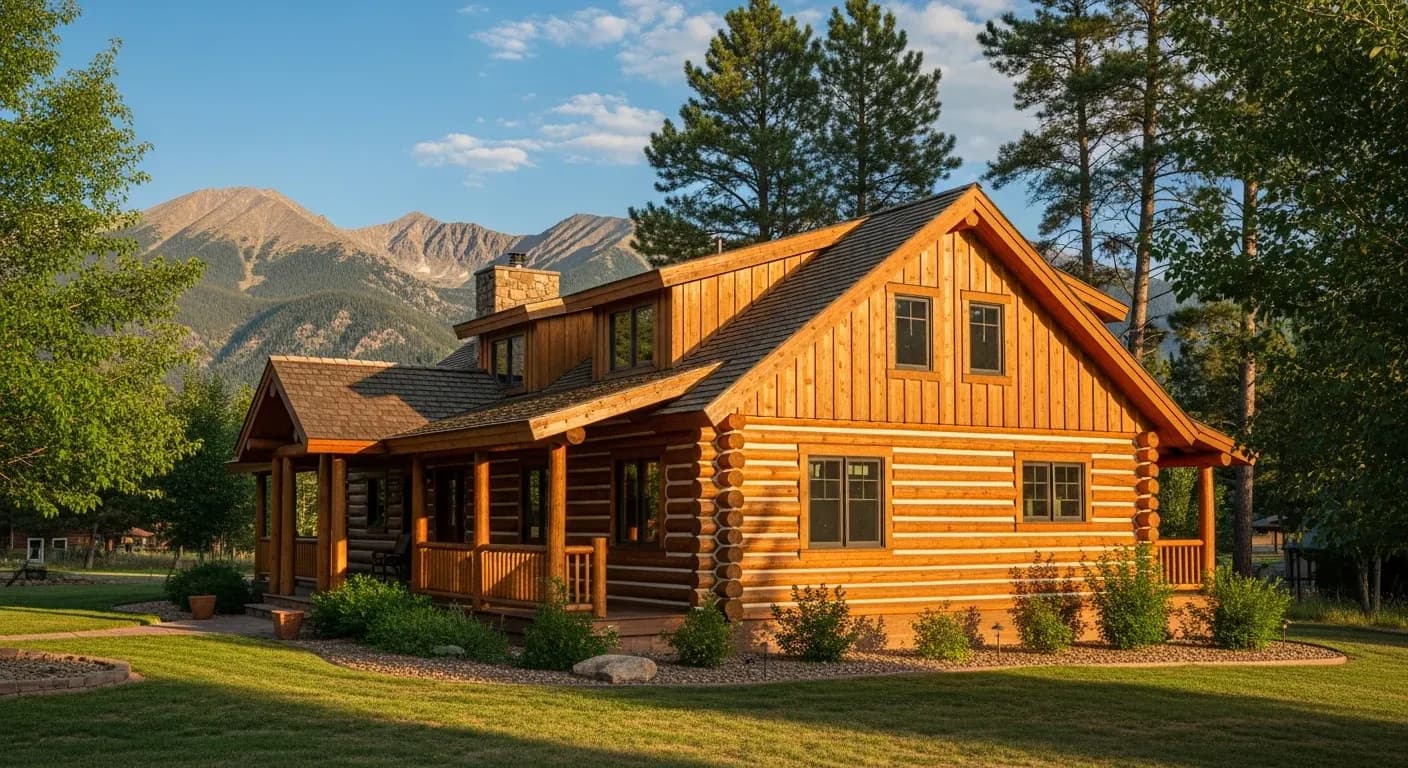
Log Home Inspection in Steamboat Springs, Colorado
A real Steamboat inspection, anonymized — a large D-log home with failed coatings and opening joints, and why even a "chinkless" D-log eventually needs chinking.
Log Homes in the Yampa Valley
Steamboat Springs sits in the Yampa Valley in Routt County, famous for its deep "champagne powder" snow. That snow, the heavy winter loads, intense high-altitude UV, and repeated freeze-thaw cycling make the Steamboat climate especially demanding on exterior log surfaces and joints.
Many Steamboat homes are built from milled D-logs and were sold as "chinkless" — but that design does not last forever in this environment. As logs shrink, swell, and settle, the once-tight joints open up, and the flat profile of a D-log turns each joint into a shelf that catches water. The example below shows a large D-log home that had reached that stage, plus failed coatings and early log-end rot.
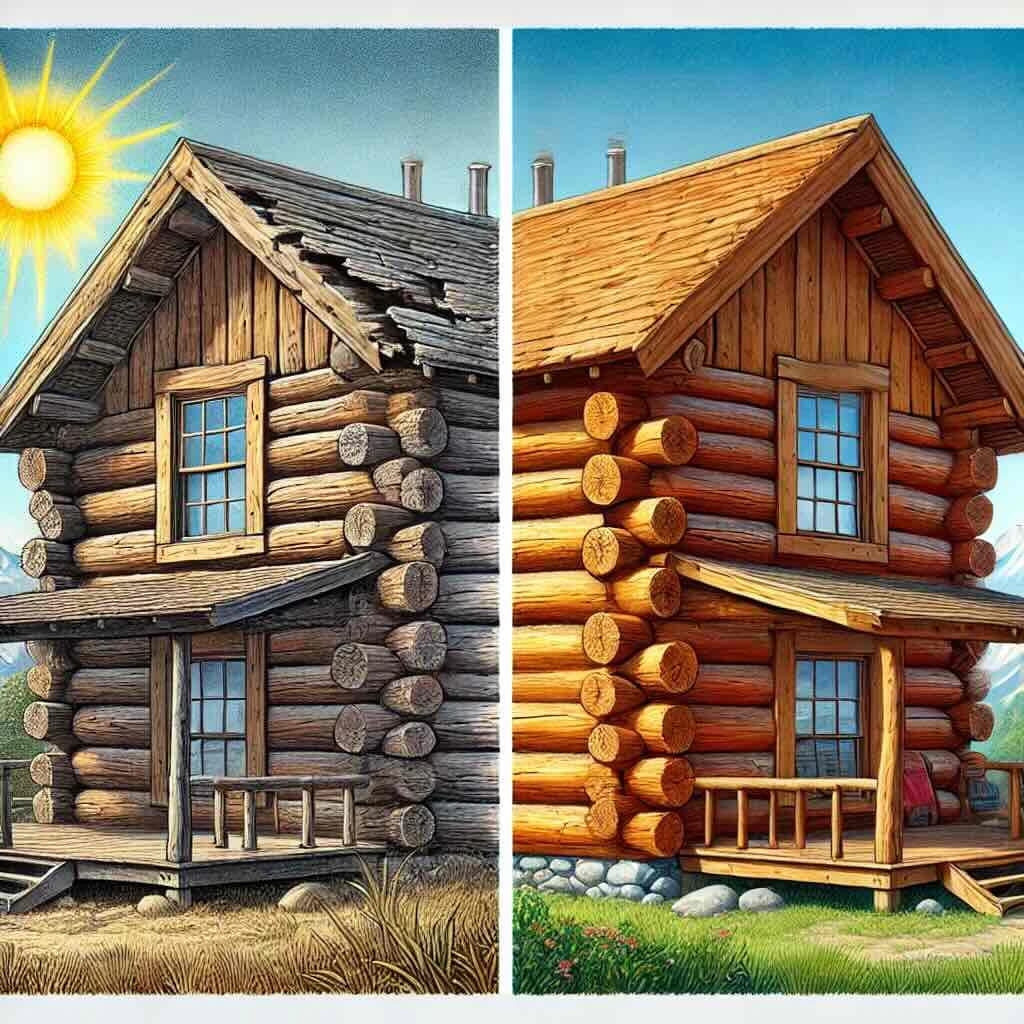
A large D-log home in Steamboat Springs
This home is a large D-log construction with roughly 4,500 square feet of exterior log surface. The inspection found the logs in a condition requiring comprehensive restoration before any new finish could be applied: the exterior had been sealed over at least three times with incompatible products, creating a layered buildup that had failed and was preventing adhesion of any new coating.
The logs showed moderate damage from water intrusion, UV degradation, and hail. Significant gaps had developed between the D-log courses — some exceeding 5/8 inch — creating flat ledges where water pools and infiltrates, and roughly 18 log ends showed early-stage rot requiring immediate treatment.
Documented Conditions
The "chinkless" D-log design — why it does not last
D-logs are milled with tongue-and-groove joints designed to fit tightly at construction, so many are sold as "chinkless." But logs are organic and constantly respond to temperature and humidity. In Steamboat’s extremes, they shrink, swell, twist, and check until those once-tight joints open — here, gaps now exceed 5/8 inch in numerous locations.
Why open D-log gaps are dangerous
Unlike a round log that sheds water off its curve, the flat top of a D-log creates a horizontal ledge at each joint. When gaps open, that ledge catches and holds rain, snowmelt, and condensation and channels it into the gap, where it wicks deep into the fibers. Trapped moisture promotes fungal growth and rot — the primary cause of D-log deterioration.
Failed, incompatible finish layers
The exterior had been sealed at least three times with incompatible products. Different chemistries — oil-based penetrants, film-formers, water-based acrylics — do not bond to one another, so the layers peel, flake, and trap moisture. Test patches of fresh stain over the existing surface absorbed unevenly and looked blotchy, confirming a simple recoat was not viable; the logs had to go back to bare wood.
Log ends in early-stage rot
About 18 log ends showed damage and the early stages of rot. Log ends are the most vulnerable part of any log home because exposed end grain wicks moisture rapidly into the interior of the log, creating ideal conditions for fungal decay deep inside where it cannot be seen until advanced.
Example Scope & Investment
The anonymized scope below mirrors the cost summary for this Steamboat restoration, sequenced from surface prep through finish.
- Refinish exteriorMedia blast + Osborne brush sanding to clean, bare wood~4,500 sq ft @ $10/sq ft$45,000
- Stain exteriorSansin Classic 1-2-3 finish system (Purity base, SDF, Precision top coat)~4,500 sq ft, three-coat$37,500
- Apply chinkingPerma-Chink chinking on all log joints + Checkmate caulking in large checks~7,000 lin ft @ $6/ft$42,000
- Repair log endsBorate rod treatment + Abatron Liquid Wood / Wood Epox restoration~18 ends @ $200/end$3,600
These figures come from a real Log Home Finishing inspection in Steamboat Springs, shown here as an anonymized example. Every home is different — your inspection includes a written scope and pricing matched to your home’s actual condition.
Products & methods used
Why This D-Log Home Needed Full Restoration
This home had reached a point in its lifecycle where comprehensive exterior restoration was necessary, not optional. The multiple layers of incompatible finish left the logs unable to hold a simple recoat, the opened joints were actively allowing water to infiltrate and damage the wood, and the damaged log ends would continue to deteriorate if left untreated.
Addressing all of it in one sequenced project — refinish to bare wood, repair the log ends, seal every joint and check, then apply the three-coat Sansin system — returns the home to a fully protected condition that should last for years with proper ongoing maintenance.
- Incompatible finish layers must be removed to bare wood — new stain will not bond over them.
- "Chinkless" D-logs eventually need chinking once seasonal movement opens the joints.
- Borate rods create a protected zone in log ends; Abatron epoxy rebuilds wood already lost to decay.
- Sealing joints and checks stops the water-intrusion cycle that drives D-log rot.
What the Work Looks Like
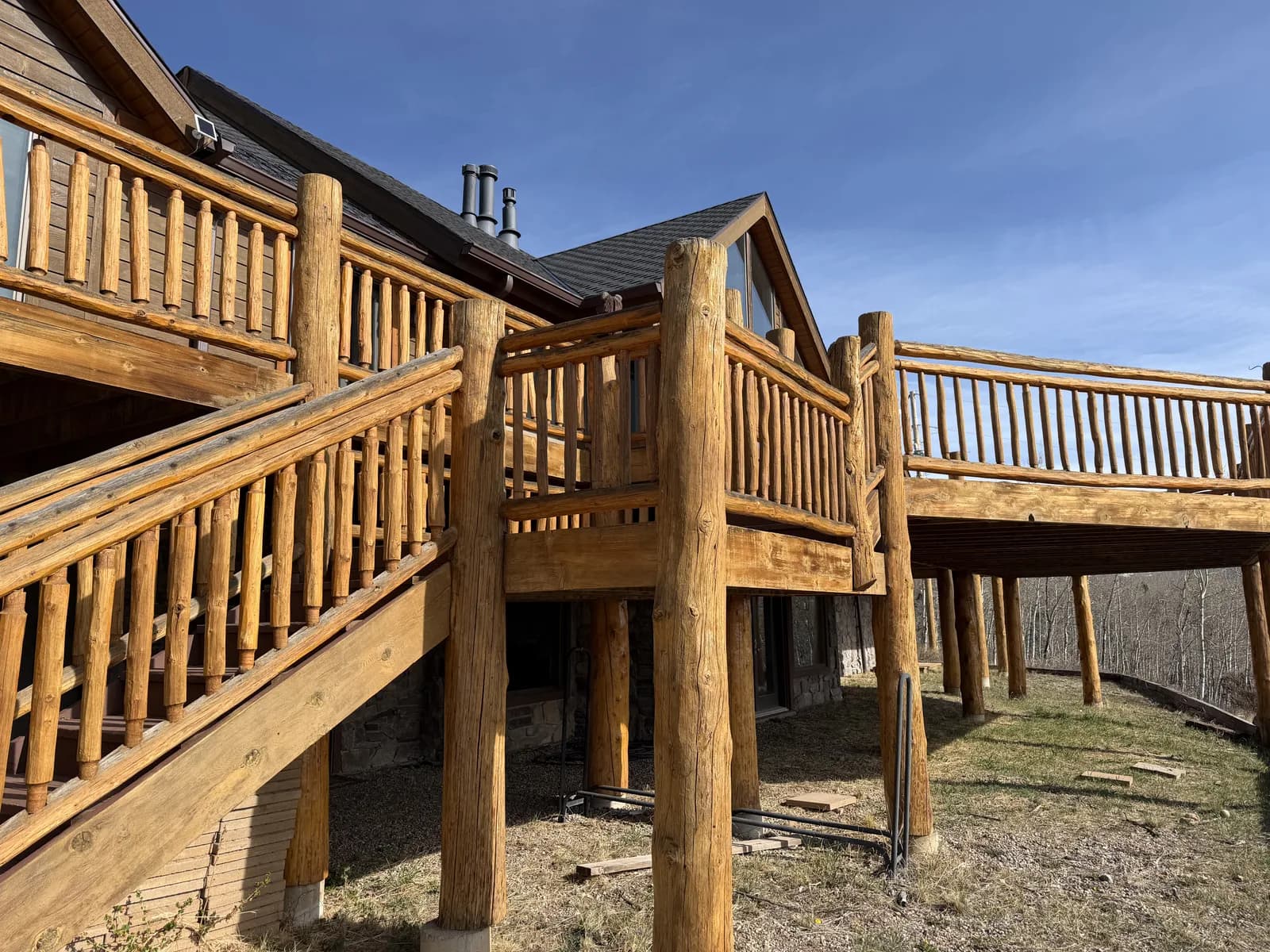
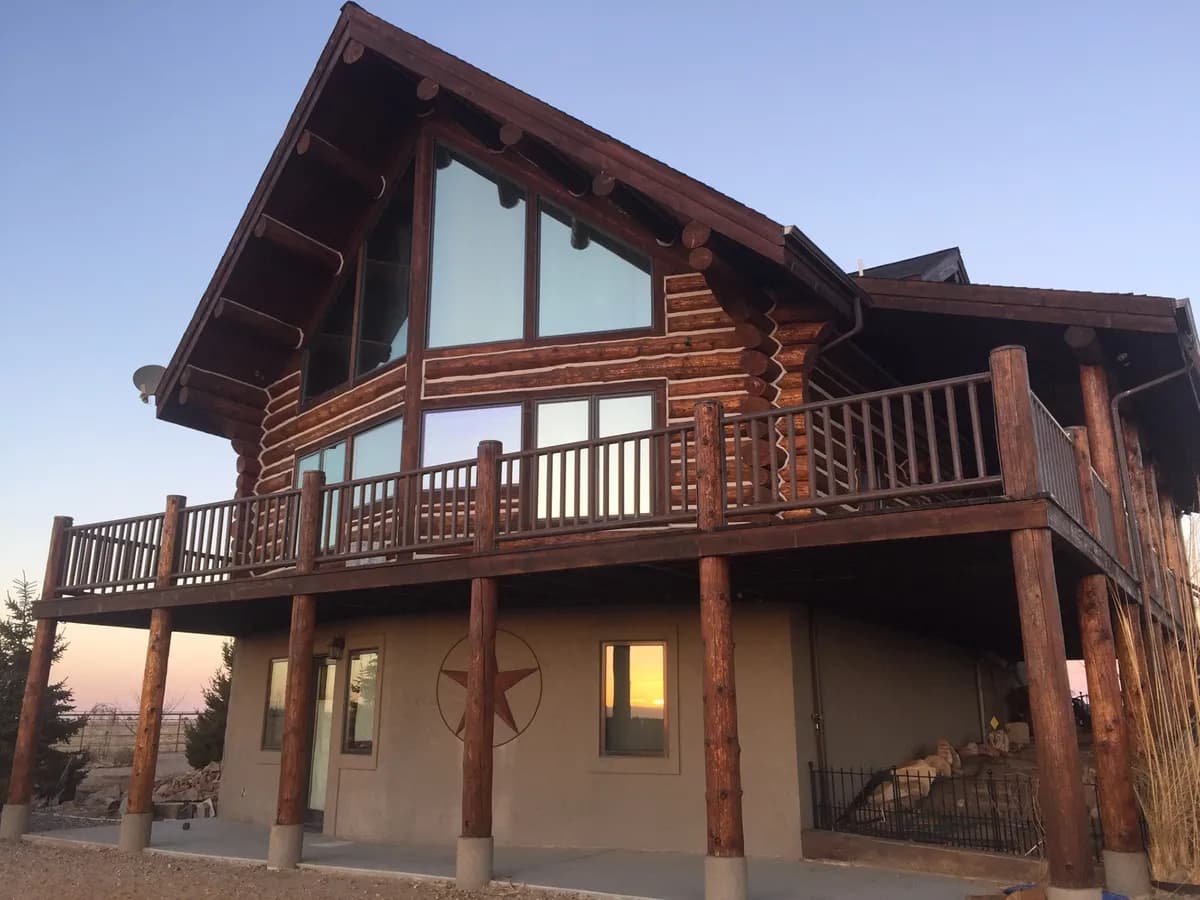
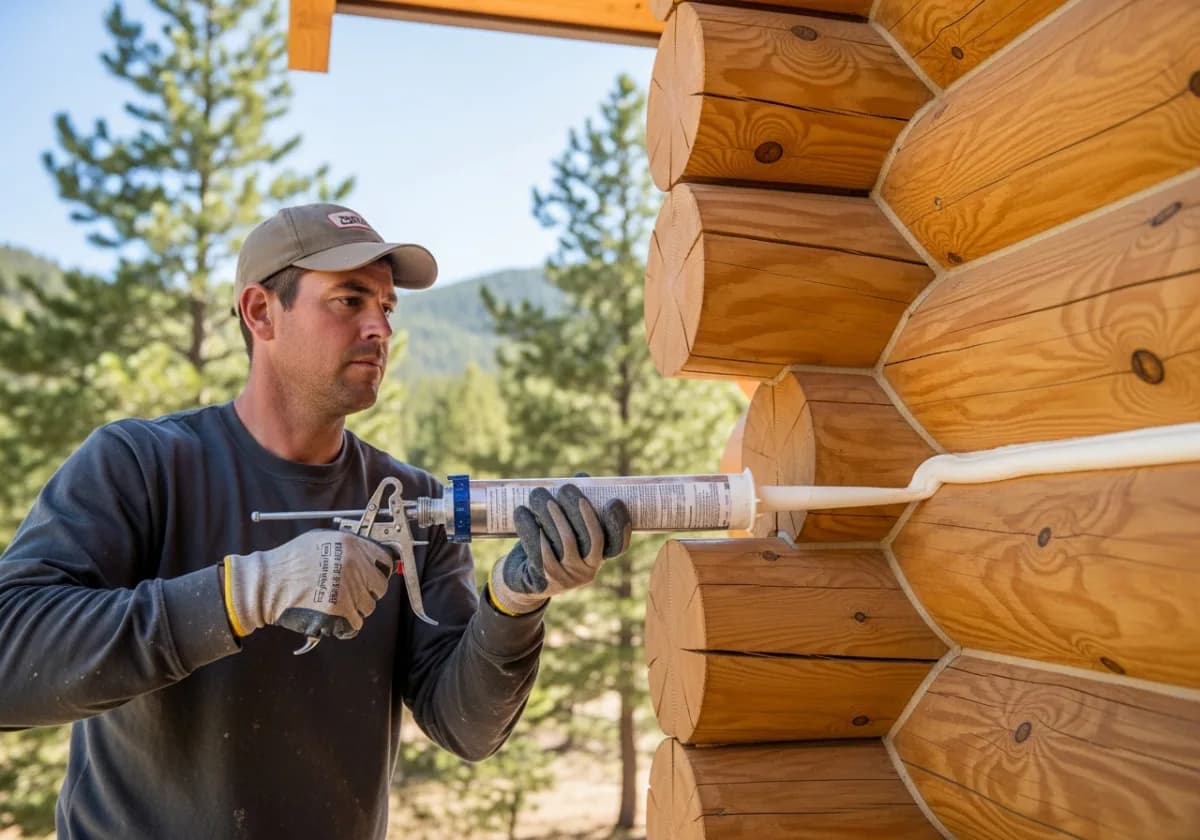
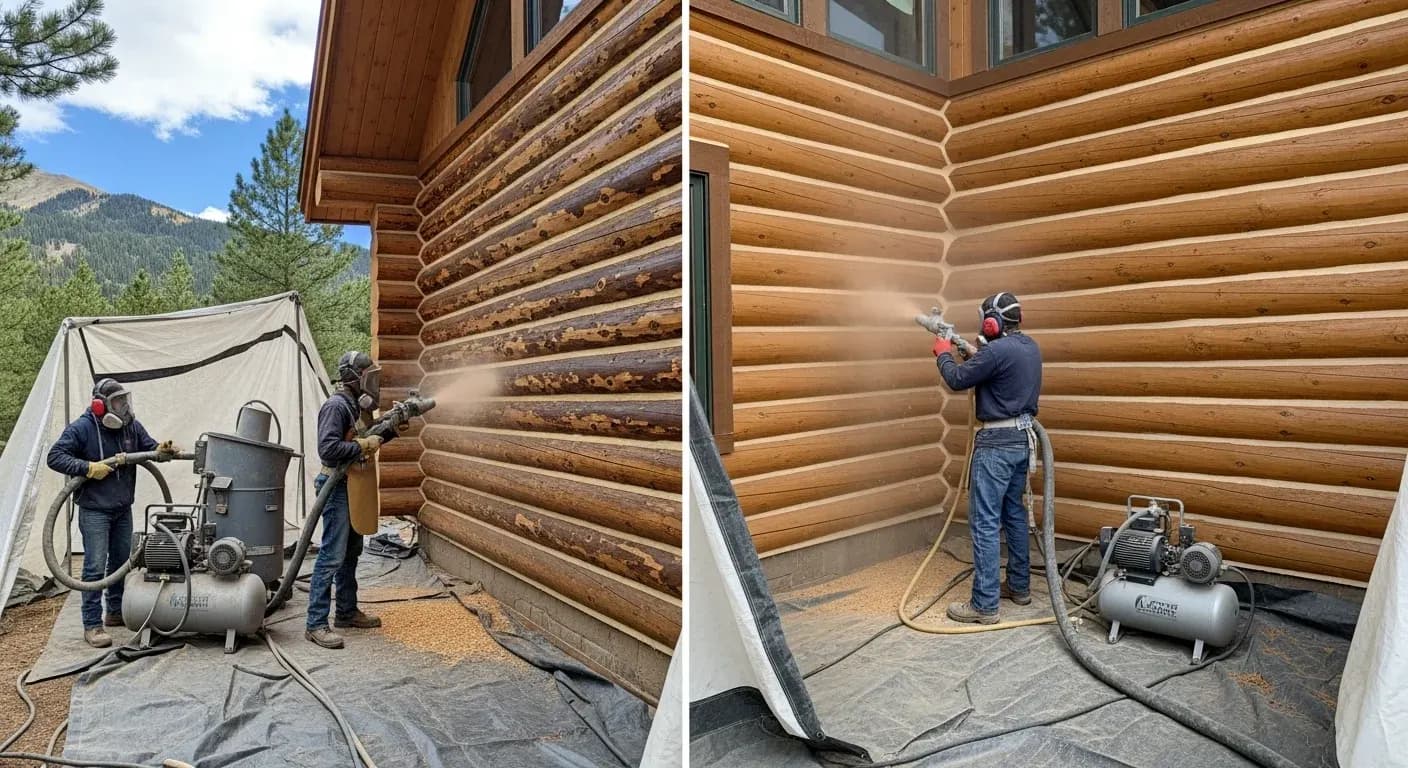
Illustrative photos of Log Home Finishing staining, chinking, and restoration work in Colorado.
Steamboat Springs Log Home Inspection — FAQ
My D-log home was sold as "chinkless" — why does it need chinking now?
Because the tight tongue-and-groove fit that made it chinkless does not last forever. Logs shrink, swell, twist, and settle with the seasons, and in Steamboat’s climate those joints open over time — on the example home, gaps now exceed 5/8 inch. The flat top of a D-log then catches and channels water into the joint, so chinking is required to re-seal the envelope.
Why can’t I just put fresh stain over my existing finish?
If the existing finish is a buildup of incompatible products, a new coat cannot penetrate to the wood and will sit on top of the failing layers and peel. On this home, test patches of fresh stain absorbed unevenly and looked blotchy, confirming the logs had to be taken back to clean, bare wood by media blasting before a new system could bond.
How are rotting log ends repaired?
With two complementary treatments. Borate rods are inserted into the log ends; in the presence of moisture they diffuse through the wood and create a protected zone that prevents fungal growth and insects. Where rot has already occurred, the Abatron two-part epoxy system consolidates the soft wood and rebuilds lost material, which is then shaped and stained to match.
What finish do you use on Steamboat log homes?
On this restoration the exterior was finished with the Sansin Classic 1-2-3 system — a premium three-coat penetrating finish built for log and timber homes, with deep penetration, rich color, and long-lasting UV and moisture protection suited to high-altitude exposure. Product selection always follows the home’s condition and the prepared surface.
Example Inspections in Other Colorado Towns
Real, anonymized inspections from log homes across the state.
An incompatible finish peeling off a home and garage
View inspectionHigh-altitude UV, split railings, and open mortar
View inspectionA large-diameter full-scribe cabin in Buena Vista
View inspectionA solid log home with a failed deck system
View inspectionA maintained full-log home in Cimarron
View inspectionA VERY GOOD, well-maintained pre-purchase home
View inspectionFailed interior chinking and an overdue exterior
View inspectionA multi-structure log property in Evergreen
View inspectionA sound home ready for a full clean and finish
View inspectionMissing chinking and open log checks
View inspectionSun-worn siding and decks, caught at maintenance
View inspectionA full-scribe home that was never chinked
View inspectionSound structure, end-of-life finishes inside and out
View inspectionAn infested, weathered handcrafted log home
View inspectionA historic ten-building log ranch
View inspectionA two-story log home in Pine
View inspectionA historic town hall in Tin Cup
View inspectionOwn a D-Log Home in Steamboat Springs?
If your joints are opening or your finish is peeling in layers, an inspection tells you exactly where the home stands and what the restoration involves.
Thomas Elliott · Serving log home communities across Colorado
Steamboat Springs Area & Related Services
Start with the main log home inspection page to see our full process, or explore log home restoration and maintenance for the work that follows.