
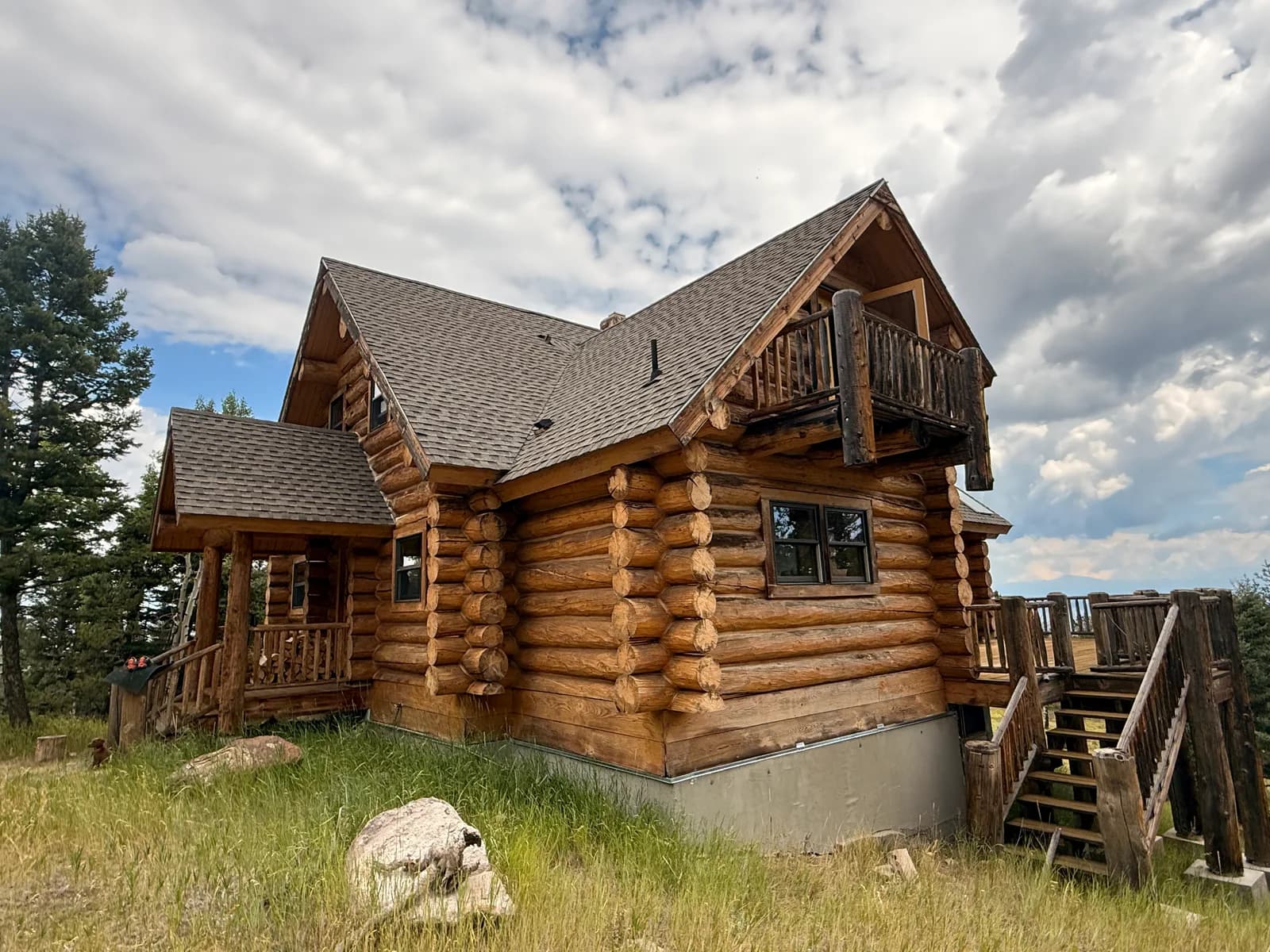
Log Home Resale Value in Colorado: How Maintenance Protects Your Investment
A log home's value lives in its logs. With real Colorado market data, appraiser methodology, and cost charts, here is exactly how staying on top of maintenance keeps your home on the value curve — and why a specialized inspection tells you where you stand.
In a Log Home, Condition Is the Asset
On a conventional house, the walls are hidden behind siding and drywall, and buyers rarely price them directly. On a log home, the walls are the finish, the structure, and the first thing every buyer sees. That is why resale value tracks condition so tightly: the logs are simultaneously the home's biggest selling point and its biggest liability if they are neglected.
Two identical log homes on the same street can diverge by tens of thousands of dollars in value based on nothing more than how faithfully their finish and chinking were maintained. One reads as a turn-key mountain retreat; the other reads as a project. The good news is that the difference is almost entirely within an owner's control — and far cheaper to protect than to recover.
This guide walks through the numbers behind that gap: how the value curve actually diverges over time, how appraisers put a dollar figure on deferred maintenance, what the Colorado market is paying today, and how a professional log home inspection tells you exactly where your home stands.
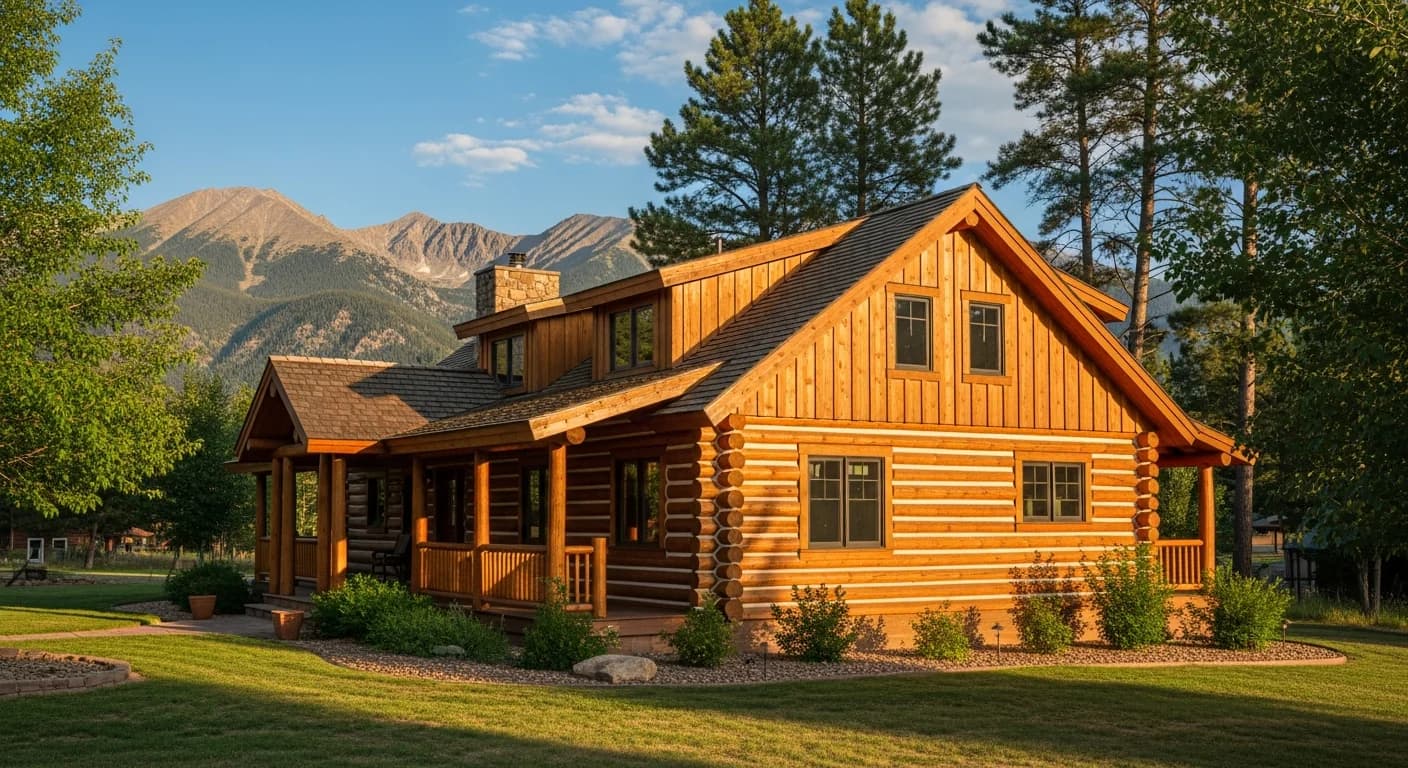
of Colorado log home restoration behind every number on this page
Relative value a well-maintained log home tends to gain
Typical hit to value once maintenance is deferred
Cost to restore vs. maintain per square foot
Median $/sq ft across the Colorado log-home markets below
The Value Gap Compounds Every Year
Index two identical log homes to 100 at purchase. The maintained home drifts upward with the market; the neglected one drifts down as buyers price in the work. Ten years later the gap is roughly 20 points — and widening.
Illustrative model based on appraiser value-impact figures and Colorado market behavior. Individual homes vary.
How Appraisers Actually Put a Number on Neglect
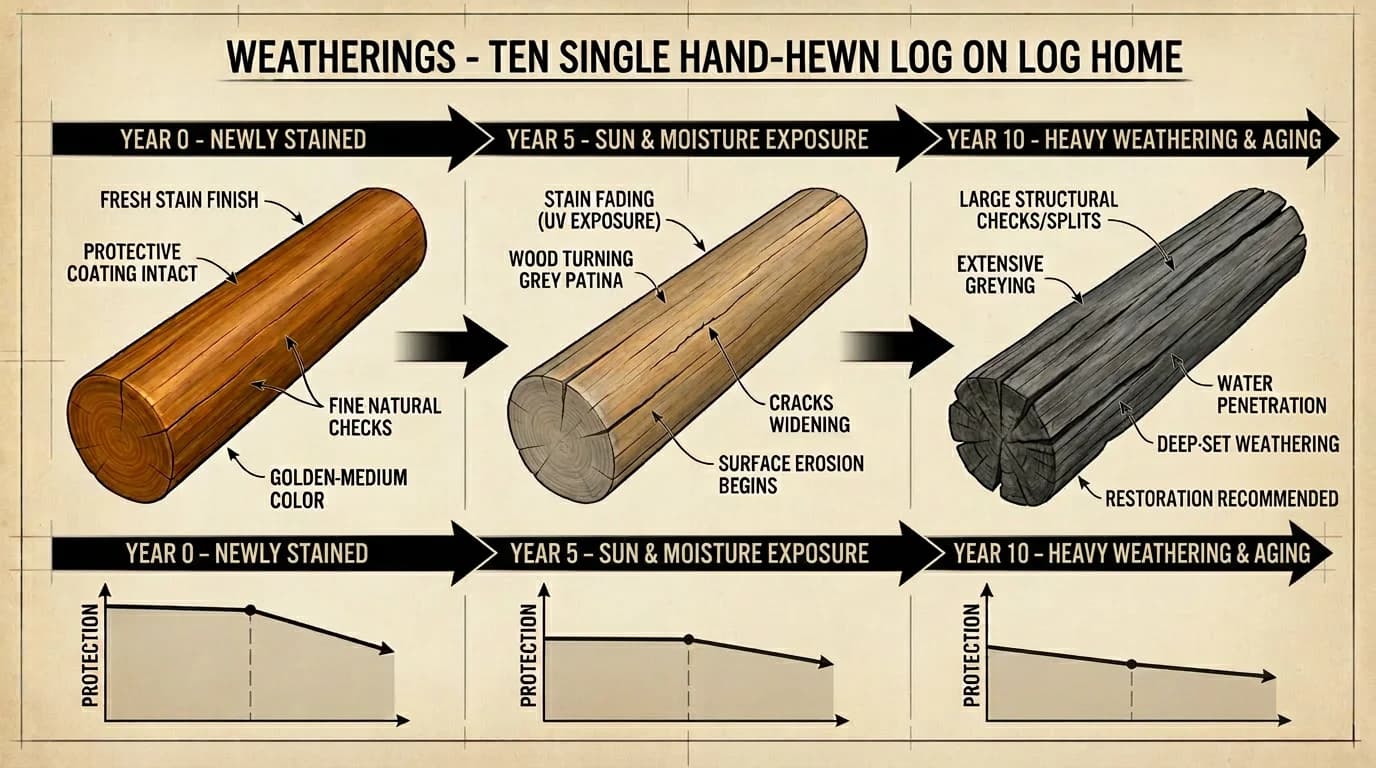
Appraisers do not guess. When they see failed stain, pulled-away chinking, or early rot, they apply a cost to cure — an estimate of what it takes to bring the home to normal condition — and subtract it from value. Deferred maintenance also accelerates a home's effective age: a 15-year-old cabin that has never been re-stained can appraise like a much older structure.
Buyers then pile a second discount on top. Beyond the visible cost to cure, they price in uncertainty — what else is hiding behind that gray, checked wood? That combination of hard cost plus risk premium is why a neglected log home so often sells around 10% below a comparable well-kept one.
The reason the gap compounds is that the cure gets dramatically more expensive the longer it waits. Routine maintenance is a wash-and-recoat on wood that is still sound. Once a finish fails and the wood is exposed, you cross into full restoration — media blasting to bare log, repairing or replacing timber, re-chinking, then staining and sealing.
Pay Now, or Pay Roughly Twice Later
The first path costs about half as much per square foot as the second. Multiply either across a whole house and the stakes of staying ahead of the cycle become obvious.
Cost Per Square Foot
Typical Colorado cost per sq ft of exterior log surface
Full Restoration by Home Size
The bill once a simple recoat is no longer an option
What the Colorado Market Is Actually Paying
None of this is abstract. Colorado's high country is one of the most active log home markets in the country. The snapshot below reflects active “log cabin” listings in two representative markets — Fairplay in Park County, and Breckenridge in Summit County, with a wider set of individual homes from across the state featured below.
| Market | Active log-cabin listings | List price range | Median list price | Median $/sq ft |
|---|---|---|---|---|
| Fairplay (80440) | ~40 | $185,000 – $1,499,000 | ≈ $659,000 | ≈ $414 |
| Breckenridge (80424) | ~24 | $535,000 – $12,750,000 | ≈ $1,425,000 | ≈ $839 |
Active Zillow listings retrieved July 25, 2026. Inventory changes frequently — the figures above are a snapshot, not a live feed.
Real Colorado Log Homes, One Common Thread
A cross-section of what is actually listed right now — from a sub-$500K cabin to a $13.4M Steamboat Springs estate, spanning Breckenridge, Fairplay, Steamboat Springs, Gunnison and Pagosa Springs. At every price, condition is doing part of the talking. Photos are AI illustrations; each card links to the real listing.
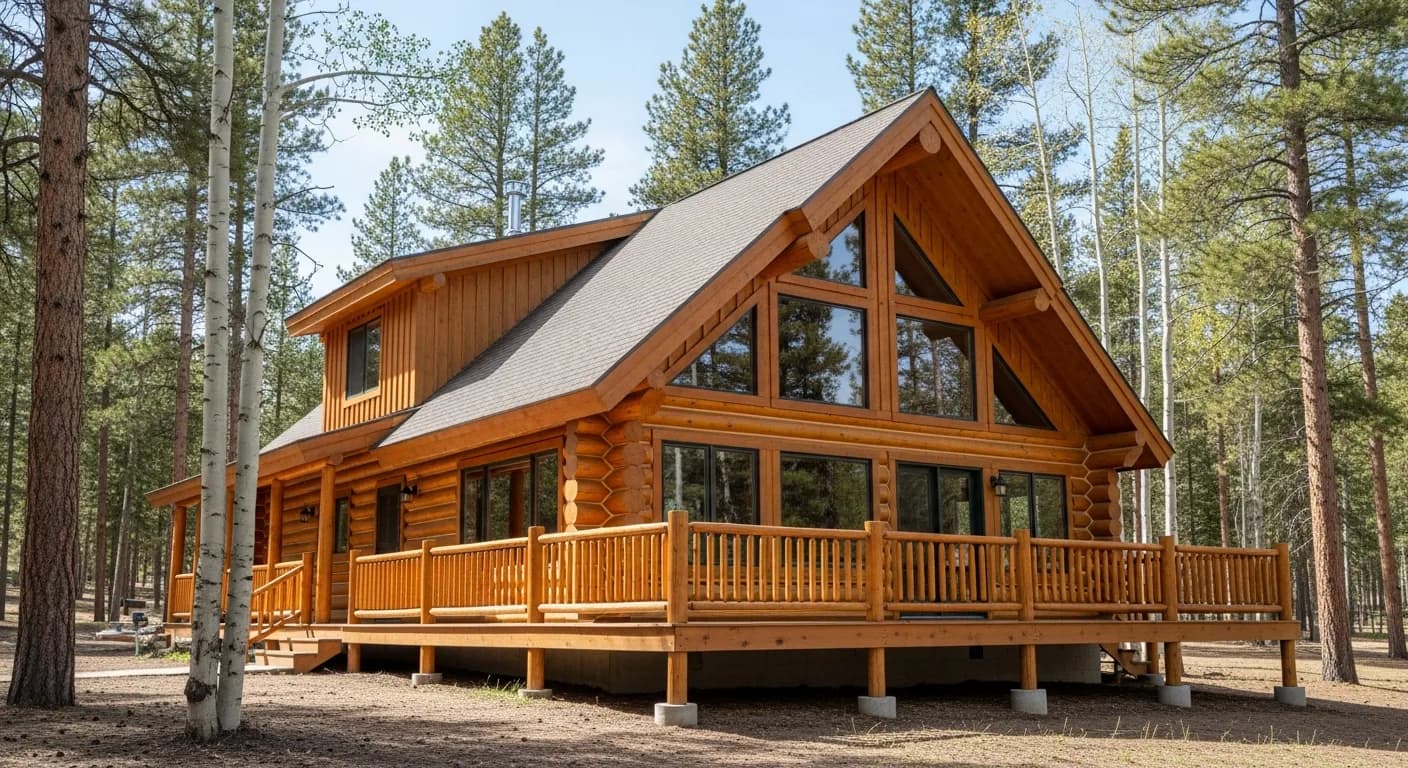 AI illustrationThe upside of care
Built 1992 · Summit County
A 1992 log cabin described as “beautifully renovated,” with natural log walls, big windows, and a wrap-around deck — listed above its Zestimate and drawing heavy demand (hundreds of views and dozens of saves within days, flagged as likely to sell faster than nearly every comparable nearby). A 34-year-old log home does not earn that demand by accident: its condition is doing the selling. Turn-key is exactly what commands a premium and a fast close in Summit County.
View this listing on Zillow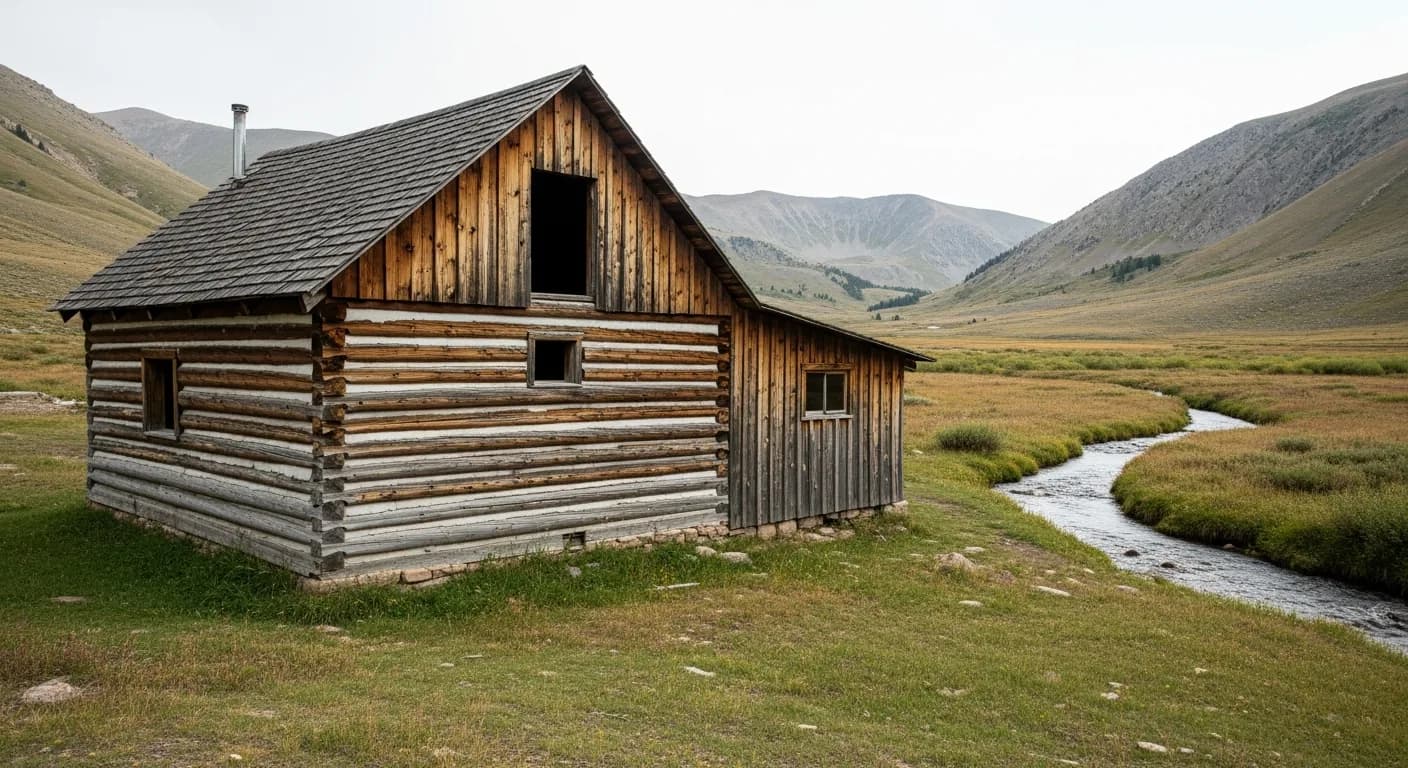 AI illustrationThe cautionary tale
30 acres · off-grid · Park County
A classic off-grid log cabin on 30 acres along Fourmile Creek. Here most of the price is land, not structure — which is exactly why deferred maintenance is so dangerous on a property like this. Seasonally used, off-grid, and fully exposed at altitude, it is the type that quietly slides behind on staining and chinking because no one is living there to notice. Let the logs go and a buyer stops paying for a cabin at all and starts paying only for raw acreage.
View this listing on Zillow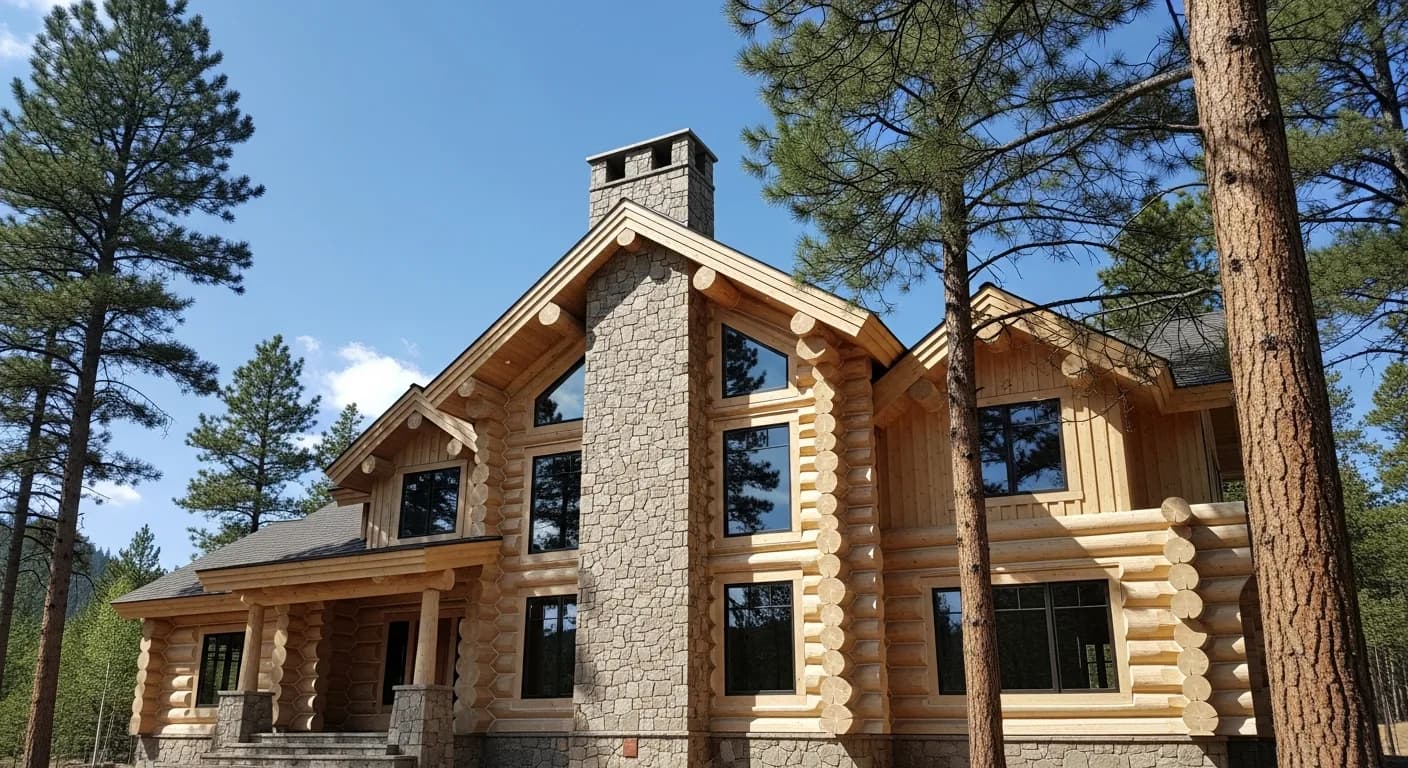 AI illustrationAn asset to defend
Built 2019 · ~$444/sq ft · Park County
A newer, premium 2019 build with hand-hewn Douglas fir logs, a floor-to-ceiling stone fireplace, and short-term-rental potential — listed at about $444 per square foot, comfortably above the Fairplay median. The logs are close to new, which means the home is arriving at the moment that decides its future: the first real staining and maintenance cycle. Kept on schedule it stays a $1M-plus asset; left to weather, even a home this nice drifts toward the neglected line. Fresh logs are an asset to defend, not a reason to relax.
View this listing on Zillow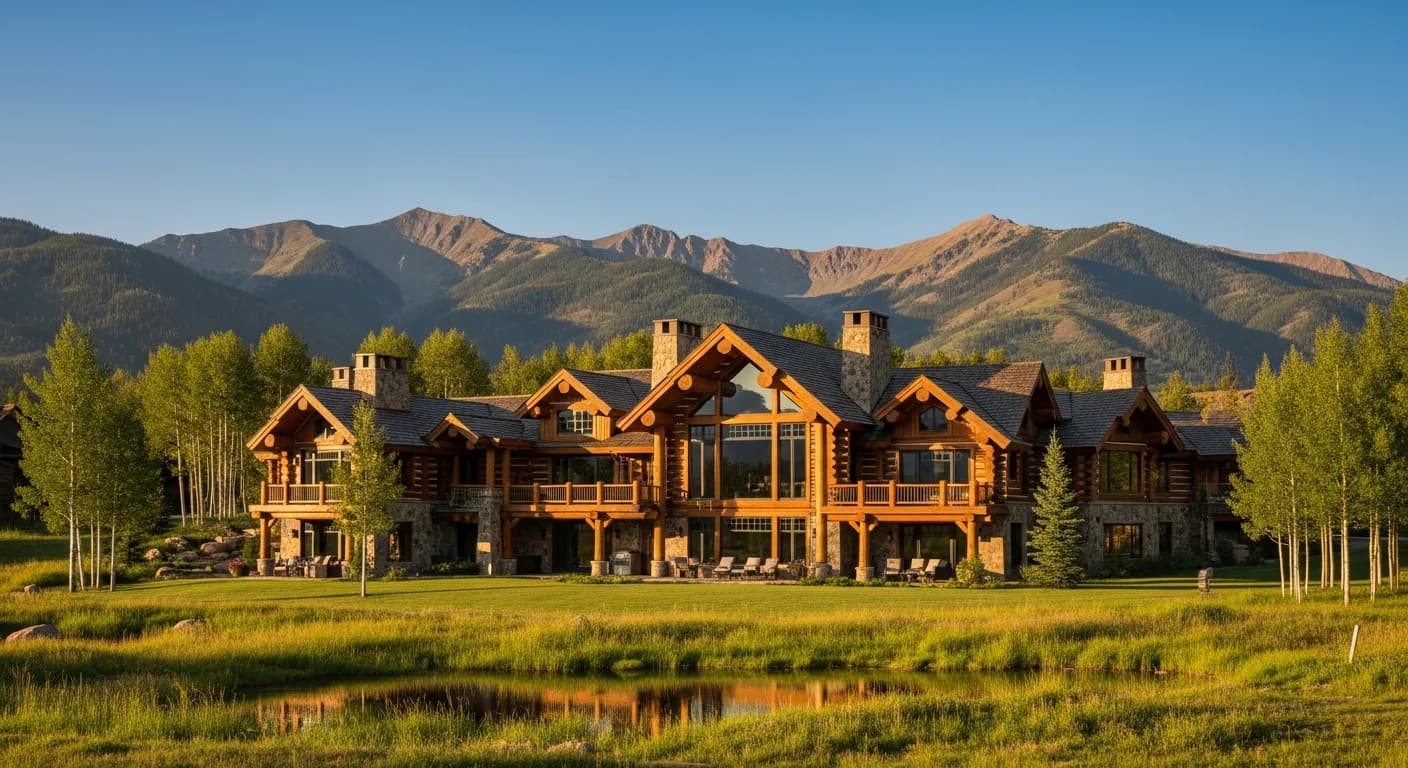 AI illustrationLegacy estate
4 bd · 3.5 ba · 4,145 sq ft · ±300 acres · built 2004 · Routt County
A four-bedroom custom log home on ±300 acres northwest of Steamboat, with Yampa Valley views and a creek-fed pond. At this level almost none of the price is square footage — it’s the land and the caliber of the build. But that caliber only reads as “legacy” if the logs, stain, and joinery look impeccable. On a trophy property, visibly tired logs don’t just invite a discount; they undercut the entire premium the setting is asking buyers to pay.
View this listing on Zillow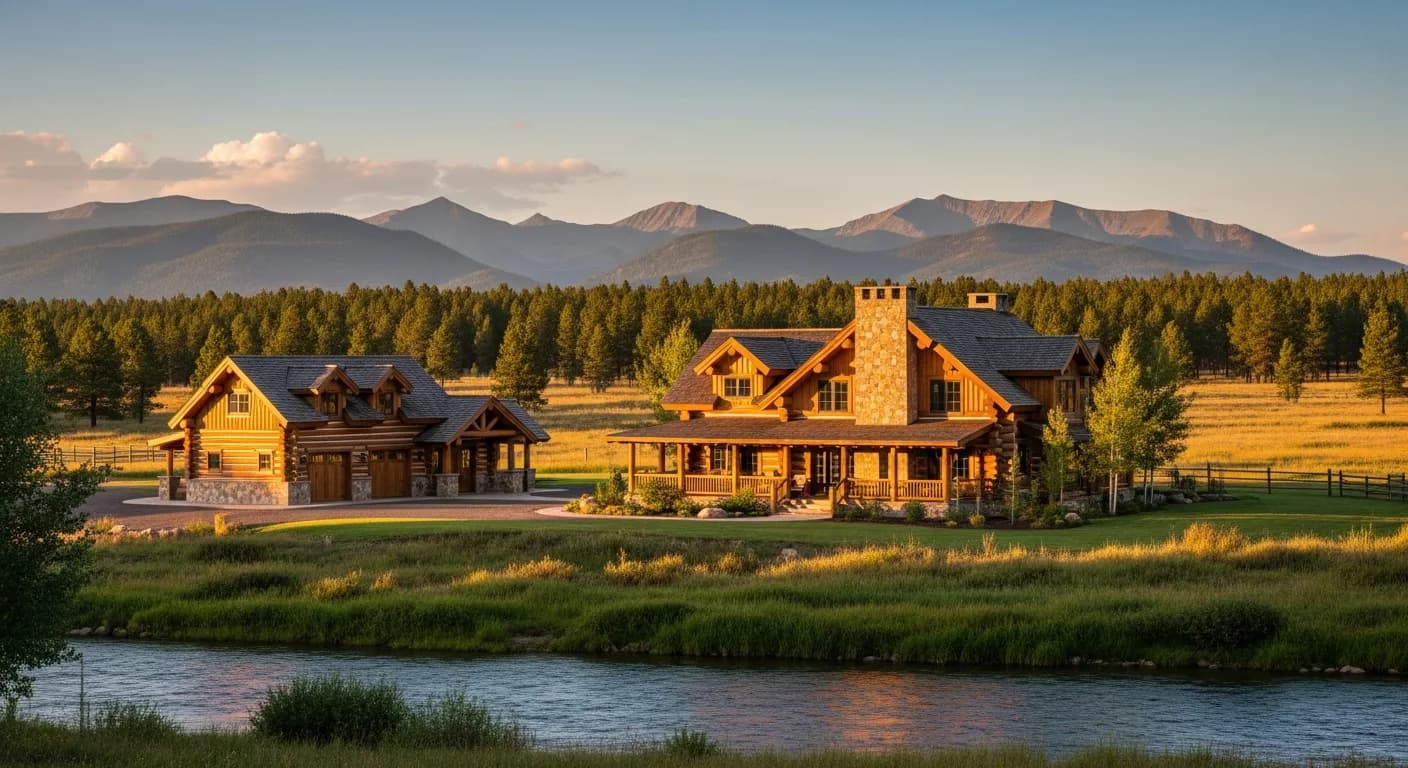 AI illustrationRiverfront luxury
5 bd · 6 ba · 5,016 sq ft · 57 acres · built 2003 · Routt County
Five bedrooms and roughly 5,000 square feet on 57 acres along the Elk River, with a separate carriage house. Two-decade-old logs sit right in the window where the second and third maintenance cycles decide the trajectory. Kept current, expert craftsmanship keeps commanding luxury money; deferred, even Elk River frontage can’t fully offset logs that look their age.
View this listing on Zillow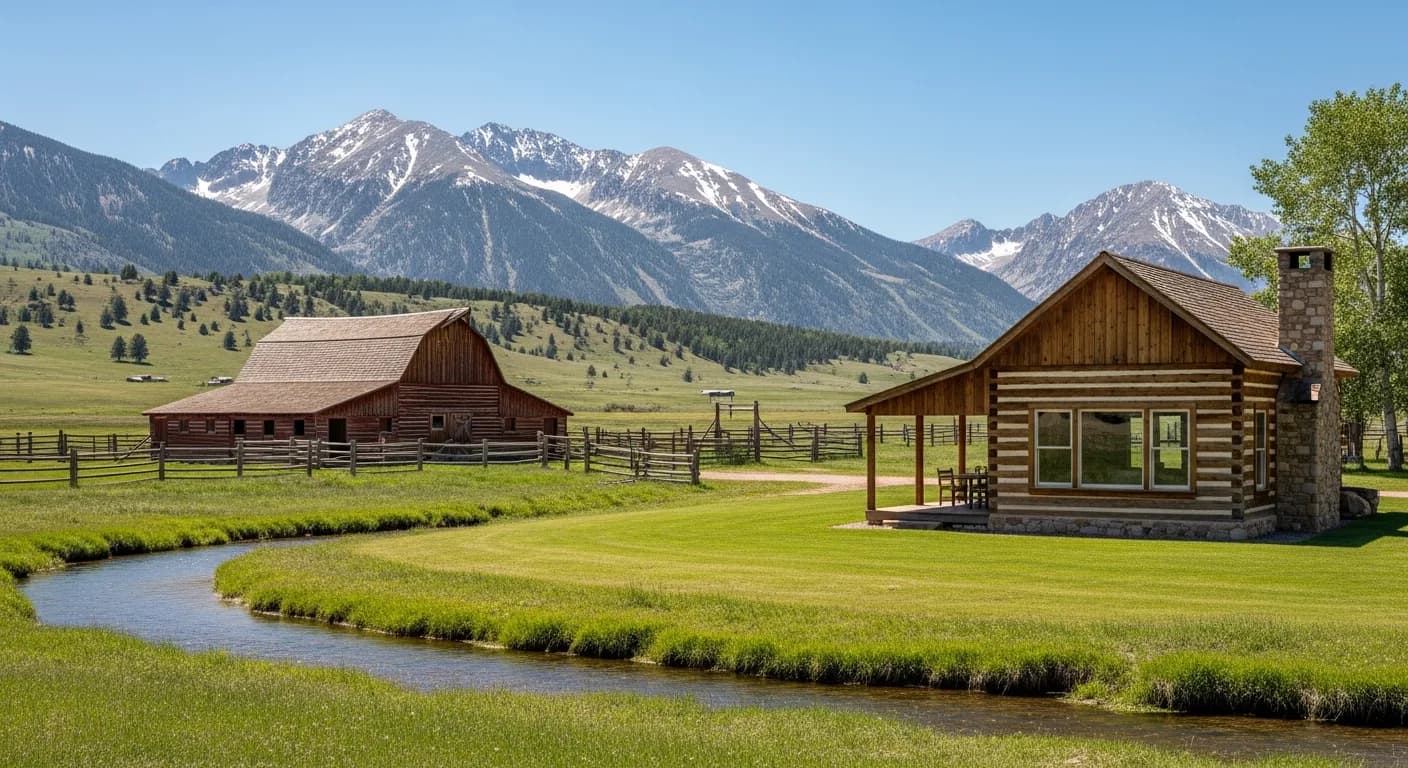 AI illustrationUpkeep as provenance
2 bd · 2 ba · 2,416 sq ft · 41 acres · built 2001 · Gunnison County
A historic two-bedroom log cabin on 41 acres on the banks of Ohio Creek — fully renovated about 25 years ago, with a barn, a second dwelling, and a solar array. The lesson here is upkeep as provenance: a cabin this old only trades near this number because it was renovated and maintained. Its story is the sale. Let that story lapse and it slides back toward acreage with an old building on it.
View this listing on Zillow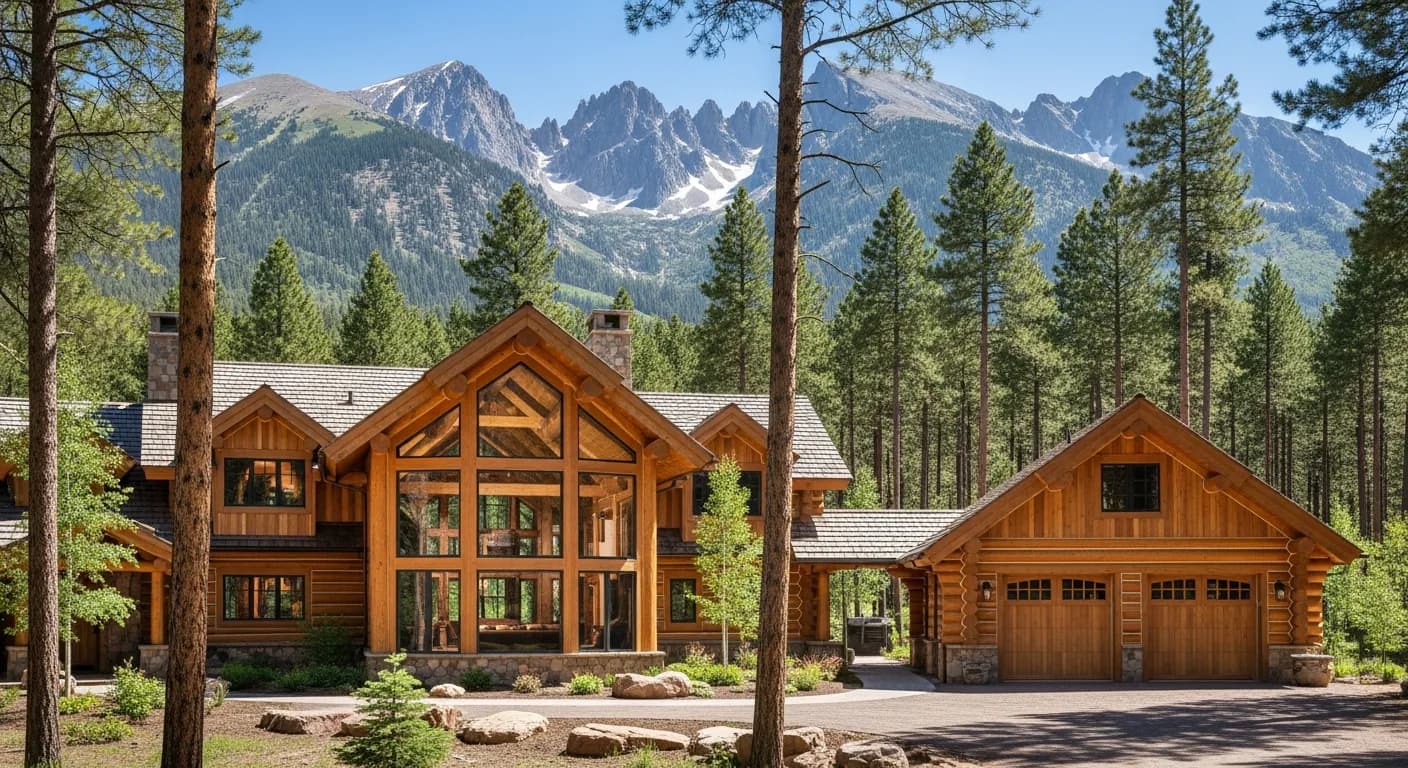 AI illustrationWell-kept & exposed
3 bd · 2 ba · 2,531 sq ft · 3.0 acres · built 2003 · Archuleta County
A full log home with an oversized detached garage on three-plus acres bordering national forest. This is the heart of the Colorado log market — genuinely nice, and genuinely exposed. Homes in this band live or die on the stain schedule, and buyers touring them can tell within seconds whether the logs have been kept up.
View this listing on Zillow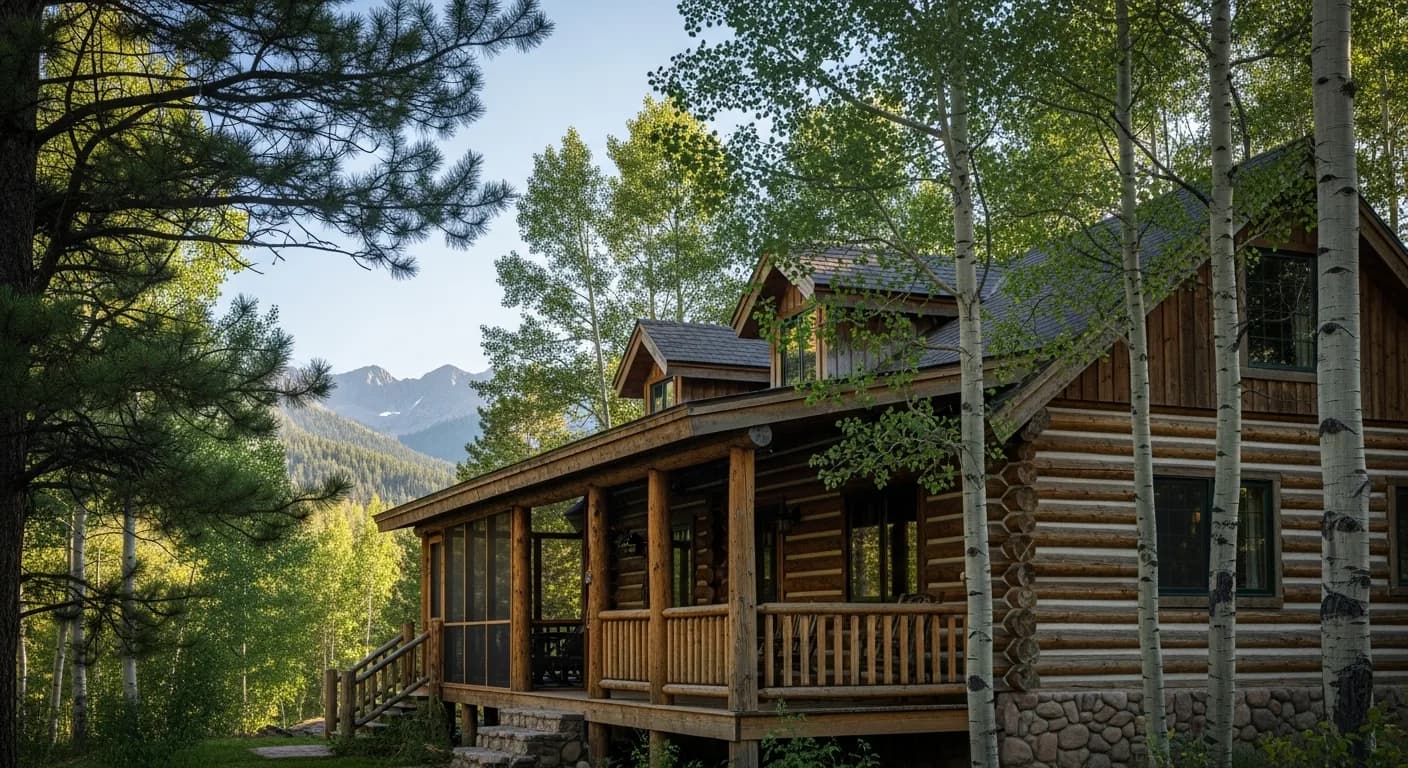 AI illustrationThe maintenance test
2 bd · 2 ba · 1,554 sq ft · 3.7 acres · built 1988 · Archuleta County
A charming 1988 log cabin on 3.7 acres with a wrap-around porch and Southern San Juan views. This is exactly the tier where maintenance is the whole ballgame. A 37-year-old log home either shows decades of steady care and sells as move-in mountain charm, or shows decades of catch-up and gets bid down to a fixer — same cabin, two very different prices.
View this listing on ZillowThis Is Why an Inspection Matters
Everything above describes the curve. The one thing charts can't tell you is where your home sits on it today. That is exactly what a specialized log home inspection is for.
It pinpoints where you are on the curve
The inspection grades the stain, chinking, and structural logs and translates that into an honest position on the value curve — appreciating, holding, or slipping.
It attaches a real dollar figure
You get an itemized estimate to bring the home current, so the “cost to cure” an appraiser or buyer would apply is a known number, not a guess.
It gives you leverage
Buyers negotiate from documented condition; sellers fix the right things before listing and hand the appraiser proof that the home is sound.
Thomas Elliott has inspected hundreds of Colorado log homes over a 20+ year career restoring them. An inspection turns the general story on this page into a specific, itemized plan for your address — the report most clients actually want in hand before they buy, sell, or budget the next few years.
What This Means If You're Buying or Selling
For Buyers
A beautiful log wall can hide an expensive future. Before you close, know whether you are buying a maintained home or a deferred-maintenance bill of $16,000–$40,000+. A pre-purchase inspection reveals the true condition of stain, chinking, and structural logs — and gives you an itemized number to negotiate with and budget against.
Pre-purchase inspections for buyersFor Sellers
The highest-return move is almost always the one that keeps you on the maintained line: a timely wash and recoat, fresh chinking where it has pulled away, and documented records. As 231 Kimmes Lane shows, a cared-for log home can sell above its estimate and faster than the field. Don't wait until the sign is in the yard and a full restoration is on a deadline.
Pre-sale inspections for sellersThe Maintenance That Protects Value
None of these are expensive on their own. Skipping them is what gets expensive. This is the short list that keeps a Colorado log home on the value-protecting side of the curve.
- Wash and recoat the finish on schedule — roughly every 3–5 years, sooner on sun- and snow-exposed elevations.
- Re-chink and re-caulk where seams have pulled away, before water finds the gap.
- Keep gutters, grading, and roof overhangs moving water away from the logs.
- Trim vegetation and keep sprinklers off the walls so logs can dry.
- Address the first sign of rot, insect activity, or checking immediately — small repairs stay small.
- Keep dated records and receipts of every maintenance cycle for the appraisal and the buyer.
Log Home Resale Value FAQs
Does maintaining a log home actually increase its resale value?
Yes. A log home kept on a consistent maintenance schedule tends to appreciate roughly 1% per year in relative terms, while a neglected one can lose around 10% of its value over the same period as buyers and appraisers price in the cost — and risk — of deferred work. Over a decade that is a value gap of roughly 20 percentage points between two otherwise identical homes.
How much value does a neglected log home lose?
Appraisers apply a “cost to cure” adjustment for visible deferred maintenance, then buyers discount further for uncertainty. A log home with failed stain, pulled-away chinking, and early rot commonly sells around 10% below a comparable well-kept home — and the deeper the neglect, the larger and less predictable the discount becomes.
How much does log home maintenance cost compared to full restoration?
Routine maintenance and staining runs roughly $8–$12 per square foot of exterior log surface, while a full restoration — media blasting back to bare log, repairing damaged timber, re-chinking, staining, and sealing — runs about $18–$20+ per square foot. Maintenance costs roughly half as much per square foot and prevents most homes from ever needing a full restoration.
Should I get a log home inspection before buying or selling?
Almost always. A specialized log home inspection quantifies exactly where a home sits on the value curve — the condition of the stain, chinking, and structural logs, plus an itemized estimate to bring it current. Buyers use it to negotiate and budget; sellers use it to fix the right things before listing and to document condition for the appraisal.
What is the single highest-return project before selling a log home?
For most owners it is the project that keeps the home on the maintained line: a timely wash and recoat of the finish, fresh chinking where it has pulled away, and clean, documented records of the work. Buyers pay a premium for a turn-key log home, and it typically returns more at closing than it costs.
How often does a Colorado log home need to be re-stained?
At high altitude the sun and weather are punishing, so most Colorado log homes need a fresh coat roughly every 3–5 years — sooner on south- and west-facing elevations that take the most UV and driving snow. Staying on that cycle is what keeps a home on the value-protecting side of the curve.
Find Out Where Your Log Home Stands
Whether you're buying, selling, or planning to hold, a specialized inspection turns this guide into a specific plan for your home. Serving log home owners across Colorado's mountain communities.
Related Resources
Sources & notes: value-impact figures from appraiser Mack Strickland via Neighborly; deferred-maintenance and cost-to-cure methodology via HAR; restoration and maintenance cost ranges reflect typical Colorado log home pricing. Listing details and market figures were retrieved from Zillow on July 25, 2026 and reflect active listings at that time; inventory changes frequently.