
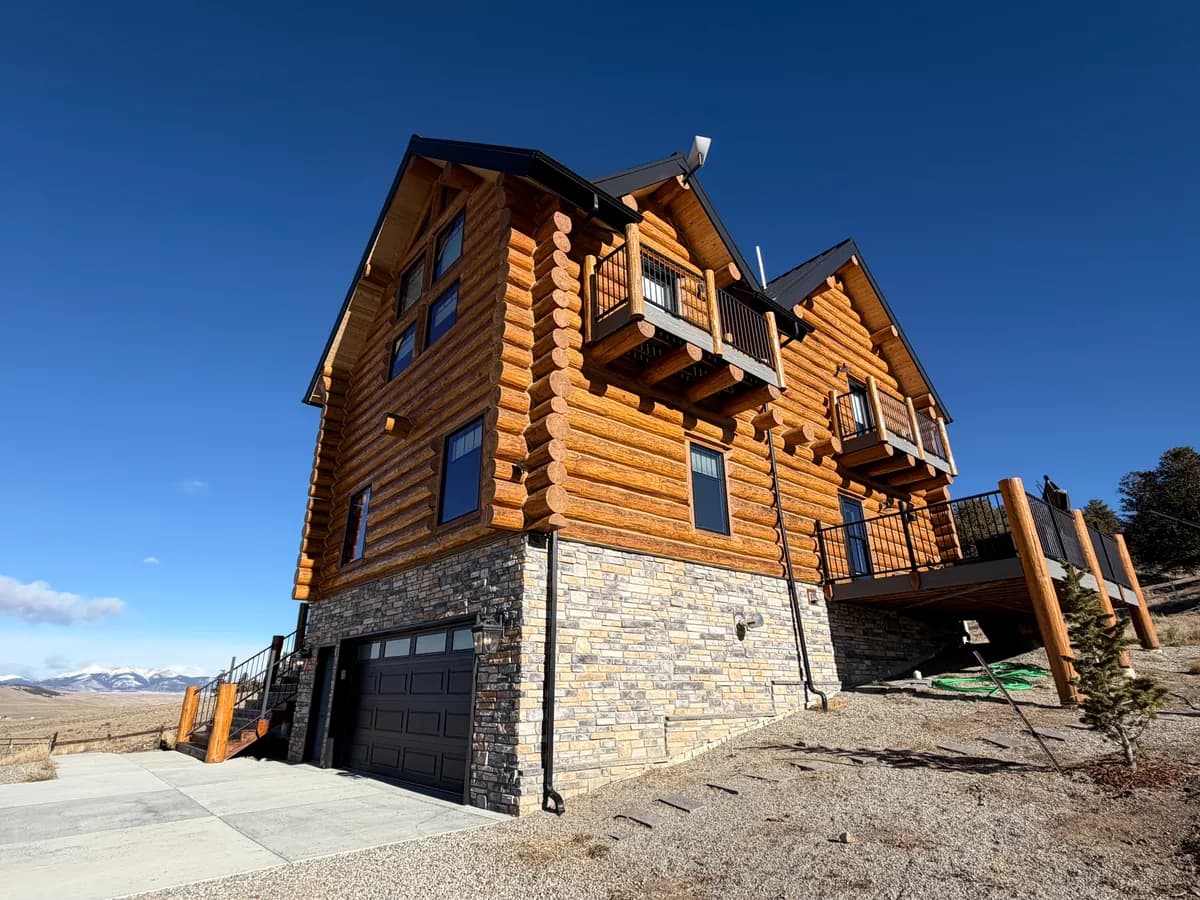
Log Home Inspection in Como, Colorado
A real Como inspection, anonymized — a solid South Park log home with failed interior chinking and an exterior due for a recoat before the finish weathered to bare wood.
Log Homes in Como & South Park
Como sits at nearly 9,800 feet in the wide, open bowl of South Park, just up the road from Fairplay. This is one of the most exposed places a log home can stand in Colorado: thin high-altitude air that lets UV through hard, almost no tree cover to break the wind, and the big day-to-night temperature swings of a high mountain valley. The historic railroad town has watched logs weather here for well over a century.
That exposure attacks a log home on two fronts at once. The exterior finish takes the UV beating, while the constant expansion and contraction works the chinking and the joints — and if the backer rod behind that chinking was never sized correctly, the seal fails early. The Como home below showed both problems together, which is exactly why a single inspection that looks inside and out matters here.
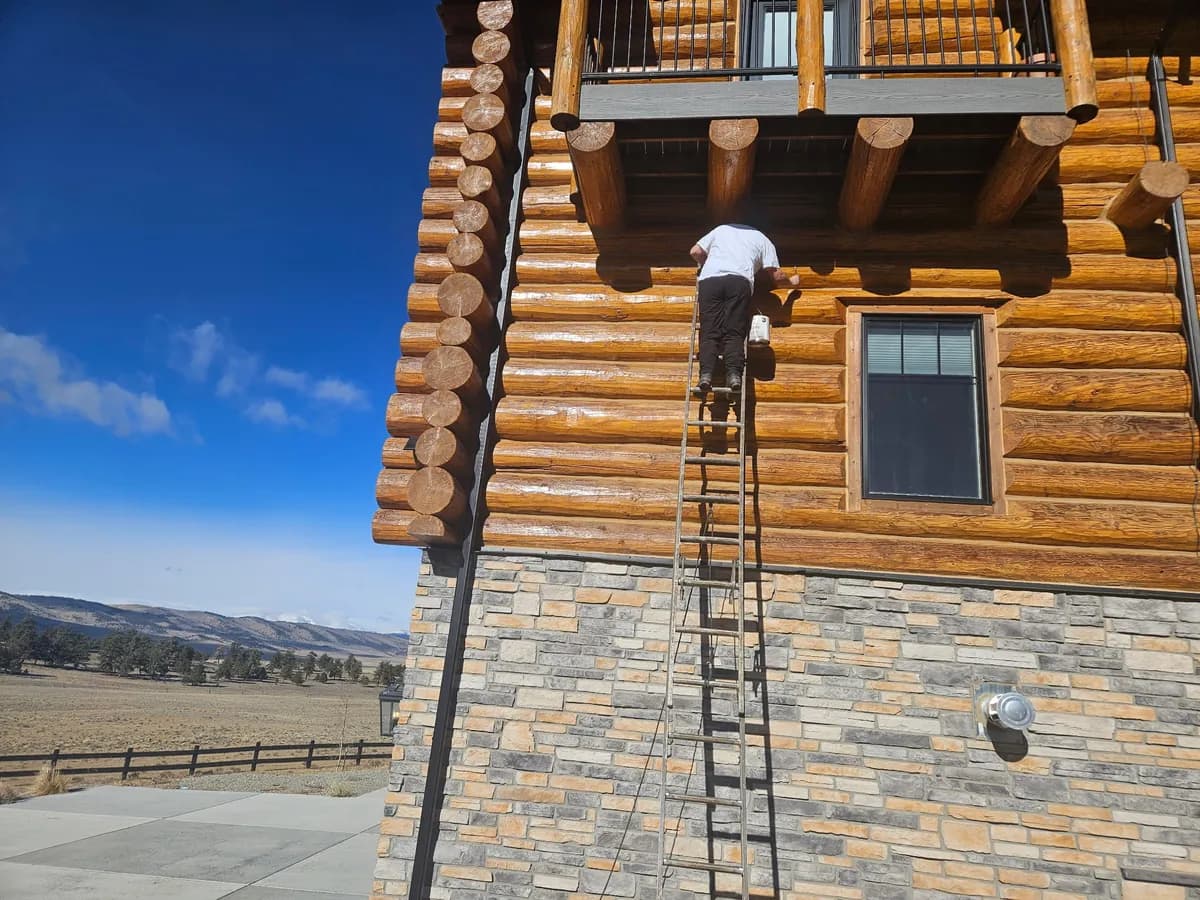
Failed interior chinking and an overdue exterior
This Como home had a solid structural foundation, with interior and exterior logs showing normal weathering for their age and exposure. The urgent items were the seals and the finish: numerous sections of interior chinking had failed — losing their bond to the logs and separating within the chinking itself — and the exterior was due, if not overdue, for a full cleaning and recoat of its protective stain.
The interior chinking failure traced back to the original construction: improper, undersized, or incompatible backer rod that never let the chinking work as designed. Correcting that root cause, re-chinking, finishing the drywall-to-log transitions, and recoating the exterior before it weathered to bare wood kept this home firmly in the maintenance range instead of a future restoration.
Findings at a Glance
| Area | Current condition | Recommended action |
|---|---|---|
| Interior chinking | Adhesive, substrate & cohesive failure | Cut out and re-chink ~900 LF |
| Backer rod (original) | Undersized / deteriorated / incompatible | Install properly sized closed-cell backer |
| Drywall-to-log transitions | Open, never finished (~700 LF) | Detail and seal the seams |
| Exterior logs & stain | Due / overdue for recoat; UV darkening | Low-pressure wash and hand-brush recoat |
| Large checks & support posts | Open checks holding water (~2,000 LF) | Seal with Permachink Energy Seal |
| Patched vent log | Visible, unblended repair | Re-profile and blend with epoxy |
Documented Conditions
Interior chinking — failed
Numerous sections of interior chinking showed adhesive, substrate, and cohesive failure — losing the bond to the logs and separating within the chinking material itself. Open chinking lets uncontrolled air move through the wall, which drops energy efficiency, and it opens pathways for dust, insects, and potential water. In several spots the detailing where drywall meets the log surfaces had never been finished, leaving open seams.
Backer rod — original construction defect
The real cause of the chinking failure was below the surface: improper backer rod installed when the home was built. In many areas the backer was undersized, deteriorated, or incompatible with the chinking, which guarantees early failure no matter how good the chinking is. Lasting repair means cutting out the failed chinking and installing properly sized closed-cell backer rod before anything new goes on.
Exterior logs & stain — due for recoat
The exterior log surfaces were due — if not overdue — for a full cleaning and recoat. UV exposure and weathering were visible, particularly on the upper log curvatures, corners, and trim, and the darkening on exposed surfaces is evidence of the existing finish breaking down. Caught now, this is a wash-and-recoat; left longer, the finish fails to bare wood and the job becomes a strip-and-refinish.
Checks & support posts
Large checks in the logs and the support posts were open and collecting water. Roughly 2,000 linear feet of checks and posts were specified for sealing with Permachink Energy Seal, backed where needed, to keep moisture out of the end grain and the log cores.
Patched vent log
A previously patched vent log stood out visually and needed re-profiling and blending. Abatron epoxy, followed by sanding and grinding, disguises the repair so it disappears into the surrounding log line.
Example Scope & Investment
The anonymized scope below mirrors the work order for this Como project — an interior chinking rebuild paired with a straightforward exterior wash and recoat.
- Re-chink failed jointsCut out all failed chinking, install properly sized closed-cell backer rod, and reapply elastic log-home chinking (~900 LF), color-matched to existingIncluded
- Finish drywall-to-log transitionsDetail and seal open seams where drywall meets the logs (~700 LF)Included
- Wash & recoat logsLow-pressure wash (~4,800 sq ft), then hand-brush Sashco Transformation Log & Timber in NaturalIncluded
- Detail caulkingApply detail caulking to missed areas (~1,500 LF)Included
- Seal checks & postsSeal large log checks and support posts with Permachink Energy Seal (~2,000 LF)Included
- Vent log patchRe-profile and blend the patched vent log with Abatron epoxy, sand, and grindIncluded
These figures come from a real Log Home Finishing inspection in Como, shown here as an anonymized example. Every home is different — your inspection includes a written scope and pricing matched to your home’s actual condition.
Products & methods used
Recommended Maintenance Schedule
Como’s altitude and open exposure are hard on finishes and seals, so a steady schedule is what keeps a home here out of full restoration.
| Element | Interval | What it involves |
|---|---|---|
| Exterior stain | 3–5 years | Wash and recoat with Sashco Transformation before the finish reaches bare wood |
| Interior & exterior chinking | Inspect yearly | Spot-repair any joint that loses bond or opens |
| Checks & support posts | Inspect yearly | Re-seal open checks with Energy Seal before they hold water |
Why the Backer Rod Mattered More Than the Chinking
Homeowners usually blame the chinking when a seal fails, but on this Como home the chinking was failing because of what was behind it. Backer rod is the foam cord set into a joint before chinking; it controls the depth and shape of the chinking and gives it a clean surface to bond against. When the backer is undersized, deteriorated, or the wrong type — as it was here from the original build — the chinking cannot form a proper bond and pulls away early, no matter how good the material is.
That is why simply re-chinking over the old backer would have failed again. The lasting fix is to cut the failed chinking out, install correctly sized closed-cell backer, and then re-chink. Pairing that with an exterior recoat caught the home at the right moment — while the exterior was a wash-and-recoat rather than a strip-to-bare-wood restoration.
- Failed chinking is often a backer-rod problem, not a chinking-material problem.
- Re-chinking over bad backer just repeats the failure — the backer has to be corrected first.
- An exterior caught “due, not failed” stays a wash-and-recoat instead of a full restoration.
- Open drywall-to-log seams quietly leak air and let in dust and insects.
What the Work Looks Like
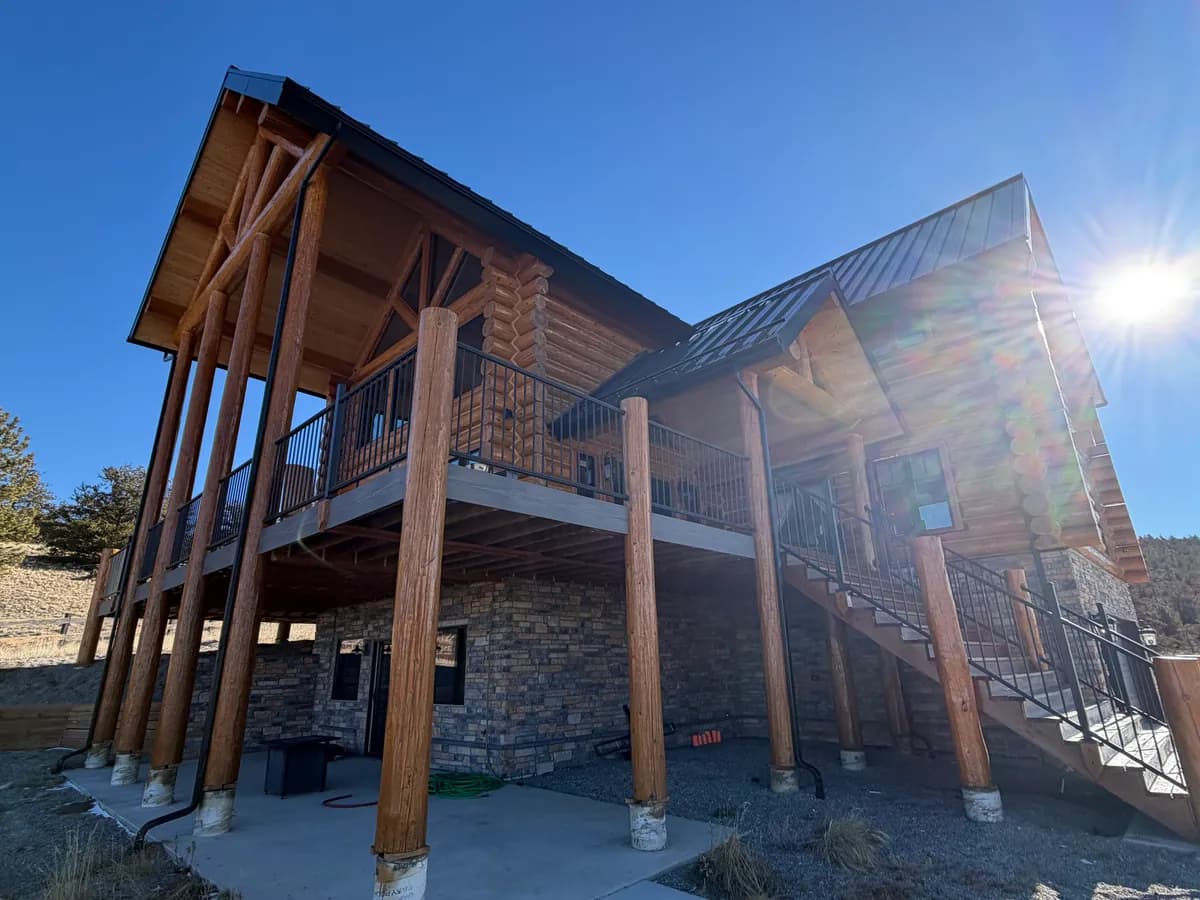
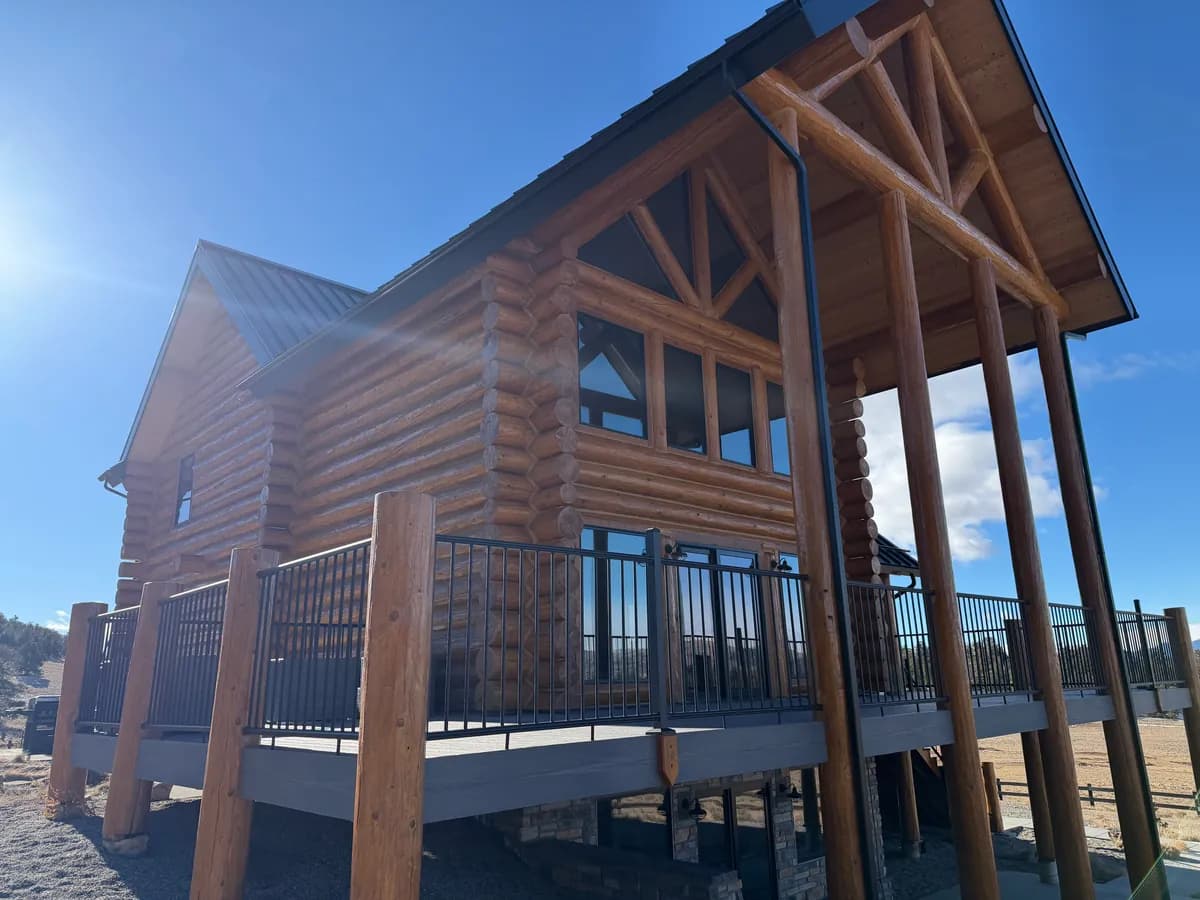
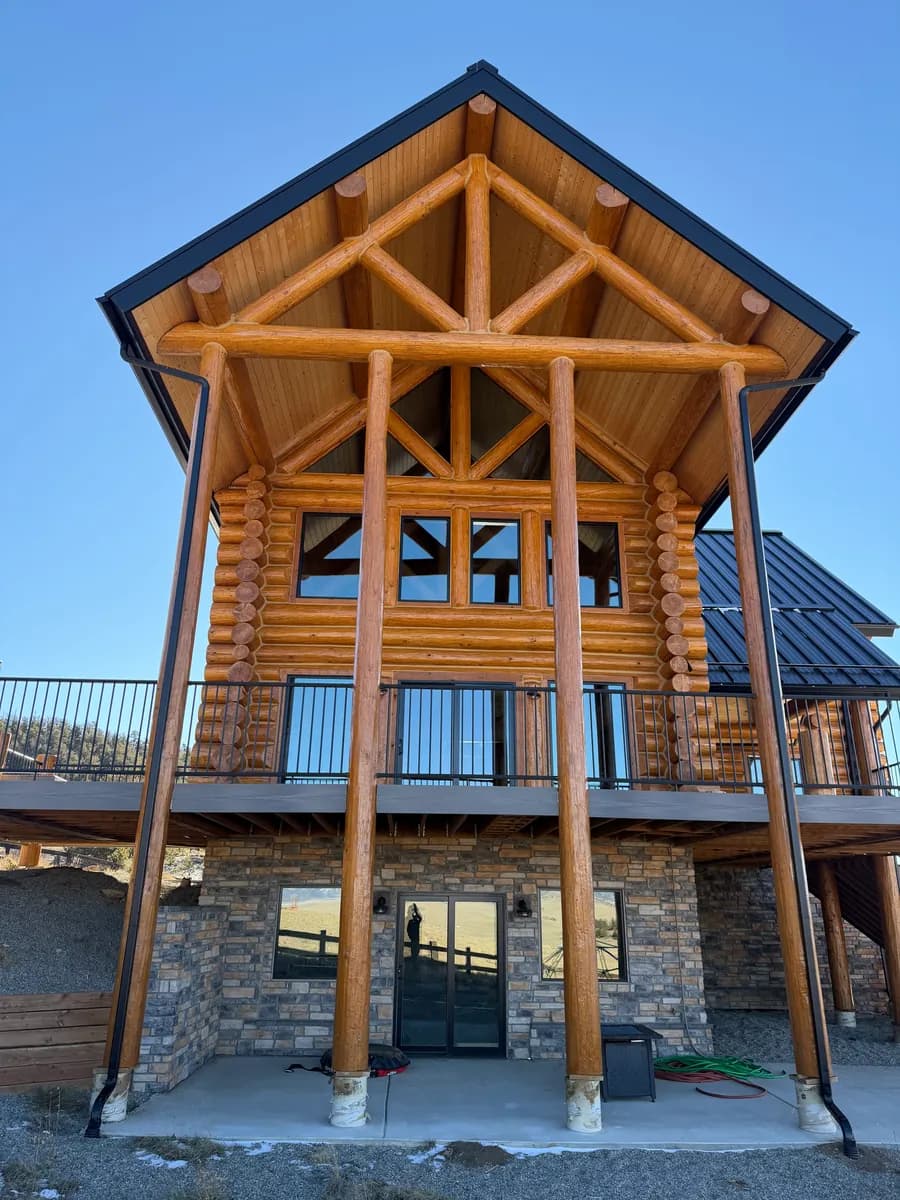
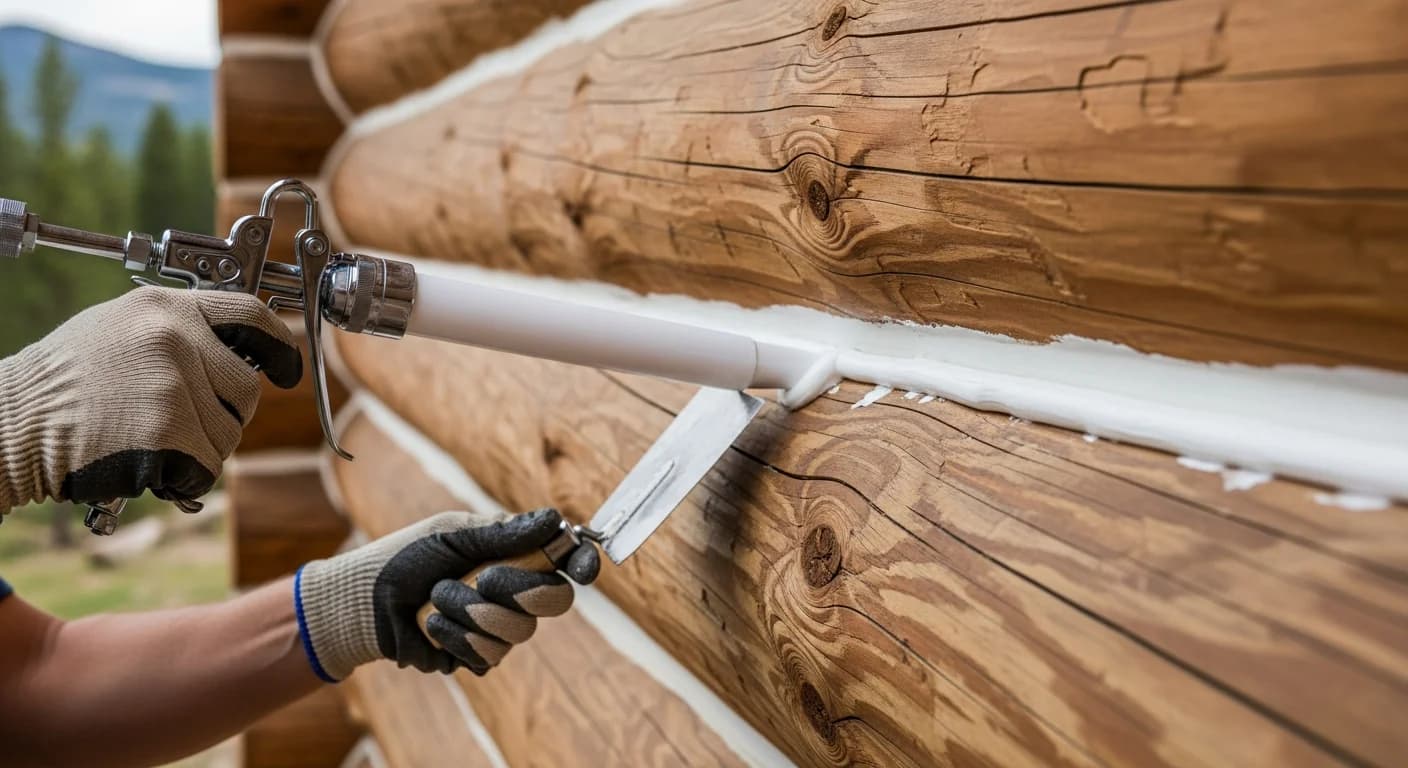
Illustrative photos of Log Home Finishing staining, chinking, and restoration work in Colorado.
Como Log Home Inspection — FAQ
Why did my Como home’s chinking fail so soon?
On this home the chinking failed because the backer rod behind it was wrong from the original construction — undersized, deteriorated, or incompatible with the chinking. Backer rod sets the depth and bond shape of the chinking; when it is wrong, the chinking cannot bond properly and pulls away early. The fix is to cut out the failed chinking, install correctly sized closed-cell backer, and re-chink — not just smear new chinking over the old backer.
Can I just recoat the exterior, or do I need to strip it first?
It depends entirely on how far gone the finish is. This Como exterior was due — even a little overdue — but not yet weathered to bare wood, so it was a low-pressure wash and a hand-brushed recoat of Sashco Transformation. That is exactly why timing matters at 9,800 feet: catch the finish while it is fading and you wash-and-recoat; wait until it is gone and you are paying to media-blast back to bare wood.
Why seal the log checks and posts separately?
Checks are the cracks that open as logs season, and on upward-facing surfaces they catch and hold water — as do open checks in support posts. Left open they wick moisture into the log core and end grain, which is where rot starts. Sealing roughly 2,000 linear feet of checks and posts with Permachink Energy Seal closes those pathways while still letting the wood move with the seasons.
Do you inspect the interior of the log home too?
Yes — and on this Como home the interior is where the most urgent work was. A thorough log home inspection covers interior chinking and the drywall-to-log transitions, not just the exterior walls, because interior seal failure drives energy loss and lets in dust and insects. Looking inside and out in one visit is how we caught both the backer-rod issue and the overdue exterior at the same time.
Example Inspections in Other Colorado Towns
Real, anonymized inspections from log homes across the state.
An incompatible finish peeling off a home and garage
View inspectionHigh-altitude UV, split railings, and open mortar
View inspectionA large-diameter full-scribe cabin in Buena Vista
View inspectionA solid log home with a failed deck system
View inspectionA maintained full-log home in Cimarron
View inspectionA VERY GOOD, well-maintained pre-purchase home
View inspectionA multi-structure log property in Evergreen
View inspectionA sound home ready for a full clean and finish
View inspectionMissing chinking and open log checks
View inspectionSun-worn siding and decks, caught at maintenance
View inspectionA full-scribe home that was never chinked
View inspectionSound structure, end-of-life finishes inside and out
View inspectionAn infested, weathered handcrafted log home
View inspectionA historic ten-building log ranch
View inspectionA two-story log home in Pine
View inspectionA large D-log home in Steamboat Springs
View inspectionA historic town hall in Tin Cup
View inspectionCaught Your Como Log Home in Time?
An inspection tells you whether your exterior is a simple recoat or a full strip — and whether your chinking is failing because of the chinking or the backer rod behind it.
Thomas Elliott · Serving log home communities across Colorado
Como Area & Related Services
Start with the main log home inspection page to see our full process, or explore log home restoration and maintenance for the work that follows.