
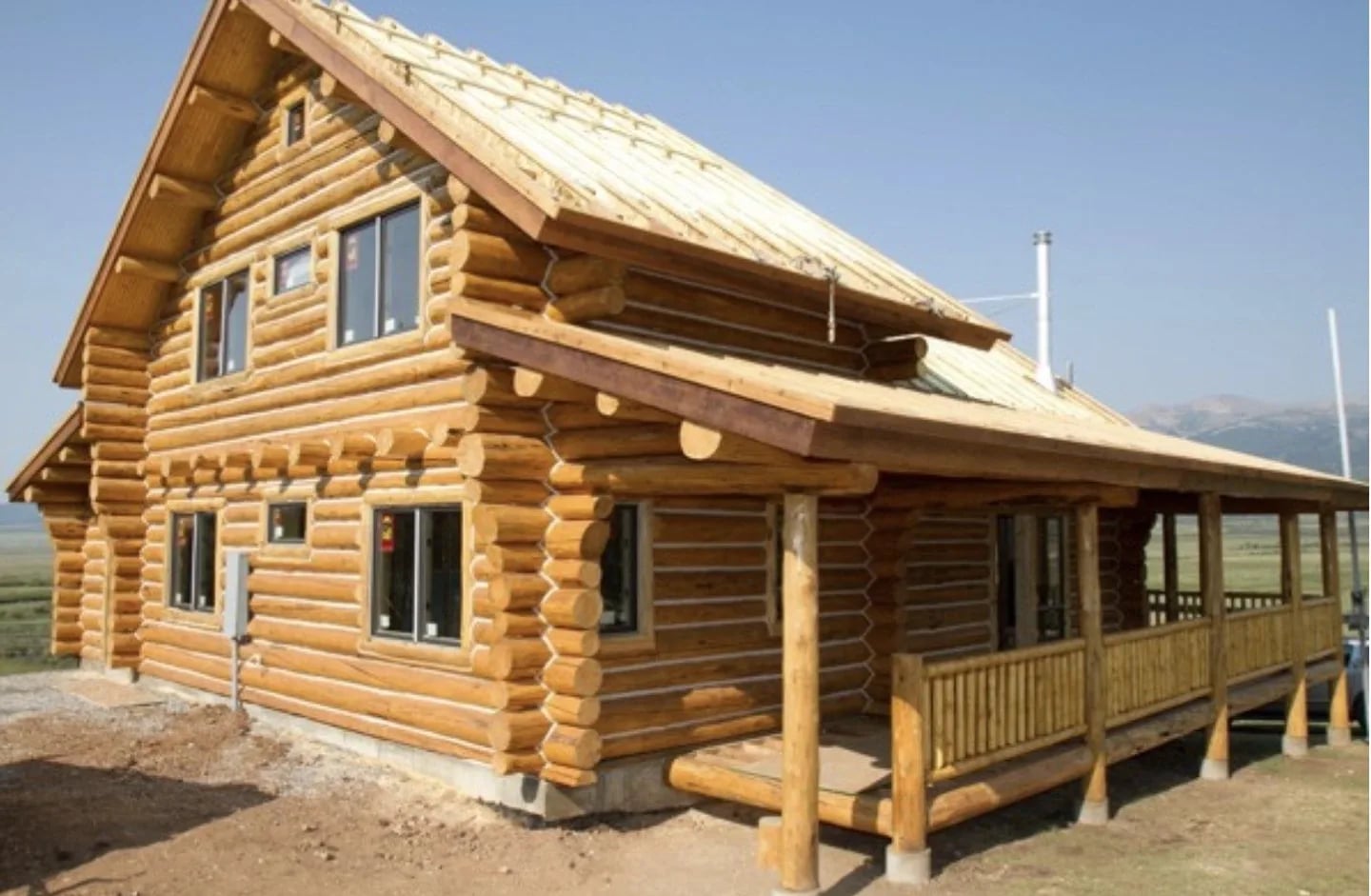
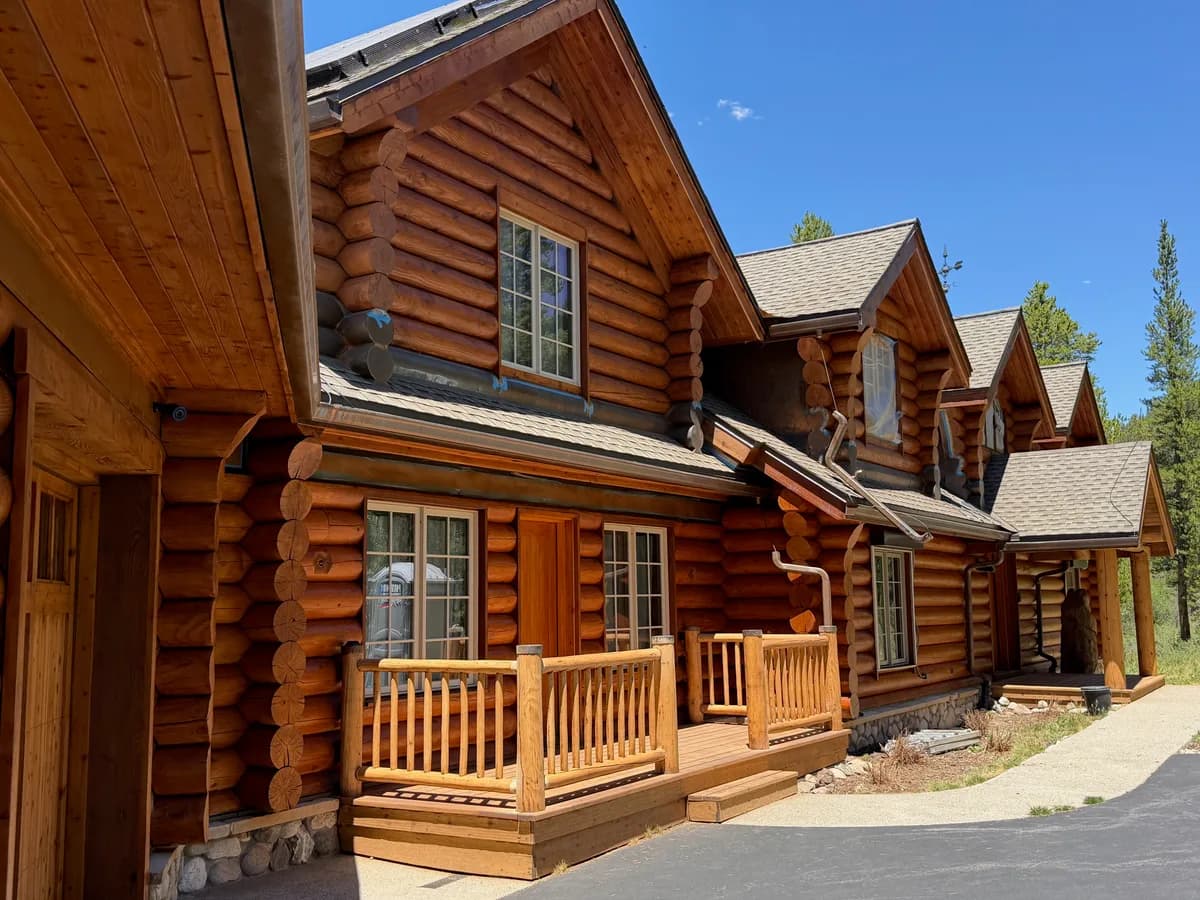
Breckenridge Log Home Restoration — Media Blasting & Permachink Ultra-2 Bronze
Breckenridge, Summit County — media blasting and Permachink Ultra-2 Bronze restoration.
Most mountain towns lean toward one main threat, but Aspen log homes get hit hard from two directions. Sitting at 7,908 feet at the head of the Roaring Fork Valley, these homes spend months buried in deep snow that packs against the lower walls and sheds off steep roofs onto log ends and chink lines. At the same time, the thin alpine air lets fierce UV bleach and degrade the finish on every sun-facing wall — often while snow is still melting on the shaded side of the same building.
That dual assault changes the whole maintenance strategy. In Pitkin County we spend real effort sealing the snow-load and roof-shed zones against meltwater while simultaneously loading extra UV-blocking coats onto the south and west elevations. A crew that only thinks about snow will miss the failing sun-side finish, and one that only thinks about UV will miss the slow rot starting at the snow line. On an Aspen home, both have to be handled together.
Pitkin County holds an unusually wide range of log structures. Aspen began as an 1880s silver-mining camp, and historic miners' cabins still stand alongside large modern timber homes whose owners expect a flawless finish. Caring for both takes a careful, adaptable hand: stabilizing and protecting original logs on the historic cabins without erasing their character, and holding a tighter standard on color match, tooling, and even coverage on the high-end homes.
Across all of them, the alpine climate is unforgiving, so getting the protection right matters more here than in milder places. We choose products that stay flexible through Aspen's freeze-thaw cycles, contain blasting media and dust carefully on finished properties, and document the work for owners who are often away. The result is a home that is genuinely protected against snow and sun — and visibly, properly cared for.
A large share of the log homes we maintain in Pitkin County are not in Aspen's core. They sit up toward Snowmass Village, out in Woody Creek and Old Snowmass, and along the Maroon and Castle Creek roads where elevation, snow depth, and UV all climb together. Many are second homes that sit empty for weeks at a time, so a problem at the snow line or a failing sun-side finish can go unnoticed until it becomes serious.
For absentee owners up the side valleys we rely on scheduled off-season inspections rather than waiting for damage to surface. We confirm the south and west walls are still protected, seal any checks and roof-shed zones before the next winter, and make sure decks and log ends are buttoned up against snowmelt. Catching a thirsty finish or an open check early in this climate is far cheaper than rebuilding a water-soaked log after a hard Roaring Fork winter.
Local conditions require specialized expertise. Here's what we tackle for Pitkin County homeowners.
At the head of the Roaring Fork Valley, winter snow piles deep and lingers for months. Drifts pack against lower log courses and slow spring melt keeps the bottom logs and foundation lines damp long after the peaks clear.
Our Solution: Weather-tight sealing of the snow-load and roof-shed zones, with durable finishes that protect the lower courses through a long, wet melt season
At 7,908 feet the thin air lets through fierce sun. Brilliant alpine UV bleaches and breaks down finishes on south- and west-facing log walls far faster than the shaded north and east faces.
Our Solution: UV-blocking stains with maximum inhibitors, applied with extra coats on the sun-exposed elevations that take the worst of the alpine sun
Sunny days and bitter mountain nights drive constant freeze-thaw cycles that push water into checks and joints, then expand it — prying chinking loose and widening cracks over the long season.
Our Solution: Flexible, elastomeric chinking and caulk that stretch with the wood through Pitkin County's hard freeze-thaw swings
Heavy roof loads shed snow and meltwater onto decks, log ends, and chink lines all winter and spring. Repeated soaking in those zones is where rot quietly begins on Roaring Fork log homes.
Our Solution: Targeted sealing of log ends, decks, and roof-shed zones, paired with finishes that shed water and resist the freeze-thaw cycle
Complete restoration for Pitkin County high-alpine log homes, addressing snow damage, sun-faded finishes, and freeze-thaw deterioration.
Learn MoreUV-blocking stain systems with meticulous preparation, built for the intense high-altitude sun on Aspen and upper Roaring Fork homes.
Learn MoreFlexible chinking and check sealing that accommodate freeze-thaw log movement and keep snowmelt out of the wall.
Learn MoreRegular inspections and proactive maintenance programs that keep valley and second-home log homes protected through the long alpine winter.
Learn MoreProfessional media blasting to strip away UV-damaged gray wood and old finish, essential for proper stain adhesion in the high-alpine climate.
Learn MoreDeck refinishing that protects outdoor living spaces from Pitkin County's deep snow, intense sun, and freeze-thaw weather.
Learn MoreExplore our town-specific service guides for Pitkin County communities — each covers the local climate, elevation, and finish schedule that shape the work in that town.
These examples are from nearby counties. Their actual locations are shown below so you can compare relevant work without confusing it with a project in this county.
Breckenridge, Summit County — media blasting and Permachink Ultra-2 Bronze restoration.
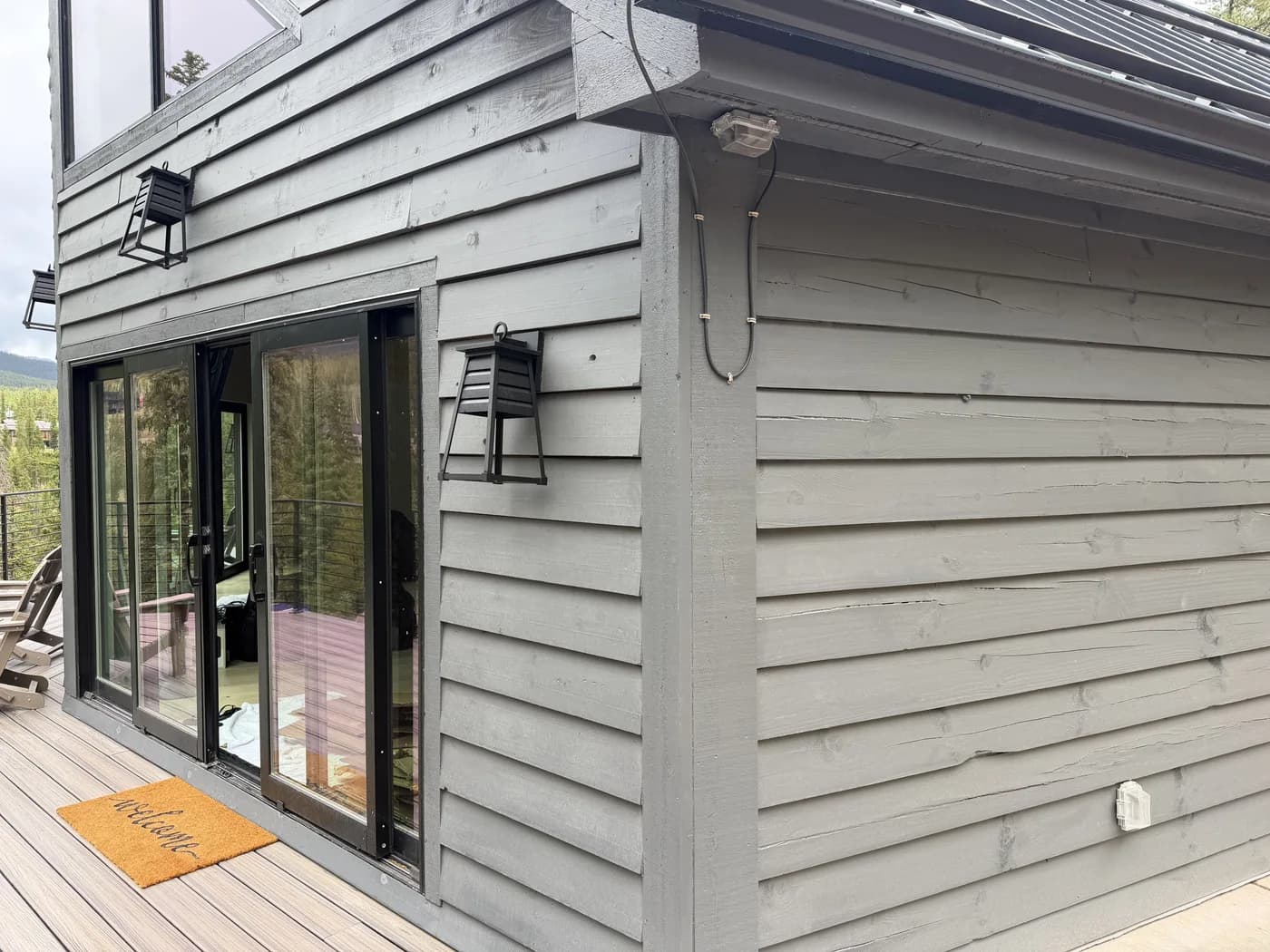
Breckenridge, Summit County — documented siding damage and caulking guidance.
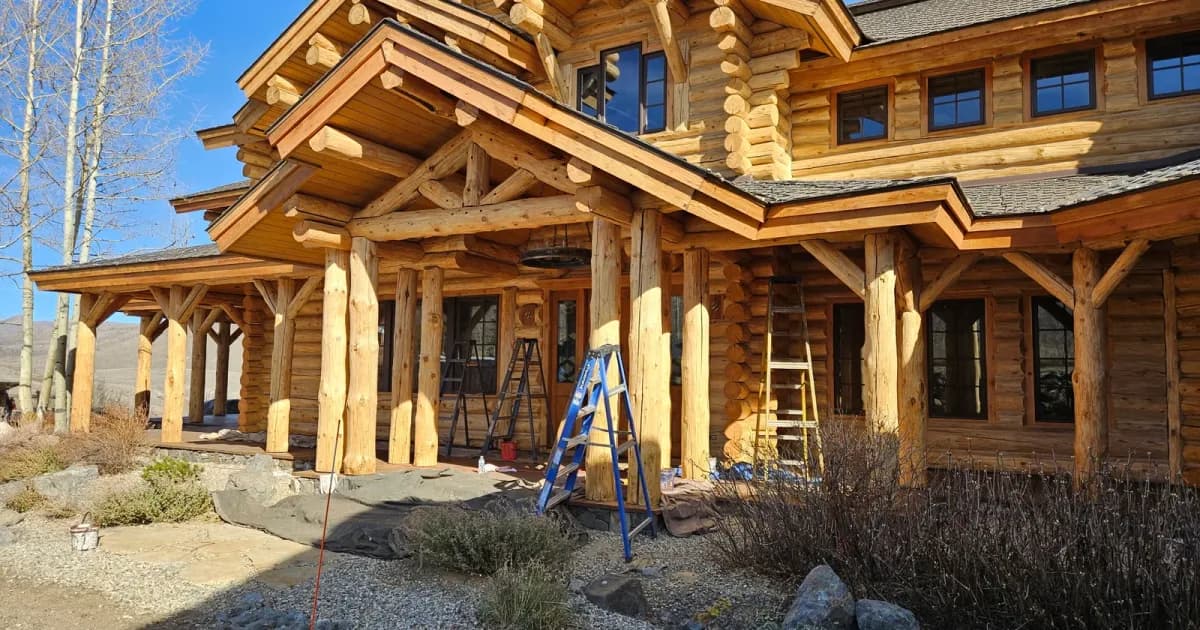
Granby, Grand County — spruce log preparation through media blasting, sanding and Prelude primer; before final staining.
Full preparation and refinishing typically costs $14–$17/sq ft of log wall surface, not floor area. Chinking, sealing and log replacement are measured separately. Typical ranges are based on recent estimates. Every job is priced after an on-site inspection. Confirm measured surfaces, condition, access and included scope.
Aspen log homes face two extremes at once. Deep Roaring Fork snow packs against the lower walls and sheds off roofs onto log ends for months, keeping the bottom of the home damp, while at 7,908 feet the intense high-altitude sun bleaches and breaks down finishes on south- and west-facing walls. Protecting an Aspen home means sealing the snow-load zones tight against meltwater and using maximum-UV stains on the sun-exposed elevations.
At 7,908 feet the thin alpine air lets through fierce UV, especially on south- and west-facing walls. We use Sashco and Permachink stains with maximum UV inhibitors, applied with extra coats on the sun-exposed elevations after thorough media blasting for maximum adhesion. These deep-penetrating finishes are built to hold their color and protection through Aspen's long, bright high-country season.
Inspect yearly and plan a maintenance coat every 2–3 years on a sound finish. Around Aspen and Snowmass Village, check roof discharge, shaded lower logs and exposed upper walls separately. Lower Roaring Fork Valley sites can have a different drying window; use actual moisture and product instructions rather than a countywide calendar.
Yes. Many of the log homes we care for in Aspen, Snowmass Village, Woody Creek, and Old Snowmass are second homes that sit empty for long stretches between visits. We offer scheduled off-season inspections and maintenance programs for absentee owners, sealing homes tight against snow and meltwater and documenting the work. Call (970) 368-2308 to set up a care plan.
Aspen's high elevation means a compressed working season. Staining and chinking cure best in dry conditions above roughly 50°F, which the upper Roaring Fork Valley reliably offers from late spring through early fall once the snow clears. We book Pitkin County projects early so the right walls are blasted, repaired, and re-coated within that summer window before the next winter sets in.
The lengthwise cracks in logs are called checks, and Aspen's relentless freeze-thaw cycles make them worse. Sunny days and cold mountain nights drive water into checks and joints, then freeze and expand it, prying chinking loose and widening cracks over time. We seal the upward-facing checks that collect meltwater and use flexible, elastomeric chinking that moves with the wood through every freeze-thaw cycle.
Absolutely — sun-bleached, gray, and snow-worn log homes are a specialty, including historic mining-era cabins and high-end timber homes. Our full restoration starts with a thorough inspection, then media blasting to strip away UV-damaged gray wood and old finish back to bright, sound wood. We replace any rotted logs, seal the checks, then apply premium UV-blocking stain and flexible chinking to protect the home for years to come.
Tell us where your home is and what you're seeing in the logs or finish. We'll talk through the condition, access, and next steps for your project.
Serving Colorado mountain communities since 2004