

Pagosa Springs Log home Deck Restoration
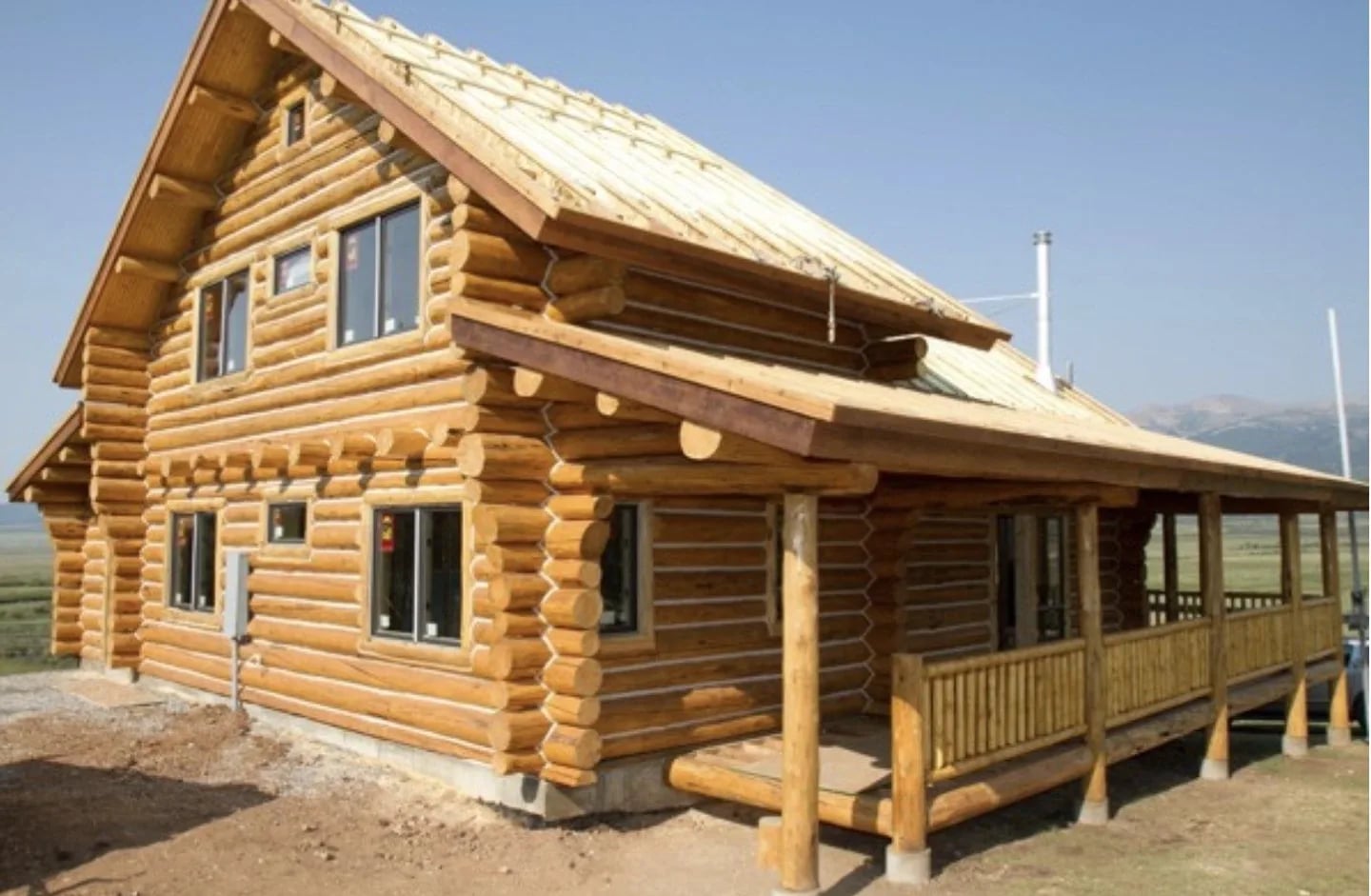
Pagosa Springs, Archuleta County — log home deck restoration.
Updated
Log home finishing, restoration and maintenance for Telluride, Mountain Village, Norwood and San Miguel County. Get a written scope based on your home's condition.
Most Colorado log homes battle one dominant threat — deep snow in the high country, or dry sun on the Western Slope. Telluride homes fight both at the same time, and that is what makes the box canyon so unforgiving. The town sits at 8,750 feet, walled in by peaks that throw long shadows, so the north-facing walls stay cold and damp while heavy San Juan snow piles against the lower logs. At the same time, the south- and west-facing walls catch some of the most intense high-alpine UV in the state.
The result is a single house that needs two strategies. On the shaded, snow-contact side we manage moisture: breathable finishes, sealed snowlines, and details that let the wall dry. On the sun-blasted side we manage UV: maximum-inhibitor stains and more frequent recoating. A crew that applies one blanket plan to the whole home will always leave one side under-protected, which is exactly the kind of damage we are called in to repair.
San Miguel County is bigger and more varied than just Telluride. Drop down the valley through Placerville and climb west and you reach Wright's Mesa around Norwood — a high, open ranching plateau that is markedly drier, sunnier, and less hemmed-in than the box canyon. The log homes and ranch buildings out there face a different mix: more full-sun exposure on every wall, more wind, and a longer working season than the deep-snow canyon to the east.
We adjust our approach to match. In Telluride and Mountain Village the emphasis is snow, shade, and a compressed schedule; out on the mesa it shifts toward all-around UV protection and dealing with wind-driven weathering. Knowing the difference between a canyon home and a mesa home is exactly the kind of local detail that separates a finish that lasts from one that fails early.
A large share of San Miguel County's log homes are second homes and luxury properties — many in town, many more up in Mountain Village — that sit empty for long stretches between visits. Owners expect them kept in excellent condition, but problems that start under winter snow often go unseen until the damage is well along. Combine that with a working season that really runs only from late spring to early fall, and timing becomes everything.
For absentee owners we rely on scheduled inspections rather than waiting for a leak to appear. We check the snowline and shaded walls for the first signs of rot, confirm the sun-facing finishes are still holding, and get any needed work onto the calendar early so it is finished and cured before the canyon fills with snow. In an alpine climate this demanding, catching a small problem in June is far cheaper than rebuilding a rotted log wall after the thaw.
Local conditions require specialized expertise. Here's what we tackle for San Miguel County homeowners.
Telluride and Mountain Village sit high in the San Juans where heavy snow piles against the lower log courses and lingers for months. Slow snowmelt soaks the base of the wall, where rot quietly takes hold first.
Our Solution: Snowline sealing, upward-facing check filling, and flashing details that shed meltwater instead of holding it against the logs
Steep canyon walls leave north-facing log faces in shadow for weeks in winter. Those cold, damp walls hold moisture, grow mildew, and resist drying long after the sunny sides have dried out.
Our Solution: Breathable finishes and careful moisture management that let shaded walls dry rather than trapping water against the wood
At 8,750 feet the thin air offers little UV protection, and the south- and west-facing walls that catch the sun fade, gray, and lose their finish far faster than the shaded sides.
Our Solution: UV-blocking stains with maximum inhibitors, applied with extra coats on the sun-exposed elevations that take the worst of the alpine sun
Long winters and late snow squeeze restoration into a narrow summer-to-fall window. Stain and chinking must cure in dry, warm conditions, leaving little room for start-stop scheduling in the high country.
Our Solution: Early-season planning and booking so projects are finished and fully cured before the canyon fills with snow again
Complete restoration for San Miguel County alpine log homes, addressing snow-rotted lower logs, sun-bleached walls, and box-canyon moisture.
Learn MoreUV-blocking stain systems with meticulous preparation, built for the intense high-alpine sun on Telluride and Mountain Village homes.
Learn MoreFlexible chinking and snowline sealing that accommodate deep-cold log movement and keep snowmelt out of the lower courses.
Learn MoreRegular inspections and proactive maintenance programs that keep canyon and mesa log homes protected through the short, demanding season.
Learn MoreProfessional media blasting to strip away UV-damaged gray wood and old finish, essential for proper stain adhesion at high alpine elevation.
Learn MoreDeck refinishing that protects outdoor living spaces from San Miguel County's deep snow load and intense high-altitude sun.
Learn MoreExplore our town-specific service guides for San Miguel County communities — each covers the local climate, elevation, and finish schedule that shape the work in that town.
These examples are from nearby counties. Their actual locations are shown below so you can compare relevant work without confusing it with a project in this county.
Pagosa Springs, Archuleta County — log home deck restoration.
Full preparation and refinishing typically costs $14–$17/sq ft of log wall surface, not floor area. Chinking, sealing and log replacement are measured separately. Typical ranges are based on recent estimates. Every job is priced after an on-site inspection. Confirm measured surfaces, condition, access and included scope.
Telluride sits at the head of a steep box canyon at 8,750 feet, which creates two very different climates on the same house. Shaded, north-facing walls stay cold and damp for weeks at a time while drifted snow leans against the lower logs, leading to mildew and rot. The south- and west-facing walls that catch the sun get bleached by intense high-alpine UV. A smart maintenance plan treats the damp side and the sunny side differently.
At 8,750 feet the thin air offers little UV protection, so the sun-facing walls take a heavy beating. We use Sashco and Permachink stains with maximum UV inhibitors, applied with extra coats on the south and west elevations after thorough media blasting for adhesion. On the shaded, moisture-prone walls we favor breathable systems that let the wood dry rather than trapping snowmelt against it.
Inspect yearly and plan a maintenance coat every 2–3 years on a sound finish. Telluride canyon properties need close attention to shaded snow-contact courses; more exposed homes around Norwood need checks for sun-worn walls and rails. Record which elevations deteriorate first rather than treating a finish as having a guaranteed lifespan.
Yes. Many of the log homes we care for in Telluride and Mountain Village are second homes and luxury properties that sit empty between visits. We offer scheduled check-ups and maintenance programs for absentee owners, keeping the snowline sealed, the shaded walls dry, and the sun-facing walls protected. Call (970) 368-2308 to set up a care plan.
San Miguel County has a short, demanding season. Staining and chinking cure best in dry conditions above roughly 50°F, which at Telluride's 8,750 feet really means late spring through early fall. Late snow and early storms can shrink that window further, so we book projects well ahead. The lower, sunnier Wright's Mesa around Norwood offers a slightly longer working season than the high canyon.
In a box canyon, deep San Juan snow piles against decks, foundations, and the lowest log courses and lingers for months. Every warm afternoon sends meltwater into any open check or failed chink line near the snowline, and that slow, repeated wetting is where rot takes hold first — often hidden behind the snow. Sealing the lower courses and upward-facing checks is the key to preventing it.
Absolutely — snow-rotted lower logs and sun-bleached upper walls are exactly what we handle. Our full restoration starts with a thorough inspection, then media blasting to strip away gray, UV-damaged wood and old finish back to bright, sound wood. We make any needed log or rot repairs at the snowline, seal the checks, then apply premium UV-blocking stain and flexible chinking to protect the home through future winters.
Tell us where your home is and what you're seeing in the logs or finish. We'll talk through the condition, access, and next steps for your project.
Serving Colorado mountain communities since 2004