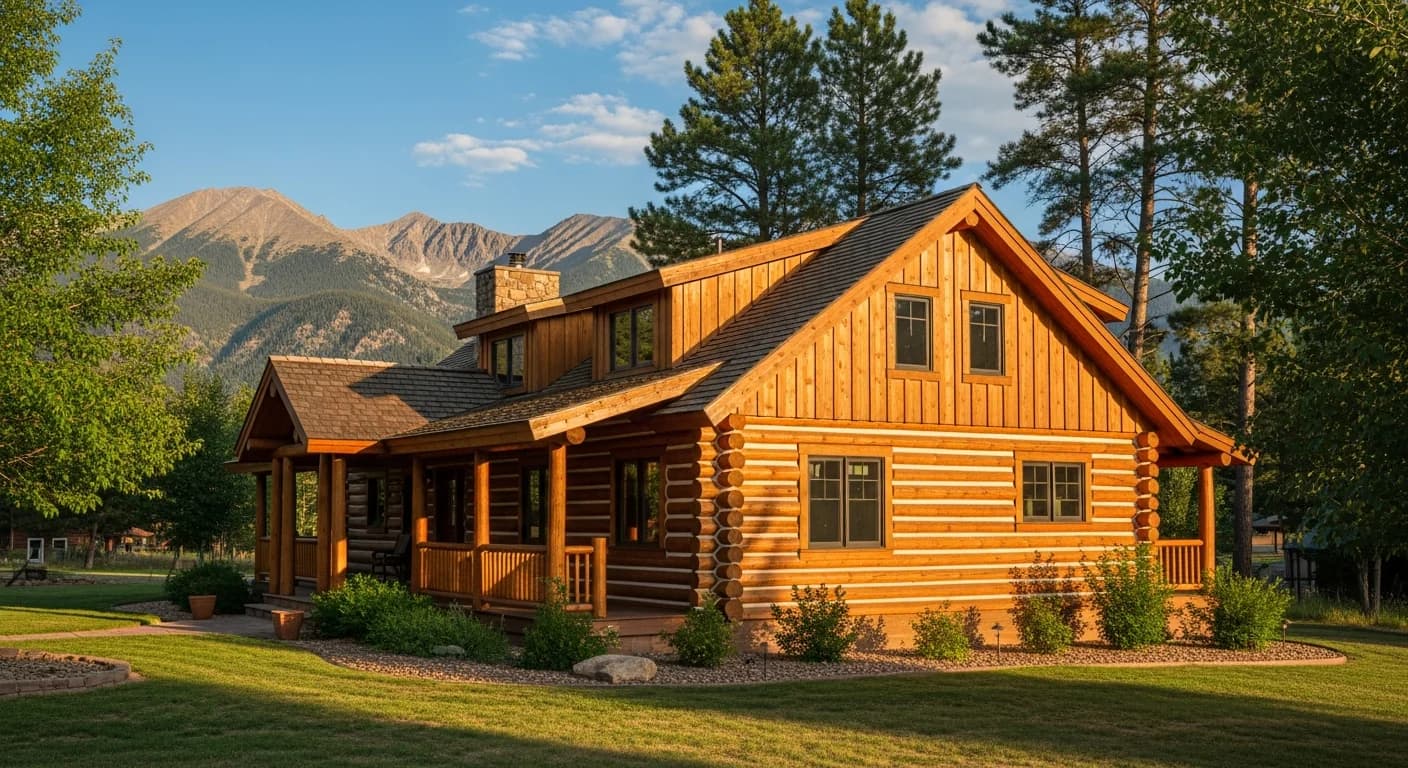
Colorado log home investment property
For Real Estate Investors

Underwrite the Log Envelope With Certainty

A log asset carries a maintenance liability most pro formas ignore. Thomas Elliott delivers itemized scope-and-cost inspections so your flip, rental, or STR pencils out before you commit capital.

LicensedInsuredSashco CertifiedPerma-Chink Certified

The number that makes or breaks a log deal

On a conventional property, deferred maintenance is a line item. On a log home, it can be the deal. Restoration economics — media blasting, log replacement, staining, and chinking — can swing a flip from profitable to underwater, and an unprepared rental owner can face a five-figure surprise a few seasons in.

That is why smart log home investors underwrite the log envelope as carefully as the roof or the systems. The question is not "does it look good in photos" — it is "what does it cost to bring it to standard and keep it there, and how does that affect my return?"

A specialist inspection answers that with a scope of work and itemized cost ranges you can drop straight into your model. Because Thomas Elliott performs the restoration work himself, those numbers reflect real project pricing — not a placeholder you will blow through later.

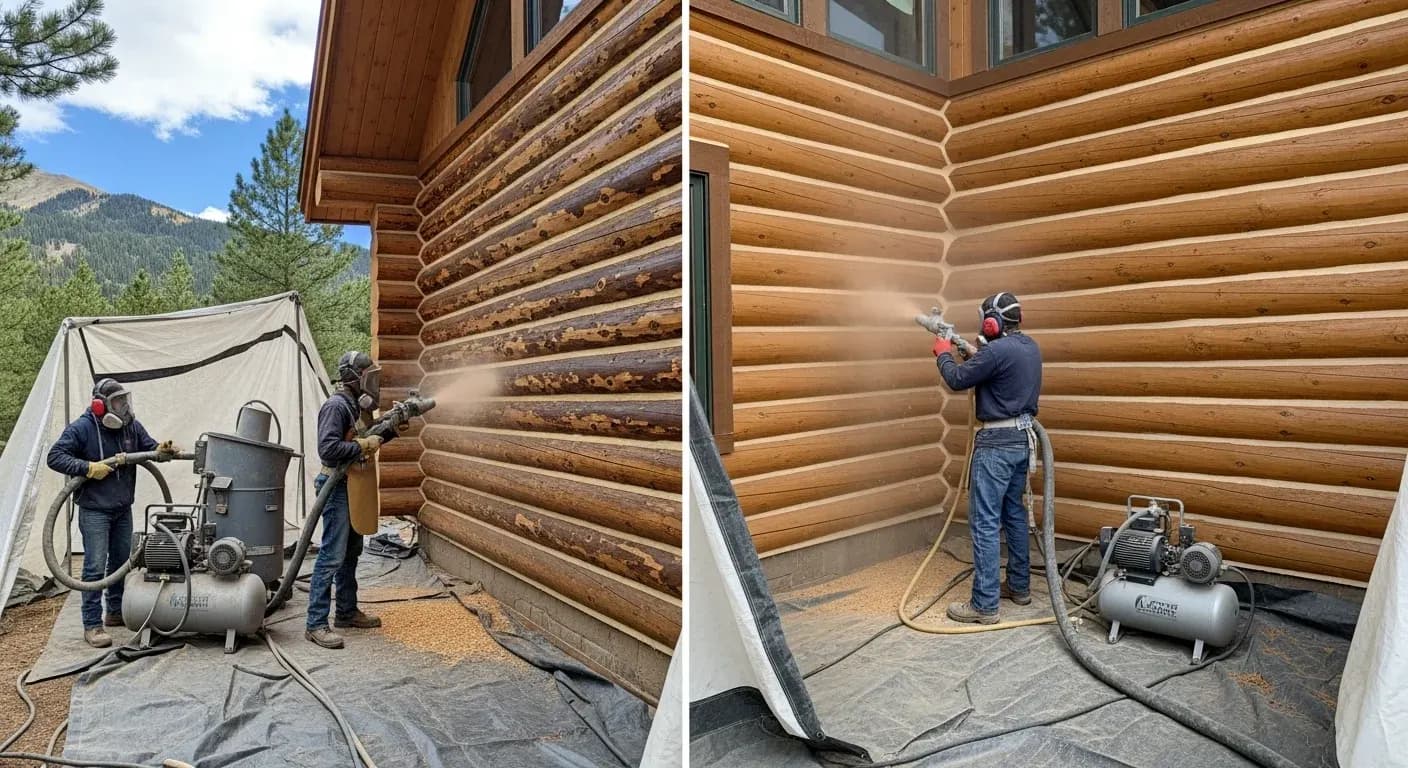
Media blasting during a Colorado log home restoration

What we quantify for investors

The inputs your underwriting actually needs — measured by someone who does the work.

Itemized Scope of Work

A line-by-line scope — what needs media blasting, which logs need replacement, where staining and chinking are required — so nothing is left to a vague "needs work" estimate.

Hard Cost Ranges

Realistic cost ranges per item and per square foot, grounded in real restoration pricing, so your capex line is defensible instead of optimistic.

Cosmetic vs Structural

The single most important distinction in a log deal. We separate quick cosmetic refreshes from true structural rot and log replacement that can dominate a budget.

Capex Timeline

What must be done now versus what can be staged over future seasons — essential for cash-flow planning on a hold or a rental.

Value-Add Upside

Fresh stain and crisp chinking dramatically lift curb appeal and STR booking appeal. We flag where restoration spend converts to ARV or nightly-rate upside.

Portfolio Scale

Assessing multiple properties? We can evaluate a portfolio and give you comparable scope-and-cost data so you can rank deals on the same basis.

20+
Years of hands-on log home experience
500+
Colorado log homes restored
4.5★
56 verified Google reviews
Licensed
Fully insured per Colorado law

Underwrite the log envelope, not just the house

In a log home, the walls are the structure, the insulation, and the weather barrier at once. Their condition drives both your repair budget and the home’s long-term durability, yet a standard inspection barely touches them. Treating the log envelope as a known cost — not a hopeful assumption — is what separates investors who profit on log homes from those who get burned.

Our inspection gives you that known cost: a documented condition, a scope of work, and itemized ranges you can underwrite against.

Flip math: restoration cost vs ARV uplift

On a flip, the spread between what restoration costs and what it adds to after-repair value is the whole game. A media-blast-and-refinish at a known per-square-foot rate, plus targeted log replacement and fresh chinking, can transform a tired, gray cabin into a showpiece — but only if you bought with those numbers in hand.

We help you see, before you commit, whether the log work pencils: what the catch-up restoration will cost, what is cosmetic versus structural, and where the spend most improves marketability.

  • Media blasting: roughly $5,000–$15,000 depending on size and condition
  • Staining: roughly $8,000–$25,000 for a full exterior
  • Chinking: a few thousand to $30,000+ depending on linear footage and failure
  • Log replacement: $500–$5,000+ per log for structural decay
  • Ongoing maintenance: about $8–12 per square foot every few years

Rentals and STRs: protect a high-traffic asset

A log home that earns nightly income is also weathering constant exposure with little owner oversight. A failing finish or open chinking does not just look bad in listing photos — it lets water and air into the structure and quietly raises your future repair bill. For a long-term rental, the same neglect erodes the asset between tenants.

An inspection at acquisition, and a maintenance cadence afterward, protects both your guest experience and the underlying value. We tell you what to fix before you list it and what to budget to keep it earning.

One vendor, inspection through restoration

For an investor, vendor risk is real — a great inspection is worthless if you cannot get the work done on budget and on schedule. Because Thomas Elliott both inspects and performs the restoration, the scope and the execution come from the same source. The numbers you underwrite are the numbers you build to.

For portfolios, that continuity means consistent quality and predictable cost across multiple properties, with a single point of accountability.

Investor inspection questions

What investors ask before adding a log home to the model.

Can you assess multiple properties for a portfolio?

Yes. We can evaluate multiple log homes and deliver comparable scope-and-cost data for each, so you can rank acquisitions on the same basis. For portfolio owners, a single vendor handling inspection and restoration also means consistent quality and predictable cost across properties.

Do you provide an itemized scope and cost I can put in my model?

That is the core of an investor inspection. You receive a line-by-line scope — media blasting, log replacement, staining, chinking — with realistic cost ranges per item and per square foot, grounded in real restoration pricing rather than guesswork.

What is the ROI of restoring a log home before selling or renting?

Fresh stain and crisp chinking can dramatically lift curb appeal, after-repair value, and short-term-rental booking appeal. Whether the spend pencils depends on the specific home, which is exactly what the inspection clarifies — we flag where restoration converts to value and where it does not.

How do you distinguish cosmetic issues from structural ones?

This is the most important call in a log deal. Surface graying and a tired finish are cosmetic and relatively inexpensive to address. Rot at log ends and lower courses, soft wood, and decayed structural logs are a different magnitude — potentially $500–$5,000+ per log. We separate the two clearly so your budget reflects reality.

Do you handle the restoration work too, or just the inspection?

Both. Thomas Elliott performs the staining, chinking, media blasting, and structural restoration himself. That eliminates vendor risk: the scope you underwrite and the work that gets executed come from the same source, on a timeline you can plan around.

What areas of Colorado do you cover for investors?

We serve log home markets statewide, including Summit, Eagle, Park, Chaffee, Grand, Routt, Teller, Larimer, and Front Range foothill communities — the areas where log home inventory and short-term rentals concentrate.

Run the numbers with confidence

Get an itemized scope-and-cost inspection before you commit capital — and underwrite your log home deal on real data.

Thomas Elliott · Serving log home communities across Colorado