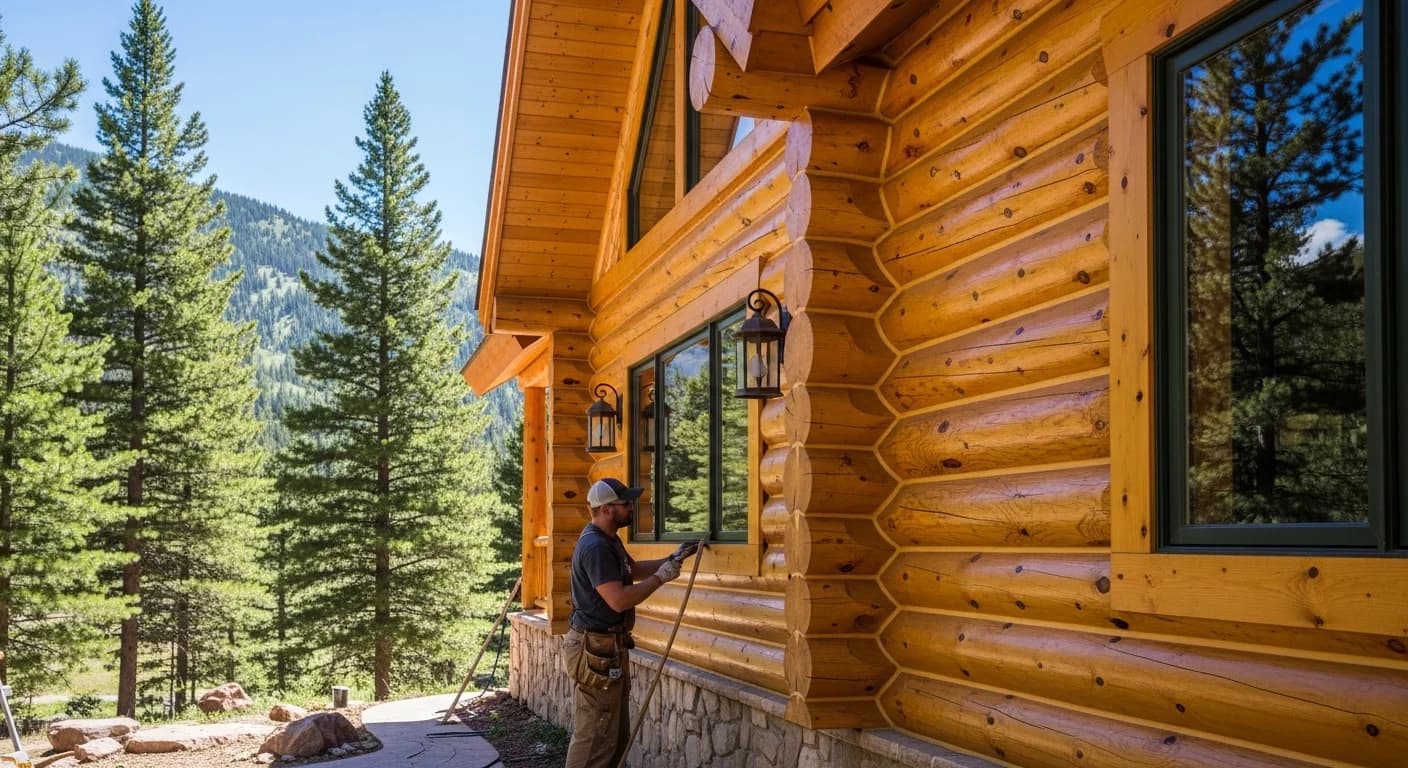
Well-maintained Colorado log home exterior
For Log Home Owners

A Log Home Inspection That Protects What You Already Own

You love your log home. The smartest way to keep it that way is to catch small problems while they are still small. Thomas Elliott brings 20+ years of hands-on log work to every homeowner inspection.

LicensedInsuredSashco CertifiedPerma-Chink Certified

Stay ahead of the maintenance, not behind it

Most expensive log home repairs do not start as emergencies. They start as a thin, chalky stain on a south-facing wall, a hairline gap in the chinking, or a log end that has started to darken. Left alone through a few Colorado winters, those small signals turn into the kind of work that costs many times more to fix.

A homeowner inspection is a calm, no-pressure look at your home by someone who actually performs this work every day. We walk the exterior course by course, read the condition of your finish and your chinking, check the spots that fail first, and tell you plainly what needs attention now, what can wait, and roughly what each item will cost.

The goal is simple: keep your home in the affordable maintenance zone — periodic cleaning and re-staining at roughly $8–12 per square foot every few years — instead of letting it slide into full restoration territory at $18–20+ per square foot.

Colorado log home maintenance and care

What we look at most closely for homeowners

The same areas that show up over and over on real Colorado log homes — checked the way the people who repair them check them.

South & West UV Walls

At altitude, UV is brutal. South and west elevations fade, gray, and lose their finish years before the rest of the home. We gauge how much protective life is left in your stain on each elevation.

Chinking & Caulk Lines

We check every chink and caulk joint for cracking, separation, and adhesion failure — including the wood-to-wood joints on homes that were never properly chinked in the first place.

Log Ends & Checks

Exposed butt ends and upward-facing checks (cracks) are where water gets in. End grain wicks moisture far faster than the face of a log, so darkening ends are an early decay warning we never ignore.

Lower Courses & Sill Logs

The bottom courses near grade and snow line take the most punishment. We look for soft wood, staining, and the early stages of rot where snow sits against the logs each winter.

Decks, Railings & Stairs

Horizontal surfaces and handrails weather fastest and matter for safety. We check for splitting cap rails, finish failure, and decay at posts and connections.

Water Management

Roof-to-log intersections, gutters, and grading decide how long your logs last. We trace where water runs and where it is being held against the wood.

20+
Years of hands-on log home experience
500+
Colorado log homes restored
4.5★
56 verified Google reviews
Licensed
Fully insured per Colorado law

The maintenance cliff: why waiting always costs more

Log home care follows a predictable curve. A home that is cleaned and re-coated on schedule stays in the inexpensive maintenance band for decades. The moment the finish fully fails, water reaches bare wood, and the math changes fast — now the logs may need to be media blasted back to sound wood, repaired, re-stained, and re-chinked, which is full restoration.

The difference is not small. Routine maintenance runs about $8–12 per square foot every few years. A neglected home that needs to be stripped and rebuilt can run $18–20+ per square foot, plus the cost of any rotted logs that have to be cut out and replaced (often $500–$5,000+ per log). An inspection exists to keep you on the cheap side of that cliff.

What a homeowner inspection covers

You receive a clear, plain-language assessment of your home — not a sales pitch. Each finding is tied to a location, a severity, and a realistic cost so you can plan and budget on your own timeline.

  • Stain and finish condition on each elevation, with remaining protective life
  • Chinking and caulk integrity, including gaps you can feel as drafts
  • Log condition: checking, rot, insect activity, and previous repairs
  • Log ends, sill logs, and lower courses where decay starts
  • Decks, railings, posts, and stairs for both finish and safety
  • Water management — roof lines, gutters, drainage, and grade contact
  • A prioritized list: do now, do soon, and monitor

Warning signs you can spot yourself

Between professional visits, a quick annual walk-around tells you a lot. Look for a finish that has gone dull, chalky, or silver-gray, especially on the sunny sides. Run a hand along chink lines and feel for drafts on a windy day. Watch your log ends — darkening or black butt ends mean moisture is being absorbed. Check for upward-facing cracks that can hold rain and snowmelt.

If you can push a screwdriver into a log with little resistance, that is soft, decaying wood and a reason to call sooner rather than later. None of this requires special tools — just a habit of looking before the snow flies.

Why Colorado is especially hard on log homes

High elevation means thinner atmosphere and far more intense UV, which breaks down stain faster than at sea level. Add deep snowpack sitting against lower logs, dramatic freeze-thaw cycles that open and close checks, and dry mountain air that makes logs move — and you have a climate that punishes any lapse in maintenance.

That is exactly why a homeowner inspection in Colorado pays for itself. Knowing which walls are degrading fastest, and acting before the finish fully fails, is the single best way to protect a log home in this state.

Homeowner inspection questions

Straight answers about keeping your log home in great shape.

How often should I have my log home inspected?

In Colorado, a professional look every year or two is ideal, with a quick visual walk-around by you each fall before the snow. South and west walls degrade fastest, so those elevations drive the timeline. Catching a failing finish or a cracked chink line early keeps you in routine maintenance instead of full restoration.

How do I know when it is time to re-stain?

When the finish looks dull, chalky, or gray, when water no longer beads and instead soaks into the wood, or when color has faded noticeably on the sunny sides, the protective film is failing. We test water absorption and finish adhesion during the inspection and tell you how much life is left on each elevation so you can plan the work before bare wood is exposed.

Is graying or cracking on my logs a structural problem?

Not always. Surface graying is usually UV breakdown of the finish, and small checks are a natural part of how logs dry. The concern is when checks face upward and hold water, when log ends darken, or when wood goes soft. The inspection separates normal aging from the early decay that actually threatens the structure.

What does deferred maintenance really cost?

A home kept on schedule stays around $8–12 per square foot per maintenance cycle. Once the finish fully fails and water reaches bare wood, you are looking at media blasting, repairs, re-staining, and re-chinking at $18–20+ per square foot — plus $500–$5,000+ for any individual logs that have rotted and must be replaced. The inspection is designed to keep you out of that bracket.

What is the difference between chinking and caulking, and do I need both?

Chinking is the wider, flexible sealant that bridges the gap between logs; caulking seals the narrower checks and joints. Both are elastomeric so they can stretch and shrink as logs move. We check every line for cracking and separation and tell you which joints need repair before they let water and air through.

Can I do some of the maintenance myself?

Light cleaning and basic visual checks, yes. But media blasting, structural log repair, and proper staining and chinking require the right products, equipment, and experience to get adhesion and longevity right. The inspection will tell you honestly what is reasonable to handle yourself and what is worth bringing us in for.

Do you do the repair work you find, or just inspect?

Both. Thomas Elliott performs the staining, chinking, media blasting, and restoration work himself, which is why the cost estimates in your report reflect real project pricing rather than guesswork. You can use the report to plan, or have us complete the recommended work.

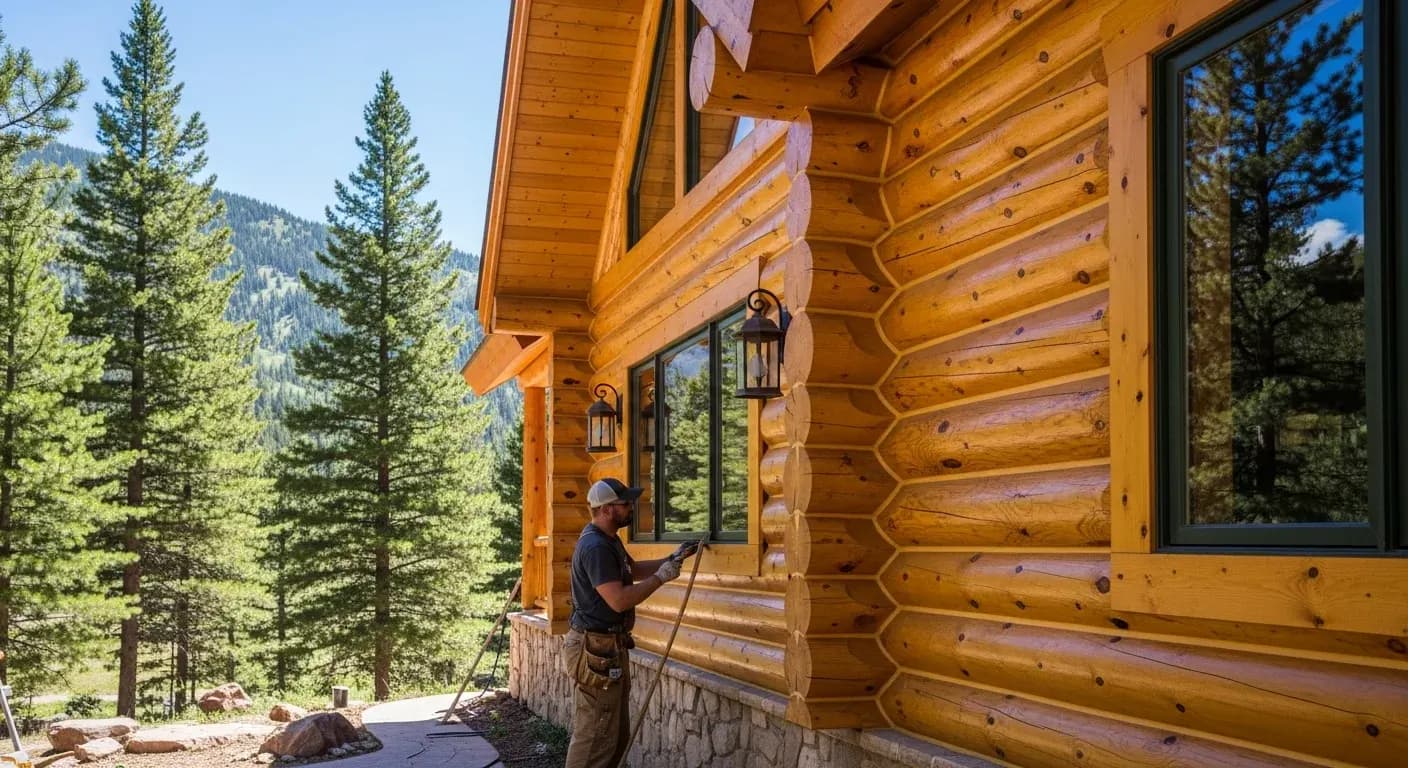
Get a clear picture of your log home

Book a homeowner inspection and walk away knowing exactly what your home needs next — and what it does not.

Thomas Elliott · Serving log home communities across Colorado