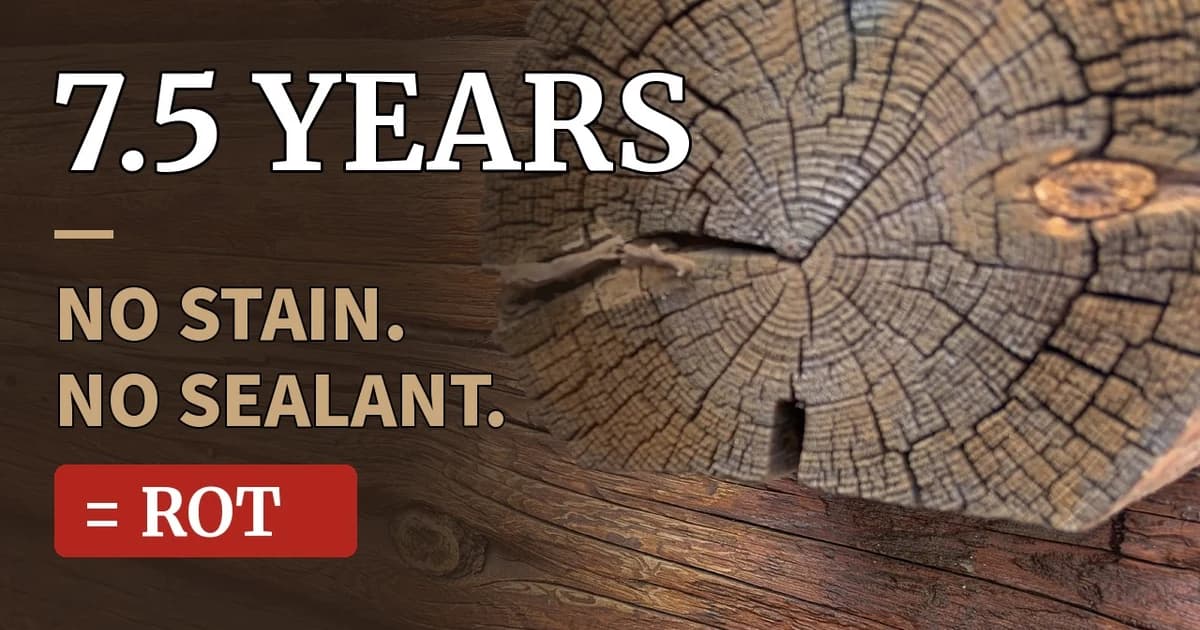
Six Years Without Maintenance: A Conifer Log Home, 2020 vs. 2026
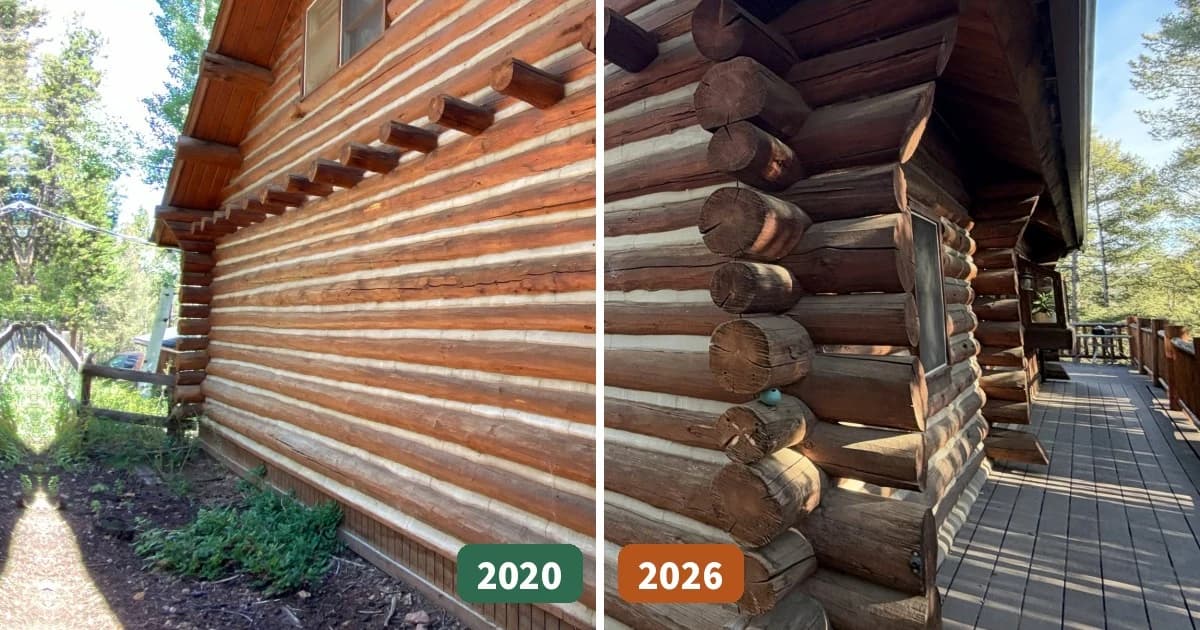
In July 2020 we inspected this log home in Conifer, Colorado. The finish was starting to wear, the chinking was cracking, and rot had already started in a deck railing post. We recommended a full exterior restoration: media blasting, new stain and new chinking.
The work wasn't done. This November we were back at the same house, and we took photos from the same spots we photographed in 2020. Six years and four months later, here's what changed.
1. The finish wore away
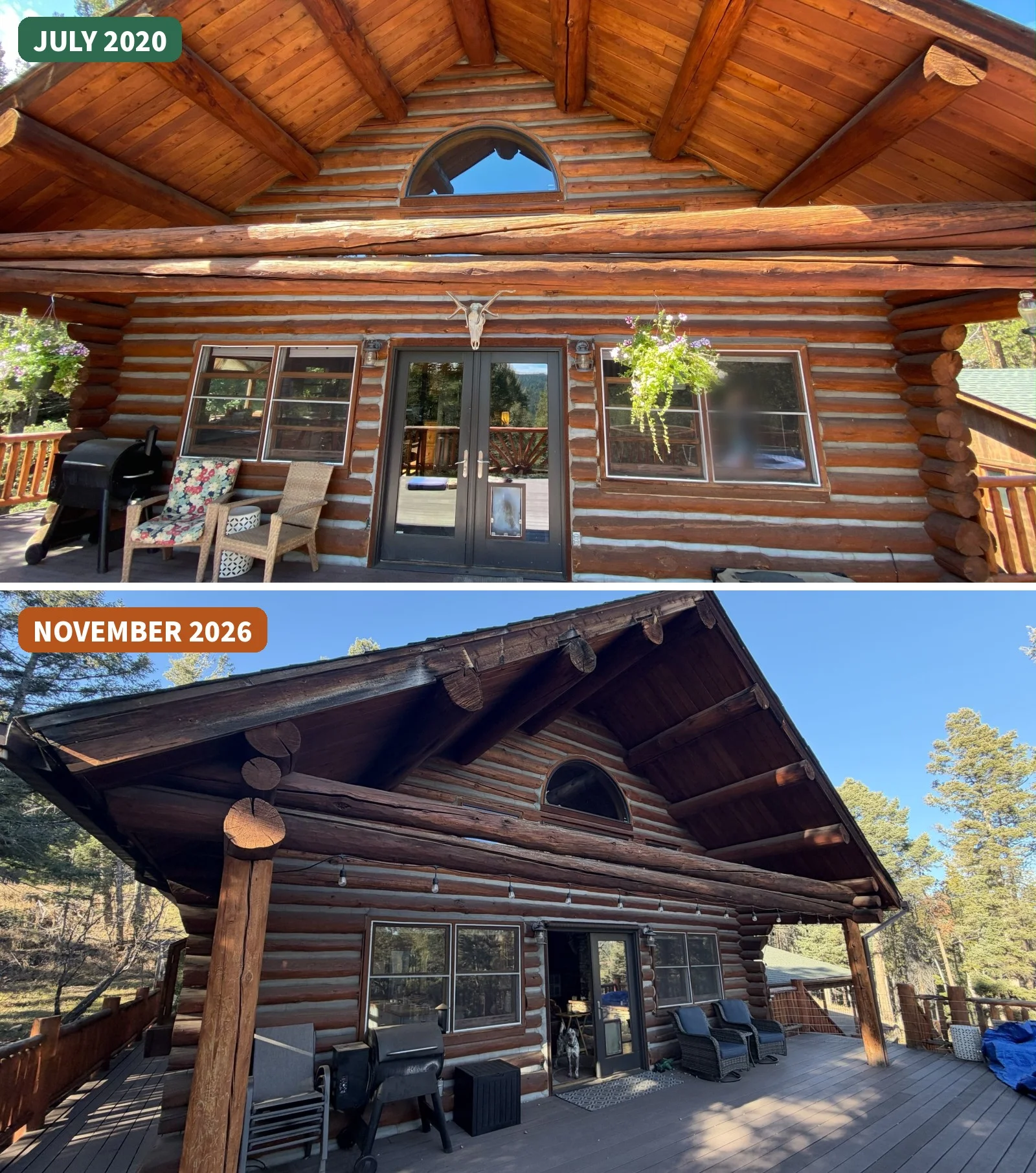
In 2020 the logs still had a warm, even color. Today most of the stain is gone from the exposed logs, and the wood is turning grey.
Conifer sits at over 8,000 feet, where the sun's UV is strong. Once a finish wears through, UV breaks down lignin, the natural glue that holds wood fibers together, and leaves a layer of loose, grey fiber on the surface. New stain can't bond to that layer. Before this home can be refinished, the old finish and the damaged fiber have to come off completely.
2. The chinking kept cracking
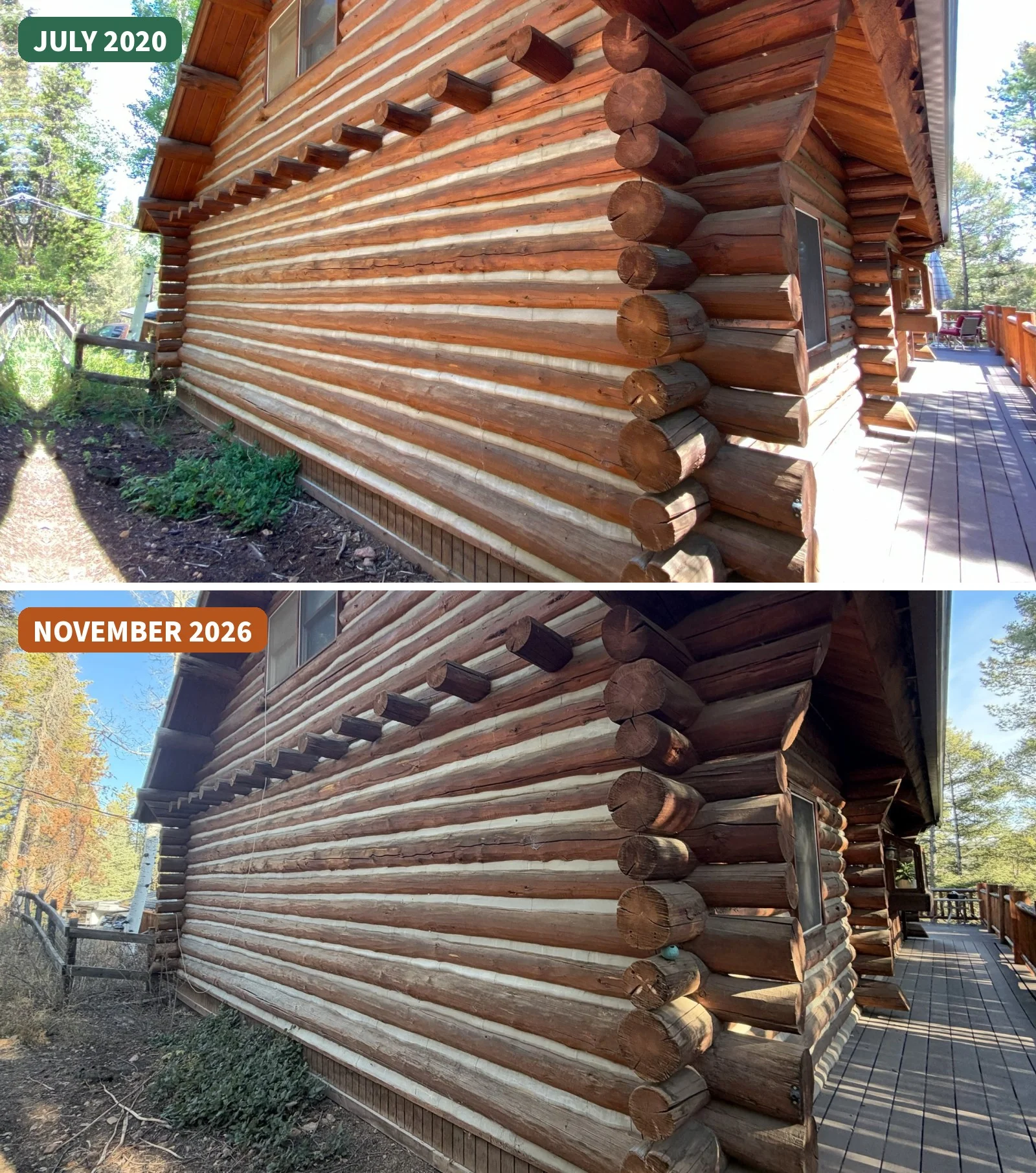
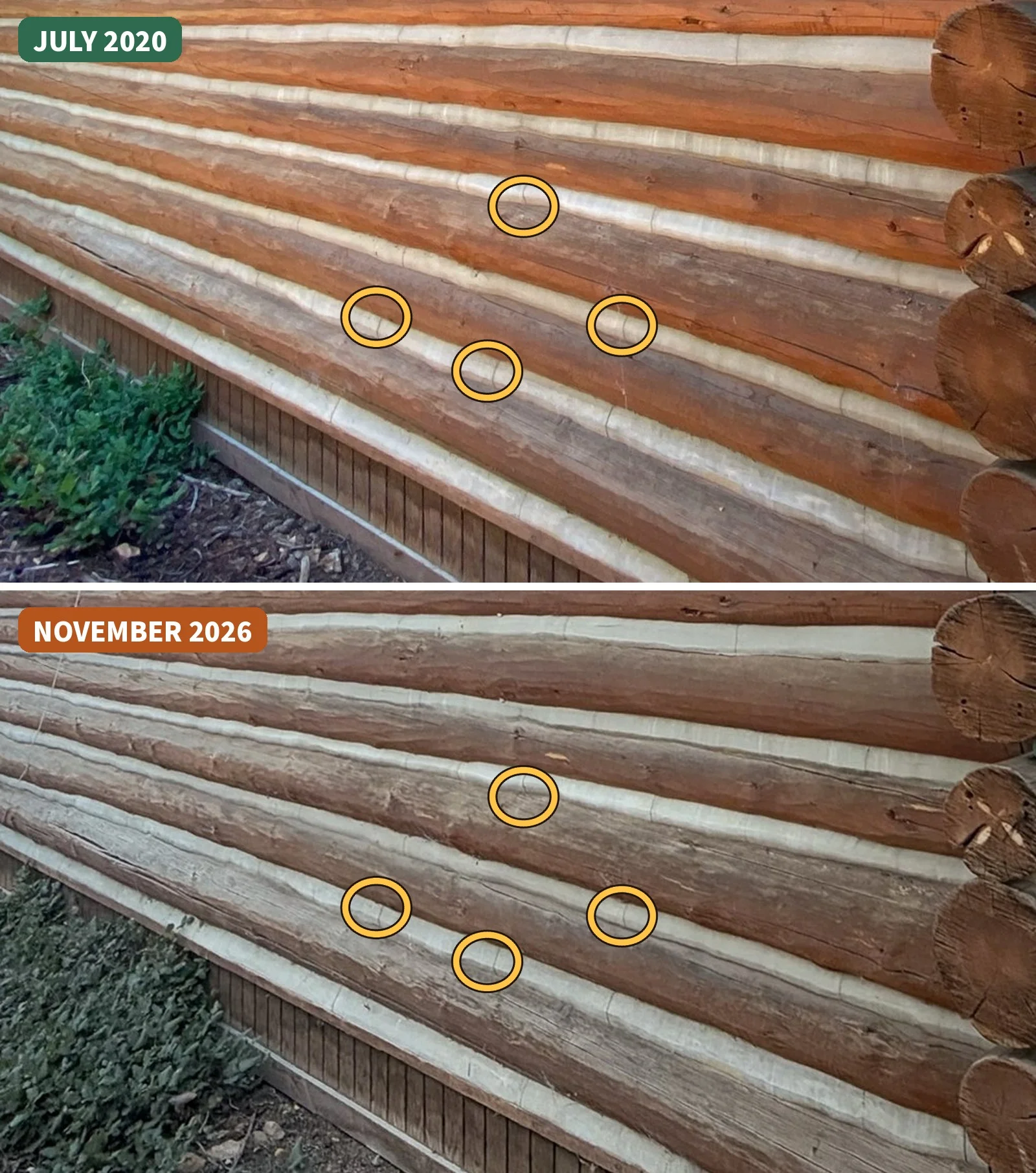
This home has a rigid, mortar-type chinking. Logs shrink and swell with every season, and rigid mortar can't move with them, so it cracks straight across the joint. Those cracks were already there in 2020. Six winters later they're still open, and the chinking is greyer and dirtier.
Every crack lets rain and snowmelt in behind the chinking. There it sits against the logs, where it can't dry out, and that's where hidden rot starts. Patching mortar with more mortar just cracks again, so the old chinking needs to come out completely.
3. Soot by the fireplace vent
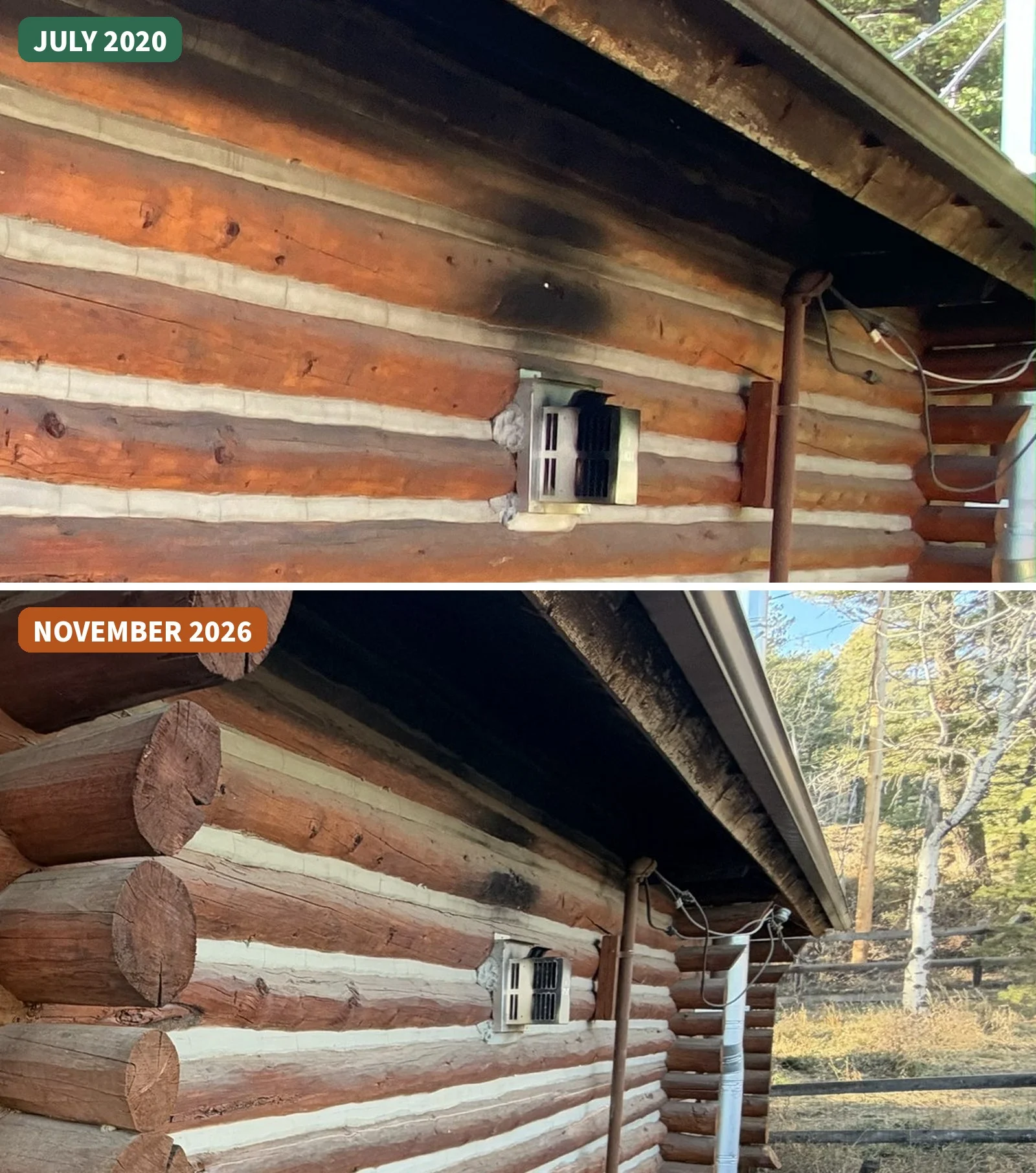
Soot from the fireplace vent stained the logs and the soffit above it. It was there in 2020, and it's still there today. Media blasting removes it along with the old finish.
4. The architectural log
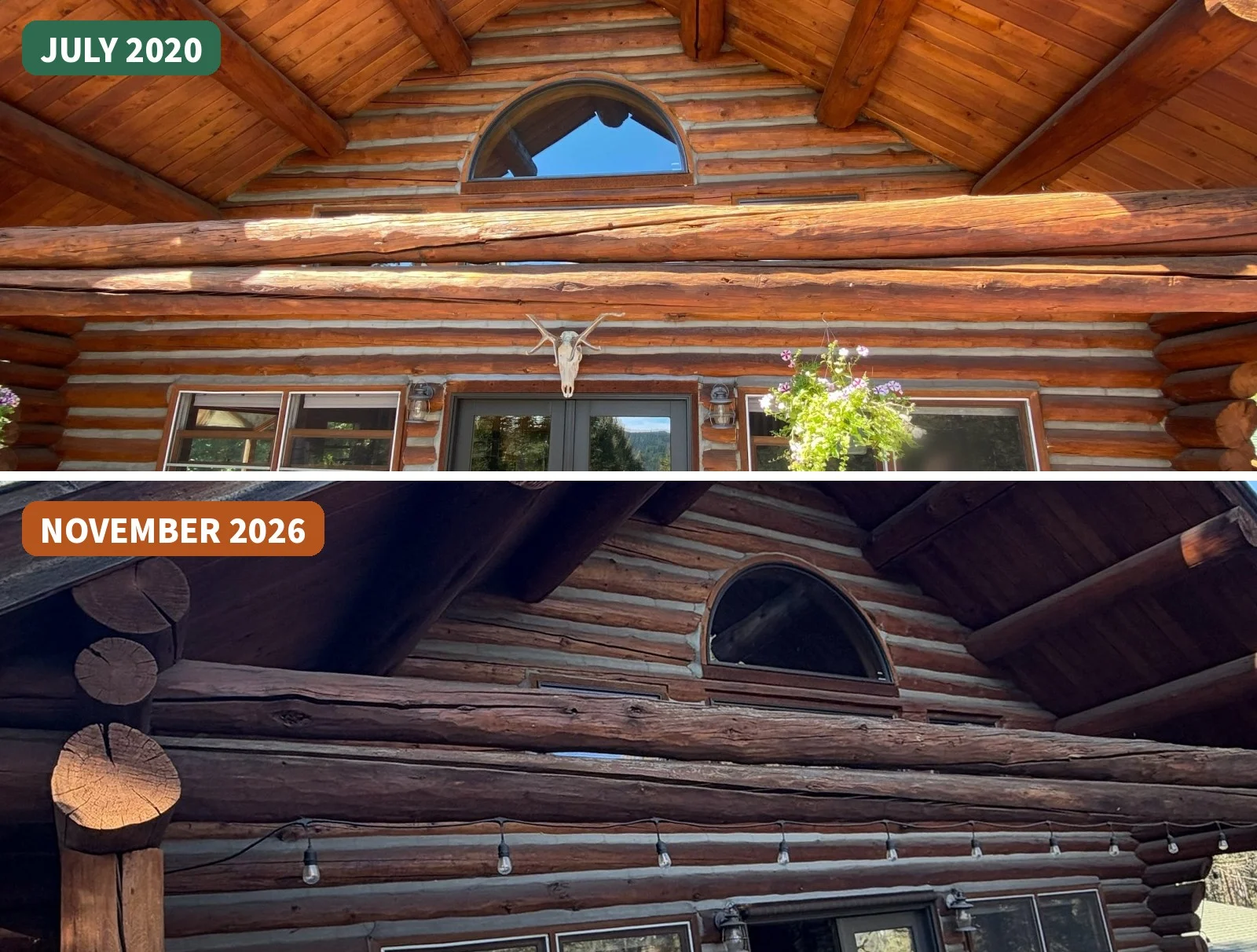
The big horizontal log across the front gable is one of this home's signature details. In 2020 the finish was still protecting it. Today the finish is gone, the surface is weathered and checked, and rot is setting in. If it isn't treated soon, it will need to be replaced, and replacing a log like this is a much bigger job than restoring it.
5. Rot doesn't stop on its own
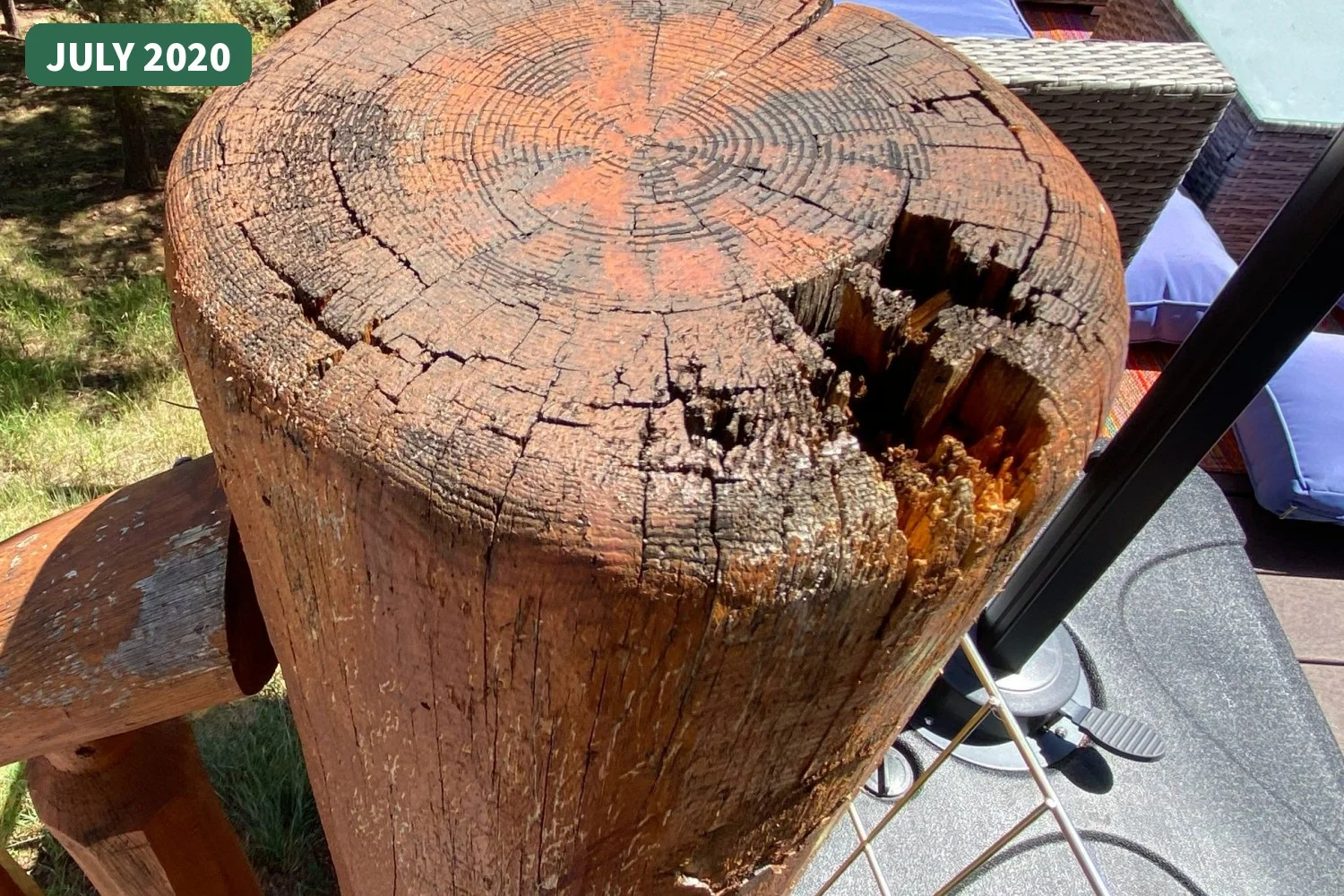
Rot had already started in this railing post back in 2020. Decay keeps working as long as the wood keeps getting wet, so rot like this keeps spreading until it's cut out and the wood is sealed.
6. The railings
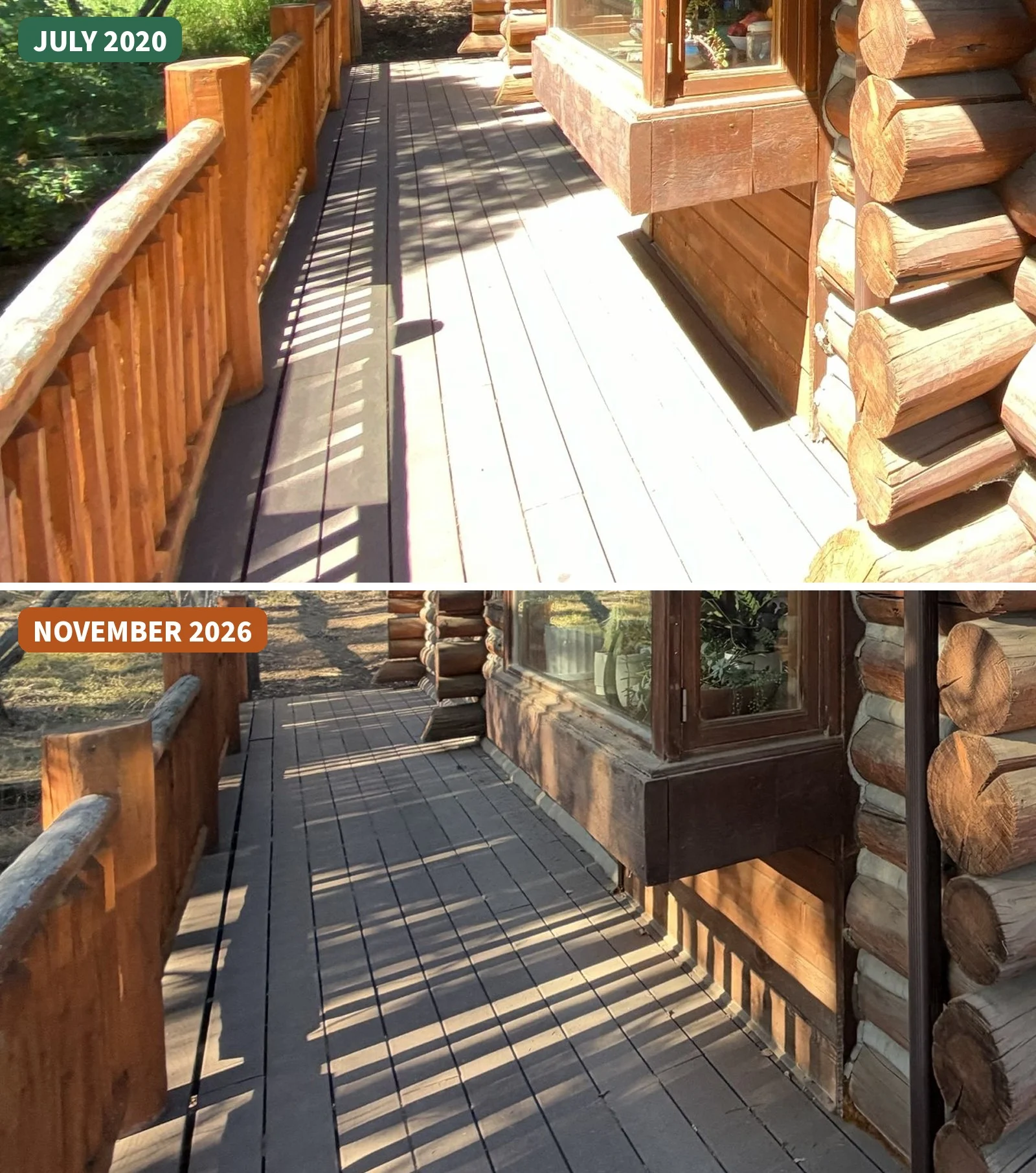
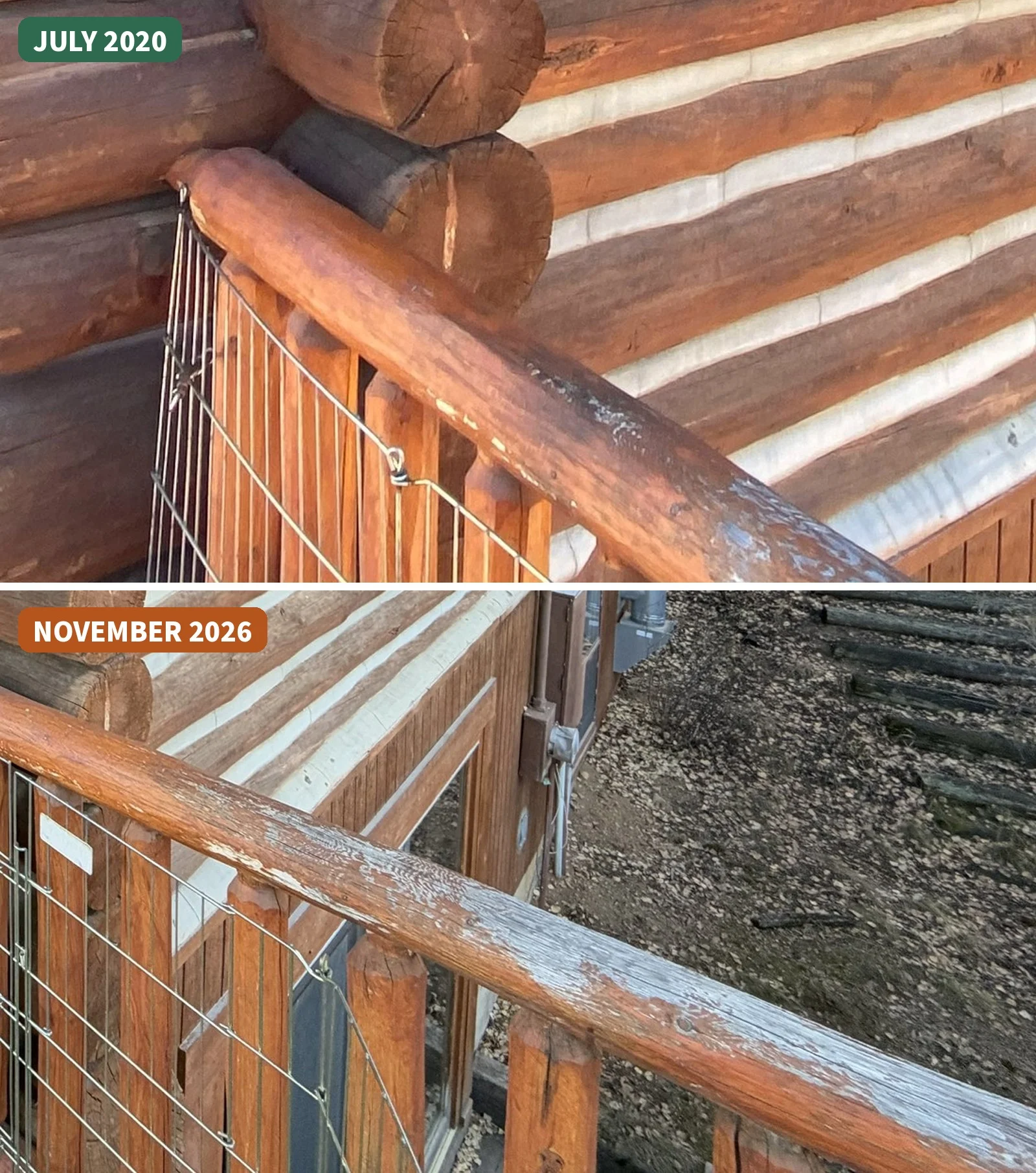
Top rails take more sun, rain and snow than anything else on a log home. In 2020 these were still stained. Today they're grey and flaking, and the bare wood soaks up water every time it rains or snows.
7. The log ends
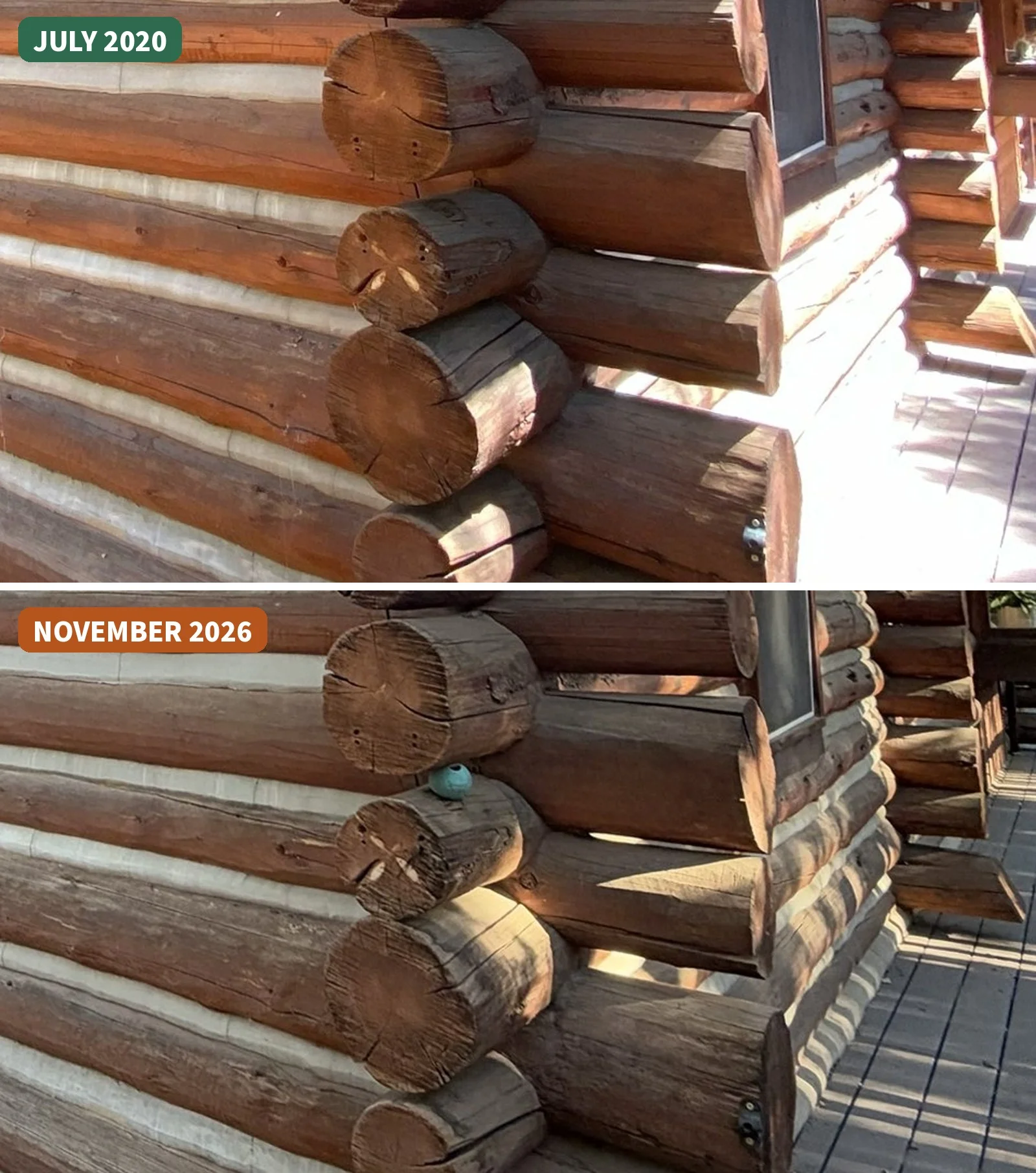
End grain soaks up water much faster than the side of a log, which makes log ends the most common place for rot to start. These corners are greyer than they were in 2020, and the checks are deeper.
What it takes now
The good news is that most of the damage we documented is still at the surface: worn-out finish, weathered wood, cracked chinking and open checks. That's exactly the stage where a full restoration makes sense:
- Media blast to strip the old finish and grey, damaged fiber down to clean wood.
- Sand to remove the fuzz and raised grain left by blasting.
- Repair the rot with Abatron LiquidWood and WoodEpox.
- Stain with Sashco Transformation Log & Timber.
- Re-chink. Cut out the old mortar chinking, then install Grip Strip backer and Sashco Log Jam, an elastic chinking that stretches and compresses as the logs move.
- Seal the open checks so water can't run into the logs.
Done now, it's a restoration. Wait longer, and it becomes rot repair and log replacement.
Learn more about our log home restoration process and chinking. For another example of what time does to a log home, read What 7.5 Years Without Stain Does to a Log Home.
Don't wait six years
A maintenance wash and recoat typically runs $4–$6 per square foot. A maintenance coat every 2–3 years, plus a yearly look at your log ends, railings and chinking, keeps water out so rot never gets a start.
Not sure where your home stands? Book a log home inspection. You'll get a written report with photos, every finding rated Critical, Major or Moderate, and a line-item repair plan. Inspections run $450–$650, depending on location.
Call or text (970) 368-2308, or get a ballpark with our cost calculator.