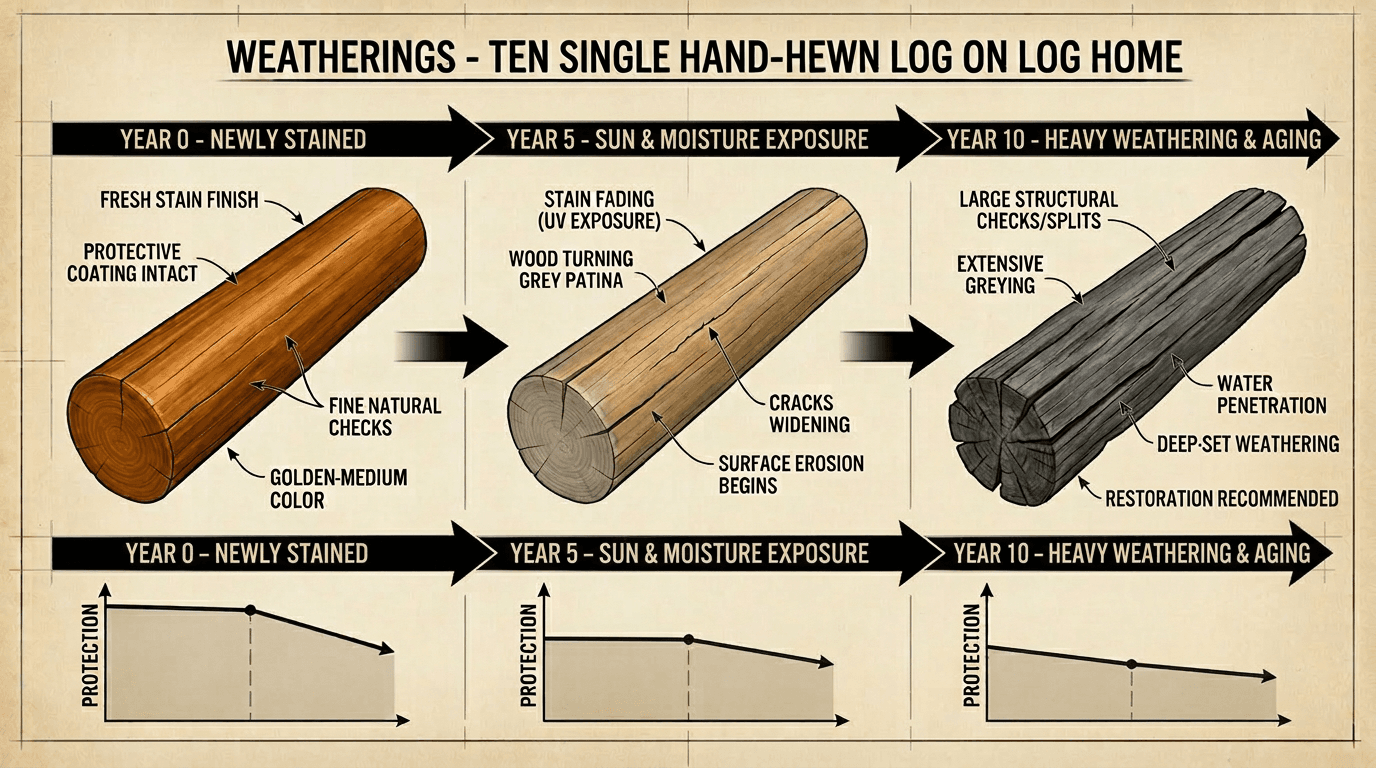
What 7.5 Years Without Stain Does to a Log Home
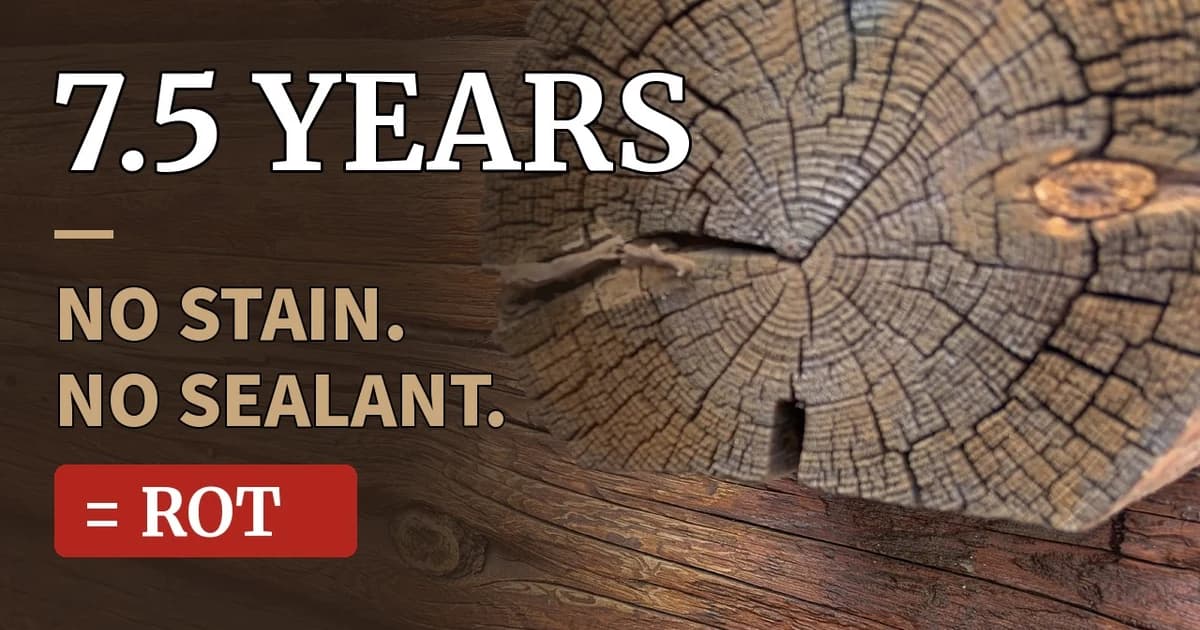
We've had our eye on this Colorado log home for about 7.5 years. In that time it was never refinished or resealed. This fall we inspected it, and it's a textbook example of what happens when a log home goes too long without stain and sealant: rotted log ends, rot pockets in the walls, failed chinking, a deck railing rotted through at the post, and older repairs that didn't hold.
Here's what we found, why it happens, and how we're approaching the restoration.
Why stain matters
A log finish has two jobs. It blocks the UV light that breaks down lignin, the natural glue that holds wood fibers together. And it sheds liquid water while still letting the log breathe out moisture vapor.
At Colorado elevations UV is intense, and an unmaintained finish can wear through within a few years. Once it's gone, the surface turns grey, loose and porous, and it soaks up rain and snowmelt like a sponge.
Why sealant matters
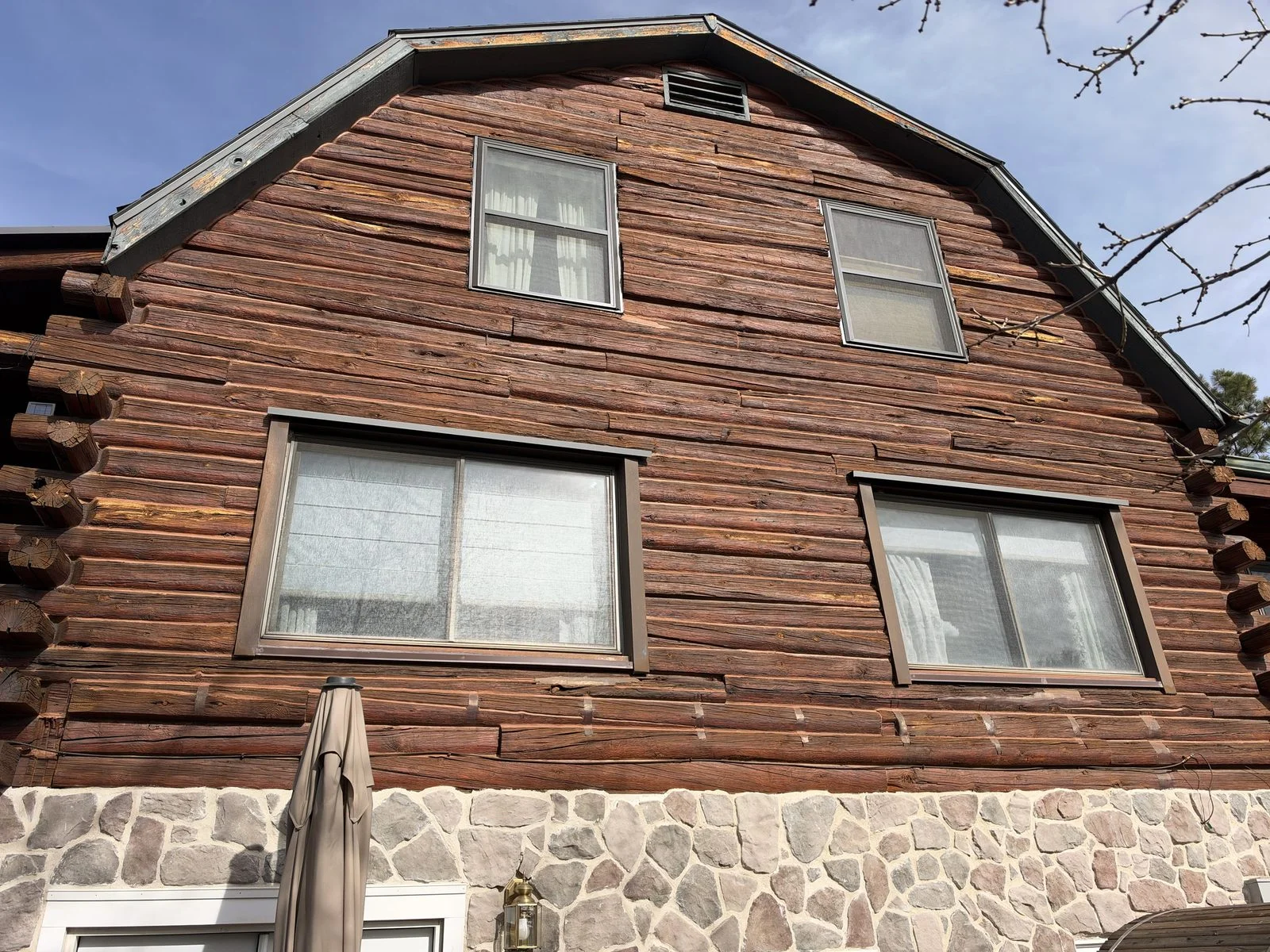
Chinking and caulking close the joints between logs and seal the corners, windows and doors. On this home, older chinking had failed in places, and some joints were never sealed at all. Every open joint carries water into the wall and holds it against the logs.
Logs also check (crack) as they season. Upward-facing checks catch water and channel it toward the center of the log, and Colorado's freeze–thaw cycles widen them every winter. Log ends are the worst: end grain draws in water far faster than the side of a log.
The moisture cycle
Rot isn't caused by a log getting wet once. It happens when a log gets wet and can't dry out. USDA Forest Service research shows decay fungi need a wood moisture content of at least 20% to grow, and wood kept below that doesn't decay. A finished, sealed log sheds water and dries back quickly. A bare, checked log with open joints takes on water faster than it can dry, and it stays in the danger zone for long stretches.
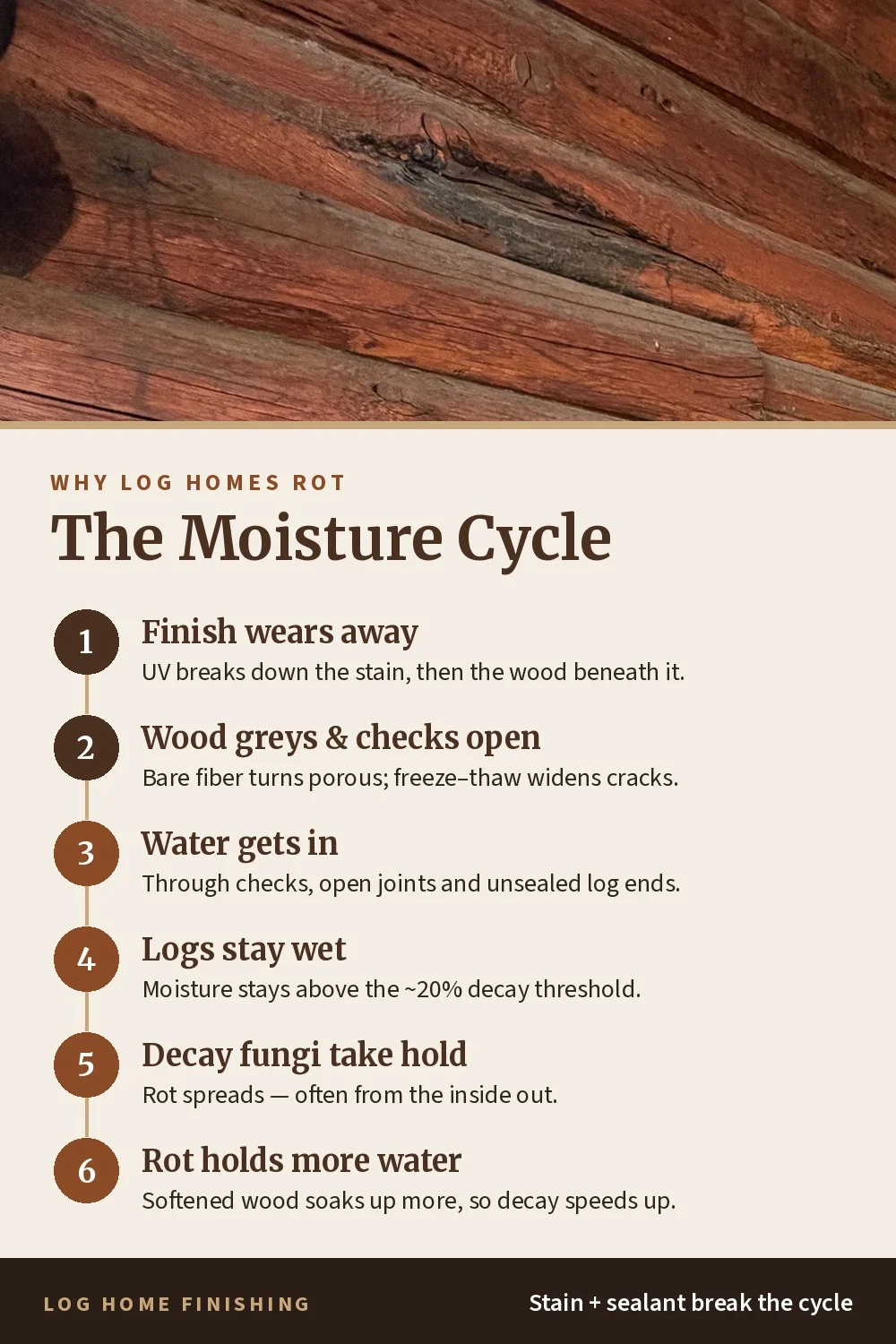
Steps 3 through 6 repeat every wet season until water is kept out of the logs.
What we found
1. Unsealed log ends
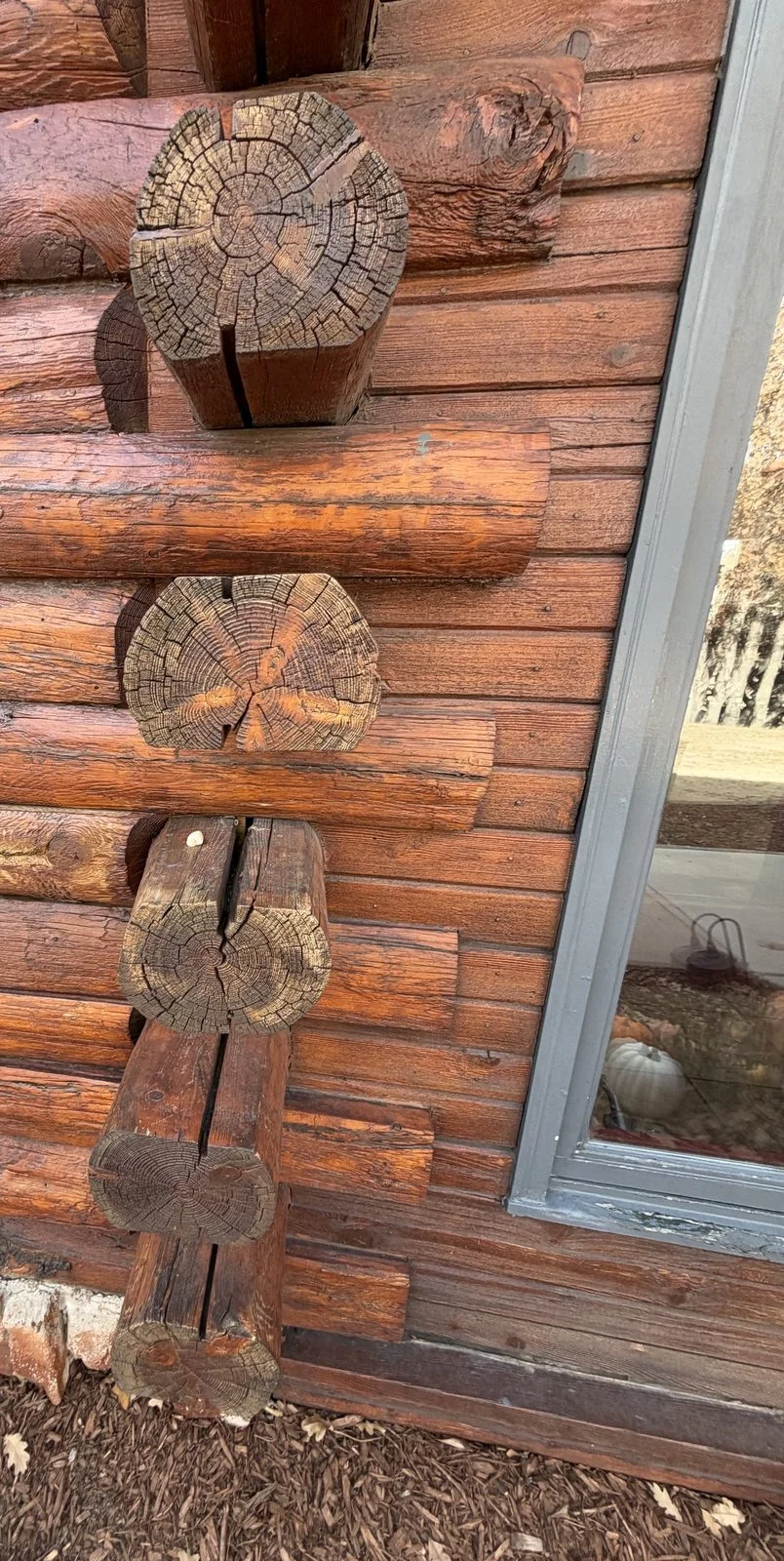
The log ends on the front of the home had no finish left. They were grey, deeply checked and decaying at the base, where they sit in the splash zone near the mulch.
2. Decay at the end grain
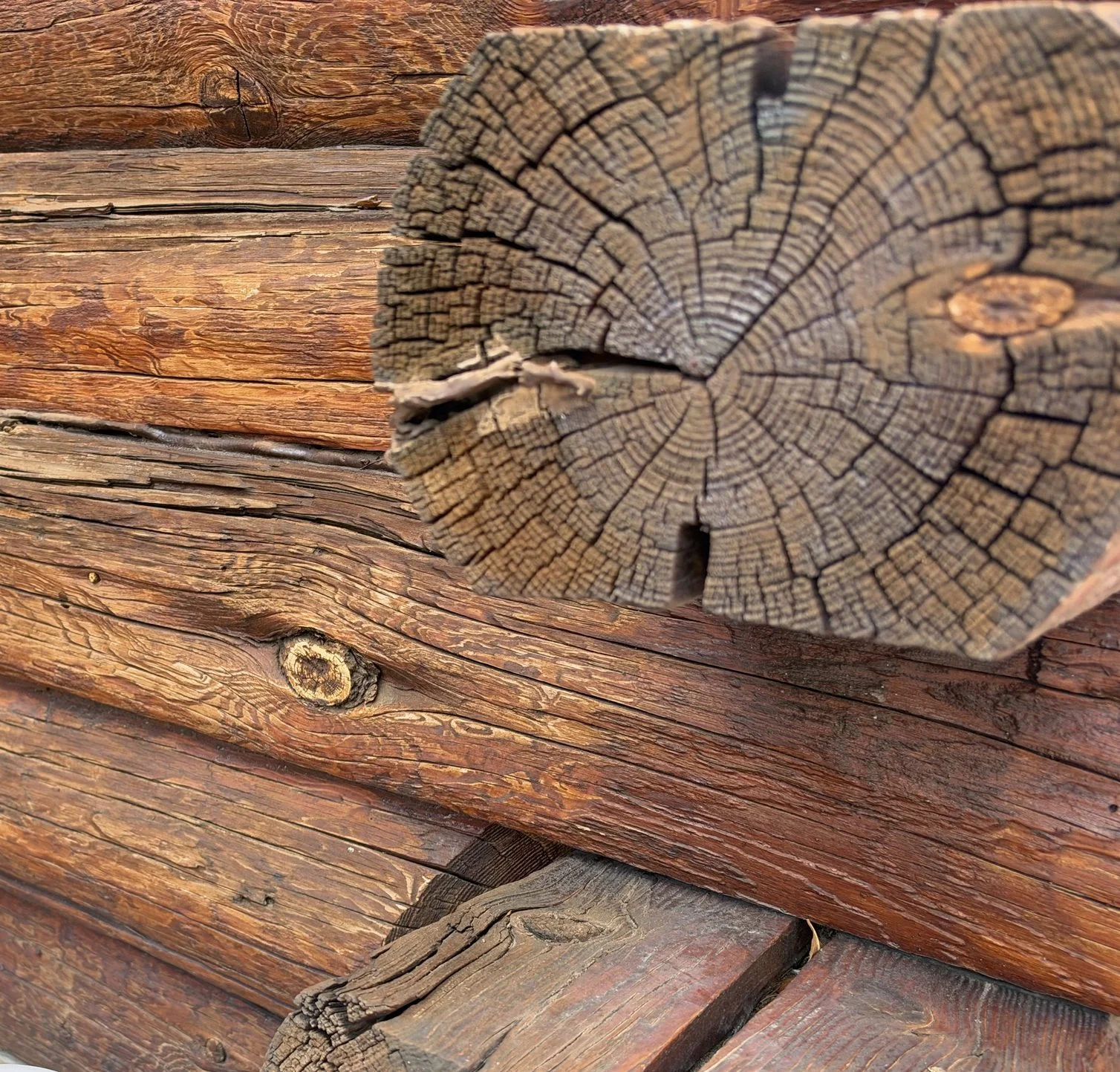
Softened, splitting fiber at the log ends is a classic sign of rot.
3. Rot pockets
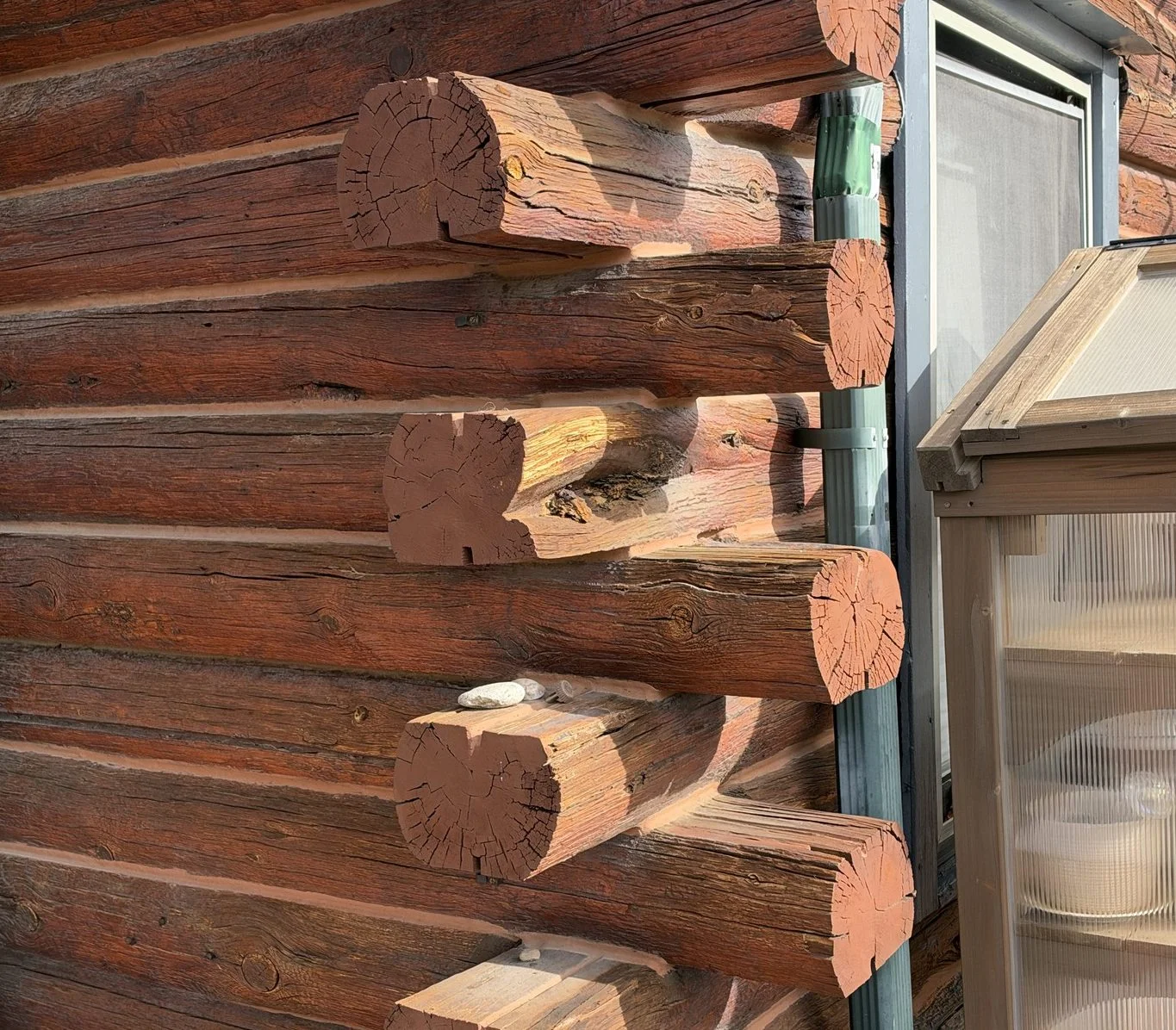
Where water sits, in knots, checks and log ends, fungi hollow out the wood. At one corner a downspout runs right alongside the log ends and keeps them wetter than the rest of the wall.
4. Decay even under cover
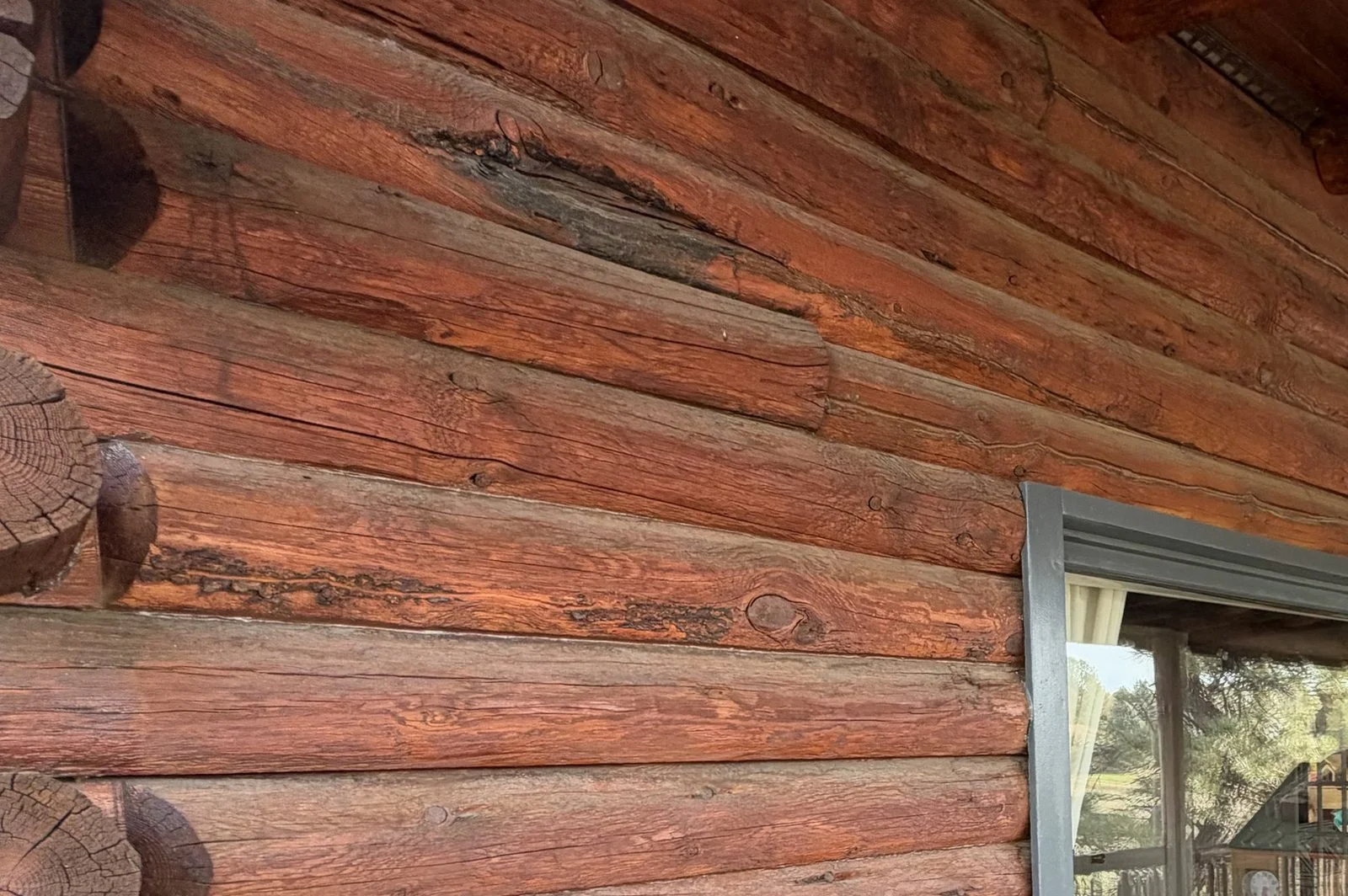
On the covered deck, wind-driven rain and snowmelt settle into checks along the tops of the logs. Dark streaks like these are active decay.
5. Railings fail first
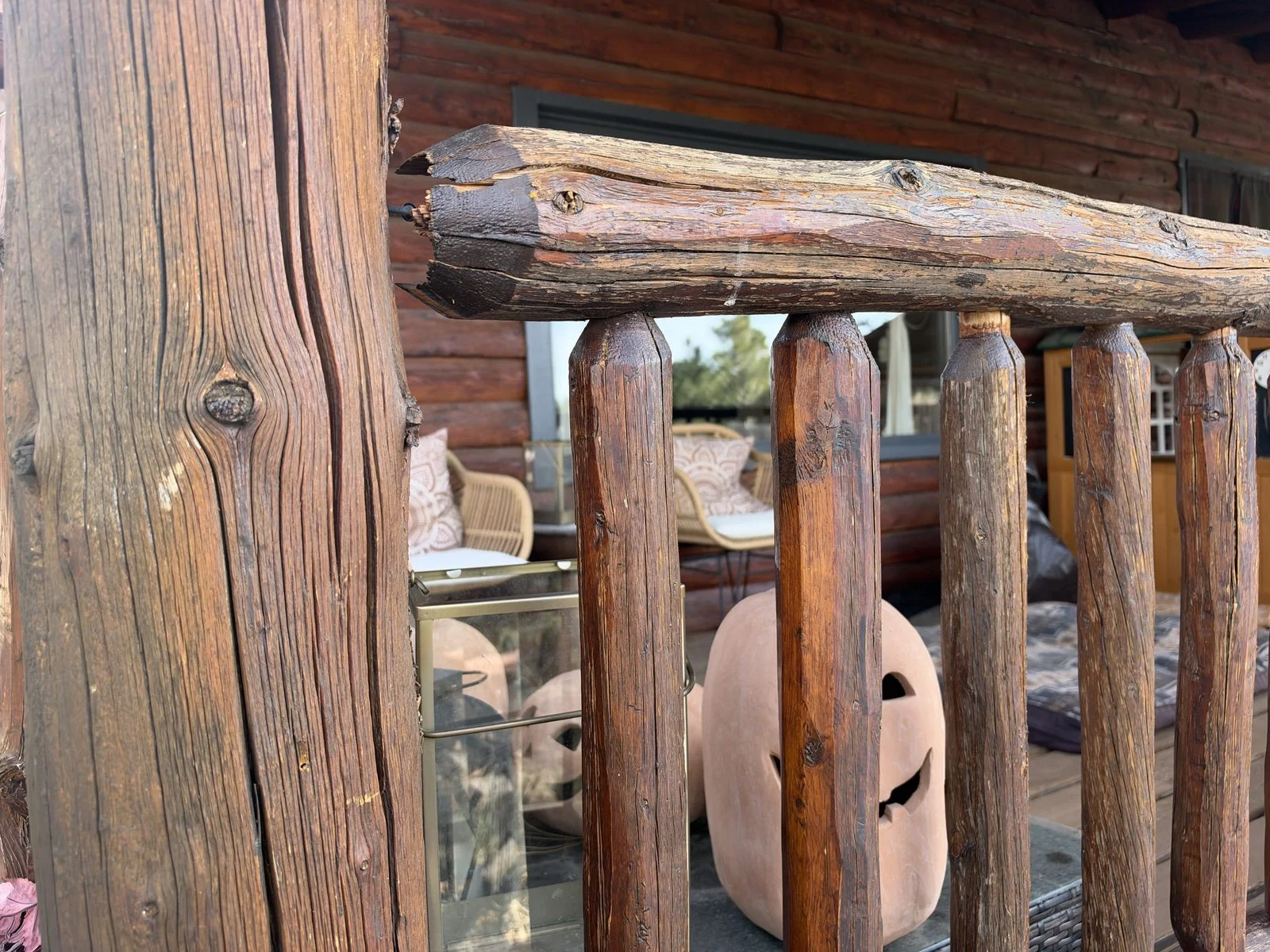
Exposed on every side, the deck's top rail rotted right where its dowel meets the post. These railing logs need to be replaced.
6. Failed repairs under the windows
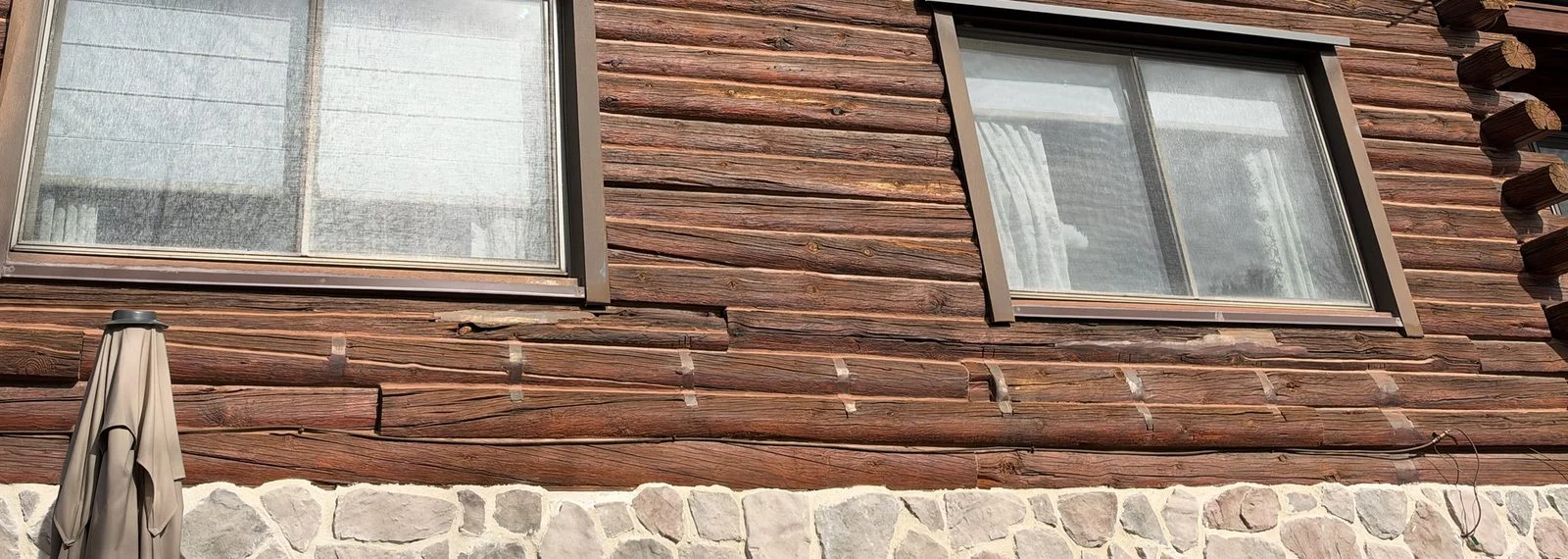
Water running off the window sills soaked the logs below, and earlier repairs there didn't hold. The logs on this side of the home need to be replaced.
The restoration plan
Replacing the worst logs and the deck railing is the long-term fix, and it can be planned as a future phase. For now, the goal is to stop water getting in and slow the decay:
- Media blast + Osborne brush. Strip the failed finish and grey, UV-damaged fiber down to sound wood.
- Repair the rot. About 80 linear feet of rot-damaged log sections repaired with Abatron LiquidWood and WoodEpox epoxy, with borate rods set inside the logs.
- Perma-Chink 6-coat finish system. Two coats of Prelude primer, two coats of Lifeline Ultra-2 stain and two coats of Lifeline Advance clear topcoat.
- Re-chink every joint. Cut out failed chinking and seal the corners, windows and doors that were never chinked.
We'll also repaint the window and door trims. Learn more about our log home restoration process and chinking.
How the rot repair works
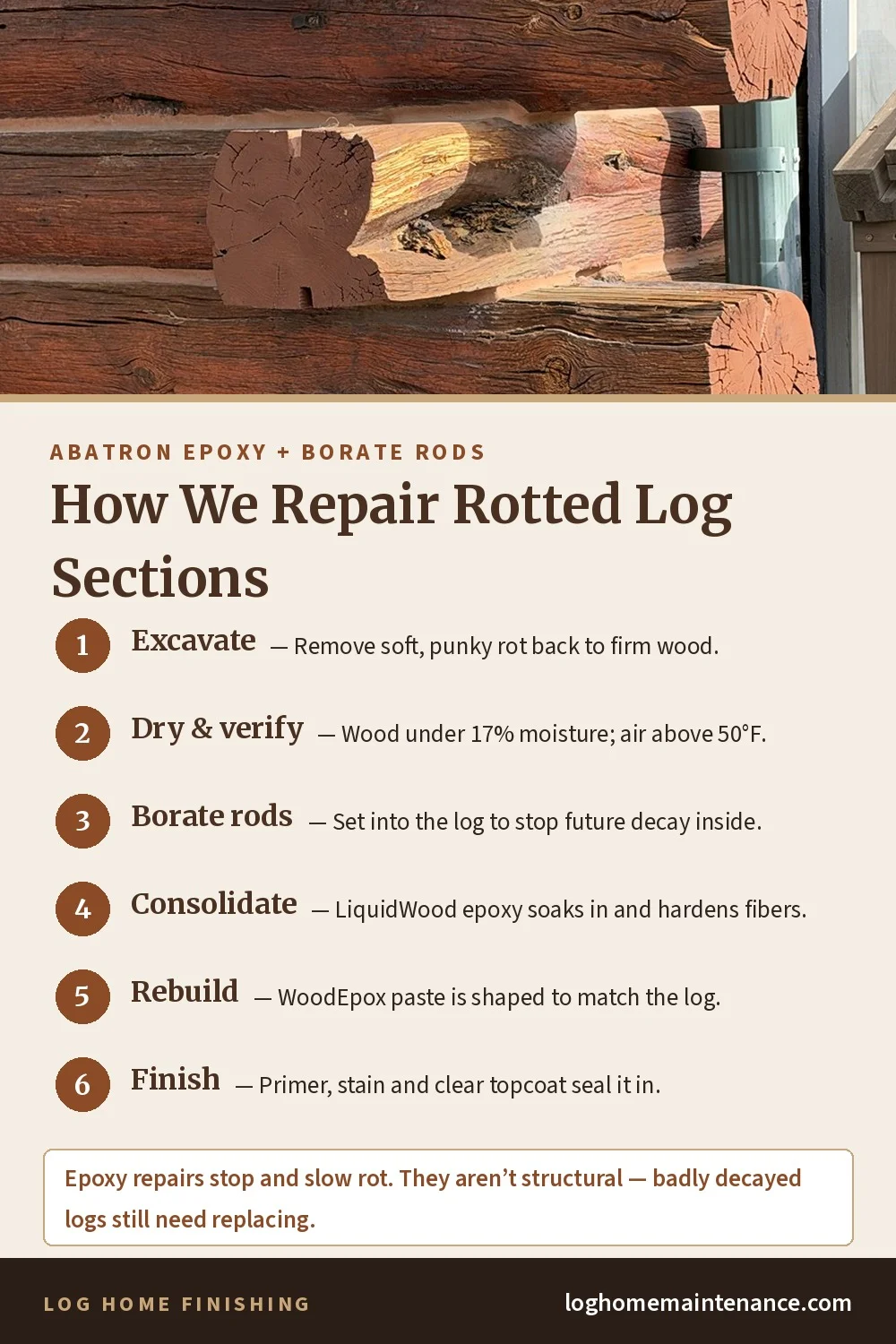
- Excavate: remove soft, punky rot back to firm wood.
- Dry and verify: Abatron calls for wood below 17% moisture and temperatures above 50°F, so this work is scheduled for warm, dry weather.
- Borate rods: set into drilled holes. They stay dormant until the wood gets wet, then release borate into the surrounding wood to stop decay fungi.
- Consolidate: LiquidWood, a thin epoxy, soaks into the decayed fibers and hardens them.
- Rebuild: WoodEpox, an epoxy paste, rebuilds missing wood and is shaped to match the log.
- Finish: the repairs are primed, stained and sealed with the rest of the home.
What epoxy repairs can and can't do
We're straight with our clients about this. Epoxy repairs remove active rot, rebuild damaged sections, keep water out of the repaired areas and slow future decay. They are not a structural repair for the home. They can't restore the strength of a log that has rotted inside, and they don't replace a log that needs replacing. On the deck railing, the repairs stabilize and seal the connections but don't restore the railing's strength as a guard.
Don't wait 7.5 years
Early on, the problem on this home was a fading finish that a routine maintenance coat would have fixed. Today it's a restoration and rot-repair project.
A maintenance wash and recoat typically runs $4–$6 per square foot. A maintenance coat every 2–3 years, plus a yearly look at your log ends, railings and chinking, keeps water out so rot never gets a start. Simple habits help too: keep mulch and snow pulled back from the bottom logs, extend downspouts away from log ends, and seal end grain every time you refinish.
Not sure where your finish stands?
Book a log home inspection. You'll get a written report with photos, every finding rated Critical, Major or Moderate, and a line-item repair plan. Inspections run $450–$650, depending on location.
Call or text (970) 368-2308, or get a ballpark with our cost calculator.