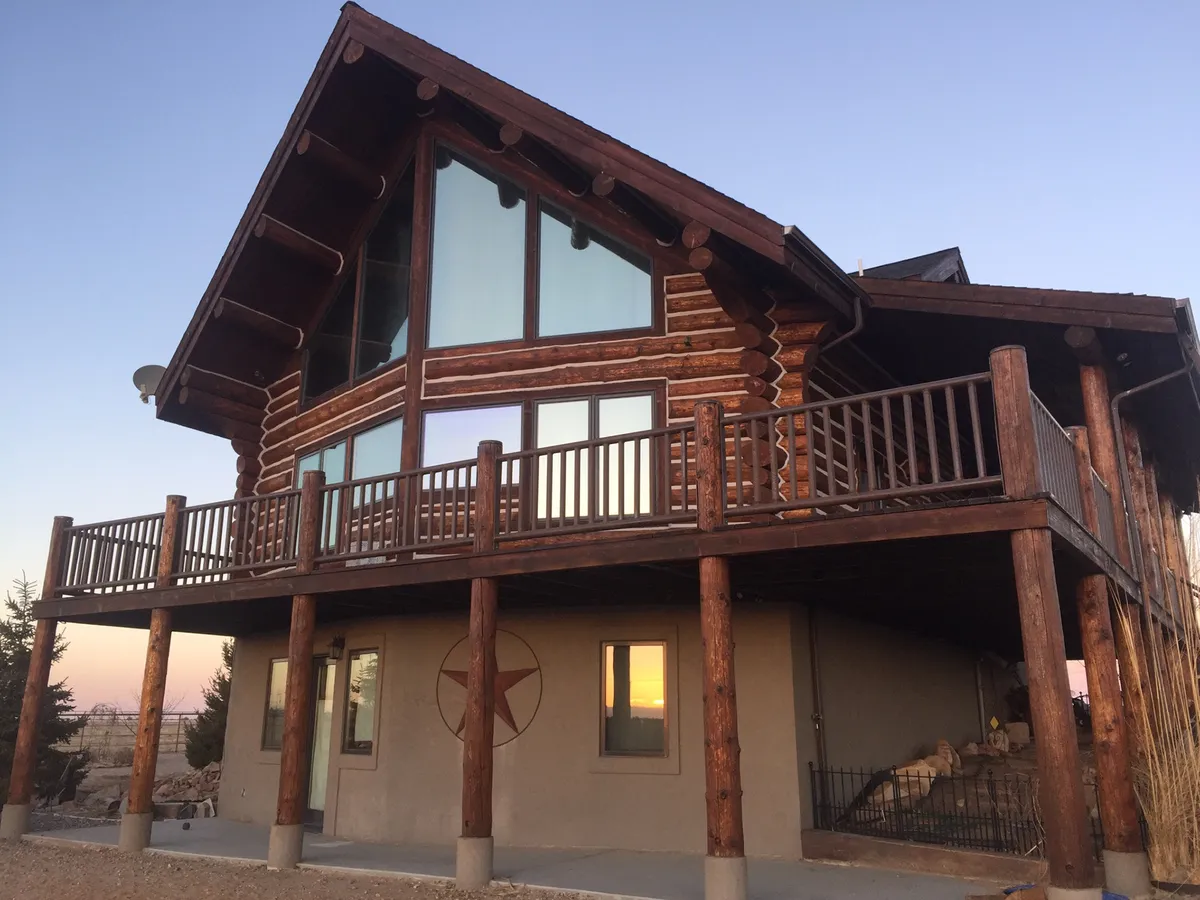
Colorado Log Home Repair Contractor: Professional Mountain Services

When a log home in Colorado starts showing its age — gray, sun-bleached logs, cracked sealant, soft spots near the foundation — the difference between a quick cosmetic touch-up and a lasting repair comes down to who does the work. As a Colorado log home repair contractor based in Fairplay, we've spent more than 20 years repairing and restoring log homes across the mountains and Front Range, and this guide covers what professional repair actually involves, the problems we see most often, and how to choose the right contractor for your home.
What Does a Log Home Repair Contractor Do?
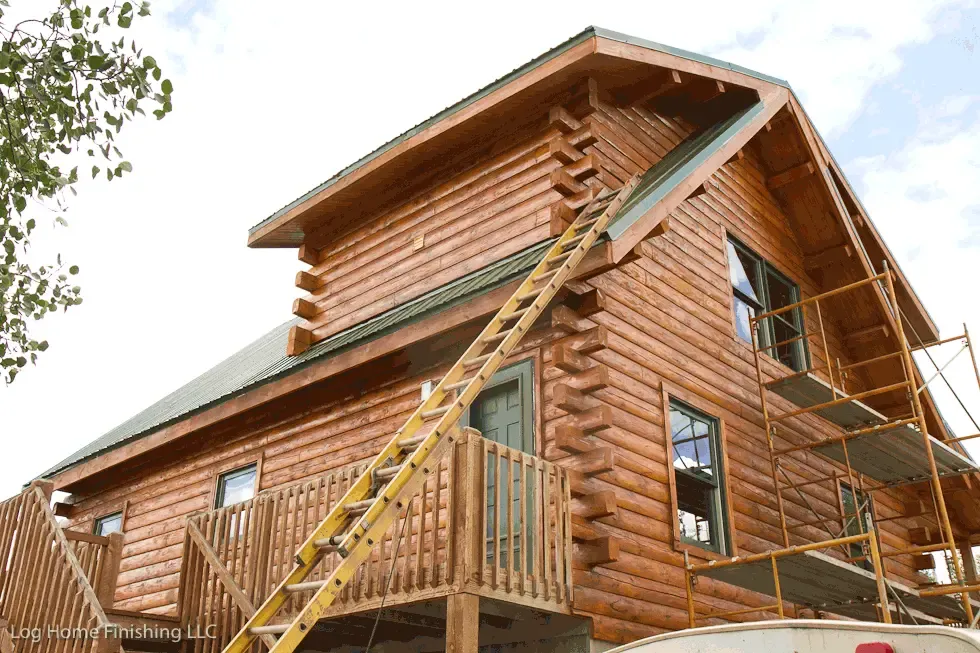
Log homes are a different trade from conventional construction. A general handyman can patch drywall, but log walls move, breathe, and weather in ways that demand specialized skills and products. A professional log home repair contractor handles:
- Structural log repair: Diagnosing and fixing log rot, from borate treatment and epoxy consolidation to full log replacement when a log is past saving.
- Finish restoration: Stripping failed stain with media blasting and applying new protective finishes built for high-altitude UV exposure.
- Sealing and weatherproofing: Repairing or replacing chinking and caulking so wind, rain, and snowmelt stay out of the joints between logs.
- Preventive maintenance: Inspections, cleaning, and maintenance coats that catch small problems before they become structural ones.
Common Log Home Problems We Repair in Colorado
Colorado is beautiful, but it is one of the hardest climates in the country on log homes. Intense high-altitude sun, dramatic freeze-thaw cycles, hail, and heavy snow loads all take a toll. The repairs we're called out for most often:
- UV-damaged, graying logs. Ultraviolet light breaks down wood fibers and destroys stain from the outside in. Once logs go gray, they need proper surface prep and re-staining — not just another coat over failing finish.
- Log rot. Water finds its way behind failed caulk, into upward-facing checks, and around dryer vents and rooflines. Left alone, rot spreads from one log into its neighbors.
- Failed chinking and caulking. Sealant that has cracked, torn, or pulled away from the logs lets in drafts, water, and insects — and drives up heating bills.
- Large checks (cracks) in logs. Checking is natural as logs season, but upward-facing checks collect water and need to be sealed correctly.
- Hail and storm damage. Front Range hailstorms can bruise and fracture log surfaces, breaking the finish and opening the door to moisture.
Our Mountain Repair Process
Every log home restoration we take on follows a proven sequence — because doing these steps out of order is one of the most common (and expensive) mistakes we see:
- Inspection and assessment. We start with a thorough log home inspection: moisture readings, probing suspect areas, and checking the condition of the existing finish and sealant.
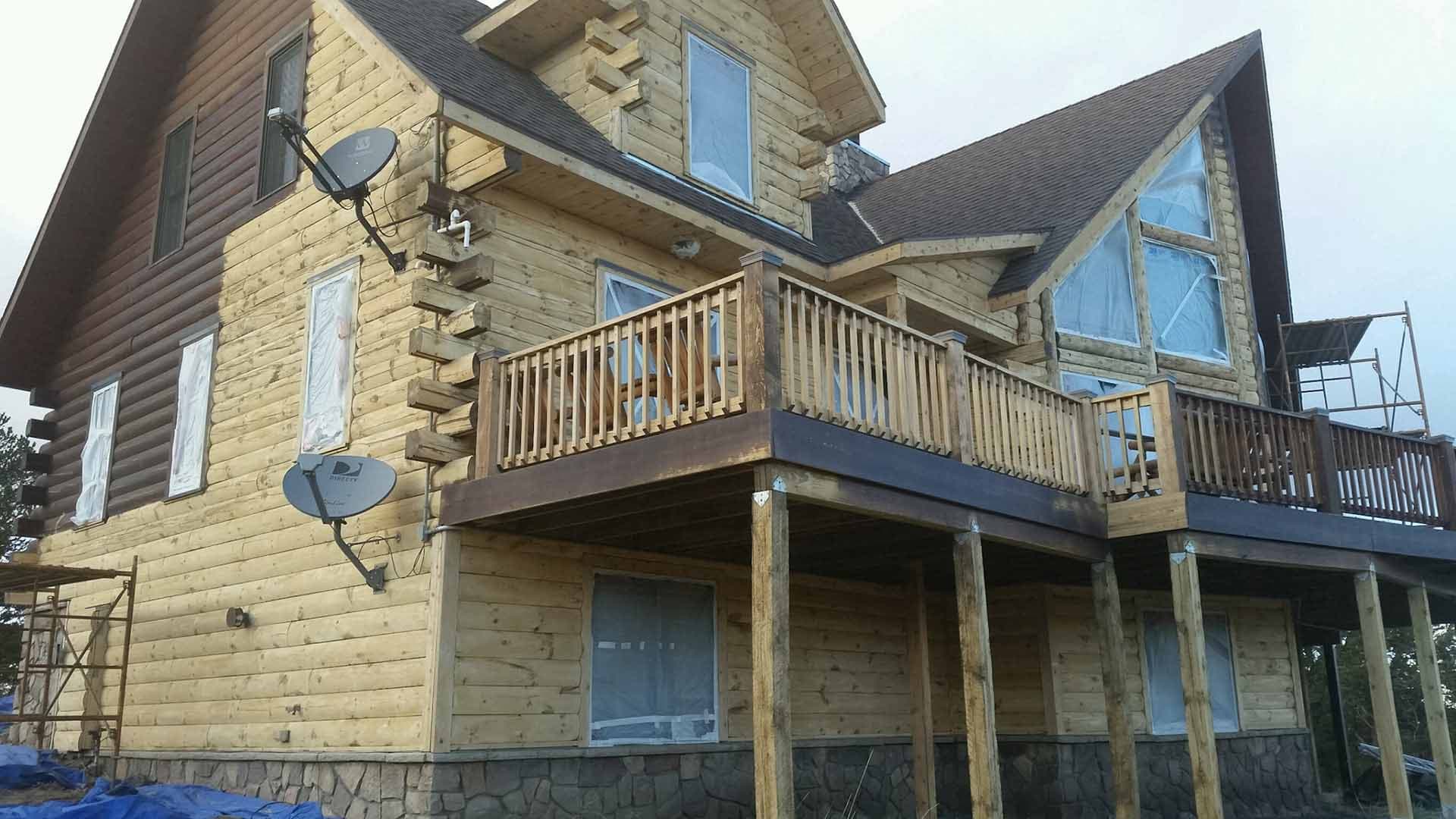
- Surface preparation. If the old finish is failing, we strip it back to clean, bare wood with eco-friendly media blasting — corn cob, walnut shell, or crushed glass — rather than pressure washing, which drives water deep into the logs.
- Repairs. With the logs exposed, we complete rot repair, log replacement, and structural fixes while problems are visible and accessible.
- Staining. We apply premium finishes matched to Colorado's climate — see our log home staining service for the systems we use and why.
- Chinking and sealing. Finally, fresh chinking and caulking lock out weather and finish the classic log home look.
Products We Trust: Sashco and Perma-Chink
We work exclusively with the two leading log home product systems: Sashco (Capture, Cascade, Transformation, Log Jam chinking) and Perma-Chink Systems (Lifeline stains and Perma-Chink sealant). Both are engineered for the log movement and UV extremes that generic hardware-store products can't handle. Not sure which system fits your home? Our Sashco vs. Perma-Chink comparison breaks down the differences.
How to Choose a Log Home Repair Contractor in Colorado
Before you hire anyone to work on your log home, ask these questions:
- Do they specialize in log homes? Log work is its own trade. Ask how many log homes they've completed and look through a portfolio of finished projects.
- What prep method do they use? If the answer to a failed finish is "pressure wash and re-stain," keep looking. Proper surface prep is the single biggest factor in how long a repair lasts.
- Which products do they apply? Reputable contractors use purpose-built systems like Sashco or Perma-Chink and follow the manufacturer's specs.
- Do they understand high-altitude conditions? Stain schedules, application temperatures, and product choices all change at 8,000+ feet.
- Will they put the scope in writing? A clear written estimate covering prep, repairs, products, and coats protects you from surprises.
Where We Work
We're headquartered in Fairplay and serve log homes across Colorado's mountain communities and the Front Range — from Breckenridge, Vail, and Steamboat Springs to Evergreen, Colorado Springs, and Denver. Browse our county service pages or city pages to see how we work in your area.
Frequently Asked Questions
How much does log home repair cost in Colorado?
Cost depends on the scope: sealing and small rot repairs are far less expensive than a full strip-and-refinish with log replacement. The best starting point is our log home cost calculator, which gives you a realistic estimate based on your home's size and condition, followed by an on-site assessment for an exact quote.
Can log rot be repaired without replacing the whole log?
Often, yes. If rot is caught early, we remove the decayed wood, treat the area with borate, and rebuild it with epoxy consolidation. Once decay has gone deep or compromised the log structurally, partial or full log replacement is the right fix — and it's routine work for an experienced crew.
How often does a Colorado log home need maintenance?
Plan on washing the walls annually and refreshing the finish's topcoat every 2 to 5 years depending on sun exposure and elevation. South- and west-facing walls weather fastest. Regular maintenance is dramatically cheaper than waiting for the finish to fail and starting over with a full restoration.
Is winter a good time to schedule log home repair?
Most staining and sealing work needs moderate temperatures, so the main application season runs spring through fall. Winter is the ideal time to get an inspection and lock in your spot on the schedule — the best contractors book out months ahead of the summer season.
Get an Honest Assessment of Your Log Home
If your logs are graying, your sealant is cracking, or you've found a soft spot that worries you, don't wait for the problem to grow. Contact us for an assessment, try the cost calculator for an instant estimate, or browse our restoration portfolio to see what's possible for a weathered log home.