Best Time of Year to Stain a Log Home in Colorado
Best Time of Year to Stain a Log Home in Colorado
Timing is one of the most important — and most overlooked — parts of a successful log home staining project. In Colorado, where elevation, dry air, and fast-changing weather all play a role, choosing the right window can mean the difference between a finish that lasts for years and one that peels within a single season. After 25+ years of staining log homes across the Colorado mountains and Front Range, we've learned that when you stain matters almost as much as how you stain.
Why Timing Matters So Much in Colorado
Stain needs the right conditions to bond and cure properly. The wood has to be dry, the air temperature has to stay within a workable range, and the surface needs time to set before rain, frost, or harsh sun hit it. At Colorado's high elevations, those conditions line up for a shorter stretch of the year than they do at lower altitudes. Get the timing right and the finish penetrates, beads water, and protects the logs. Get it wrong and you can trap moisture, get poor adhesion, or watch the stain flash off before it cures.
The Two Numbers That Decide Everything: Temperature and Moisture
Most quality log home stains want air and surface temperatures roughly between 50°F and 90°F during application and for several hours afterward as they cure. Just as important is moisture: the wood should be genuinely dry — not damp from a recent rain, morning dew, or snowmelt. Logs that look dry on the surface can still hold moisture deeper in the grain, which is why we plan around dry stretches rather than single sunny days.
Why High Elevation Shortens the Staining Season
In mountain towns like Breckenridge, Fairplay, and across Summit County, the comfortable staining window is noticeably shorter than down in Denver or Fort Collins. Higher elevations bring later spring frosts, cooler nights that drag surface temperatures down, earlier fall snow, and intense UV that can dry stain too fast on a hot afternoon. A home at 9,000 feet may only have a dependable few months of good staining weather, while a Front Range home enjoys a longer, more forgiving stretch. That's why we schedule mountain projects carefully and watch the forecast closely.
Spring vs. Late Summer and Fall
Both ends of the warm season can work well — each has tradeoffs.
Spring
Late spring is appealing because the home is protected heading into the wettest, sunniest part of the year. The catch is lingering moisture: snowmelt, spring rains, and damp ground can keep logs wetter than they appear. We wait until the wood has truly dried out before starting.
Late Summer and Early Fall
Many log home owners find early fall ideal. Humidity is low, the logs have had all summer to dry, and daytime temperatures are often steady. The risk is running out of season — an early mountain snowstorm can cut a project short, so fall jobs need to start early enough to finish and cure before the cold settles in.
Seasonal Pros and Cons at a Glance
| Season | Pros | Cons |
|---|---|---|
| Early Spring | Eager to protect before summer UV | Logs often still damp from snowmelt; late frosts; unstable temps |
| Late Spring | Warming temps; logs starting to dry | Spring rains can interrupt; nights still cool at altitude |
| Summer | Long warm days; reliable warmth | Hot afternoons and intense UV can dry stain too fast; afternoon storms |
| Early Fall | Low humidity; logs fully dried; steady temps | Shorter daylight; early snow risk in the high country |
| Winter | — | Too cold; frost and snow make proper curing nearly impossible |
What Weather Ruins a Stain Job
Even in the right season, day-to-day weather can sabotage results. Watch out for:
- Rain or snow within 24–48 hours of application — moisture before the stain cures can cause streaking, blushing, or poor adhesion.
- Heavy morning dew — common at altitude, it leaves a damp film on the logs that has to burn off before work begins.
- Direct hot sun on the working wall — stain can flash-dry on the surface before it penetrates, leaving lap marks and weak protection.
- Cold nights below the product's minimum — even if the afternoon is warm, a cold night can interrupt curing.
- High wind — speeds drying unevenly and blows dust and debris onto a fresh finish.
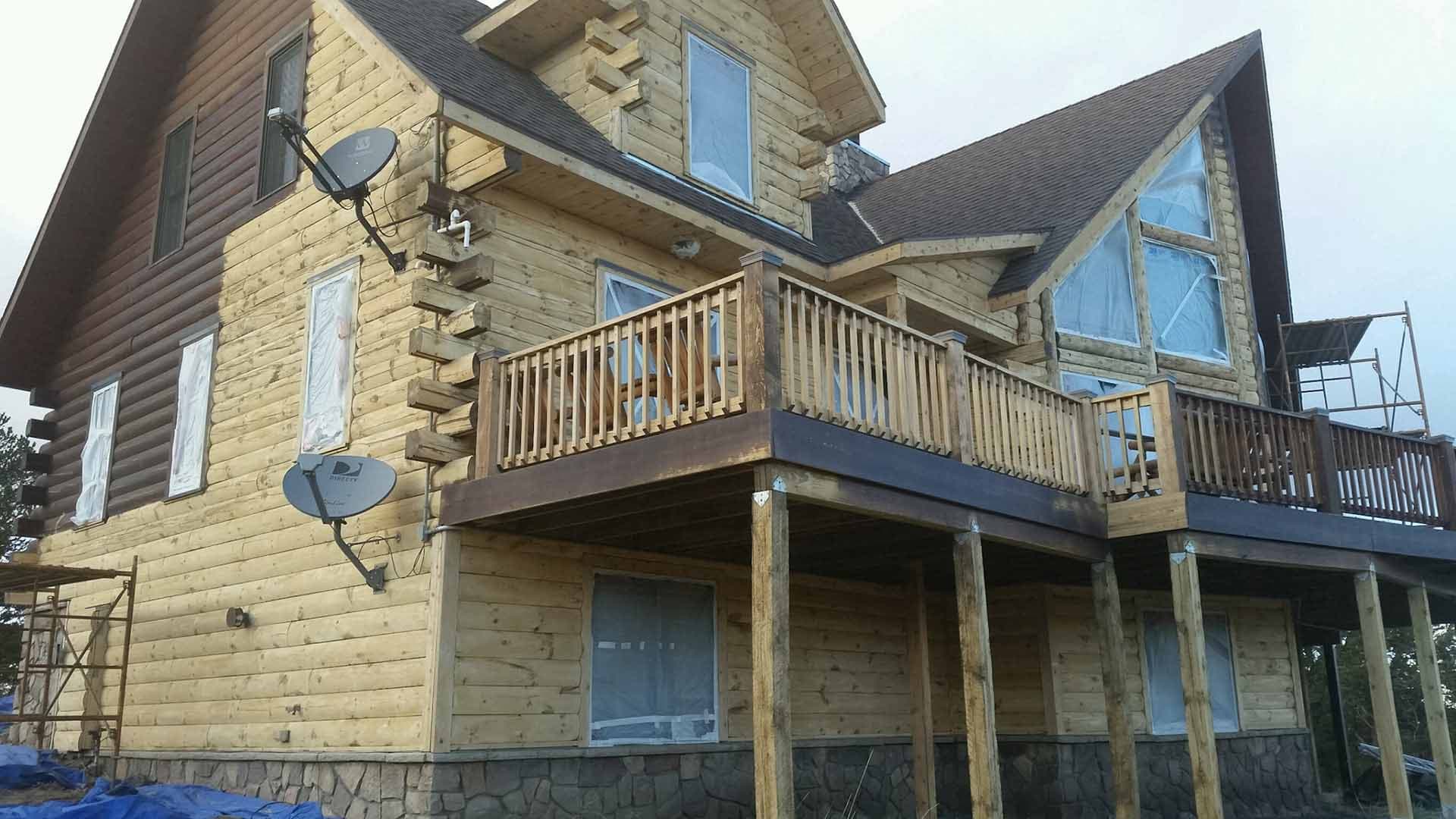
This is also why prep matters. If the old finish is failing, the logs may need media blasting or sanding first, and the surface must dry out again before any stain goes on. Quality log home staining is as much about patience and conditions as it is about the product itself.
Plan Ahead — Especially in the Mountains
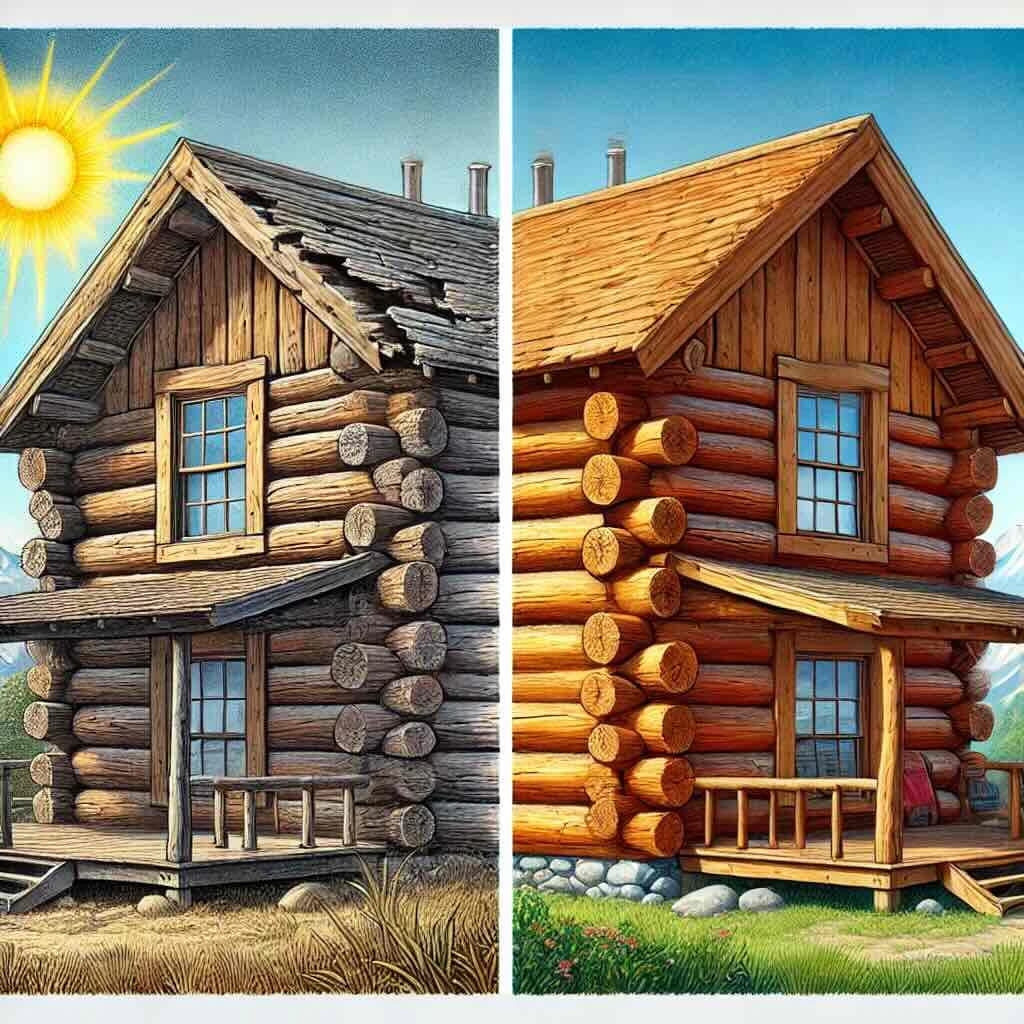
Because the dependable window is short at elevation, the best mountain staining slots fill up fast. If your logs are graying, no longer beading water, or showing a tired finish, it's worth getting on the schedule early. A quick log home inspection can confirm whether you need a full restain or just spot maintenance, and you can review timing and prep options in our log home maintenance guide. We serve communities throughout the Colorado high country and Front Range — see all of our Colorado service areas.
Ready to Stain at the Right Time?
The best results come from matching your project to Colorado's weather instead of fighting it. If you're not sure when your log home should be stained — or you want to lock in a spot during the ideal window — call us at 970-368-2308 or reach out through our contact page. We'll help you plan the timing, the prep, and the finish so your logs stay protected for years to come.