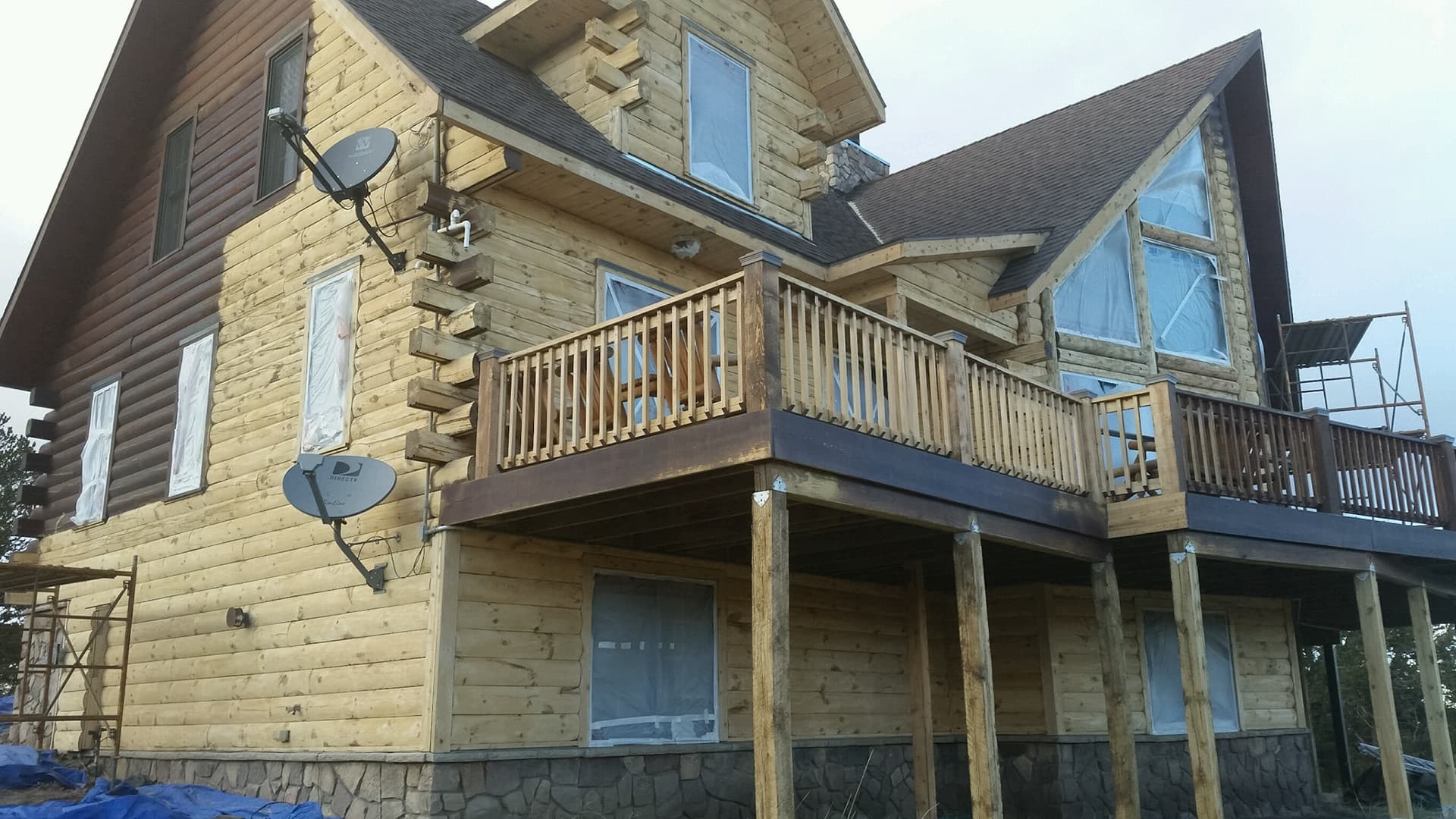
Media Blasting vs. Sandblasting vs. Chemical Stripping for Logs
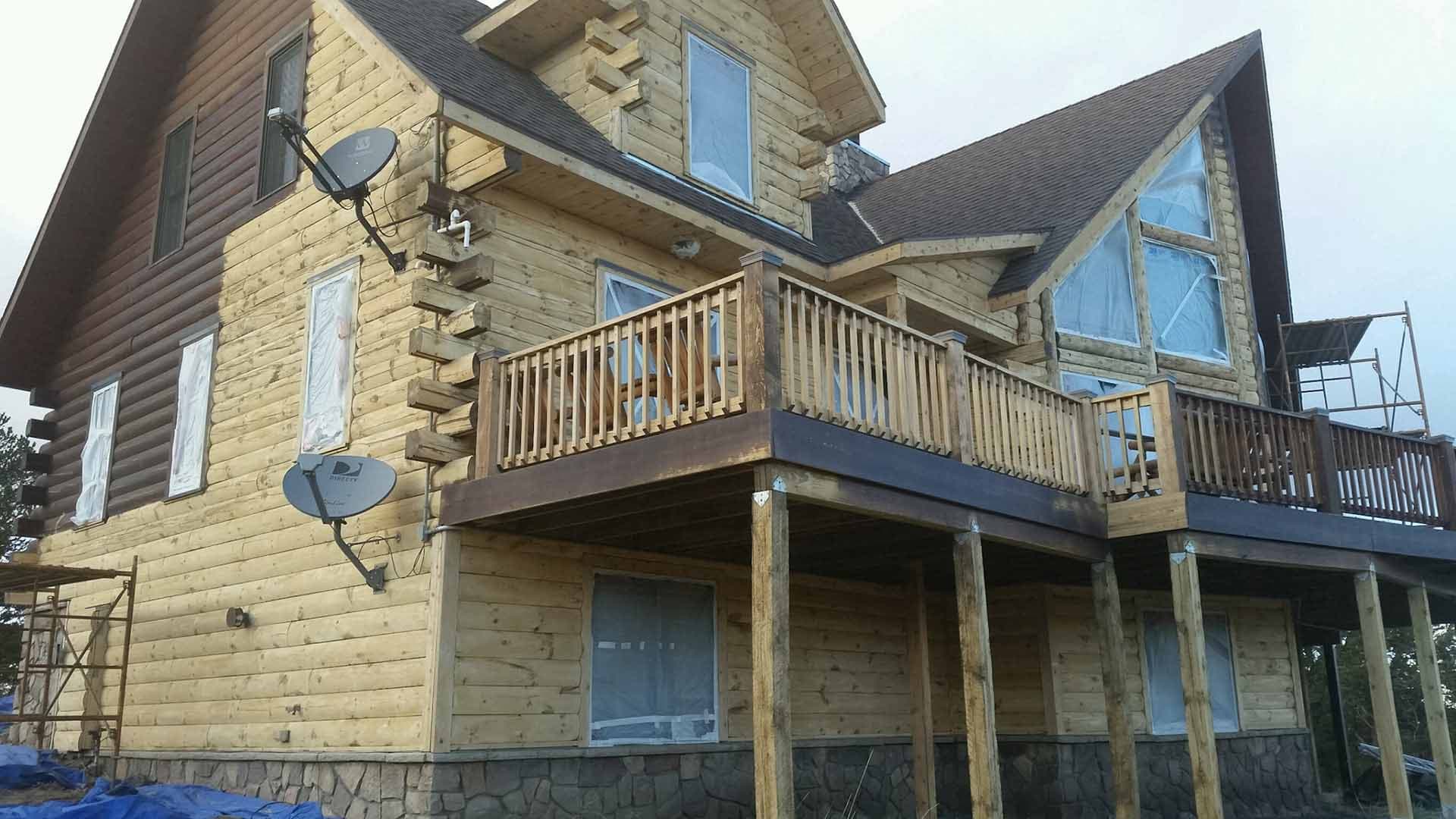
Media Blasting vs. Sandblasting vs. Chemical Stripping for Log Homes
Before a single drop of fresh stain touches your logs, the old, failing finish has to come off. How you remove it has a huge impact on the final result — and on the health of the wood itself. The three most common methods are media blasting, sandblasting, and chemical stripping. Each can get a log home back to bare wood, but they're not equal when it comes to wood safety, cost, mess, and the finish you'll get afterward. Here's how they compare, drawn from 25+ years of restoring log homes across Colorado.
Why Surface Prep Decides the Whole Project
Stain is only as good as the surface it bonds to. If old finish, mildew, or weathered grey fibers are left behind, even the best product will peel, blotch, or fail early. Good prep opens the wood grain so the new finish can penetrate and protect — which is why we treat removal as the foundation of every restoration, not an afterthought.
Media Blasting: Our Preferred Method for Most Log Homes
Media blasting uses a stream of soft abrasive — such as crushed glass, corn cob, walnut shells, or baking soda — propelled at the logs to lift off old stain and weathered fibers. The key word is soft: the right media is aggressive enough to strip the finish but gentle enough to preserve the log profile and detail.
How It Works
The operator controls pressure and media type to match the wood's condition. On a sound log, this cleans down to fresh, bright wood without gouging. It reaches into checks, corners, and textured areas that hand-sanding struggles with, and it works on large surfaces far faster than scraping.
Wood Safety
When done by an experienced hand, media blasting is one of the most wood-friendly methods available. The softer abrasives remove finish without the deep scratching that harder media can cause. It does create dust and spent media to clean up, but it avoids soaking the logs in chemicals or chemical runoff.
Sandblasting: Fast but Risky on Logs
Traditional sandblasting uses hard silica sand at high pressure. It's effective at removing coatings — almost too effective for log homes. Because sand is hard and abrasive, it can carve into soft wood, etch the grain, blast away the softer spring growth and leave a ridged, uneven surface, and round off crisp log detail.
On metal or concrete, sand is a workhorse. On logs, that same aggressiveness is a liability. Over-blasted wood can look fuzzy or washboarded, and damaged fibers don't hold stain evenly. Silica dust is also a serious health hazard. For these reasons we don't recommend hard-sand blasting for log homes — the speed isn't worth the risk to the wood.
Chemical Stripping: Targeted, but Slow and Messy
Chemical strippers use a gel or liquid that softens the old finish so it can be scraped or washed away. They can be useful in specific situations — small areas, delicate detail, or spots where blasting isn't practical.
The downsides on a full home are real: the process is slow and labor-intensive, it generates messy, sometimes hazardous residue that must be handled and disposed of carefully, leftover chemicals can interfere with the new stain's adhesion if not fully neutralized and rinsed, and the introduced moisture means the logs must thoroughly dry out before staining. For a whole log home, chemical stripping is usually better as a supplement than as the main method.
Side-by-Side Comparison
| Factor | Media Blasting | Sandblasting | Chemical Stripping |
|---|---|---|---|
| How it works | Soft abrasive (glass, corn cob, soda) lifts finish | Hard sand at high pressure | Gel/liquid softens finish for scraping |
| Wood safety | High — preserves grain and profile | Low — can gouge and etch soft wood | Moderate — risk of leftover chemicals & moisture |
| Speed on a full home | Fast | Fast but damaging | Slow and labor-intensive |
| Mess / cleanup | Dust and spent media | Heavy dust; silica hazard | Chemical residue; disposal concerns |
| Best for | Most full log home restorations | Metal/concrete — not logs | Small areas, delicate detail, touch-ups |
So Which Method Is Right for Your Log Home?
For the vast majority of Colorado log homes, media blasting offers the best balance: it strips the old finish thoroughly, protects the wood, and leaves a clean, even surface that's ready to accept stain. We reserve chemical stripping for spot situations where blasting isn't ideal, and we steer owners away from hard sandblasting because of the lasting damage it can do to soft logs.
The right answer also depends on the condition of your logs, the type of old finish, and how much weathering has set in. That's where an experienced eye matters — matching media, pressure, and technique to your specific home. Once the prep is done right, fresh log home staining can penetrate properly and deliver years of protection. You can learn more about the full restoration sequence on our log home restoration page, and review ongoing care in our maintenance guide.
Get Expert Prep and a Lasting Finish
Choosing the wrong removal method can cost you a finish that fails early — or worse, damage the logs themselves. If you want your log home stripped safely and stained right the first time, call us at 970-368-2308 or reach out through our contact page. We'll assess your logs and recommend the prep method that protects your home and your investment.