7 Warning Signs Your Log Home Needs Restaining
7 Warning Signs Your Log Home Needs Restaining
A good stain is the only thing standing between your logs and Colorado's harsh sun, wind-driven rain, and freeze-thaw cycles. When that finish starts to fail, the wood underneath is exposed to moisture and UV damage that gets expensive fast. The good news is that logs almost always tell you when they need attention long before serious problems set in. Below are seven warning signs to watch for, what each one means, and what to do about it.
1. The Color Is Fading or Looking Washed Out
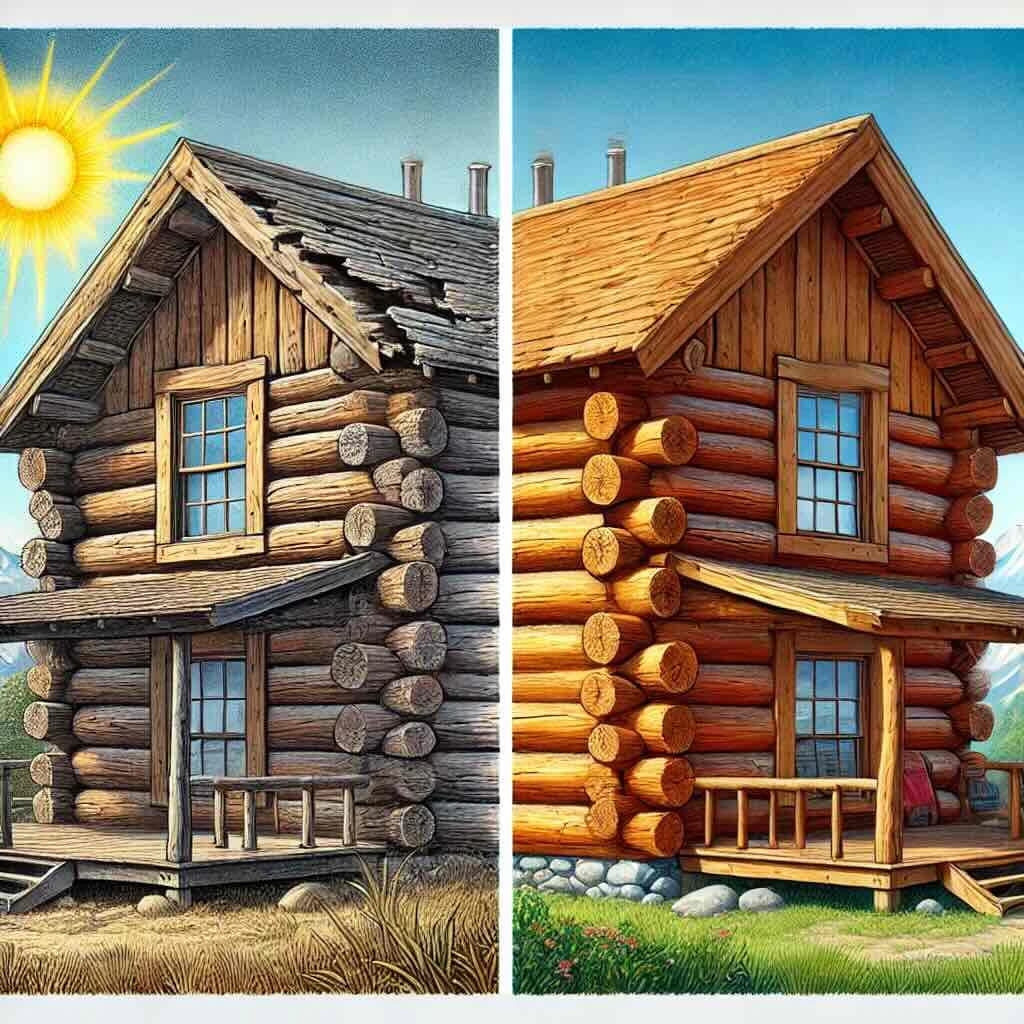
Fading is usually the first thing homeowners notice. A finish that was once warm and rich looks pale, dull, or patchy, especially on the south- and west-facing walls that take the most sun. At Colorado's high elevation there is less atmosphere to filter ultraviolet light, so stains break down faster here than they do at lower altitudes. Fading by itself is not a crisis, but it is your early warning that the protective pigments are wearing thin. Plan to refresh the finish before it disappears completely.
2. The Logs Are Turning Gray
Gray wood is fading taken one step further. Once the stain can no longer block UV rays, the sun begins to break down the lignin that holds the wood fibers together, and the surface turns a silvery gray. Light graying can often be cleaned and recoated, but deep gray means the surface layer is already damaged and will need to be cleaned or lightly sanded back to sound wood before new stain will bond. The longer you wait, the more prep work is required.
3. Water No Longer Beads on the Surface
This is the single most reliable test you can do yourself. Spray a wall with a garden hose and watch what happens. On a healthy finish the water beads up and runs off. When the stain is worn out, the water soaks straight in and the logs darken where they got wet. Logs that absorb water are vulnerable to rot, swelling, and mildew. If your walls drink the water instead of shedding it, restaining should move to the top of your list.
4. The Finish Is Blotchy, Peeling, or Flaking
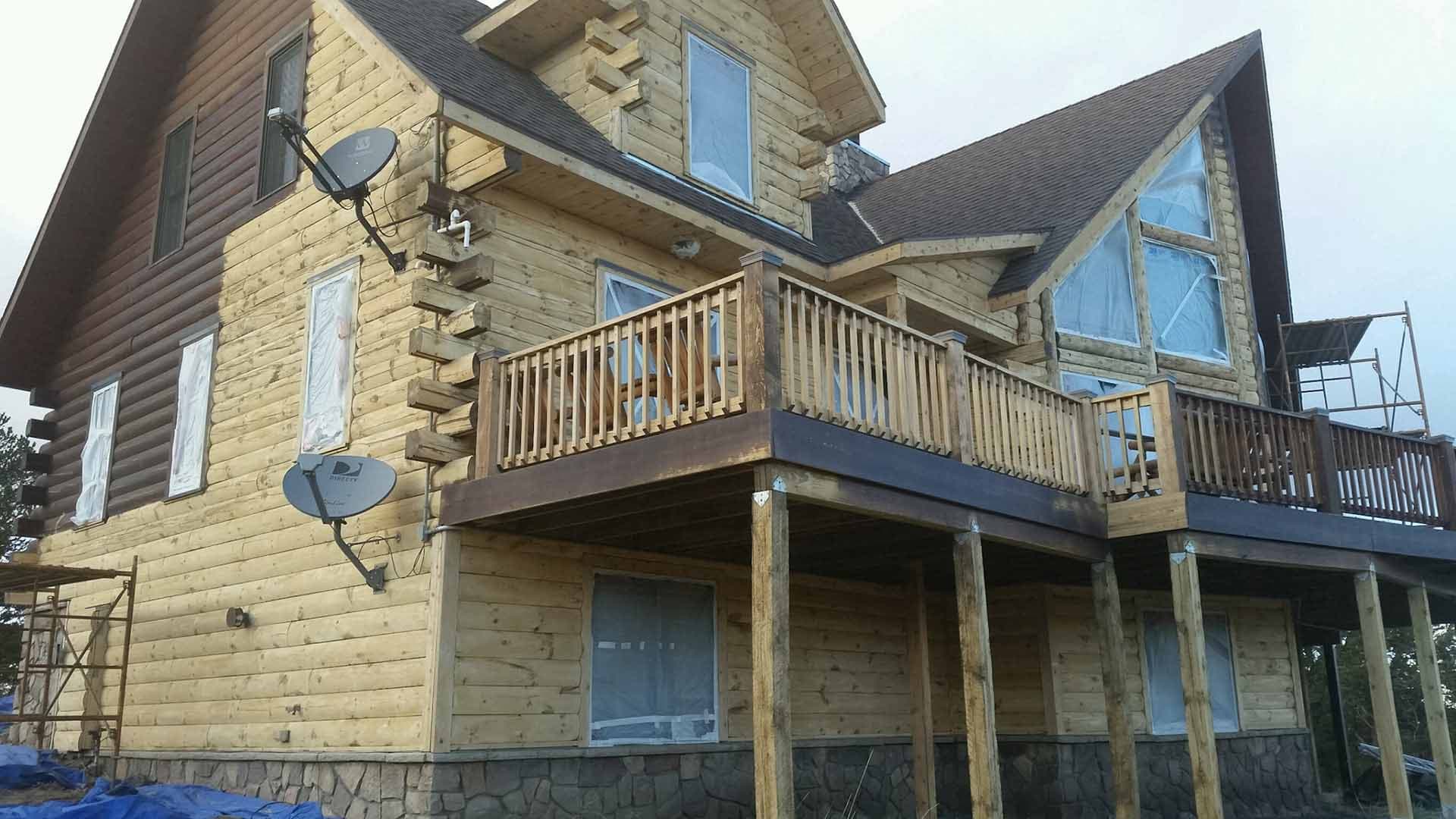
An even finish that has simply worn thin is easy to recoat. A finish that is peeling, cracking, or flaking off in sheets is a different story, and it usually points to a film-forming product that failed or moisture trapped underneath. Peeling stain cannot just be painted over; it has to be removed so the new coat can bond to clean wood. This is where surface prep matters most, and why blotchy or peeling areas often call for media blasting or sanding rather than a simple wash and recoat.
5. Dark Spots, Mildew, or Mold
Black or green speckling, especially on shaded north walls and under eaves, signals that moisture is sitting on the wood and organisms are taking hold. Mildew not only looks bad, it feeds on damp wood and can lead to decay if ignored. Surface mildew can be washed and treated, but its presence is a clear sign the protective finish is no longer keeping water out. Address the moisture source and recoat before the problem spreads.
6. Dryness, Checking, and Cracks
When logs lose their finish they also lose their ability to manage moisture evenly, and the wood dries out. You will see "checking," the natural cracks that run along the length of a log, opening wider, along with a dry, rough, thirsty-looking surface. Upward-facing checks are especially important because they collect rain and snowmelt and funnel it into the log. Restaining, along with sealing those open checks, helps the wood stabilize again.
7. It Has Simply Been Too Long
Even if your home looks okay, time alone is a valid reason to inspect and recoat. In Colorado's climate most log homes need attention on a predictable cycle. Use the timeline below as a general guide, then confirm with a hands-on inspection.
| Exposure | Typical Restaining Window | What Drives It |
|---|---|---|
| South & west walls | 3-5 years | Intense high-altitude UV and afternoon sun |
| North & east walls | 5-7 years | Less sun, but more shade-driven moisture and mildew |
| Decks & horizontal surfaces | 2-3 years | Foot traffic, standing water, and snow load |
How to Confirm What You Are Seeing
One or two of these signs may only call for a maintenance coat. Several signs together usually mean a fuller restaining project with proper prep. A professional log home inspection takes the guesswork out of it by checking moisture levels, finish adhesion, and the condition of the wood itself, so you spend money on the work the home actually needs instead of guessing.
What Restaining Involves
- Cleaning: Removing dirt, pollen, and surface mildew so the new coat can bond.
- Prep: Light cleaning for a worn but sound finish, or media blasting and sanding when the old finish is peeling or the wood has grayed.
- Repair: Sealing open checks and addressing any soft or damaged wood before coating.
- Staining: Applying a quality penetrating stain built for log homes, then a clear topcoat where appropriate.
Done right, a fresh finish restores both the look and the protection of your logs. You can read more about the products and process on our log home staining services page, and explore full log home restoration options if the wood needs more than a recoat.
Don't Wait Until the Damage Is Done
Catching these warning signs early is the difference between a straightforward recoat and a costly repair. If your logs are fading, graying, soaking up water, or peeling, now is the time to act. Call Log Home Finishing LLC at 970-368-2308 or request a free estimate, and we will help you protect your investment for years to come.