Beyond the Surface: The Hidden Hazards of Pressure Washing Your Log Cabin

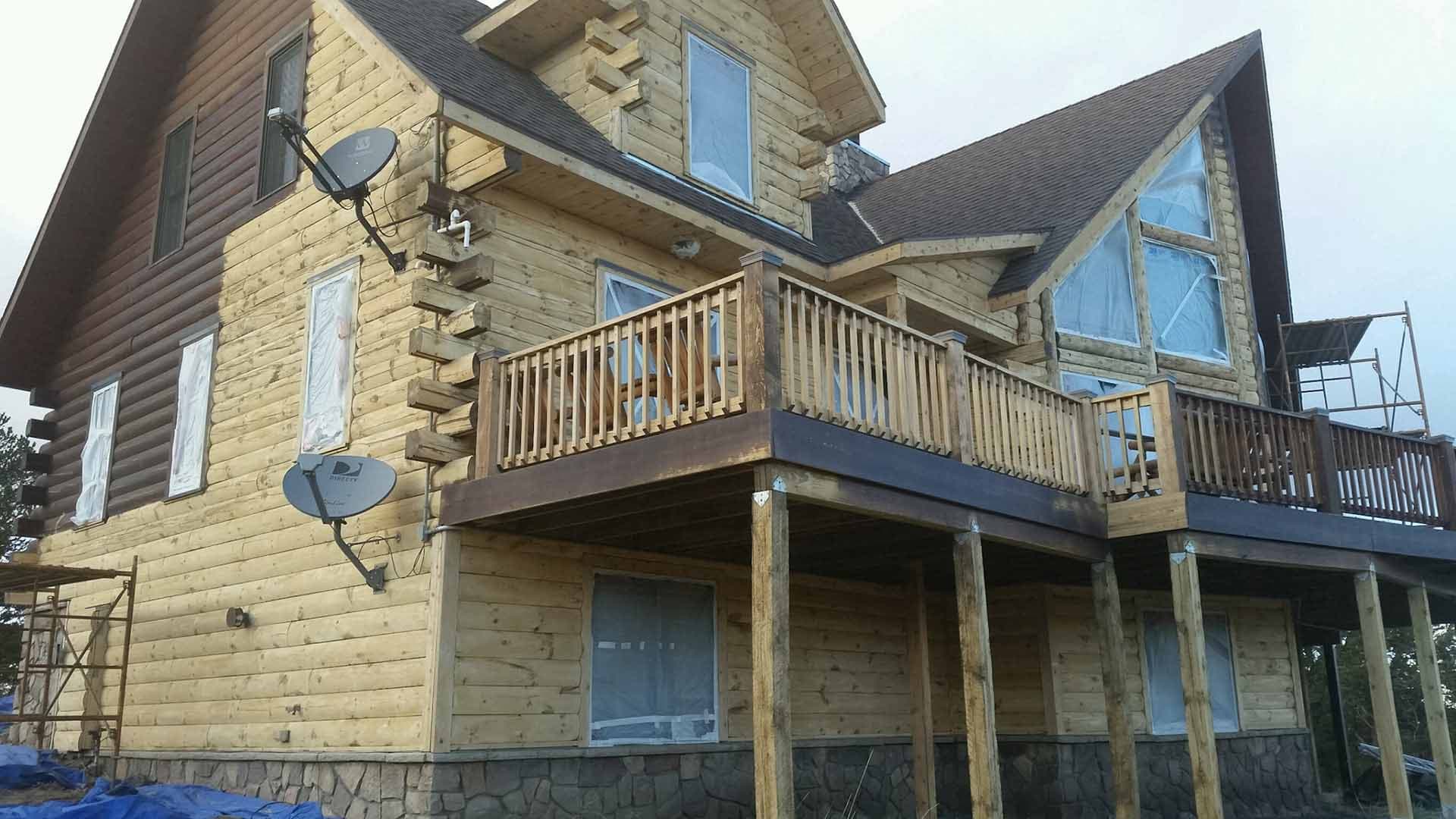
Log cabins, with their rustic charm and natural appeal, are architectural gems. The deep reddish-brown warmth of hand-hewn logs, the intricate weather-checked grain with golden-tan chinking — these are the features that make log homes so uniquely beautiful. But that very weathered surface is delicate. As homeowners, it's natural to want to clean it, to bring back that original luster. And the first tool that often comes to mind is the ubiquitous pressure washer.
Wait. Put it down. Before you pull that trigger, it is crucial to understand that on older or already damaged logs, a pressure washer is more like a sandblaster of destruction than a gentle cleaning agent.
Pressure washing can clean, but it does so by physically tearing contaminants — and wood — from the surface. While a high-pressure stream may be fine for a concrete driveway, the fiber structure of a log is far more vulnerable. When you apply that force to weathered wood, the results can be catastrophic and often irreversible.
In this guide, we'll walk through exactly how pressure washing damages log homes, why the damage is so difficult to repair, what the professionals use instead, and how to properly clean and preserve your logs without destroying them in the process.
Video: Pressure washing damage on log home exterior — Watch how high-pressure water has eroded the soft spring wood between growth rings, creating deep channels and raised grain. This is the kind of irreversible surface damage that makes pressure washing so dangerous for log homes.
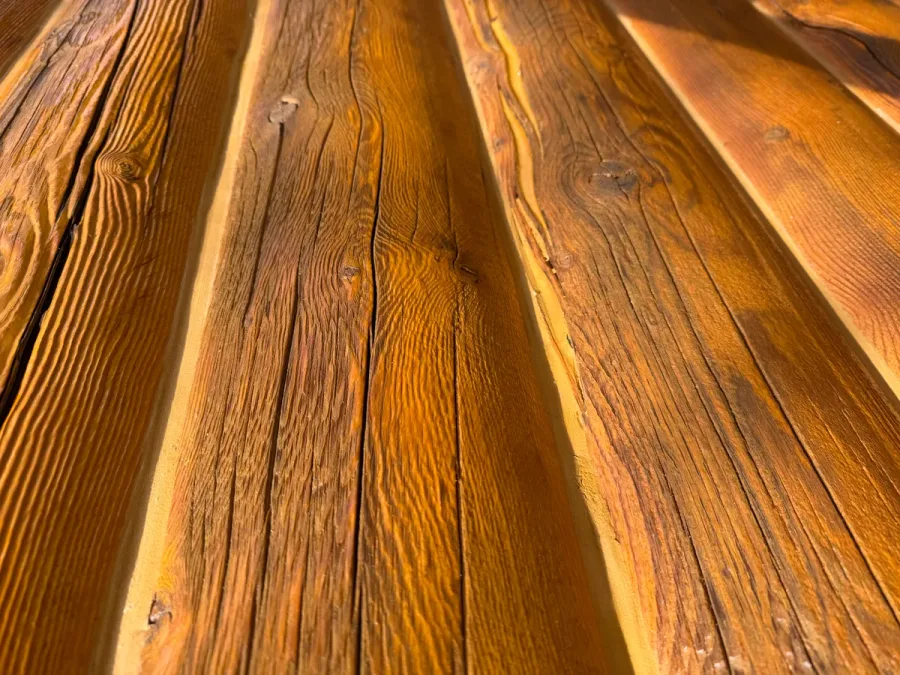
Pressure washing damage on weathered logs: Notice the deep erosion patterns where high-pressure water has carved into the softer spring wood between the harder growth rings, creating a pronounced, rough texture. The natural grain has been physically torn apart rather than cleaned, leaving the wood surface vulnerable to accelerated moisture absorption and decay.
How Pressure Washing Destroys Wood: Understanding the Science
To understand why pressure washing is so dangerous for log homes, you need to understand how wood is structured at the microscopic level — and how water pressure exploits its weaknesses.
The Uneven Density of Wood
Every log is made up of alternating layers of earlywood (spring wood) and latewood (summer wood), visible as the light and dark bands in the annual growth rings:
- Earlywood is formed during the fast-growing spring season. It has large, thin-walled cells and is significantly softer and less dense than latewood. In species like pine and spruce — the most common log home species in Colorado — the density difference between earlywood and latewood can be as much as 2-3 times.
- Latewood is formed during the slower summer growth. It has smaller, thicker-walled cells and is considerably harder and more resistant to mechanical force.
When a high-pressure water stream hits this uneven surface, it doesn't treat both layers equally. The softer earlywood is blasted away while the harder latewood remains, creating a deeply ridged, washboard-like surface. This is the fundamental problem with pressure washing wood — it's essentially a selective erosion machine that destroys the weaker parts of the wood while leaving the harder parts standing in relief.
The Pressure Numbers That Matter
A typical consumer pressure washer operates at 1,500 to 4,000 PSI (pounds per square inch). To put that in perspective:
| Application | Pressure (PSI) | Risk to Wood |
|---|---|---|
| Garden hose | 40-60 PSI | Safe |
| Soft wash system | 60-200 PSI | Safe — recommended for log homes |
| Light-duty pressure washer | 1,300-1,800 PSI | Moderate risk — damage begins |
| Medium-duty pressure washer | 2,000-2,800 PSI | High risk — felting and erosion |
| Heavy-duty pressure washer | 3,000-4,000+ PSI | Severe — guaranteed damage to logs |
The threshold for wood damage begins at around 500-800 PSI on weathered softwood. That means even a "light-duty" consumer pressure washer is operating at more than double the force needed to start destroying your log surfaces. And that's before factoring in nozzle tip size, distance from the surface, and the angle of the spray — all of which dramatically concentrate the force.
The Three Types of Pressure Washing Damage
Pressure washing damage to log homes manifests in three distinct and progressively destructive ways. Here is how pressure washing can transform a weathered log from rustic to ruined.
1. Gouge Marks and Deep Erosion
The most immediate and obvious danger is the creation of gouges. Logs, especially older ones, have varying density within their annual rings. A direct, high-pressure stream can effortlessly carve a groove into the soft wood between rings or deep into existing check cracks — the linear fissures that develop naturally as logs dry and age.
This doesn't just look bad — it creates channels and pools where water will collect during rain and snowmelt, accelerating rot from the inside out. One slip of the wand, or a tip that's too narrow, and you've permanently altered the surface geometry of the log. These gouges can't be sanded out without removing so much material that you compromise the log's structural profile.
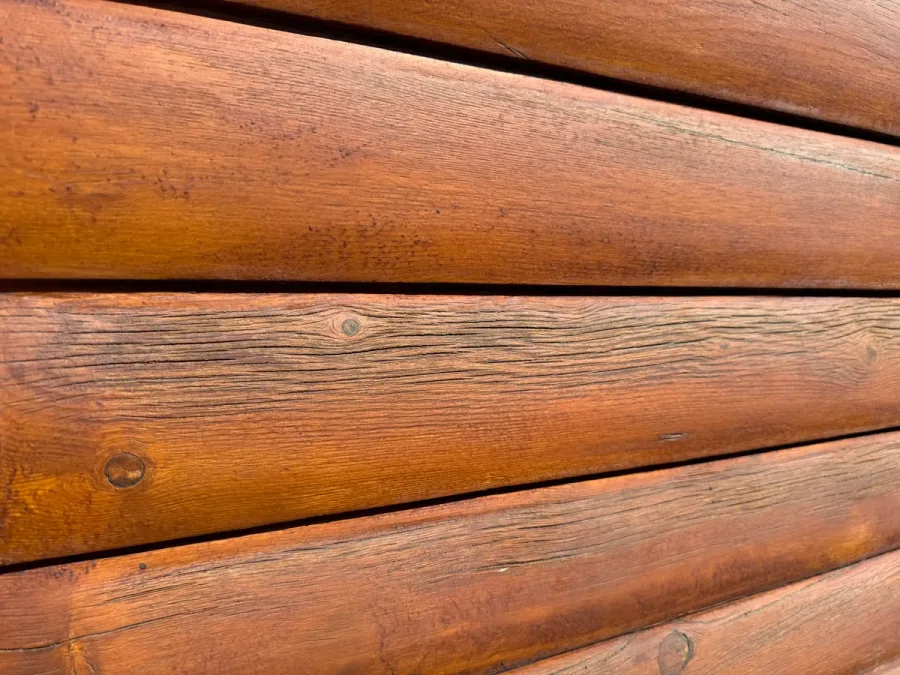
Weathered logs with deep checking — highly vulnerable to pressure washing: The existing check cracks and roughened grain on these logs are exactly the type of surface where pressure washing causes the worst damage. A high-pressure stream blasts directly into these checks, driving water deep into the log interior and widening the cracks. The weathered, open grain acts like a sponge under pressure, absorbing far more water than the wood can handle — accelerating rot, splitting, and structural deterioration.
When pressure washing hits an existing check crack, the results are especially damaging. The concentrated water stream is driven deep into the crack at tremendous force, hydraulically splitting the wood further apart. A check that was a quarter-inch deep can become an inch or more after pressure washing, turning a cosmetic imperfection into a structural problem.
2. The Silent Assassin: Felting
Perhaps the most insidious damage is "felting," also called fuzzing. This is when the high-pressure water stream hits the wood fiber structure and, instead of cleaning, literally pulverizes the lignin and rips the soft wood pulp out. The surface is no longer smooth and stainable. It becomes covered in a dense, fuzzy layer of raised wood fibers that look and feel like felt or wet wool.

Wood felting from pressure washing — the "silent assassin": This surface shows exactly what happens when high-pressure water is applied too close and too hard to softwood logs. The soft earlywood fibers have been pulverized and raised, creating a dense, fuzzy carpet of wood pulp. This felted surface cannot accept stain properly, traps moisture and dirt, and dramatically accelerates rot and mold growth. Repairing felting damage requires extensive sanding or media blasting — there is no shortcut.
Felted wood doesn't just look terrible — it is a serious maintenance nightmare for several reasons:
- Stain won't adhere properly — The raised fibers create an uneven, spongy surface that absorbs stain unevenly, resulting in a blotchy, unprofessional finish. The stain sits on top of the fuzzy fibers rather than penetrating into sound wood, meaning it will peel and flake off far sooner than it should.
- Moisture trapping — The raised fibers act like a dense carpet that traps and holds moisture against the wood surface. Instead of rain and dew running off the log, water is absorbed and held in the felted layer, keeping the wood perpetually damp. This persistent wetness is the perfect environment for rot fungi.
- Accelerated decay — The combination of trapped moisture, increased surface area (from the raised fibers), and compromised wood structure means that felted logs decay at dramatically faster rates than untreated weathered wood. You've actually made the problem worse than if you'd done nothing at all.
- Dirt and mold magnet — The fuzzy surface traps airborne dirt, pollen, and mold spores that would otherwise wash off smooth logs naturally. Within months of pressure washing, felted logs can develop severe mold and mildew problems.
Repairing felting damage requires extensive sanding or media blasting — the raised fibers must be completely removed down to sound, smooth wood before any stain or sealant can be successfully applied. This is expensive, time-consuming work that wouldn't have been necessary if the logs had been cleaned properly in the first place.
3. The Unprofessional Look: Lap Marks and Uneven Cleaning
Even if you manage not to gouge or felt the logs, poor technique will leave a lasting mark: lap marks. A pressure washer cleans a small patch at a time. Lap marks are the distinct, visible lines of different shades created when you start or stop a pass of the wand, or fail to correctly overlap and stagger your strokes.
The result is a patchwork quilt of cleaner and dirtier wood, making the cabin look worse than before you started. Achieving a seamless, uniform clean on a log surface with a pressure washer requires exceptional skill and experience — and even professionals who specialize in log homes don't use pressure washers for this exact reason. The risk-to-reward ratio is simply terrible.
Lap marks also create a major problem for subsequent staining. When you apply stain over unevenly cleaned wood, the color absorption varies dramatically from patch to patch, creating a blotchy, inconsistent finish that looks amateur and unprofessional. The only solution is to strip or sand the entire surface back to uniformity — essentially starting over.
The Hidden Damage You Don't See
Beyond the visible surface damage, pressure washing creates serious problems beneath the surface that may not become apparent for months or even years:
- Water forced deep into the wood — A pressure washer doesn't just clean the surface. It forces water deep into the wood structure under tremendous pressure, saturating the interior of the log far beyond what rain or natural exposure would cause. This deep saturation can take weeks or months to dry out, during which time internal rot can begin.
- Chinking and caulk damage — High-pressure water can blast chinking right out of the joints between logs, or undermine the adhesion of caulk and sealant around windows and doors. You may not notice the damage until the next rain, when water starts pouring through joints that were sealed before the pressure washing.
- Driving contaminants deeper — Mold, mildew, and dirt aren't just on the surface. Pressure washing can actually drive these contaminants deeper into the wood grain rather than removing them. The surface may look clean temporarily, but the embedded mold continues to grow from within.
- Destroying the stain's bond — If you're pressure washing to prepare for re-staining, you're actually making the problem worse. The felted, raised fibers created by pressure washing cannot form a proper bond with new stain. The stain will fail prematurely, requiring yet another round of preparation and application.
The Right Way to Clean Log Homes: Soft Washing
If high pressure is a danger, what's the alternative? The answer is soft washing — and it's not just a gentler version of pressure washing. It's a fundamentally different approach that relies on chemistry rather than brute force.
How Soft Washing Works
Soft washing uses specialized cleaning agents that are applied at low pressure — similar to a garden hose, typically 60-200 PSI — and allowed to dwell on the surface. The cleaning solution does the work of breaking down stains, mold, mildew, dirt, and old finish. It's then rinsed off gently with low-pressure water.
This approach relies on safe, non-abrasive chemical action rather than physical erosion. It cleans effectively without gouging, felting, or creating lap marks. It respects the wood fiber structure while achieving a cleaner result than pressure washing can deliver.
The Professional Log Home Cleaning Process
Here's the process that experienced log home restoration professionals use — and the one we follow on every project:
- Assessment — Before any cleaning begins, the log surface is evaluated. What species of wood? What type of existing finish? What is the condition of the wood fiber? How deep is the contamination? The answers determine which cleaning products and techniques to use.
- Pre-wetting — The logs are lightly misted with water to pre-wet the surface. This prevents the cleaning solution from being absorbed too deeply into the wood and ensures even coverage.
- Cleaning solution application — A sodium percarbonate-based wood cleaner (an oxygen bleach, not chlorine bleach) is applied at low pressure from the bottom up. The solution is allowed to dwell on the surface for 10-20 minutes, during which it breaks down dirt, mold, mildew, and degraded finish through chemical action.
- Gentle agitation — For stubborn areas, a soft-bristle brush is used to gently work the cleaning solution into the wood grain. This is hand work — no power tools touching the wood surface.
- Low-pressure rinse — The cleaning solution and loosened contaminants are rinsed off with low-pressure water (under 200 PSI), working from the top down. The rinse removes the cleaning products without damaging the wood surface.
- Brightening — After cleaning, an oxalic acid-based wood brightener is applied to neutralize the cleaner's alkalinity and restore the wood's natural color. This step also removes any remaining tannin stains or iron discoloration.
- Drying — The logs are allowed to dry completely before any stain or sealant is applied. Moisture meter readings should be below 15-19% before finishing.
This process typically takes 2-3 days for a complete home (including drying time), and the results are dramatically superior to pressure washing — both in terms of cleaning effectiveness and in preserving the integrity of the wood surface.
Media Blasting vs. Pressure Washing: When You Need More Than Cleaning
Sometimes logs need more than just cleaning — they need old finish removed, deep weathering addressed, or surface restoration. In these cases, the proper alternative to pressure washing is media blasting, not higher-pressure water.
Media blasting uses organic materials like crushed walnut shell, corn cob, or crushed glass propelled at controlled pressures to gently remove old finish, weathered wood fiber, and contaminants. Unlike pressure washing:
- No water saturation — Media blasting is a dry process. The wood isn't flooded with water, so there's no risk of deep saturation, swelling, or the extended drying times that pressure washing requires.
- Controlled, even removal — The media removes material uniformly across earlywood and latewood alike, producing a smooth, even surface without the washboard effect of pressure washing.
- No felting — Because the media impacts the wood differently than water, it doesn't create the fuzzy, felted surface that pressure washing causes. The result is a smooth, clean surface that's ready to accept stain.
- Adjustable aggressiveness — By changing the media type, particle size, and air pressure, an experienced operator can precisely control how much material is removed — from a light surface cleaning to a full strip back to bare wood.
Media blasting requires professional equipment and expertise, but it's the gold standard for log home surface preparation for good reason. Every major log home restoration product manufacturer — including Sashco and Perma-Chink — recommends media blasting over pressure washing for surface preparation.
What to Do If Your Logs Have Already Been Pressure Washed
If your logs have already been damaged by pressure washing, the situation isn't hopeless — but it does require proper remediation before any stain or sealant is applied. Here's the repair path:
- Allow complete drying — If the pressure washing was recent, the wood needs to dry out completely before any repair work begins. Use a moisture meter — readings must be below 15-19% throughout the log, not just at the surface.
- Sand the felted areas — All raised, fuzzy fibers must be sanded down to smooth, sound wood. This typically requires starting with 60-80 grit sandpaper and working up through 100-150 grit. On curved log surfaces, contour sanding pads are essential.
- Media blast severely damaged areas — For logs with deep gouging, severe felting, or areas where pressure washing has driven contaminants deep into the wood, media blasting is the most efficient path to a clean, smooth surface.
- Inspect chinking and caulk — Check every chinking line and caulk joint for damage or loss of adhesion. Repair or replace as needed before applying any finish.
- Brighten and neutralize — Apply oxalic acid-based wood brightener to restore the wood's natural pH and color after sanding or blasting.
- Apply quality stain — Once the surface is smooth, clean, and dry, apply a premium log home stain system. The smooth, properly prepared surface will now accept stain correctly and provide years of protection.
Protect Your Investment: Clean Your Logs the Right Way
Your log cabin is an investment and a piece of history. Don't risk its structural integrity and beauty with a tool that was designed for concrete and metal — not for the delicate fiber structure of natural wood.
If your logs need cleaning, call a professional log home restoration specialist. We use soft washing techniques to safely clean your logs without damage, and we can then advise on proper staining and preservation to protect your home for decades to come.
When it comes to your cabin, low pressure and the right chemistry will always beat high pressure and brute force.
The Bottom Line on Pressure Washing Log Homes
- Never pressure wash weathered, aged, or checked logs — the damage is irreversible.
- Soft washing (low pressure + chemical cleaners) cleans better and preserves the wood.
- Media blasting is the proper method for stripping old finish and restoring damaged surfaces.
- If already damaged, sand or blast the felted areas before applying any finish.
- Always hire a specialist who understands log home wood fiber — not a general power washing company.
Need Your Log Home Cleaned Safely?
We specialize in soft washing, media blasting, and proper log home restoration across Colorado's mountain communities. Let us clean and protect your logs the right way.
Call (719) 301-3917 or request a free estimate online