Chinking vs Caulking: The Ultimate Guide to Sealing Your Colorado Log Home (And Why Getting It Wrong Can Cost You Thousands)
If you've spent any time researching log home maintenance, you've probably encountered the terms "chinking" and "caulking" used interchangeably. Maybe you've even heard someone casually mention they need to "caulk their log cabin." Well, friend, sit down and grab a cup of coffee, because we need to have a talk.
Using the wrong term is forgivable. Using the wrong product? That's a costly mistake that could haunt your log home for years. Let's clear up the confusion once and for all.
The Quick and Dirty Difference
Here's the TL;DR for those of you who have a log home emergency and no time for our witty banter:
- Caulk: That stuff in the tube you use around your bathtub, windows, and wherever else you want to seal a small crack. It's designed to be invisible, smooth, and squeezed out in tiny amounts.
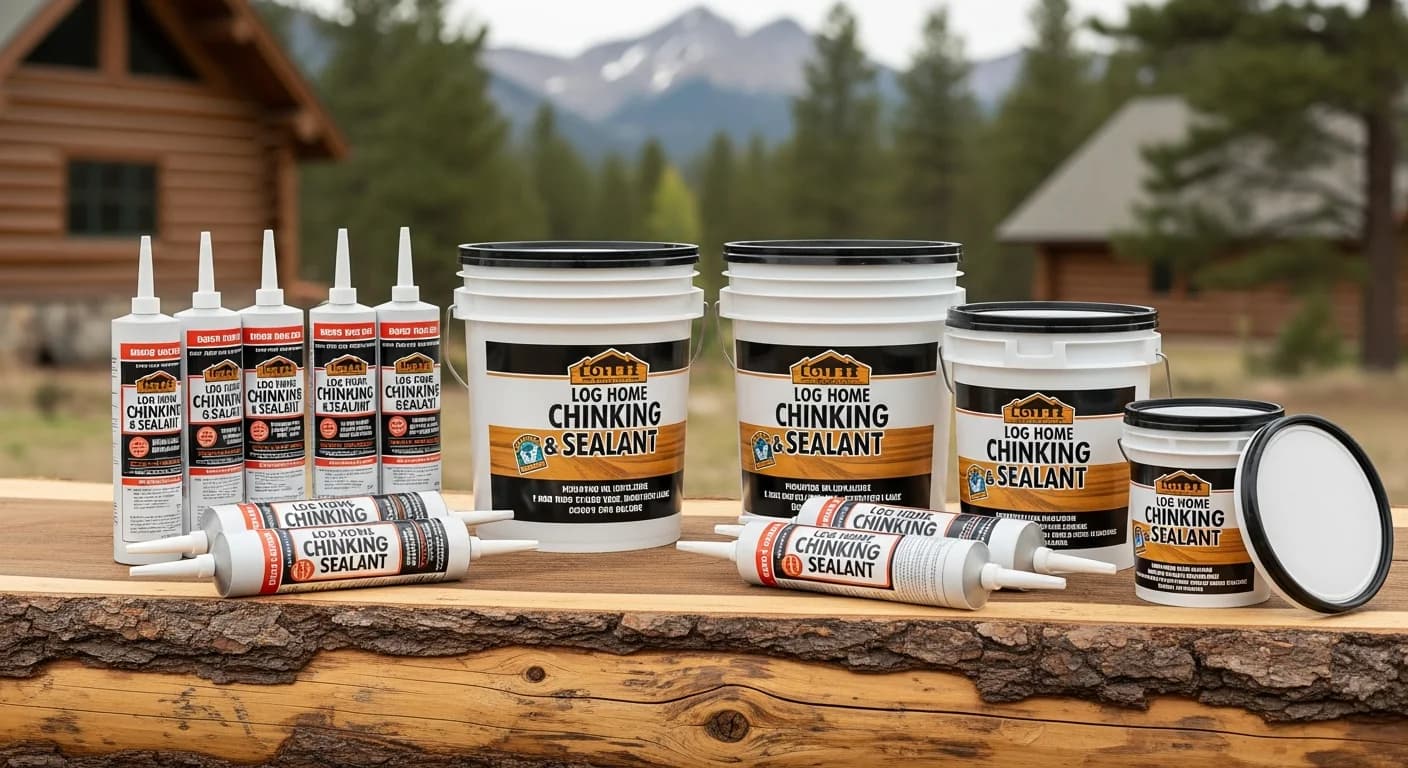
- Chinking: A specialized, flexible sealant specifically engineered for log homes that can handle the unique demands of wood movement, moisture management, and Colorado's brutal weather cycles.
Bottom line: Never, ever use hardware store caulk on your log home. We'll explain why in excruciating detail below, because we know you want the full story.
Why Your Log Home Laughs at Hardware Store Caulk
Imagine you're a log. (Stay with us here.) You're a massive piece of organic material that started life as a tree, soaking up water, surviving Colorado winters, and generally doing tree things for decades. Now you're a wall, and you still have some of those tree habits.
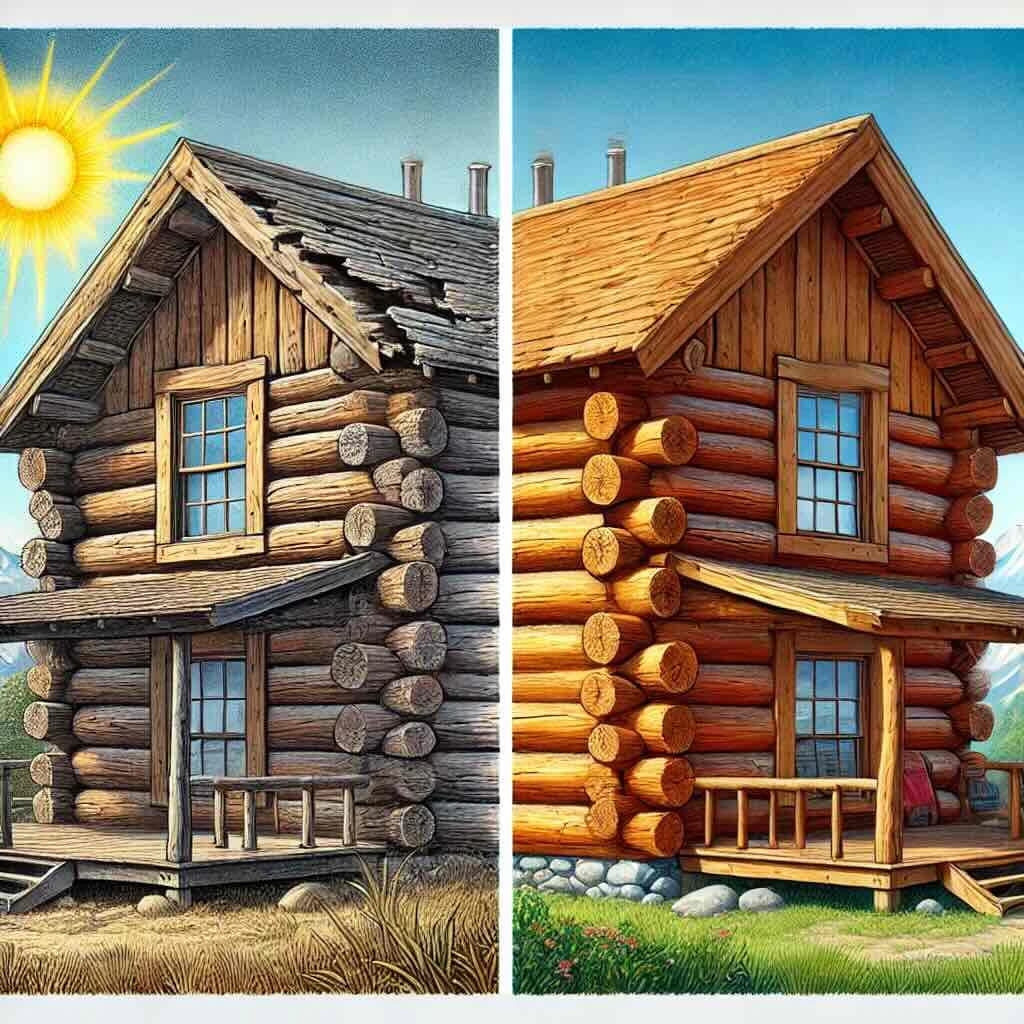
Logs are alive—not in a creepy way, but in the sense that they're constantly responding to their environment. They absorb moisture. They release moisture. They expand in summer. They contract in winter. In Colorado, where we can experience a 50-degree temperature swing in a single day (thanks, mountain weather!), your logs are basically doing CrossFit year-round.
Regular caulk was never designed for this lifestyle. Here's why it fails spectacularly:
1. Caulk Creates a Moisture Prison
Standard caulk is completely waterproof and impenetrable—which sounds great until you realize that moisture needs to escape from inside your logs. When you seal them with caulk, that internal moisture gets trapped. What happens next? Mold. Rot. Staining. All the things you were trying to prevent in the first place.
It's like wrapping yourself in plastic wrap for a workout. Sure, nothing gets in, but nothing gets out either, and the results aren't pretty.
2. Caulk Can't Keep Up with Log Movement
Most caulks either turn rock-hard over time (developing that delightful "alligator skin" cracked appearance) or simply give up and separate from the wood entirely. Either way, you end up with gaps that let water in—water that then gets trapped behind the failed caulk, accelerating rot.
Professional chinking, on the other hand, maintains elasticity for years, stretching and compressing with your logs like a well-trained dance partner.
3. Caulk Wasn't Designed for Wood Adhesion
That tube of caulk at the hardware store was engineered for bathroom tiles, window frames, and kitchen counters—not the porous, textured surface of a log. When caulk fails to adhere properly (and it will), you're left with gaps that become superhighways for water and insects.
What Makes Chinking Special?
Now that we've thoroughly roasted regular caulk, let's talk about why professional log home chinking is worth every penny.
Breathability: The Log Home's Lungs
Quality chinking is breathable—it allows moisture to escape from the wood while preventing external water from entering. Think of it as a sophisticated moisture management system, not just a plug.
This is absolutely critical in Colorado, where dry mountain air can cause logs to release moisture rapidly, and sudden storms can dump inches of rain or snow in hours.
Flexibility That Lasts Decades
Premium chinking products maintain their elasticity through thousands of expansion and contraction cycles. We're talking about products that can stretch up to 300% without cracking or losing adhesion. Try that with your bathroom caulk. (Actually, don't. It won't go well.)
Superior Adhesion to Wood
Chinking is specifically formulated to bond with wood fibers, creating a mechanical and chemical bond that regular caulk simply can't match. This adhesion remains strong even as the wood moves, ensuring a continuous seal year after year.
Weather Resistance for Colorado Conditions
Colorado throws everything at your log home: intense UV radiation at altitude, dramatic temperature swings, heavy snow loads, driving rain, and the occasional hailstorm that makes your car look like a golf ball. Professional chinking is engineered to handle all of it.
The Historic Perspective (Because We Love a Good Story)
Chinking isn't a modern invention—it's been around as long as log homes themselves. Our ancestors were clever folks who understood that stuffing something in those gaps was essential for survival.
Depending on where you lived, traditional chinking might have been:
- Northern Europe: A special moss that (miraculously) didn't cause log rot
- American frontier: Mud mixed with horsehair or grass
- Various regions: Clay, straw, wool, or whatever was available
These materials worked... sort of. They required constant maintenance and replacement. Modern synthetic chinking products like Permachink and Sashco represent decades of engineering specifically designed to solve the problems our ancestors struggled with.
Chinking vs. Caulking: The Visual Difference
Beyond performance, there's also an aesthetic consideration:
- Caulk is typically smooth and glossy—designed to disappear. On a log home, it looks exactly like what it is: the wrong product desperately trying to look natural.
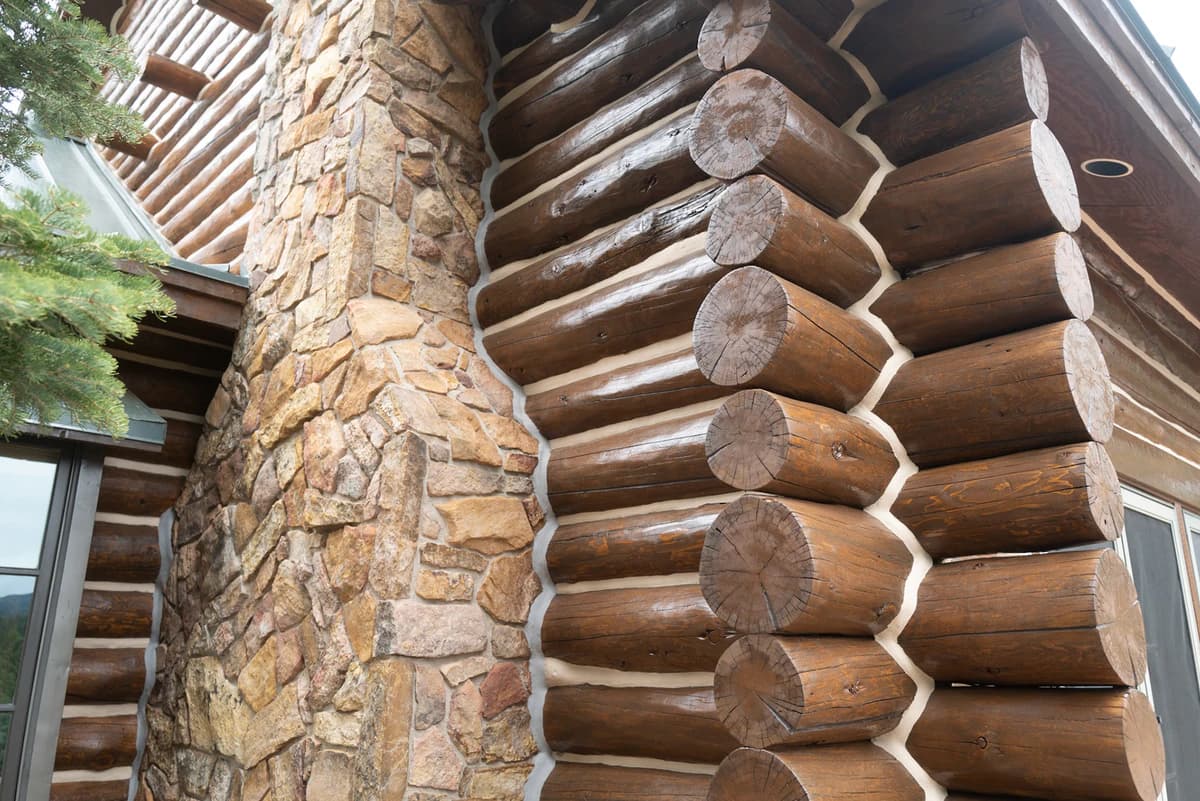
- Chinking has a textured, organic appearance that complements the natural character of logs. It looks intentional, professional, and appropriate.
When guests visit your Colorado mountain retreat, you want them to admire your log home's authentic character—not wonder why there's bathroom caulk between your logs.
What About "Log Caulk"?
Here's where terminology gets tricky. Some manufacturers sell products labeled as "log caulk" or "log home caulk." These are usually legitimate products designed for log homes—essentially chinking marketed with familiar terminology.
The key is to read the specifications, not just the name:
- Is it breathable?
- Does it maintain flexibility?
- Is it specifically designed for log home applications?
- Does the manufacturer specialize in log home products?
When in doubt, stick with proven brands like Permachink or Sashco. These companies have spent decades perfecting their formulas for exactly your situation.
Choosing the Right Chinking for Your Gaps
Not all gaps are created equal, and neither is all chinking. Here's a quick guide:
Large Gaps (1 inch or more)
For traditional log homes with visible chinking lines, you need a product designed for larger applications. These products have more texture and are formulated to span wider gaps without sagging.
Medium Gaps (less than 1 inch)
Many modern log homes have tighter tolerances. For gaps under an inch, you'll want a product with a more refined texture that still provides all the flexibility and breathability of full-sized chinking.
Minimal Gaps (between stacked logs)
Some log home designs feature logs stacked so tightly that there's no visible gap at all. These still need sealing! Smooth, lightly textured sealants are designed for this application—they create an invisible weather barrier without the aesthetic of traditional chinking lines.
The Colorado Factor
Living in Colorado means your log home faces unique challenges that make proper chinking even more critical:
Altitude and UV Exposure
At 9,000+ feet, UV radiation is significantly more intense than at sea level. This accelerates the breakdown of inferior products. Quality chinking includes UV stabilizers that maintain performance even under our intense mountain sun.
Extreme Temperature Swings
That 50-degree temperature swing we mentioned? It means your logs (and chinking) are constantly expanding and contracting. Products that work fine in more moderate climates can fail quickly in Colorado.
Snow and Ice
Heavy snow loads, freeze-thaw cycles, and ice damming all test your chinking's ability to maintain a seal. This is not the place to cut corners.
Dry Conditions
Colorado's arid climate can cause logs to dry out and shrink more dramatically than in humid regions. Your chinking needs to handle this movement without cracking.
Signs Your Chinking Has Failed (Or Was Never Right)
Not sure if your log home's current sealant is up to the task? Look for these warning signs:
- Visible gaps or cracks in the sealant
- Separation between the sealant and the logs
- Hardening or brittleness—quality chinking should feel flexible
- Drafts near log joints
- Moisture staining around sealed areas
- Evidence of insects in or around the joints
If you spot any of these issues, it's time for a professional assessment. The longer you wait, the more damage water can do behind that failing seal.
DIY vs. Professional Application
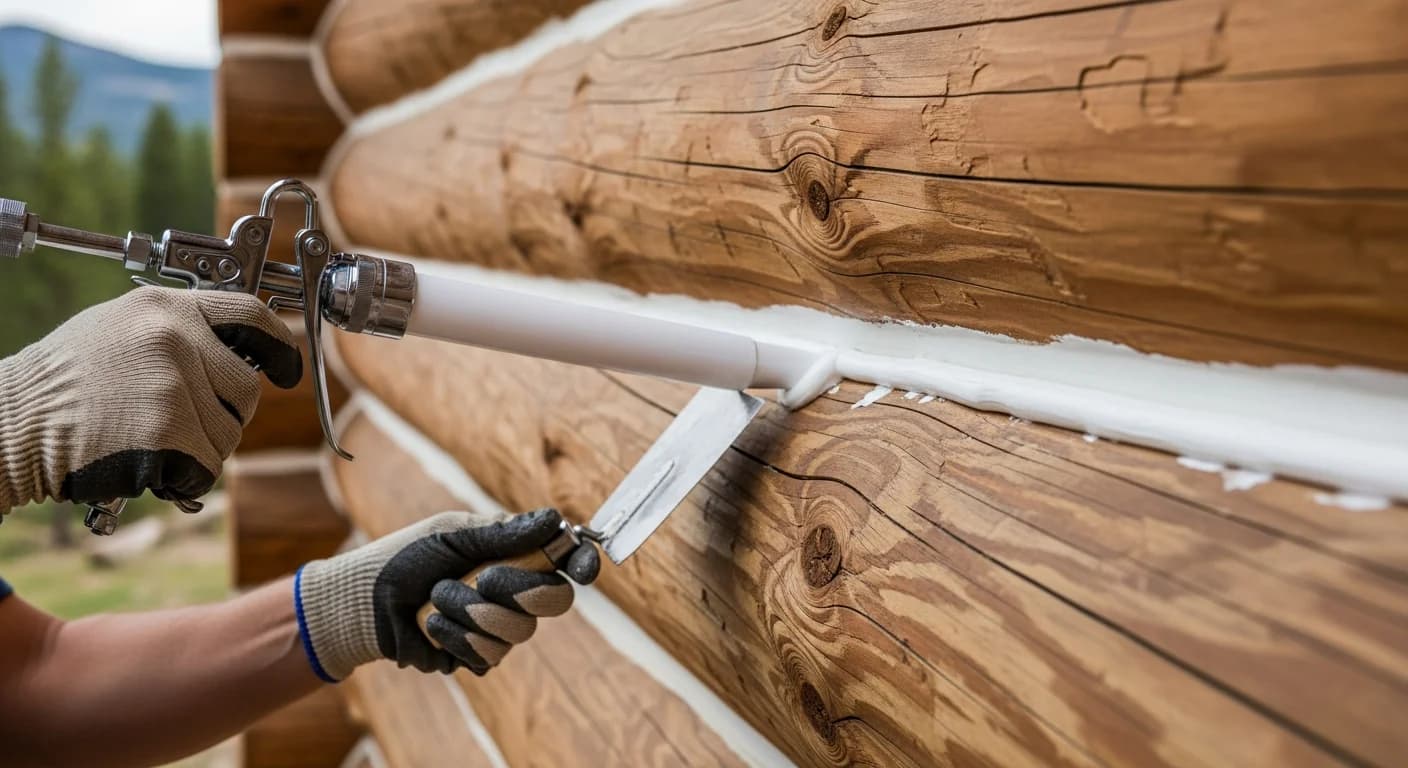
Can you apply chinking yourself? Absolutely. Should you? That depends.
DIY makes sense when:
- You're doing small touch-ups or repairs
- You have experience with log home maintenance
- You have the time and patience to do it right
- The scope is manageable (a few joints, not the entire house)
Professional application is worth it when:
- You're chinking an entire home
- Existing chinking needs complete replacement
- Access is difficult (tall walls, steep roofs nearby)
- You want it done right the first time, guaranteed
- You'd rather spend your weekend doing literally anything else
At Log Home Finishing, we've applied thousands of feet of chinking across Colorado's mountain communities. We know the products, we know the techniques, and we know how to make your log home weather-tight for years to come.
The Bottom Line
Chinking and caulking might sound similar, but they're as different as a Subaru and a semi-truck. Both have wheels, but you wouldn't use one to haul timber and the other to navigate Breckenridge in January.
Your Colorado log home deserves products and application methods specifically designed for its unique demands. Cutting corners with hardware store caulk isn't saving money—it's just deferring the expense until the damage is worse and the repair costs higher.
Have questions about the chinking on your log home? Want a professional assessment of your current sealant situation? Give us a call or reach out directly at (970) 368-2308. We've been helping Colorado log home owners protect their investments for over 20 years, and we'd love to help you too.
Related reading: